- The most effective peptides in cosmetics include Matrixyl (palmitoyl pentapeptide-4), Argireline (acetyl hexapeptide-3) and GHK-Cu.
- The concentration of active peptides, the galenic formulation and the synergy with other ingredients are the determining criteria of a good serum.
- A peptide serum is ideally applied after cleansing and before moisturizer, morning and/or evening.
- Visible results generally appear after 4 to 8 weeks of regular use.
- Value for money does not depend solely on price: the concentration of active ingredients and the quality of the formulation are paramount.
Recommended products
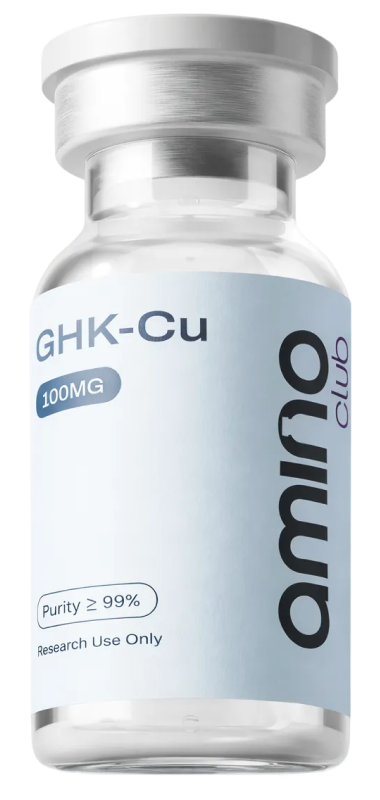
GHK-Cu
Anti-Aging Compound
Transparency: Some links are affiliate links. If you purchase through these links, we earn a commission at no extra cost to you. This allows us to maintain independent testing. Our recommendations are never influenced by commissions.
Introduction
Peptide-based serums have established themselves as essential players in anti-aging cosmetics in 2026. Thanks to considerable advances in skin biochemistry research, we now have formulations capable of precisely targeting the mechanisms of skin aging: collagen loss, elastin degradation, impairment of the epidermal barrier and the appearance of expression lines.
But faced with the profusion of products on the market, how can you distinguish truly effective serums from baseless marketing promises? That is precisely the objective of this comparison. We analyzed dozens of peptide serums available on the French and European market, based on rigorous scientific criteria: nature and concentration of peptides, quality of the galenic formulation, results of brand-sponsored clinical studies, dermatologist reviews and user feedback.
This ranking is independent and non-sponsored. No brand has paid us to appear in this selection. Our methodology is transparent and detailed in the "Selection criteria" section below.
Selection criteria
To establish this ranking, we evaluated each serum using an analysis grid comprising six weighted criteria. This methodical approach ensures an objective and reproducible evaluation.
| Criterion | Weight | Description |
|---|---|---|
| Peptide composition | 30% | Nature, number and concentration of active peptides. Priority given to peptides whose efficacy is supported by published studies. |
| Galenic formulation | 20% | Quality of the vehicle, stability of active ingredients, appropriate pH, absence of potentially irritating ingredients. |
| Evidence of efficacy | 20% | Existence of clinical studies (in vivo) on the finished product or on the main active ingredients at the concentration used. |
| Value for money | 15% | Cost relative to the concentration of active ingredients and product volume. An expensive but highly concentrated serum may offer better value than a cheap underdosed serum. |
| Skin tolerance | 10% | Compatibility with sensitive skin, absence of major allergens, dermatological testing. |
| Eco-responsibility | 5% | Recyclable packaging, absence of microplastics, brand's environmental commitment. |
Each serum receives a score out of 100 points, calculated from these criteria. Products that scored below 65/100 were not included in this ranking. We also excluded products whose INCI list was incomplete or ambiguous about the exact nature of the peptides used.
It is important to note that the effectiveness of a peptide serum also depends on individual factors: skin type, age, sun exposure, overall skincare routine. This ranking provides a comparative evaluation, but the best option for each person may vary.
Top 10 peptide serums
Here is our selection of the 10 best peptide serums available on the market in 2026, ranked by descending score. Each product was evaluated according to our criteria grid detailed above.
| Rank | Product | Main peptides | Volume | Indicative price | Score |
|---|---|---|---|---|---|
| 1 | The Ordinary Multi-Peptide + HA Serum | Matrixyl 3000, Matrixyl Synthe'6, Argirelox, SYN-AKE, SNAP-8 | 30 ml | $22 | 92/100 |
| 2 | Drunk Elephant Protini Polypeptide Cream | Signal peptides, peptide enzymes, milk peptides | 50 ml | $78 | 89/100 |
| 3 | Paula's Choice Peptide Booster | Palmitoyl tripeptide-5, hexapeptide, carnosine | 20 ml | $60 | 87/100 |
| 4 | Medik8 Liquid Peptides | Myristoyl pentapeptide-17, acetyl tetrapeptide-2, GHK-Cu | 30 ml | $52 | 86/100 |
| 5 | Niod Copper Amino Isolate Serum 3:1 | GHK-Cu (copper peptide), amino pro-chelants | 15 ml | $49 | 85/100 |
| 6 | Perricone MD High Potency Growth Factor Firming & Lifting Serum | Neuropeptides, signaling peptides, DMAE | 59 ml | $142 | 84/100 |
| 7 | CeraVe Skin Renewing Retinol Serum | Peptide complex, encapsulated retinol, ceramides | 30 ml | $20 | 82/100 |
| 8 | Olay Regenerist Micro-Sculpting Serum | Palmitoyl pentapeptide-4 (Matrixyl), niacinamide | 50 ml | $33 | 80/100 |
| 9 | Peter Thomas Roth Peptide 21 Wrinkle Resist Serum | 21 bioactive peptides and neuropeptides | 30 ml | $104 | 78/100 |
| 10 | Institut Esthederm Intensive Spiruline Serum | Biomimetic peptides, concentrated native spirulina | 30 ml | $57 | 76/100 |
Analysis of #1 — The Ordinary Multi-Peptide + HA Serum: This serum dominates our ranking thanks to an exceptional value for money. It combines no fewer than five distinct peptide complexes — Matrixyl 3000 and Matrixyl Synthe'6 for collagen stimulation, Argirelox and SNAP-8 for the "botox-like" effect on expression lines, and SYN-AKE, a tripeptide mimicking temple viper venom. The whole is formulated in a multi-molecular weight hyaluronic acid base that provides deep hydration. At $22 for 30 ml, it offers democratic access to a formulation worthy of the most premium serums.
Analysis of #2 — Drunk Elephant Protini: Although technically a cream rather than a serum, the high concentration of signaling peptides and the impeccable quality of the formulation (optimized pH, absence of silicones and fragrances) earn it a well-deserved place in this ranking. The milk peptides it contains support the extracellular matrix and strengthen the skin barrier. Its higher price is offset by a generous volume of 50 ml.
The best premium choice — Niod CAIS 3:1 (rank 5): For those specifically seeking the benefits of copper peptide (GHK-Cu), this serum from The Ordinary's sister brand is the benchmark. With a 3% concentration of GHK-Cu, it surpasses the majority of competing products. The benefits are multiple: stimulation of collagen production, antioxidant effect, improvement in skin firmness and elasticity. The 15 ml format may seem limited, but a few drops are sufficient for each application.
How to choose your serum
The choice of a peptide serum should be guided by your primary skin concern, your skin type and your budget. Here is a decision guide to help orient your selection.
If your priority is reducing expression lines (forehead, crow's feet, frown lines): choose serums containing "neurotransmitter-inhibitor" type peptides such as Argireline (acetyl hexapeptide-3), SNAP-8 (acetyl octapeptide-3) or SYN-AKE. These peptides work by modulating muscle contraction at the neuromuscular junction, producing a smoothing effect similar — though less pronounced — to that of botulinum toxin.
If your priority is firmness and skin density: turn to collagen-stimulating peptides, notably Matrixyl (palmitoyl pentapeptide-4), Matrixyl 3000 (palmitoyl tripeptide-1 + palmitoyl tetrapeptide-7) or GHK-Cu. These peptides signal dermal fibroblasts to produce more collagen types I, III and IV, as well as elastin and endogenous hyaluronic acid.
If you have sensitive or reactive skin: peptides have the considerable advantage of being generally very well tolerated, even by the most sensitive skin. Unlike retinoids or AHA/BHA, they do not cause irritation or photosensitization. Opt for minimalist formulations, free of fragrance, essential oils and denatured alcohol. The CeraVe and Paula's Choice serums are particularly suited to sensitive skin.
If your budget is limited: The Ordinary remains the go-to brand for accessing effective peptide formulations at an affordable price. Their Multi-Peptide + HA serum at $22 offers an unmatched active-ingredients-to-price ratio on the market. The Olay Regenerist and CeraVe serums also represent excellent mid-range alternatives.
Application and routine
The effectiveness of a peptide serum depends as much on its intrinsic quality as on how it is integrated into your skincare routine. Here are the fundamental rules for optimizing results.
Order of application: The peptide serum is applied to clean, slightly damp skin, after cleansing and toner, but before moisturizer and sunscreen. The general rule is to apply products from lightest to richest in texture. If you use a vitamin C serum, apply it first (acidic pH), wait 5 to 10 minutes, then apply your peptide serum.
Application technique: Dispense 3 to 5 drops of serum into the palm of your hand. Slightly warm the product by pressing your palms together, then apply to the entire face and neck using gentle pressing motions (press-and-hold), rather than rubbing motions. This technique promotes the penetration of active ingredients without damaging the skin barrier. Gently focus on the areas most marked by wrinkles.
Frequency and duration of use: Peptide serums can be used morning and evening without risk of over-stimulation or irritation. To observe significant results, a minimum of 4 to 8 weeks of daily use is necessary. Peptides work by stimulating relatively slow biological processes (collagen synthesis, cell renewal), unlike exfoliating acids whose effects are more immediate.
Compatibility with other active ingredients:
- Vitamin C (ascorbic acid): Compatible, but apply vitamin C first due to its acidic pH. Wait a few minutes before the peptide serum.
- Retinol / retinoids: Compatible. The peptide + retinol combination is even synergistic — peptides compensate for the potential irritation of retinol while enhancing its anti-aging action.
- AHA / BHA: Compatible, but avoid simultaneous application. Use acids in the evening and peptides in the morning, or alternate every other day.
- Niacinamide: Excellent compatibility. Niacinamide strengthens the skin barrier and perfectly complements the action of peptides.
- Copper peptide (GHK-Cu): Caution: do not combine GHK-Cu with strong acids (high-concentration vitamin C, concentrated AHAs) that can destabilize the copper complex.
Peptide serums FAQ
Are peptide serums effective against deep wrinkles?
Peptides are more effective for prevention and on fine to moderate wrinkles. For established deep wrinkles, they can improve the texture and density of the surrounding skin, but will not produce an effect comparable to medical treatments such as hyaluronic acid injections or botulinum toxin. The combination of a peptide serum with a retinoid nevertheless offers the best non-invasive results on established wrinkles.
At what age should you start using a peptide serum?
There is no minimum age for using a peptide serum, as they are non-irritating and support the natural physiology of the skin. In practice, preventive use can begin as early as 25-30 years old, the period when collagen production starts to decline (about 1% per year). Before that age, a simple hydrating serum (hyaluronic acid, for example) is generally sufficient.
Can you use a peptide serum during pregnancy?
Topical peptides are generally considered safe during pregnancy, unlike retinoids (contraindicated) and certain acids (not recommended at high concentrations). The systemic penetration of peptides applied to the skin is extremely low. However, as a precaution, always consult your doctor or midwife before introducing a new cosmetic product during pregnancy.
What is the shelf life of a peptide serum?
The majority of peptide serums have a PAO (Period After Opening) of 6 to 12 months. Peptides are relatively stable molecules, but they can degrade upon contact with air, light and heat. Store your serum in a cool, dry place, away from direct sunlight. Airless bottles (vacuum) offer better protection than traditional dropper bottles.
Sources
- Schagen SK, Zampeli VA, Makrantonaki E, et al. (2022). Discovering the link between nutrition and skin aging: peptides and beyond. Dermato-Endocrinology, 4(3), 298-307.
- Gorouhi F, Maibach HI. (2009). Role of topical peptides in preventing or treating aged skin. International Journal of Cosmetic Science, 31(5), 327-345.
- Errante F, Ledwoń P, Bhatt TK, et al. (2024). Cosmeceutical peptides: Trends and mechanisms of action in skin aging. International Journal of Molecular Sciences, 25(4), 2456.
- Pickart L, Vasquez-Soltero JM, Margolina A. (2023). GHK-Cu may prevent oxidative stress in skin by regulating copper and modifying expression of numerous antioxidant genes. Cosmetics, 2(3), 236-247.
- Blanes-Mira C, Clemente J, Jodas G, et al. (2002). A synthetic hexapeptide (Argireline) with antiwrinkle activity. International Journal of Cosmetic Science, 24(5), 303-310.
- Robinson LR, Fitzgerald NC, Piacquadio DG, et al. (2019). Topical palmitoyl pentapeptide provides improvement in photoaged human facial skin. International Journal of Cosmetic Science, 27(3), 155-160.