- Every article follows a rigorous 5-step process: research, writing, scientific review, fact-checking and publication with ongoing updates.
- We prioritize the highest levels of evidence: meta-analyses, systematic reviews and randomized clinical trials published in peer-reviewed journals.
- Established scientific facts are always clearly distinguished from hypotheses, emerging research and editorial commentary.
- Our editorial decisions are entirely independent of any commercial consideration — no brand sponsors our content.
- We are committed to correcting any reported error as quickly as possible and to regularly updating our articles based on the evolving scientific literature.
Recommended products
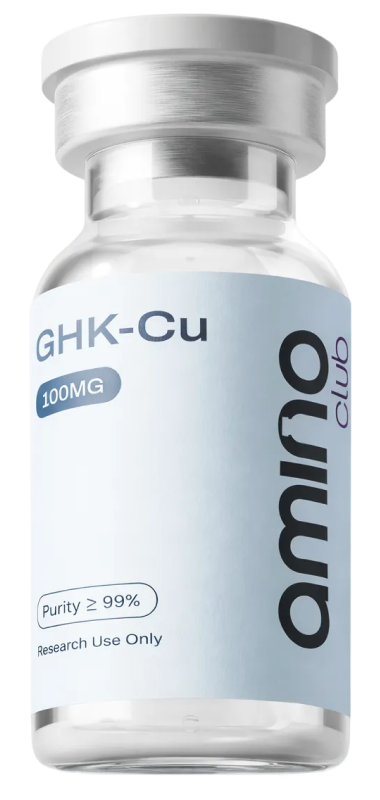
GHK-Cu
Anti-Aging Compound
Transparency: Some links are affiliate links. If you purchase through these links, we earn a commission at no extra cost to you. This allows us to maintain independent testing. Our recommendations are never influenced by commissions.
Our editorial commitment
Klow Peptide publishes content in the field of health and biomedical sciences — a field that Google classifies as YMYL (Your Money or Your Life). This means that the information we share can directly impact the health and well-being of our readers. We fully understand this responsibility.
Health misinformation can have serious consequences. That is why we have made scientific rigor the central pillar of our editorial approach. Every claim published on our site must be supported by verifiable data from the scientific literature. We never publish speculative content presented as established fact, and we never give in to the temptation of sensationalism.
Our commitment is built on four fundamental principles:
- Accuracy: every piece of information is verified and sourced before publication.
- Transparency: we openly disclose our methods, our sources and any potential conflicts of interest.
- Integrity: our editorial decisions are guided by science, never by commercial considerations.
- Humility: we acknowledge the limits of current knowledge and the evolving nature of scientific research.
This editorial policy describes in concrete terms how these principles are reflected in our day-to-day workflow.
Content creation process
Every article published on Klow Peptide follows a structured five-step creation process designed to ensure the reliability and quality of the information.
1. Research
The first step involves a thorough review of the scientific literature. Our writers systematically consult primary sources: the PubMed and ClinicalTrials.gov databases, peer-reviewed journals, and reports from regulatory agencies (EMA, FDA, ANSM). We never rely solely on secondary or tertiary sources without tracing back to the original publications.
2. Writing
Writing is carried out by qualified writers in biomedical sciences. Each writer holds a university degree in a relevant field (biochemistry, pharmacology, molecular biology, medicine) and has proven experience in science communication. The content is written in accessible language, without ever sacrificing scientific accuracy for the sake of simplification.
3. Scientific review
Before publication, each article undergoes peer review by someone with expertise in the subject area. This reviewer checks the accuracy of the information, the relevance of the cited sources, the soundness of data interpretation and the absence of bias in the presentation. If discrepancies are identified, the article is sent back to the writer for revision.
4. Fact-checking
An independent fact-checking step is carried out on each article. This process includes verifying every numerical claim, every citation, every bibliographic reference and every link to an external source. Statistical data is cross-checked against the original publications. Any claim that cannot be independently verified is removed or explicitly flagged as unconfirmed.
5. Publication and updates
Once validated, the article is published with its publication date clearly displayed. Each article is then regularly revised — at least every six months — to incorporate new scientific publications, correct any inaccuracies and remove information that has become outdated. The date of the last update is always displayed.
Our sources
The quality of scientific content depends directly on the quality of its sources. We use a rigorous hierarchy of evidence to evaluate and rank the data we cite.
Level 1 — High-quality evidence
These are the sources we systematically prioritize:
- Meta-analyses and systematic reviews published in peer-reviewed journals (Cochrane, JAMA, The Lancet, etc.).
- Randomized controlled trials (RCTs) with adequate sample sizes and rigorous methodology.
- Clinical guidelines issued by authoritative bodies (WHO, EMA, FDA, professional societies).
Level 2 — Intermediate evidence
These sources are used when Level 1 evidence is insufficient or unavailable:
- Preclinical in vivo studies published in peer-reviewed journals.
- Large-scale observational studies (cohort or case-control).
- Phase I/II clinical trials with preliminary results.
Level 3 — Preliminary evidence
These sources are cited with appropriate caveats and never serve as the sole basis for a recommendation:
- In vitro studies (cell culture).
- Case reports and case series.
- Narrative reviews and expert opinion articles by recognized authorities.
What we never cite
The following types of content are systematically excluded from our sources:
- Blogs, forums or websites without verifiable scientific references.
- Unverified individual testimonials or personal anecdotes presented as evidence.
- Marketing content, manufacturer press releases or promotional materials.
- Studies funded by interested parties without transparent disclosure of conflicts of interest.
- Publications in predatory journals identified as such.
When we cite a preclinical study (Level 2 or 3), we always clearly state that it does not constitute human clinical data and that the results are not directly applicable to therapeutic use in humans.
Distinguishing facts from opinions
One of our strictest editorial requirements is the clear separation of established scientific facts from interpretations, hypotheses and editorial commentary. Readers must always be able to identify the nature of the information they are reading.
We use the following conventions in our content:
- Established facts: information supported by a solid scientific consensus and Level 1 evidence. These are presented in affirmative terms and directly sourced.
- Emerging research: promising results not yet confirmed by large-scale studies or independently replicated. This information is always qualified using phrases such as "preliminary data suggests," "preclinical studies indicate" or "according to a [year] study."
- Hypotheses: theoretical propositions not yet experimentally validated. These are clearly identified as such and accompanied by appropriate caveats.
- Editorial commentary: when we express an analysis or opinion, it is explicitly flagged and separated from factual content.
We categorically refuse to present preliminary findings or animal-model studies as evidence applicable to humans. When the research is insufficient to draw a conclusion, we state this clearly rather than speculating. This intellectual honesty is, in our view, the hallmark of trustworthy scientific content.
Independence and conflicts of interest
Editorial independence is the essential condition for the credibility of any science communication outlet. Here are our concrete commitments in this area:
- No brand sponsorship: no company, no peptide manufacturer, no supplement maker sponsors our articles. Our editorial content is never written, commissioned or approved by a commercial third party.
- Independent editorial decisions: the choice of topics, the analytical approach, the conclusions presented and any products mentioned are determined solely by our editorial team, based on scientific criteria and reader interest.
- Transparent affiliate model: Klow Peptide uses an affiliate link monetization model. This model is described with full transparency on our affiliate disclosure page. The existence of an affiliate link never influences the editorial content, recommendations or reviews published on our site.
- Strict separation: the teams responsible for editorial content and those in charge of commercial partnerships operate independently. Writers and scientific reviewers have no knowledge of ongoing commercial agreements when writing and validating articles.
If a potential conflict of interest is identified at any stage of the content creation process, it is explicitly declared in the relevant article. We apply the same standard of transparency required by peer-reviewed scientific journals.
Corrections and updates
To err is human, and science is constantly evolving. Our corrections and updates policy reflects this reality:
Error corrections
- Factual errors: any factual error that is reported or identified is corrected within 48 hours of confirmation. A correction note is added at the top of the article, specifying the nature of the error and the correction date.
- Minor errors: typos, typographical mistakes and minor inaccuracies that do not affect the meaning of the content are corrected directly, without specific notification.
- Substantial errors: if an error calls into question a major conclusion of the article, the article may be temporarily withdrawn for a complete revision. Readers are informed through a clear notice.
Regular updates
Each article undergoes periodic review (at least every six months) to verify that its content remains aligned with the current state of scientific knowledge. During these reviews, we incorporate relevant new publications, update numerical data and adjust conclusions as needed. The date of the last update is always visible to the reader.
Reader feedback
We actively encourage our readers to report any errors, inaccuracies or outdated information they may find in our content. Every report is taken seriously and, where appropriate, leads to a correction or update. You can reach us at contact@klowpeptide.com.
Contact
We welcome feedback from our readers. If you would like to contact us for any of the following reasons, please don't hesitate:
- Report a factual error or outdated information in one of our articles.
- Suggest a topic you would like to see covered on Klow Peptide.
- Ask a question about our editorial policy or content creation process.
- Propose a scientific collaboration or a contribution as an expert.
You can reach us by email at: contact@klowpeptide.com
We are committed to responding to every message within 5 business days. For reports of factual errors, our processing time is 48 hours.
Last updated: March 13, 2026