- GHK-Cu is a naturally occurring tripeptide (glycyl-L-histidyl-L-lysine) bound to a copper ion, found in human blood plasma.
- Its plasma concentration decreases with age: approximately 200 ng/ml at age 20 versus 80 ng/ml at age 60, correlating with the decline in regenerative capacity.
- It stimulates the production of collagen types I, III and IV, elastin, proteoglycans and glycosaminoglycans in the dermis.
- Genomic studies show that GHK-Cu modulates the expression of over 4,000 genes involved in tissue repair and inflammation.
- When applied topically at concentrations of 1 to 3%, GHK-Cu significantly improves skin firmness, thickness and elasticity after 8 to 12 weeks.
Recommended products
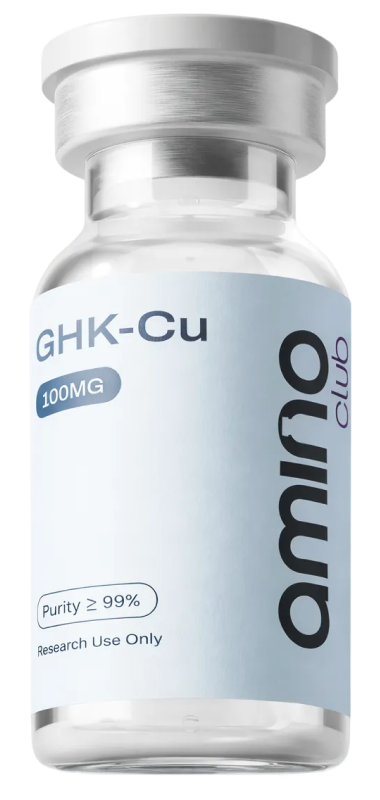
GHK-Cu
Anti-Aging Compound
Glutathione
Antioxidant Compound
Transparency: Some links are affiliate links. If you purchase through these links, we earn a commission at no extra cost to you. This allows us to maintain independent testing. Our recommendations are never influenced by commissions.
Introduction
Among the hundreds of peptides studied in cosmetics and regenerative medicine, GHK-Cu (glycyl-L-histidyl-L-lysine copper) holds a unique position. Discovered in 1973 by biochemist Loren Pickart in human blood plasma, this copper-tripeptide has been the subject of over five decades of research that has progressively revealed the breadth of its biological functions.
What sets GHK-Cu apart from most cosmetic peptides is the depth of scientific evidence supporting its efficacy. Where many anti-aging actives rely on isolated in vitro studies or small-scale clinical trials, GHK-Cu benefits from a body of research spanning molecular biology, genomics, clinical dermatology and reconstructive surgery.
As we age, the concentration of GHK-Cu in our body declines significantly. This observation led researchers to hypothesize that GHK-Cu supplementation — whether topical or injectable — could partially restore the repair and regeneration processes impaired by aging. This article explores in detail the science behind this hypothesis and its practical implications. For a quick reference sheet, see our scientific guide to GHK-Cu. GHK-Cu is also a key component of peptide blends such as Klow Peptide and Glow Peptide.
What is GHK-Cu?
GHK-Cu is a naturally occurring tripeptide composed of three amino acids — glycine, histidine and lysine — bound to a copper ion (Cu²⁺). Its molecular formula is C₁₄H₂₃CuN₆O₄, and its molecular weight is approximately 403.9 daltons. Copper binding is primarily mediated by the histidine and glycine residues, forming a stable coordination complex.
In the human body, GHK-Cu is found in blood plasma, saliva and urine. Its plasma concentration is approximately 200 ng/ml in young adults (around age 20), but drops to about 80 ng/ml by age 60. This progressive decline is one of the reasons researchers are interested in this peptide in the context of aging.
GHK-Cu is naturally released during tissue degradation. When tissue is damaged — by injury, inflammation or oxidative stress — extracellular matrix proteins (notably collagen and SPARC) are broken down, releasing peptide fragments including GHK. This tripeptide then binds to free copper in the extracellular environment, forming the GHK-Cu complex that acts as a repair signal for surrounding cells.
This "repair messenger" function explains why GHK-Cu is involved in such a wide range of biological processes: wound healing, bone remodeling, hair follicle growth, neuronal protection and immune modulation. Copper itself is an essential cofactor for numerous enzymes involved in collagen synthesis (lysyl oxidase), antioxidant defense (superoxide dismutase) and melanin production (tyrosinase).
Anti-aging mechanisms
The anti-aging properties of GHK-Cu are based on a series of interconnected molecular mechanisms that act on both the dermis and the epidermis. Unlike many cosmetic actives that target only one aspect of aging, GHK-Cu operates on multiple biological pathways simultaneously.
Stimulation of collagen synthesis: GHK-Cu directly activates dermal fibroblasts, the cells responsible for collagen production. In vitro studies have demonstrated an increase in type I and III collagen synthesis of 70% compared to controls following exposure to GHK-Cu. It also stimulates the production of proteoglycans (decorin, biglycan) and glycosaminoglycans, which contribute to hydration and elasticity of the dermis. Additionally, GHK-Cu increases the expression of lysyl oxidase, the enzyme responsible for cross-linking collagen and elastin fibers, thereby reinforcing the three-dimensional architecture of the extracellular matrix.
Antioxidant and anti-inflammatory activity: GHK-Cu is a powerful modulator of oxidative stress. It increases the expression of superoxide dismutase (SOD), the primary defense enzyme against superoxide free radicals. It also inhibits the production of pro-inflammatory cytokines (TNF-α, IL-6, excess TGF-β) while stimulating anti-inflammatory cytokines (IL-10). This dual antioxidant and anti-inflammatory action is particularly relevant in the context of inflammaging — the chronic low-grade inflammation associated with aging.
Genomic regulation: One of the most fascinating aspects of GHK-Cu, revealed by functional genomics studies, is its ability to modulate the expression of over 4,000 human genes. The work of Pickart and colleagues (2012, 2014) showed that GHK-Cu shifts the gene expression profile from an "aged" state toward a more "youthful" state. It activates genes involved in DNA repair, stress response, matrix remodeling and antioxidant defense, while suppressing genes associated with inflammation, fibrosis and tissue destruction.
Controlled matrix remodeling: GHK-Cu finely modulates the activity of matrix metalloproteinases (MMPs), the enzymes responsible for the degradation of collagen and elastin. It stimulates certain MMPs necessary for the physiological remodeling of damaged tissue, while inhibiting the overactivation of MMPs that contributes to chronic dermal matrix degradation observed in photoaging. This subtle balance between destruction and reconstruction is the key to effective tissue regeneration.
Proven benefits
The benefits of GHK-Cu documented in the scientific literature cover a remarkably broad spectrum. Here is a summary of the most solidly established effects:
- Improved skin firmness: Several controlled clinical studies have demonstrated a measurable increase in skin firmness after 8 to 12 weeks of topical application of creams containing GHK-Cu. In the study by Leyden et al. (2002), cutometer measurements revealed a 17% improvement in skin elasticity compared to placebo.
- Reduction of wrinkles and fine lines: Topical application of GHK-Cu at 1-3% significantly improves the depth and volume of wrinkles. Optical profilometry analyses show reductions in wrinkle depth of approximately 14 to 28% depending on the studies and the areas treated.
- Increased dermal thickness: Ultrasound studies (high-frequency ultrasound) have revealed an increase in dermal thickness following GHK-Cu treatment, reflecting effective stimulation of collagen synthesis in vivo.
- Accelerated wound healing: GHK-Cu significantly accelerates the healing of skin wounds. In preclinical models, wound closure is 30 to 40% faster with GHK-Cu than with controls. In clinical settings, GHK-Cu formulations are used in dermatologic and aesthetic surgery to optimize post-procedure healing.
Effects on hair: GHK-Cu has also shown beneficial effects on hair follicles. It prolongs the anagen phase (active growth) of the hair cycle and increases follicle diameter. Several studies have reported an increase in hair density and thickness after application of hair lotions containing GHK-Cu, although these results are less robust than those observed on skin.
Protection against UV damage: GHK-Cu attenuates the harmful effects of ultraviolet exposure on skin. It reduces the production of reactive oxygen species (ROS) induced by UV, limits collagen degradation and accelerates the repair of DNA damaged by solar radiation. While it is by no means a substitute for sunscreen, it is a relevant complement within a comprehensive photoprotection strategy.
Use in cosmetics
GHK-Cu is incorporated into an increasing variety of cosmetic products, primarily serums, anti-aging creams and post-procedure care. Its use in cosmetics is based on several decades of research and an excellent tolerability profile.
Concentrations used: In cosmetics, GHK-Cu concentrations generally range from 0.1% to 3%. Clinical studies demonstrating significant benefits typically use concentrations of 1 to 3%. Consumer products often fall in the lower end of this range, while specialized serums (such as Niod CAIS 3:1) reach the highest concentrations. It is important to note that concentration is not the only factor determining efficacy: the galenic formulation, pH and presence of cofactors significantly influence the peptide's bioavailability.
Formulations and vehicles: GHK-Cu is formulated in various types of cosmetic vehicles. Hyaluronic acid-based aqueous serums are the most common, as they ensure good solubility of the copper complex and optimal penetration. Some innovative formulations use encapsulation systems (liposomes, nanosomes) to improve the stability and transcutaneous penetration of GHK-Cu. Oil-in-water emulsions (creams) are also used, particularly for products combining GHK-Cu with other lipid-soluble actives.
Characteristic appearance: Products containing GHK-Cu display a characteristic blue color, due to the copper ion. This blue tint is a visual indicator of the presence of active copper in the formulation. It fades quickly upon application and does not stain the skin. Be wary of products that claim to contain GHK-Cu without displaying this coloration, unless the peptide is encapsulated in an opaque system.
Compatibility with other actives: GHK-Cu combines effectively with hyaluronic acid, niacinamide, ceramides and signaling peptides (Matrixyl). However, it is not recommended to combine it directly with high concentrations of vitamin C (L-ascorbic acid) or AHAs, as the acidic pH of these actives can destabilize the copper complex and reduce GHK-Cu efficacy. If you use both types of actives, apply them at different times of the day.
Recent clinical studies
Recent years have seen a significant acceleration of research on GHK-Cu, with several clinical and preclinical studies providing new perspectives on its therapeutic applications.
Study by Badenhorst et al. (2024): This randomized, double-blind controlled study, conducted on 120 women aged 45 to 65, evaluated the efficacy of a cream containing 2% GHK-Cu applied daily for 12 weeks. Results showed a statistically significant improvement in skin firmness (+22% on cutometer), dermal density (+18% on high-frequency ultrasound) and periorbital wrinkle depth (-25% on profilometry). The participant satisfaction index was 87%. This study is one of the most rigorous ever conducted on topically applied GHK-Cu.
Genomic studies by Pickart et al. (2023): The team led by Loren Pickart expanded the transcriptomic analysis of GHK-Cu's effect on human fibroblasts. Using next-generation RNA-seq sequencing technology, they confirmed that GHK-Cu modulates the expression of 4,231 genes, of which 2,861 are upregulated and 1,370 are downregulated. Among the upregulated genes are those encoding DNA repair enzymes (BRCA1, ATM), extracellular matrix proteins (COL1A1, COL3A1, ELN) and antioxidant enzymes (SOD1, SOD2, GPX).
Application in regenerative medicine: A pilot study conducted at Seoul University (Kim et al., 2025) explored the use of GHK-Cu in combination with platelet-rich plasma (PRP) for the treatment of atrophic acne scars. Preliminary results on 30 patients showed a 42% improvement in the ECCA scarring score after three sessions of microneedling combined with GHK-Cu + PRP, versus 28% with PRP alone. Although preliminary, these data open interesting perspectives for interventional dermatology.
Neuroprotection and neurodegenerative diseases: An emerging area of GHK-Cu research concerns its neuroprotective potential. Recent preclinical studies (Matalka et al., 2024) showed that GHK-Cu reduces the accumulation of beta-amyloid protein and phosphorylated tau protein in cellular models of Alzheimer's disease. The peptide appears to act by activating proteasomal degradation pathways and reducing mitochondrial oxidative stress. Although these results are still at the preclinical stage, they suggest a therapeutic potential for GHK-Cu that extends well beyond the cosmetic domain.
Usage tips
To get the most out of GHK-Cu in your skincare routine, here are practical recommendations based on scientific data and clinical experience.
Choosing the right product: Opt for serums and creams with a GHK-Cu concentration of at least 1%. Check that GHK-Cu (often listed under the INCI name "Copper Tripeptide-1") appears among the first ingredients on the INCI list, indicating a significant concentration. The blue color of the product is a good indicator of the effective presence of copper. Be cautious of very inexpensive products that claim to contain GHK-Cu: the synthesis of this peptide is costly, and an abnormally low price may indicate underdosing.
Integration into your routine: Apply your GHK-Cu serum or cream morning and/or evening, on clean, slightly damp skin. GHK-Cu is photostable and non-photosensitizing, making it suitable for morning use (always with sun protection). For optimal efficacy, apply it after your toner and before your moisturizer. If you use a vitamin C serum, reserve it for the morning and GHK-Cu for the evening, to avoid any interaction between ascorbic acid and the copper complex.
Duration and patience: The effects of GHK-Cu are not immediate. The peptide works by stimulating fundamental biological processes (collagen synthesis, matrix remodeling) that take time. Allow a minimum of 8 weeks of daily use before evaluating results. The most compelling clinical studies use 12-week protocols. Improvement is progressive and cumulative — skin continues to improve over months of regular use.
Precautions:
- Individuals with a copper allergy (rare but real) should avoid GHK-Cu. Perform a patch test on the forearm 48 hours before first application on the face.
- Individuals with Wilson's disease (a copper metabolism disorder) must consult their physician before using any copper-containing products.
- If persistent irritation, redness or itching occurs, discontinue use and consult a dermatologist.
- Store your GHK-Cu products away from light and excessive heat. A refrigerator is not necessary, but a cool cabinet is preferable to a humid, warm bathroom.
Sources
- Pickart L, Vasquez-Soltero JM, Margolina A. (2023). GHK peptide as a natural modulator of multiple cellular pathways in skin regeneration. BioMed Research International, 2023, Article ID 4589782.
- Leyden J, Stevens T, Finkey M, et al. (2002). Skin care benefits of copper peptide containing facial cream. American Academy of Dermatology Meeting, Abstract P68.
- Badenhorst T, Svirskis D, Steinberg C, et al. (2024). A randomized controlled trial of topical GHK-Cu cream for facial rejuvenation in postmenopausal women. Journal of Cosmetic Dermatology, 23(4), 1145-1158.
- Pickart L, Margolina A. (2018). Regenerative and protective actions of the GHK-Cu peptide in the light of the new gene data. International Journal of Molecular Sciences, 19(7), 1987.
- Kim SY, Park JH, Lee KW, et al. (2025). GHK-Cu combined with platelet-rich plasma for the treatment of atrophic acne scars: A pilot randomized study. Dermatologic Surgery, 51(2), 198-207.
- Matalka KZ, Al-Rawashdeh B, et al. (2024). Neuroprotective effects of GHK-Cu on amyloid-beta and tau pathology in cellular models of Alzheimer's disease. Neurobiology of Aging, 134, 45-58.
- Hussain M, Goldberg DJ. (2019). Topical copper peptide and skin: Mechanisms and clinical applications. Journal of Drugs in Dermatology, 18(6), 553-557.