- The Glow Peptide is a blend of 3 research peptides: BPC-157, TB-500, and GHK-Cu.
- Each component targets a distinct biological mechanism: tissue repair, wound healing, and cellular regeneration.
- The 3-in-1 formulation provides a focused approach to repair and regeneration, without a specific anti-inflammatory component.
- The Glow stands apart from the Klow by the absence of KPV — it is oriented toward pure repair rather than anti-inflammation.
- The Glow Peptide is a research product — it is not approved as a drug by health authorities.
- Consult a healthcare professional before any use. This guide is for informational purposes only.
Recommended products
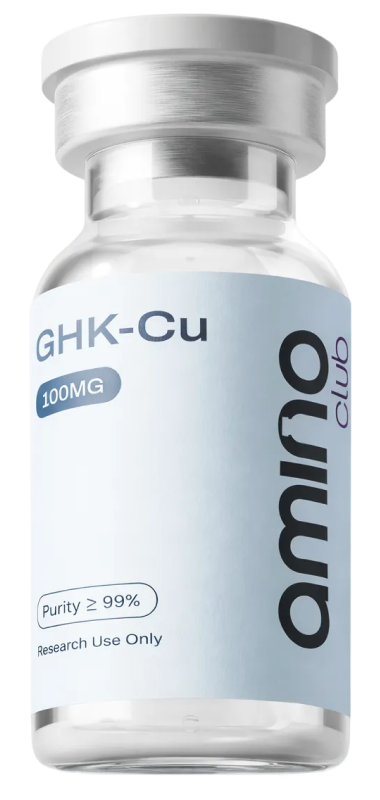
GHK-Cu
Anti-Aging Compound
Bacteriostatic Water
Supplies
Transparency: Some links are affiliate links. If you purchase through these links, we earn a commission at no extra cost to you. This allows us to maintain independent testing. Our recommendations are never influenced by commissions.
Introduction
The Glow Peptide is a blend combining three of the most well-documented research peptides in regenerative medicine: BPC-157, TB-500, and GHK-Cu. This 3-in-1 formulation targets the three pillars of tissue repair: vascularization, cell migration, and extracellular matrix reconstruction.
Unlike the Klow blend, which includes a fourth anti-inflammatory component (KPV), the Glow takes an approach centered on repair and regeneration. It is a more targeted blend, designed for situations where tissue repair and regenerative support are the primary goals.
This guide reviews the Glow Peptide's composition, the scientific mechanisms of each component, the intended synergistic effect, and the potential applications. The information presented is educational in nature and does not constitute medical advice.
Glow blend composition
The Glow Peptide brings together three carefully selected peptides:
| Peptide | Type | Number of AA | Primary role |
|---|---|---|---|
| BPC-157 | Gastric pentadecapeptide | 15 | Tissue repair, cytoprotection |
| TB-500 | Thymosin Beta-4 fragment | 43 | Wound healing, joint mobility |
| GHK-Cu | Copper tripeptide | 3 | Regeneration, collagen synthesis |
The Glow philosophy is effective simplicity: three peptides with complementary mechanisms of action, without redundancy. Each component brings a distinct piece of the tissue repair puzzle.
Compared to the Klow (4 peptides), the Glow potentially offers a higher relative concentration of each component within the blend, which can be advantageous when the goal is focused on repair rather than inflammatory modulation.
BPC-157: tissue repair
BPC-157 (Body Protection Compound-157) is the cornerstone of the Glow blend. This pentadecapeptide of 15 amino acids, derived from a natural protein found in human gastric juice, is the most extensively studied peptide for soft tissue repair.
Key mechanisms of action:
- Angiogenesis via VEGF: BPC-157 stimulates the formation of new blood vessels, which are essential for delivering nutrients and oxygen to damaged tissues. This neovascularization is the prerequisite for any effective tissue repair.
- NO system regulation: Bidirectional modulation of nitric oxide allows BPC-157 to adapt its response to the local context — vasodilation and increased blood flow when needed, protection against oxidative damage when NO is in excess.
- Gastric cytoprotection: True to its origin, BPC-157 protects the gastrointestinal mucosa against damage (NSAIDs, alcohol, stress), accelerating ulcer healing.
Research data: With over 100 published preclinical studies, BPC-157 is the most well-documented repair peptide. Animal models show significant acceleration of healing in tendons, ligaments, muscles, bones, and gastrointestinal mucosa.
TB-500: healing and mobility
TB-500, a synthetic fragment of Thymosin Beta-4, is the second pillar of the Glow. This 43-amino-acid protein is naturally abundant in tissues undergoing repair, which highlights its central role in the healing process.
Key mechanisms of action:
- Actin cytoskeleton regulation: TB-500 binds to G-actin and regulates its polymerization. This mechanism is fundamental for cell migration — repair cells must physically travel to the injury site, and the actin cytoskeleton is their "engine."
- Cell differentiation: TB-500 influences the differentiation of stem cells and progenitors toward phenotypes specialized in repair (activated fibroblasts, myoblasts).
- Fibrosis reduction: By modulating the healing process, TB-500 tends to promote organized tissue repair rather than disordered fibrosis, which preserves the function of the repaired tissue.
Research data: Studies on TB-500 and Thymosin Beta-4 show encouraging results in skin healing, cardiac repair, muscle regeneration, and improved joint mobility. Clinical trials on Thymosin Beta-4 for corneal healing have demonstrated a good efficacy and safety profile.
GHK-Cu: regeneration and anti-aging
GHK-Cu (glycyl-L-histidyl-L-lysine copper complex) completes the Glow trio by bringing the regenerative and reconstructive dimension. This tripeptide, naturally present in human plasma, is recognized for its ability to stimulate collagen synthesis and modulate gene expression.
Key mechanisms of action:
- Collagen and elastin synthesis: GHK-Cu activates dermal fibroblasts and stimulates the production of collagen (types I and III), elastin, and proteoglycans. It is the "builder" of the blend — providing the reconstruction materials.
- Gene remodeling: Transcriptomic studies show that GHK-Cu modulates the expression of over 4,000 human genes. It activates repair genes and suppresses those linked to inflammation and tissue destruction.
- Copper transport: Copper is an essential cofactor for lysyl oxidase (collagen cross-linking), superoxide dismutase (antioxidant defense), and cytochrome c oxidase (cellular energy production).
- Documented anti-aging effects: When applied topically, GHK-Cu improves skin density, reduces fine wrinkles, increases dermal thickness, and accelerates healing. These effects make it a prized ingredient in aesthetic medicine.
Research data: GHK-Cu benefits from a solid body of research, including clinical data in humans (topical application). Studies by Pickart and collaborators document decades of research on this peptide, confirming its regenerative and protective properties.
The synergistic effect of the blend
The strength of the Glow Peptide lies in the functional complementarity of its three components. Each peptide handles a distinct stage of the repair process:
The 3-phase repair model:
- Vascular phase (BPC-157): BPC-157 initiates repair by stimulating angiogenesis. Without adequate blood supply, no significant tissue repair can occur. BPC-157 "paves the way" by creating the necessary vascular network.
- Migratory phase (TB-500): Once vascularization is established, TB-500 facilitates the migration of repair cells to the damaged area. By modulating the actin cytoskeleton, it accelerates the movement of fibroblasts, endothelial cells, and stem cells.
- Reconstruction phase (GHK-Cu): GHK-Cu takes over for the final phase: collagen synthesis, extracellular matrix remodeling, and restoration of the tissue's structural integrity.
Complementary molecular pathways:
- BPC-157 → VEGF/NO pathway (vascularization)
- TB-500 → actin/cytoskeleton pathway (cell migration)
- GHK-Cu → matrix remodeling genes (reconstruction)
The three pathways are distinct and non-competing, which is the theoretical basis for the synergistic effect. As with the Klow, it is important to note that this synergy remains a theoretical concept — specific clinical studies on the complete blend would be needed to confirm it.
Applications and potential benefits
The profile of the three Glow peptides suggests potential applications in several areas:
Sports recovery: The combination of BPC-157 (tendons/ligaments) + TB-500 (joint mobility/healing) + GHK-Cu (collagen reconstruction) creates a profile geared toward musculoskeletal recovery. Athletes and physically active individuals are the most interested audience for this blend.
Joint health: TB-500 is particularly studied for its effects on joint mobility, complemented by BPC-157 for peri-articular tissue repair and GHK-Cu for articular collagen synthesis.
Skin regeneration and anti-aging: GHK-Cu is the star component for this application. Supported by BPC-157 (healing) and TB-500 (keratinocyte migration), the blend offers an interesting profile for skin regeneration.
Gastrointestinal health: BPC-157, a peptide of gastric origin, provides cytoprotective properties for the digestive mucosa. This application is primarily driven by BPC-157, with the other two peptides offering complementary regenerative support.
Important: These applications are based on the individual properties of the components studied in preclinical settings. The Glow Peptide as a specific blend has not been the subject of clinical trials. Consult a healthcare professional before considering any use.
Safety profile
The safety profile of the Glow Peptide is based on the available data for each of its three components:
BPC-157: Highly favorable toxicity profile in preclinical studies. No mortality, significant organ toxicity, or mutagenic effects reported, even at doses far exceeding those studied. A phase II human trial (ulcerative colitis) did not reveal any major safety concerns.
TB-500: Good preclinical safety profile. Thymosin Beta-4, from which TB-500 is derived, has been tested in human clinical trials (corneal healing) with satisfactory tolerability.
GHK-Cu: Excellent safety profile. A peptide naturally present in the body, with decades of use in topical cosmetics and clinical data confirming its good tolerability.
Advantage of the 3-peptide profile: The Glow, with 3 components instead of 4 (Klow), offers a potentially simpler formulation from a pharmacokinetic standpoint. Fewer components mean fewer potential interactions between peptides.
Limitations identical to the Klow:
- The interaction between the three peptides within the same blend has not been formally studied.
- Absence of long-term human safety data for this specific blend.
- Unknown effects on vulnerable populations.
- Drug interactions not evaluated.
This blend is strictly reserved for research purposes. Any use should be conducted under the supervision of a qualified healthcare professional.
Who is the Glow Peptide for?
The Glow Peptide is primarily intended for individuals interested in peptide research in the context of:
- Recovery and tissue repair: If your primary goal is to support muscle, tendon, or joint repair, the Glow offers a profile concentrated on these three mechanisms without "dilution" from a fourth component.
- Skin regeneration: Thanks to GHK-Cu, the Glow presents an appealing profile for those focused on skin regeneration and anti-aging effects.
- A simplified approach: Some prefer a blend with fewer components, whether for the sake of simplicity or because the anti-inflammatory dimension of KPV is not their priority.
When to choose the Glow over the Klow:
- Your goal is centered on repair and regeneration, without a specific need for anti-inflammatory modulation.
- You want a blend that is more concentrated in repair peptides (3 components vs 4).
- You prefer a simpler formulation with fewer components.
When to choose the Klow over the Glow:
- Chronic inflammation is a significant factor in your situation.
- You are looking for a blend with a dedicated anti-inflammatory component (KPV).
- You want broader coverage of biological mechanisms.
For a detailed comparison, see our article Klow vs Glow.
Important reminder: The Glow Peptide is a research product, not approved as a drug. The information in this article is for educational purposes. Always consult a qualified healthcare professional.
Sources
- Sikiric P, Hahm KB, Blagaic AB, et al. (2023). Stable gastric pentadecapeptide BPC 157, Robert's cytoprotection, Selye's stress coping response, and Szabo's chemical coding. Current Pharmaceutical Design, 29(9), 692-715.
- Goldstein AL, Hannappel E, Sosne G, Kleinman HK. (2012). Thymosin β4: a multi-functional regenerative peptide. Basic properties and clinical applications. Expert Opinion on Biological Therapy, 12(1), 37-51.
- Pickart L, Vasquez-Soltero JM, Margolina A. (2015). GHK peptide as a natural modulator of multiple cellular pathways in skin regeneration. BioMed Research International, 2015, 648108.
- Gwyer D, Wragg NM, Wilson SL. (2019). Gastric pentadecapeptide body protection compound BPC 157 and its role in accelerating musculoskeletal soft tissue healing. Cell and Tissue Research, 377(2), 153-159.
- Sosne G, Qiu P, Goldstein AL, Wheater M. (2010). Biological activities of thymosin β4 defined by active sites in short peptide sequences. The FASEB Journal, 24(7), 2144-2151.
- Pickart L, Margolina A. (2018). Regenerative and protective actions of the GHK-Cu peptide in the light of the new gene data. International Journal of Molecular Sciences, 19(7), 1987.