- Klow = 4 peptides (BPC-157 + TB-500 + GHK-Cu + KPV). Glow = 3 peptides (BPC-157 + TB-500 + GHK-Cu).
- The only difference between the two blends is the presence of KPV in Klow — an anti-inflammatory tripeptide derived from alpha-MSH.
- Choose Klow if inflammation is a significant factor in your situation (chronic inflammation, recovery from inflammatory injury).
- Choose Glow if your priority is repair and regeneration without a specific need for anti-inflammatory support.
- Both blends are research products, not approved as medications.
- The three shared peptides (BPC-157, TB-500, GHK-Cu) provide the same foundation of repair, healing, and regeneration in both blends.
Recommended products
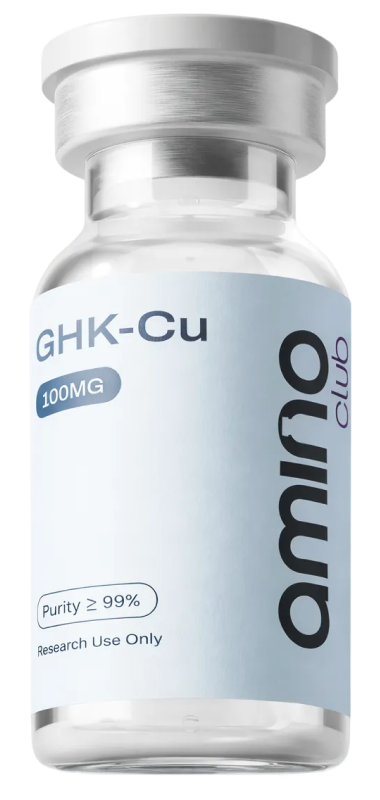
GHK-Cu
Anti-Aging Compound
Bacteriostatic Water
Supplies
Transparency: Some links are affiliate links. If you purchase through these links, we earn a commission at no extra cost to you. This allows us to maintain independent testing. Our recommendations are never influenced by commissions.
Introduction
"Klow or Glow?" — This is the most common question asked by people interested in research peptide blends. These two formulations share a common foundation of three powerful peptides but differ by one key component: KPV.
This detailed comparison analyzes both blends point by point: composition, mechanisms of action, respective applications, and selection criteria. The goal is to give you all the keys to understand the difference and identify which blend best matches your research objectives.
Please note that both blends are research products, not approved as medications. The information presented here is for educational purposes and does not constitute medical advice.
Composition comparison
Here is a side-by-side composition of the two blends:
| Peptide | Klow | Glow | Role |
|---|---|---|---|
| BPC-157 | Yes | Yes | Tissue repair, cytoprotection, angiogenesis |
| TB-500 | Yes | Yes | Wound healing, joint mobility, cell migration |
| GHK-Cu | Yes | Yes | Regeneration, collagen synthesis, anti-aging |
| KPV | Yes | No | Anti-inflammation, immunomodulation |
What is identical: The three shared peptides — BPC-157, TB-500, and GHK-Cu — form the same foundation of repair and regeneration. Whether you choose Klow or Glow, you benefit from this core trio.
What differs: Klow contains a fourth peptide, KPV (Lysine-Proline-Valine), an anti-inflammatory tripeptide absent from Glow. This single difference is what defines the positioning of each blend.
The key difference: KPV
KPV is the C-terminal fragment of alpha-melanocortin (α-MSH), a peptide hormone naturally produced by the body. It is a tripeptide (only 3 amino acids: Lysine-Proline-Valine), yet its biological impact is considerable.
What KPV brings to Klow:
- NF-κB inhibition: KPV blocks nuclear factor kappa-B, the "master switch" of the inflammatory response. By inhibiting NF-κB, it suppresses the transcription of dozens of pro-inflammatory genes upstream.
- Cytokine reduction: It decreases the production of IL-1β, IL-6, IL-8, and TNF-α — the main molecules that sustain chronic inflammation.
- Immunomodulation: KPV does not suppress the immune system — it modulates it. It reduces excessive inflammation while preserving the body's normal defense capacity.
- Antimicrobial properties: KPV possesses direct antimicrobial activity against certain bacteria, adding an extra layer of protection.
Why this difference matters:
Inflammation is not always the enemy. It is a normal and necessary physiological response for repair. But when inflammation becomes chronic or excessive, it hinders the healing process rather than supporting it. This is where KPV provides significant added value:
- Injuries with a significant inflammatory component
- Joint issues with chronic inflammation
- Inflammatory intestinal conditions
- Situations where inflammation delays healing
When to choose Klow
Klow Peptide (4 peptides including KPV) is the logical choice in the following situations:
1. Inflammation is a predominant factor
If the inflammatory component is in the foreground — joint inflammation, digestive inflammation, chronic skin inflammation — the KPV in Klow provides a dedicated anti-inflammatory mechanism of action that complements the repair effects of the other three peptides.
2. Post-injury recovery with swelling or redness
Recent injuries come with an acute inflammatory phase (redness, heat, swelling). KPV can help modulate this initial inflammatory response, facilitating the transition to the repair phase.
3. Chronic conditions
Chronic situations — persistent joint pain, recurring digestive disorders, low-grade inflammation — benefit from Klow's multi-target approach. Inflammatory modulation by KPV adds to the repair mechanisms of the other three components.
4. Comprehensive, holistic approach
If you are looking for the broadest possible coverage of repair mechanisms — vascularization (BPC-157) + cell migration (TB-500) + matrix reconstruction (GHK-Cu) + anti-inflammation (KPV) — Klow offers the most complete spectrum of action.
When to choose Glow
Glow Peptide (3 peptides without KPV) is the suitable choice in the following situations:
1. The goal is focused on repair and regeneration
If inflammation is not a major factor and your primary goal is to support tissue repair, wound healing, and cellular regeneration, Glow offers a focused and effective profile.
2. Standard muscle and tendon recovery
For standard athletic recovery, post-training muscle micro-tears, or tendon support, the BPC-157 + TB-500 + GHK-Cu trio in Glow covers the essential mechanisms of musculoskeletal repair.
3. Focus on skin regeneration and anti-aging
GHK-Cu is the flagship peptide for skin regeneration. Combined with BPC-157 and TB-500, it offers a profile oriented toward skin matrix reconstruction. KPV is not essential for this application.
4. Preference for a simpler formulation
Fewer components means potentially fewer interactions between peptides and a relatively higher concentration of each component. Some prefer the simplicity of Glow's 3-in-1 profile.
5. Budget
Glow, containing one fewer component, may be offered at a lower price than Klow. If budget is a factor and anti-inflammation is not a priority, Glow offers excellent value for money.
Detailed comparison
| Criterion | Klow (4 peptides) | Glow (3 peptides) |
|---|---|---|
| Number of components | 4 (BPC-157 + TB-500 + GHK-Cu + KPV) | 3 (BPC-157 + TB-500 + GHK-Cu) |
| Dedicated anti-inflammatory action | Yes (KPV inhibits NF-κB) | No (indirect anti-inflammation via BPC-157/TB-500) |
| Tissue repair | Yes (BPC-157) | Yes (BPC-157) |
| Healing / mobility | Yes (TB-500) | Yes (TB-500) |
| Regeneration / anti-aging | Yes (GHK-Cu) | Yes (GHK-Cu) |
| Immunomodulation | Yes (KPV) | No |
| Formulation complexity | More complex (4 peptides) | Simpler (3 peptides) |
| Ideal for | Inflammation + repair | Repair + regeneration |
| Spectrum of action | Broader | More focused |
In summary: Klow and Glow share 75% of their composition. The difference comes down to a single component — KPV — but this difference is significant. KPV brings a powerful and targeted anti-inflammatory dimension that does not exist in Glow.
Neither blend is "better" than the other in absolute terms. The best choice depends on your specific goals:
- Inflammation + repair → Klow
- Repair + regeneration → Glow
FAQ
Can you use Klow and Glow at the same time?
There is no data on the simultaneous use of both blends. This would essentially mean using BPC-157, TB-500, and GHK-Cu at double the dosage, plus KPV. This approach is not documented and is not recommended. Choose one or the other based on your objectives.
Can you alternate between Klow and Glow?
Alternating between the two blends has not been studied. In theory, there is nothing against it since both share the same peptide foundation, but no data supports this approach. Consult a healthcare professional for personalized advice.
Is Klow more effective than Glow?
"More effective" depends on the goal. Klow has a broader spectrum thanks to KPV, but Glow may offer a relatively higher concentration of the three repair peptides. In situations without a major inflammatory component, the difference may be minimal.
Do both blends have the same safety profile?
Both blends are composed of peptides with a favorable preclinical safety profile. Glow, with one fewer component, potentially has fewer interactions between peptides. Neither has been the subject of clinical trials as a complete blend.
I'm new to peptides — which one should I choose first?
If you are just starting out, Glow (3 peptides) is often recommended as a starting point due to its simpler formulation. Klow can then be considered if additional anti-inflammatory support proves relevant. In all cases, consult a healthcare professional.
Sources
- Sikiric P, Hahm KB, Blagaic AB, et al. (2023). Stable gastric pentadecapeptide BPC 157, Robert's cytoprotection, Selye's stress coping response, and Szabo's chemical coding. Current Pharmaceutical Design, 29(9), 692-715.
- Goldstein AL, Hannappel E, Sosne G, Kleinman HK. (2012). Thymosin β4: a multi-functional regenerative peptide. Basic properties and clinical applications. Expert Opinion on Biological Therapy, 12(1), 37-51.
- Pickart L, Vasquez-Soltero JM, Margolina A. (2015). GHK peptide as a natural modulator of multiple cellular pathways in skin regeneration. BioMed Research International, 2015, 648108.
- Dalmasso G, Charrier-Hisamuddin L, Nguyen HTT, et al. (2008). PepT1-mediated tripeptide KPV uptake reduces intestinal inflammation. Gastroenterology, 134(1), 166-178.
- Brancato SK, Albina JE. (2011). Wound macrophages as key regulators of repair: origin, phenotype, and function. The American Journal of Pathology, 178(1), 19-25.
- Gwyer D, Wragg NM, Wilson SL. (2019). Gastric pentadecapeptide body protection compound BPC 157 and its role in accelerating musculoskeletal soft tissue healing. Cell and Tissue Research, 377(2), 153-159.