- Peptide stacking involves combining multiple peptides to achieve synergistic effects greater than each peptide used alone.
- The BPC-157 + TB-500 stack is the most studied and popular combination for tissue recovery.
- Peptide synergy relies on activating complementary biological pathways, such as angiogenesis and inflammatory modulation.
- Stacking safety requires careful attention to interactions, administration timing, and dosing.
- Most data comes from animal studies or in vitro research — human clinical trials on combinations remain limited.
- Any peptide stacking protocol must be supervised by a qualified healthcare professional.
Recommended products
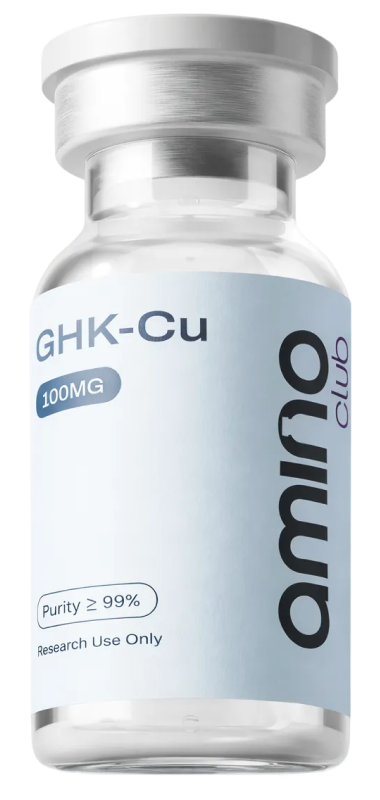
GHK-Cu
Anti-Aging Compound
Transparency: Some links are affiliate links. If you purchase through these links, we earn a commission at no extra cost to you. This allows us to maintain independent testing. Our recommendations are never influenced by commissions.
Introduction to Peptide Stacking
Peptide stacking refers to the practice of using multiple peptides simultaneously to achieve complementary or synergistic effects. This approach, which is rapidly gaining popularity in biohacking and regenerative medicine communities, is based on a simple principle: certain peptides act on different but complementary biological pathways, and their combination can potentially produce results superior to those of each peptide taken individually.
If you are new to peptides, we recommend starting with our article What is a Peptide? before diving into stacking. Understanding the fundamentals is essential before considering combinations.
The growing interest in stacking can be attributed to several factors: the accumulation of promising preclinical data on specific combinations, broader access to scientific information, and the development of products like Klow Peptide and Glow Peptide that already incorporate this synergistic formulation logic.
Important disclaimer: This article is for educational and informational purposes only. Peptide stacking does not constitute medical advice. All peptide use should be discussed with a qualified healthcare professional. We will clearly distinguish between data from animal studies and data from human trials.
Understanding Peptide Stacking
The concept of stacking is not new in pharmacology. Conventional medicine has long used drug combinations to treat complex conditions — think of triple therapy in infectious disease or multi-agent protocols in oncology. Peptide stacking applies this same principle to bioactive peptides.
The Principle of Synergy
Synergy occurs when the combined effect of two substances exceeds the simple addition of their individual effects (1 + 1 > 2). In the context of peptides, this synergy can manifest in several ways:
- Complementary pathway activation: Two peptides can activate different signaling cascades that converge toward the same biological objective.
- Cascade amplification: One peptide can sensitize the receptors or signaling pathways that the other peptide utilizes.
- Temporal coverage: Peptides with different half-lives can ensure a more sustained effect over time.
- Multi-target modulation: The combination enables simultaneous action on multiple aspects of the same biological process (e.g., inflammation, angiogenesis, and cell proliferation for wound healing).
Types of Stacking
There are generally three approaches:
- Objective-based stacking: Combining peptides targeting the same outcome (e.g., recovery, anti-aging, skin).
- Mechanism-based stacking: Combining peptides with complementary mechanisms of action.
- Temporal stacking: Using different peptides at different stages of a protocol (loading phase then maintenance phase).
Popular Stacking Protocols
1. The Recovery Stack: BPC-157 + TB-500
This is arguably the best-known and most documented combination. BPC-157 (Body Protection Compound-157) and TB-500 (Thymosin Beta-4) are two peptides with regenerative properties that work through distinct but complementary mechanisms.
- BPC-157: Derived from a gastric protein, it promotes angiogenesis (formation of new blood vessels), modulates the NO (nitric oxide) system, and protects the endothelium. Animal studies have demonstrated significant effects on tendon, muscle, and gastrointestinal tissue healing. For more details, see our complete BPC-157 guide.
- TB-500: The active fragment of thymosin beta-4, it promotes cell migration through actin regulation, reduces inflammation, and promotes new blood vessel formation through pathways distinct from BPC-157.
Why this synergy works: BPC-157 primarily activates the VEGF (vascular endothelial growth factor) pathway and modulates the FAK-paxillin system, while TB-500 acts on G-actin polymerization and the HIF-1α pathway. Together, they cover a broader spectrum of tissue repair mechanisms. Preclinical studies suggest that this combination produces faster and more complete recovery than either peptide alone (Cerovecki et al., 2010; Stark et al., 2011).
Note: This data is predominantly from animal studies. Human clinical trials on this specific combination remain limited.
2. The Anti-Aging Stack: GHK-Cu + Epithalon + Collagen Peptides
This protocol targets multiple mechanisms of aging:
- GHK-Cu (Copper peptide GHK): This tripeptide complexed with copper stimulates collagen production, antioxidant activity, and modulates the expression of over 4,000 genes involved in aging. Discover its anti-aging properties in our dedicated article on GHK-Cu and aging.
- Epithalon: A synthetic tetrapeptide based on epithalamin, it stimulates telomerase activity, the enzyme responsible for maintaining telomeres. Studies in animal models show telomere elongation and increased lifespan (Khavinson et al., 2003).
- Collagen peptides: Provide the specific amino acids (glycine, proline, hydroxyproline) needed for the collagen synthesis stimulated by GHK-Cu.
The synergistic logic: GHK-Cu stimulates the collagen production machinery, collagen peptides provide the substrates, and Epithalon addresses fundamental cellular aging through telomeres. Each component addresses a different aspect of aging.
3. The Cosmetic/Skin Stack: GHK-Cu + Matrixyl + Argireline
This topical protocol is oriented toward visible skin improvement:
- GHK-Cu: Extracellular matrix remodeling and collagen stimulation.
- Matrixyl (Palmitoyl Pentapeptide-4): Stimulates production of collagen I, III, and IV, as well as fibronectin.
- Argireline (Acetyl Hexapeptide-3): Inhibits neurotransmitter release at the neuromuscular junction, reducing muscle contractions responsible for expression lines.
For a detailed comparison of these cosmetic peptides, see our article Matrixyl vs Argireline.
Why combine: GHK-Cu and Matrixyl stimulate collagen production through distinct pathways (TGF-β and integrin signaling, respectively), while Argireline acts on an entirely different dimension — muscle relaxation. This multi-target approach is analogous to what products like Glow Peptide offer.
4. The Performance/Repair Stack: BPC-157 + TB-500 + GHK-Cu
This protocol expands the recovery stack by adding GHK-Cu:
- BPC-157 + TB-500: Accelerated tissue recovery (as described above).
- GHK-Cu: Adds a dimension of extracellular matrix remodeling and oxidative damage reduction, supporting the remodeling phase that follows the inflammatory phase of healing.
This triple stack aims to cover the entire repair process: inflammatory phase (modulation by BPC-157), proliferative phase (TB-500 + BPC-157), and remodeling phase (GHK-Cu). Preliminary data from animal models is encouraging, but it should be noted that no human clinical trial has evaluated this specific triple combination.
The Science of Peptide Synergy
Understanding why certain peptide combinations work better together requires examining the underlying biological mechanisms.
Complementary Signaling Pathways
Peptides exert their effects by binding to specific receptors and activating intracellular signaling cascades. When two peptides activate distinct pathways converging toward the same biological result, the effect can be potentiated. For example:
- BPC-157 activates the VEGF → ERK1/2 → angiogenesis pathway
- TB-500 activates the G-actin → cell migration → tissue repair pathway
- Result: The formation of new vessels (BPC-157) facilitates the migration of repair cells (TB-500), creating a virtuous cycle.
Pharmacological Potentiation
Certain peptides can modify the bioavailability or efficacy of other peptides. BPC-157, for example, has shown in animal models a capacity to modulate dopaminergic and serotonergic systems, which could influence the response to other peptides acting on these same systems (Sikiric et al., 2018).
Temporal Modulation
The healing process occurs in distinct phases: hemostasis, inflammation, proliferation, and remodeling. Different peptides may be more effective at different phases. Stacking theoretically allows coverage of the entire process:
- Inflammatory phase (days 1-5): BPC-157 for anti-inflammatory modulation and endothelial protection.
- Proliferative phase (days 3-21): TB-500 to stimulate cell migration and proliferation.
- Remodeling phase (days 21+): GHK-Cu to optimize extracellular matrix remodeling.
The Concept of Functional Redundancy
Biology often uses redundant systems. Activating a single pathway may not suffice if compensatory mechanisms attenuate the effect. By simultaneously targeting multiple pathways, stacking can theoretically overcome these compensatory mechanisms, a well-established principle in combinatorial pharmacology (Zimmermann et al., 2007).
Safety Considerations
Safety is the most important consideration in peptide stacking. Combining active substances inherently increases complexity and potential risks.
Peptide-Peptide Interactions
Although negative interactions between peptides are rarely reported in the literature, this reflects a lack of studies more than an absence of risk. Points of concern:
- Receptor competition: Two peptides targeting nearby receptors could compete, reducing the efficacy of each.
- Pathway overactivation: Excessive activation of the same signaling pathway through different mechanisms could have adverse effects.
- Protein load: Simultaneous administration of multiple peptides increases the protein load on degradation and elimination systems.
Dosing Considerations
Dosing in a stacking context is particularly nuanced:
- Effective doses studied for each individual peptide are not necessarily transferable to a combination context.
- Synergy may mean that a lower dose of each peptide is sufficient to achieve the desired effect.
- Conversely, some combinations might require upward adjustments.
Administration Timing
The relative timing of each peptide's administration can influence the efficacy and safety of the stack:
- Some peptides may be better taken together, others at separate times.
- Short half-life peptides require more frequent administration.
- The relationship between administration timing and circadian cycles may play a role (particularly for growth hormone-related peptides).
Monitoring and Follow-up
Anyone considering peptide stacking should:
- Consult a physician before starting any protocol.
- Perform baseline blood tests before and during the protocol.
- Keep a detailed journal of observed effects and any side effects.
- Start with a single peptide before adding others (gradual approach).
- Plan rest periods (cycles) to allow the body to maintain sensitivity.
How to Design Your Stack
If you are considering peptide stacking (always under medical supervision), here are the guiding principles to follow:
Step 1: Define a Clear Objective
A good stack begins with a precise objective. Resist the temptation to address everything at once:
- Recovery/repair: Focus on BPC-157, TB-500
- Systemic anti-aging: Focus on GHK-Cu, Epithalon
- Skin/cosmetic: Focus on GHK-Cu, Matrixyl, Argireline
- Gut health: Focus on BPC-157, L-glutamine (amino acid)
Step 2: Choose Complementary Mechanisms
Select peptides that act through distinct but convergent pathways. Avoid combining peptides with identical mechanisms — this likely will not provide synergy and could increase the risk of overactivation.
Step 3: Start Simple
Golden rule: never start with more than two peptides simultaneously.
- Weeks 1-2: Start with a single peptide to assess individual tolerance.
- Weeks 3-4: If tolerance is good, introduce the second peptide.
- Evaluate for 4-6 weeks before considering adding a third component.
Step 4: Plan Cycles
Most protocols include rest periods:
- Classic cycles: 4-6 weeks of use followed by 2-4 weeks off.
- Some practitioners recommend 5 days ON / 2 days OFF protocols.
- Topical peptides (GHK-Cu, Matrixyl) can generally be used more continuously.
Step 5: Document and Adjust
Keep a precise journal including:
- Peptides used, doses, and timing
- Observed effects (positive and negative)
- Blood test results
- Sleep quality, energy, recovery
Common Mistakes to Avoid
Experience and analysis of biohacking communities reveal several frequent mistakes:
1. The "More Is Better" Syndrome
Combining five or six peptides simultaneously is rarely wise. Each added peptide increases complexity, potential interactions, and the difficulty of identifying what works (or what causes a problem). Two to three well-chosen peptides are generally sufficient.
2. Ignoring the Basics
No peptide stack will compensate for insufficient sleep, poor nutrition, chronic stress, or lack of exercise. Fundamentals remain the priority.
3. Not Respecting Cycles
Continuous use without breaks can lead to receptor desensitization, progressively reducing efficacy. Rest cycles are essential.
4. Copying Others' Protocols Without Thought
What works for one person may not work for another. Genetics, age, health status, lifestyle, and goals differ from one individual to another.
5. Neglecting Source Quality
Peptide quality varies considerably from one supplier to another. Poor-quality peptides (impurities, degradation, inaccurate dosing) can compromise the efficacy and safety of any protocol.
6. Skipping Medical Supervision
This cannot be emphasized enough: peptide stacking should be supervised by a healthcare professional. Regular blood tests, monitoring of inflammatory markers, and surveillance of key organs (liver, kidneys) are indispensable.
7. Extrapolating Animal Studies to Humans
Many promising results on peptide combinations come from studies on animal models (rats, mice). Doses, pharmacokinetics, and responses can differ considerably in humans.
Legal and Regulatory Considerations
The regulatory framework surrounding peptides is complex and varies considerably by country and peptide type.
Variable Regulatory Status
- Cosmetic peptides (GHK-Cu, Matrixyl, Argireline): Generally available as cosmetic ingredients in most jurisdictions. Their topical use is widely accepted.
- Research peptides (BPC-157, TB-500, Epithalon): Often sold "for research use only." Their status for personal use varies by country.
- Collagen peptides: Generally classified as dietary supplements and widely available.
Important Considerations
- Regulations evolve rapidly. Peptides available today may be restricted tomorrow (and vice versa).
- In professional sports, many peptides appear on WADA (World Anti-Doping Agency) prohibited substance lists.
- Self-administration of injectable peptides carries specific risks (infections, dosing errors) that fall under medical responsibility.
Recommendation
Research the specific regulations in your country before taking any action. Favor the least invasive routes of administration when possible (topical, oral) and work with healthcare professionals for more advanced protocols.
Frequently Asked Questions
Frequently Asked Questions
Is peptide stacking safe?
Can you stack topical peptides with oral or injectable peptides?
How many peptides can you stack simultaneously?
Should BPC-157 and TB-500 be administered at the same time?
Is stacking more effective than using a single peptide?
Should peptide stacks be cycled?
Sources
- Cerovecki T, Bojanic I, Brcic L, et al. (2010). Pentadecapeptide BPC 157 (PL 14736) improves ligament healing in the rat. Journal of Orthopaedic Research, 28(9), 1155-1161.
- Stark C, Stark R, Gómez-Fernández C, et al. (2011). Thymosin beta-4 in tissue regeneration and repair. Annals of the New York Academy of Sciences, 1269, 1-6.
- Pickart L, Vasquez-Soltero JM, Margolina A. (2015). GHK Peptide as a Natural Modulator of Multiple Cellular Pathways in Skin Regeneration. BioMed Research International, 2015, 648108.
- Khavinson VK, Bondarev IE, Butyugov AA. (2003). Epithalon peptide induces telomerase activity and telomere elongation in human somatic cells. Bulletin of Experimental Biology and Medicine, 135(6), 590-592.
- Sikiric P, Rucman R, Turkovic B, et al. (2018). Novel Cytoprotective Mediator, Stable Gastric Pentadecapeptide BPC 157. Current Pharmaceutical Design, 24(18), 2012-2032.
- Zimmermann GR, Lehár J, Keith CT. (2007). Multi-target therapeutics: when the whole is greater than the sum of the parts. Drug Discovery Today, 12(1-2), 34-42.
- Pickart L, Margolina A. (2018). Regenerative and Protective Actions of the GHK-Cu Peptide in the Light of the New Gene Data. International Journal of Molecular Sciences, 19(7), 1987.
- Crascì L, Lauro MR, Puglisi G, Panico A. (2018). Natural antioxidant polyphenols on inflammation management: Anti-glycation activity vs metalloproteinases inhibition. Critical Reviews in Food Science and Nutrition, 58(6), 893-904.