- Peptides stimulate collagen production without irritating the skin, while retinol accelerates cell renewal but can cause irritation.
- Retinol has a longer scientific track record with decades of clinical studies, but peptides are gaining credibility with promising recent data.
- Sensitive or reactive skin generally tolerates peptides better than retinol, especially at the beginning of treatment.
- Combining peptides and retinol in a routine is possible and often synergistic, provided they are applied at different times of the day.
- The choice depends on your skin type, your main concerns and your tolerance: there is no universal answer.
Recommended products
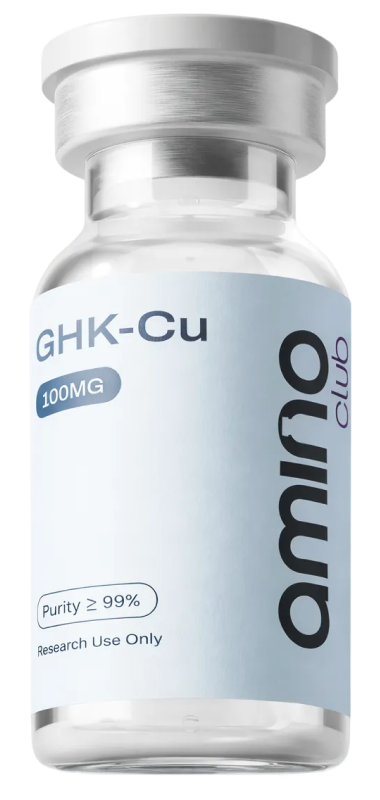
GHK-Cu
Anti-Aging Compound
Glutathione
Antioxidant Compound
Transparency: Some links are affiliate links. If you purchase through these links, we earn a commission at no extra cost to you. This allows us to maintain independent testing. Our recommendations are never influenced by commissions.
Introduction
In the world of anti-aging skincare, two ingredients have dominated the debate for several years: peptides and retinol. Each has its staunch advocates, its clinical studies and its promises. But when it comes to choosing between these two active ingredients, confusion often reigns among consumers and beauty professionals alike.
Peptides, those protein fragments capable of signaling skin cells to produce more collagen, are appealing for their gentleness and versatility. Retinol, a vitamin A derivative and considered the gold standard of anti-aging in dermatology, impresses with its documented results on wrinkles, dark spots and skin texture.
But do these two ingredients work the same way? Are they interchangeable, complementary or antagonistic? In this article, we compare peptides and retinol on all the criteria that matter: mechanism of action, proven efficacy, skin tolerance and possibility of combination. The goal: to give you all the keys to make an informed choice, tailored to your skin and your objectives.
Understanding peptides
Peptides are short chains of amino acids, the same building blocks that make up proteins. In cosmetics, bioactive peptides are primarily used — specific sequences designed to trigger precise biological responses in the skin. Unlike complete proteins such as collagen, their small size allows them to penetrate the epidermis and reach deeper layers.
Several families of cosmetic peptides are distinguished according to their mechanism of action:
- Signal peptides (e.g., Matrixyl, palmitoyl pentapeptide-4): they send a signal to fibroblasts to stimulate the production of collagen, elastin and fibronectin.
- Carrier peptides (e.g., GHK-Cu): they deliver trace elements like copper to cells, promoting healing and regeneration.
- Neurotransmitter-inhibiting peptides (e.g., Argireline): they limit the muscle contractions responsible for expression lines, acting as a "topical Botox."
- Antimicrobial peptides: they strengthen the skin's natural defenses against pathogens.
One of the great advantages of peptides is their excellent tolerance. They rarely cause irritation, redness or flaking, making them suitable for all skin types, including sensitive, reactive or rosacea-prone skin. Moreover, peptides do not make the skin photosensitive, which allows their use both morning and evening.
However, not all peptides are created equal. Their effectiveness depends on the concentration, the stability of the formulation and the peptide's ability to reach its cellular target. A serum containing a poorly stabilized peptide or at too low a concentration will only deliver negligible results.
Understanding retinol
Retinol is a derivative of vitamin A, an essential nutrient for skin health. When applied topically, retinol is converted into retinoic acid (tretinoin) by skin enzymes. It is this active form that acts directly on the nuclear receptors of cells, modifying the expression of genes involved in cell renewal, collagen production and melanin regulation.
Retinol is arguably the most studied anti-aging ingredient in dermatology. Since the 1970s, hundreds of clinical studies have demonstrated its efficacy on:
- Wrinkles and fine lines: retinol stimulates the synthesis of type I and III collagen in the dermis, thickening the skin and smoothing wrinkles.
- Hyperpigmentation: it accelerates cell turnover, dispersing melanin clusters and reducing dark spots.
- Skin texture: by increasing keratinocyte renewal, it refines skin texture and reduces the appearance of enlarged pores.
- Acne: its more potent derivatives (adapalene, tretinoin) are first-line treatments for acne.
Despite this recognized efficacy, retinol has significant drawbacks. The adaptation phase — often called "retinization" — can last from 4 to 12 weeks, during which the skin may exhibit redness, flaking, dryness and increased sensitivity. This difficult period discourages many users before the benefits become visible.
Furthermore, retinol is photosensitizing: it weakens the skin barrier against UV rays, making daily sunscreen application essential. It is also not recommended during pregnancy and breastfeeding due to teratogenic risks associated with high-dose vitamin A.
Efficacy comparison
Comparing the efficacy of peptides and retinol requires considering several dimensions: wrinkle reduction, firmness improvement, complexion radiance and overall skin quality. Here is a summary table for a clearer picture:
| Criterion | Peptides | Retinol |
|---|---|---|
| Fine line reduction | Moderate to good | Good to excellent |
| Deep wrinkle reduction | Moderate | Good |
| Collagen stimulation | Good (signaling pathway) | Excellent (gene expression) |
| Anti-dark spots | Low | Excellent |
| Complexion radiance | Good | Very good |
| Firmness and elasticity | Good | Good |
| Speed of results | 8 to 12 weeks | 4 to 8 weeks (after retinization) |
Retinol is generally considered more powerful for treating visible signs of aging, particularly established wrinkles and pigmentation spots. Its action at the cellular DNA level gives it a skin transformation capacity that peptides cannot fully match.
On the other hand, peptides offer specific advantages depending on their type. For example, Argireline targets expression lines in a way that retinol cannot replicate (neuromuscular inhibition). GHK-Cu possesses unique healing and tissue remodeling properties. The most recent biomimetic peptides show increasingly convincing results in clinical trials.
It is important to note that studies on peptides are generally more recent and fewer in number than those on retinol. This does not mean that peptides are less effective — simply that the level of evidence is still being built. Preliminary results are nevertheless very encouraging, and research in this area is progressing rapidly.
Tolerance and side effects
This is probably the area where peptides hold the clearest advantage. Skin tolerance is a determining criterion for many users, and the difference between these two active ingredients is significant.
Peptides are remarkably well tolerated by the vast majority of skin types. Allergic reactions are extremely rare, and even high-concentration formulations generally cause neither redness, nor flaking, nor tightness. This gentleness makes peptides a preferred choice for:
- Sensitive or reactive skin
- Skin prone to rosacea or eczema
- People with a compromised skin barrier
- Pregnant or breastfeeding women (unlike retinol)
- People who want anti-aging skincare without a difficult adaptation phase
Retinol, on the other hand, is known for its sometimes challenging adaptation phase. The most common side effects include:
- Dryness and flaking: the skin often peels during the first weeks of use.
- Redness and irritation: transient inflammation is common, especially with higher concentrations.
- Photosensitivity: the skin becomes more vulnerable to UV damage, requiring rigorous sun protection.
- Skin purging: for acne-prone skin, a temporary increase in breakouts may occur.
These effects are generally transient and diminish over time as the skin adjusts. Dermatologists recommend a gradual introduction — start with a low concentration (0.025% to 0.05%), two to three times a week, then gradually increase the frequency and concentration.
Expert tip: If you have never used retinol, start with an encapsulated or slow-release formulation. These technologies significantly reduce irritation while maintaining the efficacy of the active ingredient.
Can you combine them?
The good news is that peptides and retinol are not mutually exclusive. On the contrary, their combination can prove particularly synergistic, provided you follow a few simple application rules.
Peptides and retinol act through complementary mechanisms: where retinol accelerates cell renewal and activates the genetic transcription of collagen, peptides provide an additional biological signal to fibroblasts and can help repair the skin barrier weakened by retinol. Certain peptides, such as GHK-Cu, possess soothing and healing properties that counterbalance the irritating effects of retinol.
Here is a typical routine integrating both active ingredients:
- Morning: gentle cleanser → peptide serum → moisturizer → sunscreen SPF 30 or higher.
- Evening: gentle cleanser → retinol (wait 20 minutes) → rich or repairing moisturizer.
Some brands offer formulations combining peptides and retinol in the same product. While these all-in-one formulas can be convenient, they are not always optimal: retinol requires an acidic pH to be stable, while some peptides work better at a neutral pH. It is therefore often preferable to apply them separately, using peptides in the morning and retinol in the evening.
Finally, there is an important precaution: avoid applying certain copper-based peptides (such as GHK-Cu) at the same time as retinol, because metal ions can destabilize the retinol molecule. Separating their use over time (morning/evening) eliminates this risk.
Our verdict
After this in-depth analysis, it is clear that the choice between peptides and retinol is not a question of "better" or "worse," but of individual context. Here are our recommendations based on your profile:
Choose peptides if:
- You have sensitive, reactive or rosacea-prone skin.
- You are pregnant or breastfeeding.
- You are looking for a preventive and well-tolerated anti-aging treatment.
- You do not wish to go through an uncomfortable adaptation phase.
- You want to specifically target expression lines (with Argireline).
Choose retinol if:
- You have established wrinkles and pigmentation spots to treat.
- Your skin tolerates powerful active ingredients well.
- You are looking for the anti-aging active ingredient with the most scientific evidence.
- You have skin texture issues or acne.
Combine both if:
- You want to maximize anti-aging results.
- Your skin tolerates retinol without too much difficulty.
- You are willing to adopt a morning/evening routine with different active ingredients.
Ultimately, peptides and retinol are not competitors but complementary allies in the fight against skin aging. The smartest approach often involves integrating both into your routine — adapting concentrations, frequency and timing to your skin type and your goals.
Sources
- Gorouhi F, Maibach HI (2009). Role of topical peptides in preventing or treating aged skin. International Journal of Cosmetic Science, 31(5), 327-345.
- Mukherjee S, Date A, Patravale V, et al. (2006). Retinoids in the treatment of skin aging: an overview of clinical efficacy and safety. Clinical Interventions in Aging, 1(4), 327-348.
- Schagen SK (2017). Topical peptide treatments with effective anti-aging results. Cosmetics, 4(2), 16.
- Kang S, Duell EA, Fisher GJ, et al. (1995). Application of retinol to human skin in vivo induces epidermal hyperplasia and cellular retinoid binding proteins characteristic of retinoic acid. Journal of Investigative Dermatology, 105(4), 549-556.
- Robinson LR, Fitzgerald NC, Pham DG, et al. (2005). Topical palmitoyl pentapeptide provides improvement in photoaged human facial skin. International Journal of Cosmetic Science, 27(3), 155-160.
- Zasada M, Budzisz E (2019). Retinoids: active molecules influencing skin structure formation in cosmetic and dermatological treatments. Advances in Dermatology and Allergology, 36(4), 392-397.