Overview
Argireline, or acetyl hexapeptide-8 (formerly acetyl hexapeptide-3), is a synthetic six-amino acid peptide developed by the Spanish laboratory Lipotec (now Lubrizol). Marketed under the brand name Argireline, this peptide is often referred to as "topical Botox" due to its mechanism of action targeting muscle contraction, although its mode of action is fundamentally different from that of botulinum toxin.
Structurally, Argireline reproduces the N-terminal end of the SNAP-25 protein, an essential component of the SNARE complex responsible for the fusion of synaptic vesicles with the presynaptic membrane. By competing with native SNAP-25, Argireline modulates the release of acetylcholine at the neuromuscular junction, thereby reducing the intensity of facial muscle contractions responsible for expression lines.
Since its introduction in 2002, Argireline has become one of the most popular and widely studied cosmetic peptides, present in numerous anti-aging formulations targeting expression lines on the forehead, crow's feet, and nasolabial folds. Several clinical studies have evaluated its efficacy, helping to establish its position among cosmetic actives targeting wrinkle reduction. For a detailed comparison with Matrixyl, see our article Matrixyl vs Argireline. Also discover how peptides are used in cosmetics in our guide to cosmetic peptides.
Recommended products
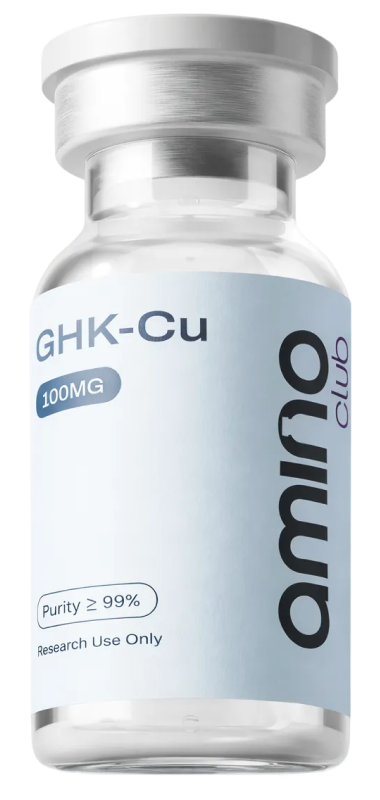
GHK-Cu
Anti-Aging Compound
Transparency: Some links are affiliate links. If you purchase through these links, we earn a commission at no extra cost to you. This allows us to maintain independent testing. Our recommendations are never influenced by commissions.
Mechanism of Action
The mechanism of action of Argireline is based on the inhibition of neurotransmitter exocytosis at the neuromuscular junction. Muscle contraction requires the release of acetylcholine by motor nerve terminals, a process mediated by the SNARE (Soluble NSF Attachment Protein Receptor) protein complex. This complex is formed by three proteins: syntaxin, VAMP/synaptobrevin, and SNAP-25 (Synaptosomal-Associated Protein of 25 kDa).
Argireline mimics the N-terminal sequence of SNAP-25 and competes with the native protein for SNARE complex formation. By disrupting the assembly of this complex, the peptide reduces the number of acetylcholine vesicles that fuse with the synaptic membrane, thereby decreasing the amount of neurotransmitter released. This action results in an attenuation of facial muscle contractions without completely paralyzing them, unlike botulinum toxin which irreversibly cleaves SNARE proteins.
It is important to note that the action of Argireline in topical application is limited by its cutaneous penetration. The peptide must cross the epidermis to reach the nerve endings in the dermis, which constitutes a pharmacological challenge. Skin permeation studies show that penetration depends on the concentration, vehicle, and pH of the formulation. Topical efficacy is therefore necessarily inferior to that of direct injection into the muscle, but sufficient to produce clinically measurable effects.
Studied Benefits
Expression Line Reduction
Controlled clinical studies have shown a significant reduction in periorbital (crow's feet) and forehead wrinkle depth after 28 to 30 days of topical application of Argireline at 10%. Profilometric measurements indicate an average decrease of 17 to 27% in wrinkle depth depending on the study.
Non-Invasive Alternative to Botox
Argireline offers a non-invasive topical approach to attenuate expression lines, without injections or paralyzing effects. Its gentle muscle contraction modulation mechanism preserves the natural expressiveness of the face while reducing repeated contraction marks.
Skin Texture Improvement
Beyond its neuromuscular action, studies have shown that Argireline contributes to improving overall skin texture, with smoothing of the skin surface and a reduction in roughness measurable by profilometry. These effects may be related to increased hydration of the stratum corneum.
Compatibility with Aesthetic Treatments
Argireline can be used as a complement to botulinum toxin or hyaluronic acid injections to prolong and potentiate their effects. Dermatologists report that regular topical use between injection sessions allows for longer intervals between treatments.
Research Status
Research on Argireline combines mechanistic in vitro studies, ex vivo skin penetration tests, and clinical trials in humans. The foundational work by Blanes-Mira and colleagues (2002) elucidated the SNARE complex inhibition mechanism using neuromuscular cell models, demonstrating a dose-dependent reduction of catecholamine exocytosis in chromaffin cells.
Several clinical trials have evaluated the efficacy of Argireline in topical application. The study by Wang and colleagues (2013) showed a significant reduction in wrinkles compared to placebo after 4 weeks of twice-daily treatment. Other studies have confirmed these results, although the magnitude of the effect varies depending on the concentration used (5% to 10%), the formulation vehicle, and the treated area.
Current scientific debates primarily concern the peptide's ability to penetrate the skin in topical application. Some researchers argue that the molecular size of Argireline (888.96 Da) limits its transcutaneous passage, while others point out that the positive clinical results suggest sufficient penetration to exert a biological effect. Research is ongoing to improve cutaneous delivery via nanoparticulate systems and enhanced-penetration formulations.
Safety and Side Effects
Argireline has a favorable safety profile for topical cosmetic use. Regulatory skin tolerance tests (48-hour patch test, 4-week repeated use test) have not revealed significant irritation or allergic sensitization. The peptide is compatible with sensitive skin at use concentrations (5 to 10%) and has not shown photosensitization in phototoxicity studies.
Unlike injectable botulinum toxin, topically applied Argireline does not induce muscle paralysis or loss of facial expression. Its modulatory action is reversible and proportional to the applied dose. Discontinuation of application leads to a gradual return to the initial state, with no documented rebound effect. No tachyphylaxis (diminishing effect over time) has been reported in long-term studies.
Documented side effects are rare and generally minor: transient tightness sensation, slight redness, or skin dryness. These manifestations occur primarily in sensitive or reactive skin types and disappear with reduced application frequency. No systemic effects have been reported in the literature, as systemic penetration of the topically applied peptide is negligible.
Frequently Asked Questions
Is Argireline as effective as Botox?
At what concentration should Argireline be used?
Can Argireline be used during pregnancy?
How long does it take to see results?
Scientific Sources
- Blanes-Mira C, Clemente J, Jodas G, et al. (2002). A synthetic hexapeptide (Argireline) with antiwrinkle activity. International Journal of Cosmetic Science, 24(5), 303-310.
- Wang Y, Wang M, Xiao S, et al. (2013). The anti-wrinkle efficacy of Argireline. Journal of Cosmetic and Laser Therapy, 15(1), 65-71.
- Grosicki M, Latacz G, Szopa A, et al. (2022). The study of activity and penetration into the skin of topically applied cosmeceutical hexapeptide-a review. Molecules, 27(3), 735.
- Ruiz MA, Clares B, Morales ME. (2010). Evaluation of the anti-wrinkle efficacy of cosmetic formulations with an anti-aging peptide (Argireline). ARS Pharmaceutica, 51(Suppl. 3), 168-176.
- Kraeling ME, Zhou W, Wang P, et al. (2015). In vitro skin penetration of acetyl hexapeptide-8 from a cosmetic formulation. Cutaneous and Ocular Toxicology, 34(1), 46-52.