Overview
CJC-1295 is a modified synthetic analog of GHRH (Growth Hormone Releasing Hormone, or somatoliberin), the natural hypothalamic hormone responsible for stimulating growth hormone (GH) secretion from the anterior pituitary. Developed by ConjuChem Biotechnologies, this 29-amino acid peptide was designed to overcome the pharmacokinetic limitations of native GHRH, which has a plasma half-life of only a few minutes.
The key modification of CJC-1295 lies in the incorporation of Drug Affinity Complex (DAC) technology, which enables reversible covalent binding to serum albumin. This bioconjugation considerably extends the peptide's half-life, increasing it from a few minutes (native GHRH) to approximately 6 to 8 days. There is also a version without DAC (CJC-1295 no DAC, or Mod GRF 1-29) with an intermediate half-life of approximately 30 minutes.
CJC-1295 is the subject of research in the context of growth hormone deficiencies, aging, and body composition. Its interest lies in its ability to stimulate the natural pulsatile secretion of GH, unlike direct exogenous administration of recombinant growth hormone, thus preserving physiological feedback mechanisms.
Recommended products
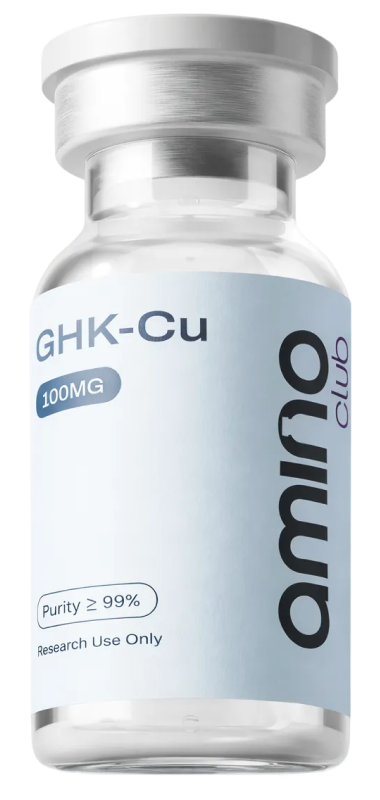
GHK-Cu
Anti-Aging Compound
Transparency: Some links are affiliate links. If you purchase through these links, we earn a commission at no extra cost to you. This allows us to maintain independent testing. Our recommendations are never influenced by commissions.
Mechanism of Action
CJC-1295 acts by binding to the GHRH receptor (GHRHR) expressed on the surface of somatotropic cells of the anterior pituitary. This receptor belongs to the class B (secretin) family of G protein-coupled receptors. Activation of the GHRHR triggers a signaling cascade involving the Gs protein, adenylate cyclase, and cAMP, leading to the opening of voltage-dependent calcium channels and exocytosis of secretory granules containing GH.
Unlike native GHRH, which is rapidly inactivated by dipeptidyl peptidase-IV (DPP-IV) within minutes, CJC-1295 incorporates structural modifications that protect it from this enzymatic degradation. The D-Ala substitution at position 2 confers resistance to DPP-IV, while the DAC technology (in the CJC-1295 DAC version) allows binding to circulating albumin, creating a sustained-release peptide reservoir.
The effect of CJC-1295 on GH secretion is pulsatile and dose-dependent. The peptide amplifies the amplitude of natural GH secretory pulses without altering their frequency, thus preserving the circadian rhythm of somatotropic secretion. This property distinguishes it from direct administration of recombinant GH, which suppresses endogenous secretion through negative feedback. CJC-1295 also stimulates IGF-1 (Insulin-like Growth Factor-1) secretion by the liver, the primary mediator of the anabolic and metabolic effects of GH.
Studied Benefits
Increased GH and IGF-1 secretion
Phase I/II clinical studies have shown that CJC-1295 DAC increases plasma GH levels by 2- to 10-fold and IGF-1 levels by 1.5- to 3-fold compared to baseline values, with a sustained effect lasting 6 to 14 days after a single injection. These increases are dose-dependent and reproduce a more physiological secretory profile than direct GH injection.
Improved body composition
Preclinical research and preliminary clinical data suggest that the prolonged GH/IGF-1 increase induced by CJC-1295 could promote increased lean mass and reduced fat mass. These effects are consistent with the known actions of the GH/IGF-1 axis on protein and lipid metabolism.
Potential for age-related GH deficiency
GH secretion progressively declines with age (somatopause), contributing to sarcopenia, increased adiposity, and decreased bone density. CJC-1295 is being studied as a potential alternative to recombinant GH replacement therapy, with the theoretical advantage of preserving natural secretory pulsatility.
Improved sleep quality
GH is primarily secreted during slow-wave sleep (stages 3 and 4 of NREM sleep). Preliminary data suggest that GH axis stimulation by CJC-1295 could improve sleep architecture and increase the proportion of deep sleep, although these observations require confirmation through controlled polysomnographic studies.
Research Status
The clinical development of CJC-1295 was initiated by ConjuChem Biotechnologies with Phase I and II trials conducted in the 2000s. The pivotal study by Teichman and collaborators (2006) demonstrated that CJC-1295 DAC significantly and sustainably increases GH and IGF-1 levels in healthy adults, with good tolerability at the doses tested (30 to 60 mcg/kg). These results constituted an important proof of concept for the use of long-acting GHRH analogs.
However, the clinical development program was halted following serious adverse events, including a death that occurred during a clinical trial, although a definitive causal link with CJC-1295 was not established. This interruption considerably slowed progression toward Phase III trials. Since then, research has shifted toward the version without DAC (Mod GRF 1-29) and combinations with GH secretagogues (GHRP).
The current state of research is classified as preclinical to early clinical. Existing data clearly demonstrate the pharmacodynamic efficacy of CJC-1295 in increasing GH and IGF-1, but questions regarding long-term safety, therapeutic efficacy on relevant clinical endpoints, and the benefit/risk ratio remain insufficiently documented. The peptide is listed on the World Anti-Doping Agency (WADA) prohibited substances list in the S2 category.
Safety and Side Effects
Safety data for CJC-1295 come primarily from Phase I/II clinical trials and preclinical studies. The most frequently reported side effects in clinical trials include injection site reactions (redness, induration, pain), transient flushing, diarrhea, and headaches. These effects were generally mild to moderate and dose-dependent.
Potential adverse effects related to chronic GH/IGF-1 elevation represent an important theoretical concern. Excessive and prolonged stimulation of the somatotropic axis could theoretically induce effects similar to acromegaly: fluid retention, arthralgia, carpal tunnel syndrome, insulin resistance, and potentially an increased risk of proliferation of certain IGF-1-sensitive tumor cells. These risks underscore the need for rigorous medical monitoring.
The most serious event during clinical development was the death of a participant during a trial, which led to the interruption of ConjuChem's clinical program. Although the investigation did not establish a definitive causal link with CJC-1295, this event illustrates the inherent risks of manipulating the GH/IGF-1 axis. The use of CJC-1295 outside of a supervised clinical research setting is not recommended and carries unquantified risks.
Frequently Asked Questions
What is the difference between CJC-1295 DAC and CJC-1295 without DAC (Mod GRF 1-29)?
Is CJC-1295 approved for medical use?
Is CJC-1295 banned in sports?
What are the risks of chronic elevation of GH and IGF-1?
Scientific Sources
- Teichman SL, Neale A, Lawrence B, et al. (2006). Prolonged stimulation of growth hormone (GH) and insulin-like growth factor I secretion by CJC-1295, a long-acting analog of GH-releasing hormone, in healthy adults. Journal of Clinical Endocrinology & Metabolism, 91(3), 799-805.
- Ionescu M, Frohman LA. (2006). Pulsatile secretion of growth hormone (GH) persists during continuous stimulation by CJC-1295, a long-acting GH-releasing hormone analog. Journal of Clinical Endocrinology & Metabolism, 91(12), 4792-4797.
- Alba M, Fintini D, Sagazio A, et al. (2006). Once-daily administration of CJC-1295, a long-acting growth hormone-releasing hormone (GHRH) analog, normalizes growth in the GHRH knockout mouse. American Journal of Physiology-Endocrinology and Metabolism, 291(6), E1290-E1294.
- Jetté L, Léger R, Thibaudeau K, et al. (2005). Human growth hormone-releasing factor (hGRF)1-29-albumin bioconjugates activate the GRF receptor on the anterior pituitary in rats. Journal of Endocrinology, 184(3), 441-452.
- Friedman SD, Baker LD, Borber S, et al. (2013). Growth hormone-releasing hormone effects on brain gamma-aminobutyric acid levels in mild cognitive impairment and healthy aging. JAMA Neurology, 70(7), 883-890.