Overview
GHK-Cu (glycyl-L-histidyl-L-lysine copper) is a tripeptide naturally present in human blood plasma, saliva, and urine. Discovered in 1973 by Dr. Loren Pickart, this peptide complex has an exceptional affinity for copper (II) ions, forming a stable chelate that constitutes one of the main physiological copper transporters in the body.
The plasma concentration of GHK-Cu decreases significantly with age: from approximately 200 ng/mL at age 20, it drops to approximately 80 ng/mL around age 60. This decline correlates with the age-related slowdown of tissue regenerative capacities, which has directed research toward anti-aging and regenerative applications of this peptide.
GHK-Cu is one of the few bioactive peptides that has been the subject of clinical studies in the dermatological field. Its well-characterized safety profile and natural presence in the body make it a particularly interesting candidate for cosmetic formulations and applications in cutaneous regenerative medicine. GHK-Cu is a key component of blends such as Klow Peptide and Glow Peptide. For a detailed article on its anti-aging applications, see GHK-Cu: the anti-aging peptide.
Recommended products
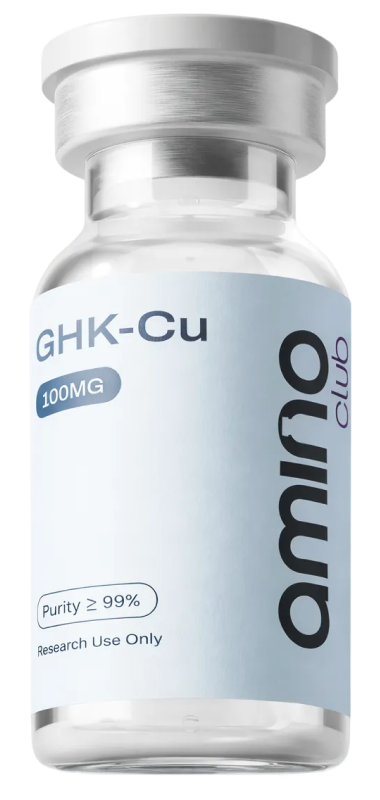
GHK-Cu
Anti-Aging Compound
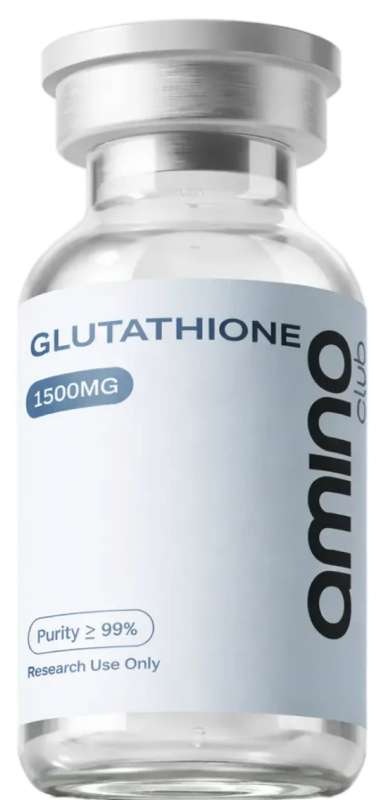
Glutathione
Antioxidant Compound
Transparency: Some links are affiliate links. If you purchase through these links, we earn a commission at no extra cost to you. This allows us to maintain independent testing. Our recommendations are never influenced by commissions.
Mechanism of Action
The mechanism of action of GHK-Cu relies on its ability to extensively modulate gene expression. Transcriptomic studies have revealed that this peptide influences the expression of more than 4,000 human genes, approximately 6% of the genome. Among the activated pathways are those involved in tissue repair, antioxidant defense (via superoxide dismutase and glutathione peroxidase), and synthesis of extracellular matrix components.
At the skin level, GHK-Cu stimulates the production of type I, III, and V collagen by dermal fibroblasts, as well as the synthesis of proteoglycans (decorin) and glycosaminoglycans. It also activates the production of matrix metalloproteinases (MMP-2) involved in tissue remodeling, while inhibiting excessive pro-inflammatory MMPs. This dual role promotes orderly matrix remodeling.
The copper ion plays an essential catalytic role in these processes. It serves as a cofactor for lysyl oxidase, a key enzyme in collagen and elastin cross-linking, and for mitochondrial cytochrome c oxidase, thereby supporting cellular energy metabolism. GHK-Cu also exerts anti-inflammatory effects by inhibiting the release of pro-inflammatory cytokines (IL-6, TNF-alpha) and by modulating the activity of the nuclear factor NF-kB.
Studied Benefits
Skin Regeneration and Anti-Aging
Controlled clinical studies have demonstrated that GHK-Cu improves dermal density and thickness, increases collagen and elastin production, and visibly reduces wrinkles and fine lines. Comparative trials have shown efficacy superior to that of vitamin C and retinol on certain skin parameters.
Wound Healing
GHK-Cu accelerates skin healing by stimulating angiogenesis, fibroblast migration, and collagen synthesis at the injury site. Clinical studies on chronic and post-surgical wounds have shown a significant reduction in healing time and an improvement in scar tissue quality.
Antioxidant Activity
GHK-Cu strengthens endogenous antioxidant defenses by increasing the expression of superoxide dismutase (SOD), glutathione peroxidase, and ferritin. This action reduces cellular oxidative damage induced by free radicals, UV radiation, and environmental pollutants.
Hair Growth Stimulation
Research has shown that GHK-Cu increases hair follicle size, stimulates follicle cell proliferation, and prolongs the anagen phase of the hair cycle. Comparative studies suggest efficacy comparable to 5% minoxidil in certain alopecia models.
Research Status
GHK-Cu benefits from a solid body of research spanning more than five decades, since its discovery in 1973. Studies have progressed from initial in vitro observations to controlled clinical trials, particularly in the dermatological field. Several randomized double-blind clinical trials have been published, evaluating the efficacy of GHK-Cu in topical creams for skin rejuvenation.
Transcriptomic studies conducted by the Pickart and Campbell team constituted a major breakthrough by revealing the extent of GHK-Cu's genomic action. This work, using DNA microarray technology (Connectivity Map), identified the signaling pathways modulated by the peptide, opening new therapeutic perspectives in the fields of pulmonary fibrosis, neurodegenerative diseases, and oncology.
The cosmetic applications of GHK-Cu are the best clinically validated, with several commercialized products containing this peptide. Current research focuses on regenerative medicine applications, including chronic wound healing, bone regeneration, and neuroprotection. Preclinical studies are also exploring its potential in the treatment of COPD and idiopathic pulmonary fibrosis.
Safety and Side Effects
GHK-Cu has a well-established safety profile, benefiting from a long history of use in cosmetic dermatology. Published clinical studies report excellent skin tolerance, with no significant irritation or notable allergic reactions at concentrations used in topical formulations (generally 0.01% to 1%). Repeated skin sensitization tests have not revealed any allergenic potential.
As a natural component of human plasma, GHK-Cu has an intrinsic advantage in terms of biocompatibility. In vitro cytotoxicity studies confirm the absence of cellular toxicity at physiological and supraphysiological concentrations. However, high concentrations of free copper could theoretically induce oxidative stress; the chelated GHK-Cu form minimizes this risk by ensuring controlled release of the copper ion.
Side effects reported in the literature are rare and generally mild, limited to transient redness or a slight tingling sensation upon topical application. No adverse systemic effects have been documented during topical use. For non-topical routes of administration, safety data remain more limited and require further investigation.
Frequently Asked Questions
What is GHK-Cu and where is it found naturally?
What are the proven benefits of GHK-Cu for the skin?
Is GHK-Cu safe for cosmetic use?
How does GHK-Cu compare to other anti-aging peptides?
At what concentration is GHK-Cu effective?
Scientific Sources
- Pickart L, Vasquez-Soltero JM, Margolina A. (2015). GHK peptide as a natural modulator of multiple cellular pathways in skin regeneration. BioMed Research International, 2015, 648108.
- Pickart L, Vasquez-Soltero JM, Margolina A. (2012). GHK and DNA: Resetting the human genome to health. BioMed Research International, 2012, 153626.
- Arul V, Kartha R, Jayakumar R. (2007). A therapeutic approach for diabetic wound healing using biotinylated GHK incorporated collagen matrices. Life Sciences, 80(4), 275-284.
- Canapp SO, Farese JP, Schultz GS, et al. (2003). The effect of topical tripeptide-copper complex on healing of ischemic open wounds. Veterinary Surgery, 32(6), 515-523.
- Finkley MB, Appa Y, Bhandarkar S. (2005). Copper peptide and skin. Cosmeceuticals and Active Cosmetics, 2nd Ed., CRC Press, 549-563.
- Campbell JD, McDonough JE, Zeskind JE, et al. (2012). A gene expression signature of emphysema-related lung destruction and its reversal by the tripeptide GHK. Genome Medicine, 4(8), 67.