
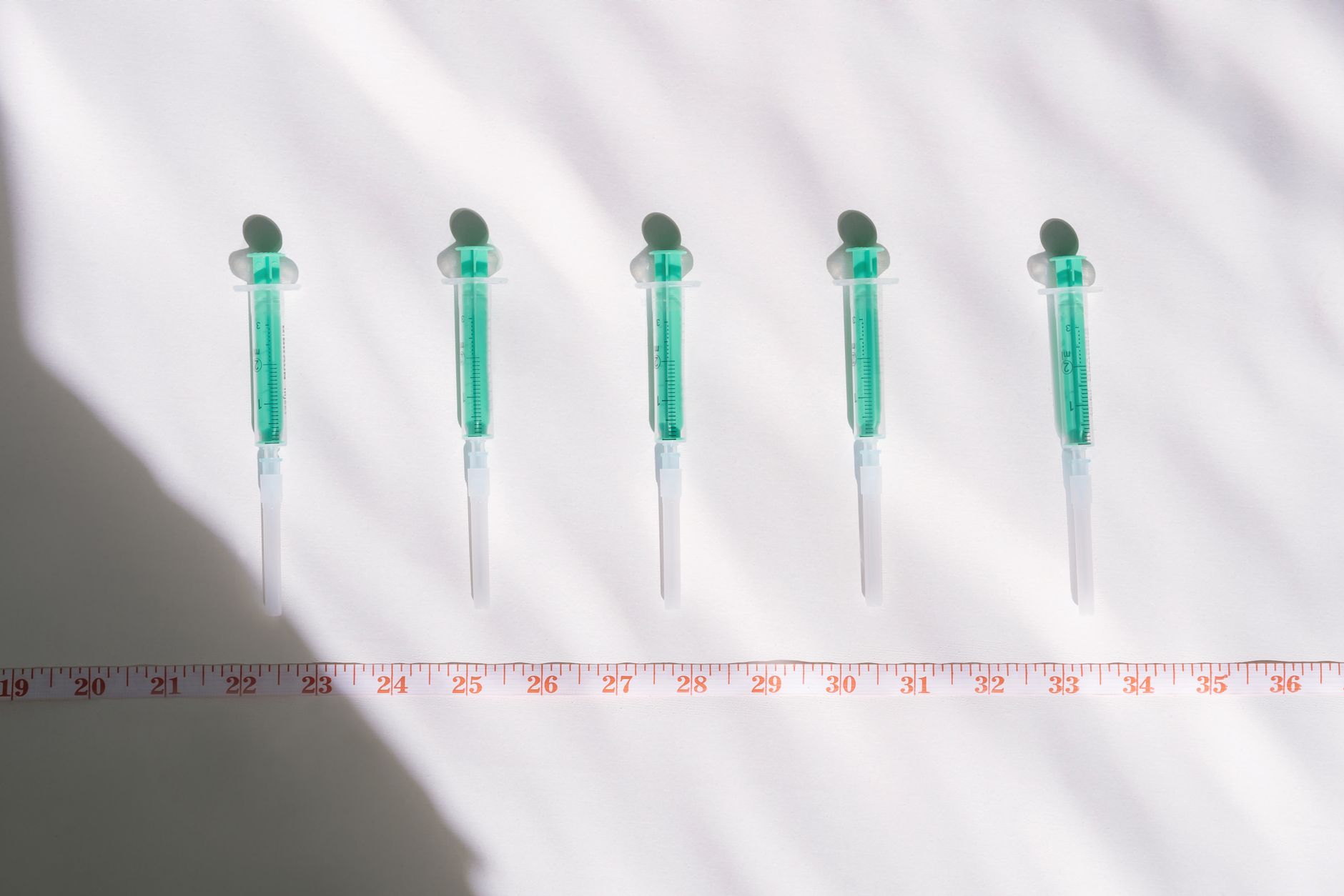
- There is no FDA- or EMA-approved BPC-157 dosage because the peptide has not completed human clinical trials; all figures below come from animal studies and informal research protocols.
- Commonly referenced research protocols use roughly 200–500 mcg per dose, once or twice daily, expressed in micrograms (mcg) — not milligrams.
- Subcutaneous injection is the most frequently described route, with oral and localized administration also discussed in the literature.
- Reconstitution with bacteriostatic water and accurate insulin-syringe measurement are the two steps where most dosing errors occur.
- Cycles are typically described as 4–8 weeks; longer use lacks any human safety data.
- BPC-157 is not approved for human use and is sold for research purposes only — consult a qualified healthcare professional before considering it.
What Is BPC-157 and Why Does Dosage Matter?
BPC-157 (Body Protection Compound-157) is a synthetic peptide composed of 15 amino acids (sequence Gly-Glu-Pro-Pro-Pro-Gly-Lys-Pro-Ala-Asp-Asp-Ala-Gly-Leu-Val) with a molecular weight of approximately 1,419 Daltons. It is a partial sequence derived from a protein found in human gastric juice, and it has been studied extensively in animal models for its apparent effects on tissue repair, angiogenesis, and gastrointestinal protection. For a foundational overview, see our complete BPC-157 monograph.
Dosage is one of the most searched topics around this peptide, and for good reason: with more than 165,000 monthly searches, BPC-157 is the most-searched non-weight-loss peptide. Yet the gap between public interest and rigorous human dosing data is enormous. There are zero published Phase III human clinical trials, which means no regulatory body has ever established a safe and effective human dose.
Understanding dosage therefore is not about following an approved prescription — none exists — but about understanding where the numbers commonly cited online actually come from, how they are measured, and what their limitations are. Misreading a dose by an order of magnitude (confusing micrograms with milligrams, for example) is one of the most common and consequential mistakes in this space.
This guide explains the typical protocols described in the research community, the administration routes involved, how reconstitution works, and the safety and legal context you need before any discussion with a healthcare professional. This article is for educational purposes only and is not medical advice.
What Does the Evidence Say About BPC-157 Dosing?
The vast majority of what is known about BPC-157 comes from preclinical research. There are over 100 published preclinical studies, and PubMed activity has grown sharply — from roughly 45 results in 2020 to more than 180 in 2025. This is a substantial body of animal and in vitro evidence, but it is critical to be clear about what it does and does not establish.
In rodent models, BPC-157 has shown effects such as accelerated tendon-to-bone healing (with some studies reporting 60–80% faster healing versus controls) and significant reductions in gastric ulcer surface area. These studies typically dose by body weight — for example, microgram or nanogram quantities per kilogram of body weight — which does not translate directly into a fixed human dose.
The key limitation is the absence of human pharmacokinetic and dose-ranging trials. We do not have reliable published data on how BPC-157 is absorbed, distributed, metabolized, or cleared in humans, nor on what dose produces a measurable effect or where toxicity might begin. Allometric scaling (converting an animal dose to a human-equivalent dose) is an estimation tool, not a substitute for clinical trials.
As a result, every human dosage figure circulating online is an extrapolation or an anecdotal convention, not a clinically validated recommendation. Reputable sources, including our medical disclaimer, stress that BPC-157 remains an investigational compound. Treat all numbers in the next sections as descriptions of common practice, not endorsements.
What Are the Common BPC-157 Dosage Protocols?
Within the research community, dosing is almost always expressed in micrograms (mcg). The most frequently referenced figures cluster around 200–500 mcg per administration, taken once or twice daily. Some protocols are described in terms of body weight, often in the range of roughly 1–10 mcg per kilogram, which for an 80 kg adult would also land in the low hundreds of micrograms.
The table below summarizes commonly described protocol ranges. These are not prescriptions and carry no clinical validation:
| Protocol type | Typical per-dose range | Frequency | Notes |
|---|---|---|---|
| Conservative / starting | 200–250 mcg | Once daily | Often used to assess individual tolerance |
| Standard | 250–500 mcg | Once or twice daily | Most commonly cited range |
| Localized (research) | 200–300 mcg | Near area of interest | Discussed for soft-tissue research |
A frequent point of confusion is unit conversion. A typical 5 mg vial contains 5,000 mcg of peptide. A 250 mcg dose is therefore 1/20th of the vial — a very small volume once reconstituted. Mistaking the dose for 250 mg rather than 250 mcg would represent a 1,000-fold error, which is why careful measurement matters so much. A free tool such as PeptideCalc's mg-to-mcg converter makes these unit conversions quick to double-check.
Some researchers split the daily total into two doses (morning and evening) on the theory that the peptide's half-life is short, while others use a single daily dose for simplicity. There is no human data confirming that one schedule is superior. If BPC-157 is combined with other compounds, the principles of peptide stacking add further complexity and should be approached cautiously.
Which Administration Routes Are Used for BPC-157?
Several routes appear in the literature and in informal protocols, each with different practical considerations. Subcutaneous injection is by far the most commonly described route. It involves injecting the reconstituted peptide into the fatty layer just beneath the skin, typically using a small insulin syringe. It is favored for its simplicity and the small volumes involved.
The choice of injection site is sometimes debated. Some protocols describe injecting near the area of interest (for example, close to an injured tendon in animal research), based on the hypothesis of a localized effect. Others argue that BPC-157 acts systemically, in which case site selection matters less. Human data to resolve this debate does not exist.
Oral administration is also discussed, particularly for gastrointestinal research, since BPC-157 was originally derived from a gastric protein and appears relatively stable in the digestive environment in animal studies. Oral bioavailability in humans, however, has not been established, so the effective oral dose is unknown.
Other routes occasionally mentioned include intramuscular injection and, less commonly, intranasal or topical formulations. The table below compares the main approaches at a high level:
| Route | Frequency of use | Key consideration |
|---|---|---|
| Subcutaneous | Most common | Small volume, simple technique |
| Oral | Common for GI research | Human bioavailability unknown |
| Intramuscular | Less common | Deeper injection, larger needle |
Whatever the route, sterile technique is essential to avoid infection, and reused or contaminated needles pose a real risk. Any injection-based use carries inherent hazards and should not be undertaken without professional medical guidance.
How Do You Reconstitute BPC-157 Correctly?
BPC-157 is typically supplied as a lyophilized (freeze-dried) powder that must be reconstituted with a sterile diluent before it can be measured and used. Reconstitution is where many dosing errors originate, so understanding the arithmetic is essential — even if only to follow a clinician's instructions accurately.
The standard diluent is bacteriostatic water (sterile water containing 0.9% benzyl alcohol), which inhibits bacterial growth and allows the solution to be stored for several weeks under refrigeration. Sterile or normal saline is sometimes used but offers no preservative, shortening usable life.
The core principle is concentration = amount of peptide ÷ volume of water added. The volume of water does not change the total dose available; it only changes how many units on the syringe correspond to a given microgram dose. A worked example for a 5 mg (5,000 mcg) vial:
- Add 2 mL of bacteriostatic water → concentration is 2,500 mcg/mL.
- On a U-100 insulin syringe, 1 mL = 100 units, so each unit = 25 mcg.
- A 250 mcg dose = 10 units; a 500 mcg dose = 20 units.
The practical steps generally described are: swab both the vial stopper and the bacteriostatic water vial with alcohol; draw the water slowly and let it run down the inside wall of the peptide vial rather than spraying directly onto the powder; gently swirl (do not shake) until fully dissolved; and store refrigerated. Vigorous shaking can damage the peptide.
Because a small change in water volume changes every subsequent measurement, it is wise to write the concentration on the vial. Reconstitution and injection should only be performed with appropriate sterile supplies and, ideally, under the supervision of a healthcare professional.
For a comprehensive guide with an integrated calculator and step-by-step protocol, see our Reconstitution App, which also includes a peptide tracking tool.
Quick calculation: Use our free Peptide Reconstitution Calculator to instantly convert milligrams to syringe units for BPC-157 and 50+ other peptides.
How Long Should a BPC-157 Cycle Last?
Cycle length is another area governed entirely by convention rather than clinical evidence. The most commonly described protocols run for 4 to 8 weeks, after which a break is typically taken. The rationale offered is that this window aligns with the time course of tissue repair observed in animal studies, but there is no human trial confirming an optimal duration.
Some protocols describe a continuous daily approach for the duration of the cycle, while others use a loading concept — a slightly higher frequency early on followed by a maintenance phase. Again, none of these patterns rest on published human pharmacokinetic data.
The question of repeated cycles is especially uncertain. Because there are no long-term human safety studies, the consequences of extended or repeated use are simply unknown. Concerns that are routinely raised — but not resolved — include effects on angiogenesis (new blood vessel growth) over long periods, since promoting vascularization is one of BPC-157's proposed mechanisms and could theoretically have undesirable effects in some contexts.
A common conservative framing is to use the shortest duration that a research objective requires and to avoid open-ended use. Anyone considering BPC-157 should treat the absence of long-term data as a meaningful limitation, not a green light, and should discuss timing with a qualified professional rather than defaulting to the longest cycle described online.
What Factors Influence the Right Dose?
Even within the informal protocols above, several variables are commonly cited as reasons to adjust dosing. Body weight is the most obvious: weight-based protocols scale the dose to body mass, so a heavier individual using a per-kilogram protocol would use proportionally more. This is an extrapolation from animal dosing conventions, not a validated human formula.
The research objective is another factor. Protocols aimed at gastrointestinal questions more often involve oral administration, whereas soft-tissue research more often involves subcutaneous injection, sometimes near the area of interest. The route and the goal are interconnected.
Product purity and concentration matter enormously. Research peptides vary in quality, and an inaccurately labeled vial makes precise dosing impossible. Third-party testing (certificates of analysis) is the only way to have reasonable confidence in what a vial actually contains, and a mislabeled concentration silently corrupts every dose calculation.
Individual factors — age, overall health, medications, and tolerance — also influence how any bioactive compound is handled by the body, yet none of these interactions have been characterized for BPC-157 in humans. The honest summary is that the right dose for a given person cannot be determined from current evidence. This uncertainty is precisely why a conversation with a healthcare professional, who can account for your medical history, is irreplaceable.
What Are the Safety Considerations and Side Effects?
Animal studies have generally reported a favorable short-term safety profile for BPC-157, and peptides as a class tend to have fewer off-target effects than small-molecule drugs because of their specificity. However, the absence of human safety data is the single most important fact here, and it should not be interpreted as evidence of safety. "No reported side effects in limited research" is not the same as "safe."
Anecdotal reports from the research community sometimes mention transient effects such as injection-site irritation, mild nausea, fatigue, or lightheadedness, but these are not from controlled trials and cannot be reliably attributed to the peptide. Without systematic monitoring, the true frequency and severity of any adverse effects are unknown.
Theoretical concerns deserve attention because of BPC-157's proposed mechanisms. Its effects on angiogenesis, while potentially helpful for healing, raise unresolved questions about its action in the presence of abnormal tissue growth. Anyone with a relevant medical history should regard this as a reason for caution and professional consultation rather than self-experimentation.
Practical safety also depends on the basics: sterile reconstitution and injection technique, accurate dose measurement, proper refrigerated storage, and verified product purity. Contamination, dosing errors, and low-quality product are tangible risks regardless of the peptide's intrinsic profile. For related safety context, see our discussion of peptide safety considerations.
Consult a qualified healthcare professional before considering BPC-157. This is especially important if you take other medications, have a chronic condition, or are pregnant or breastfeeding.
What Is the Legal and Regulatory Status of BPC-157?
BPC-157 is not approved by the FDA, the EMA, or other major regulators for human use. It has not gone through the clinical trial process required for approval, which is the underlying reason no official dosage exists. In most jurisdictions it is sold and labeled "for research use only," and it is not a legal dietary supplement or medicine.
In the United States, the FDA has issued warning letters to companies marketing unapproved peptide products, and BPC-157 has been the subject of regulatory scrutiny regarding compounding. The legal status varies meaningfully by country, and importing or possessing research peptides can carry legal risk depending on local law.
For competitive athletes, anti-doping rules are an additional consideration. Peptides and growth factors fall under categories monitored by the World Anti-Doping Agency (WADA), and athletes should assume that using investigational peptides could violate their sport's rules even where the substance is not explicitly named.
The bottom line is that BPC-157 occupies a legal gray zone that differs by jurisdiction and is actively evolving. Before considering it, verify the current rules where you live, understand that "research use only" labeling carries real meaning, and prioritize a conversation with a healthcare professional. This article does not constitute legal or medical advice and is provided for educational purposes only.
Recommended products
Research peptides selected for quality and purity:
GHK-Cu
Anti-Aging Compound
Test your knowledge
Quick quiz · 6 questions
Peptide Lab — free calculator & tracker
Calculate your reconstitution, track your peptides and injections. Free, no credit card required.
Frequently Asked Questions
What is a typical BPC-157 dosage?
How do you reconstitute BPC-157?
Which administration route is most common for BPC-157?
How long should a BPC-157 cycle last?
Is BPC-157 safe and legal?
Sources
- Sikiric P, et al. (2022). Stable Gastric Pentadecapeptide BPC 157 and Wound Healing. Frontiers in Pharmacology.
- Staresinic M, et al. (2003). Gastric pentadecapeptide BPC 157 accelerates healing of transected rat Achilles tendon. Journal of Orthopaedic Research.
- Chang CH, et al. (2011). The promoting effect of pentadecapeptide BPC 157 on tendon healing involves tendon outgrowth, cell survival, and cell migration. Journal of Applied Physiology.
- Gwyer D, et al. (2019). Gastric pentadecapeptide body protection compound BPC 157 and its role in accelerating musculoskeletal soft tissue healing. Cell and Tissue Research.
- Sikiric P, et al. (2016). Brain-gut Axis and Pentadecapeptide BPC 157: Theoretical and Practical Implications. Current Neuropharmacology.
- Seiwerth S, et al. (2018). BPC 157 and Standard Angiogenic Growth Factors. Gastrointestinal Tract Healing. Current Pharmaceutical Design.