
Prices and stock are set by each vendor and can change. Always confirm third-party testing on the vendor site.
- The BPC-157 + TB-500 blend is a research-only combination; neither peptide is approved by the FDA or EMA for human use, and this article is for educational purposes only.
- The two are frequently paired in preclinical literature because their mechanisms appear complementary: BPC-157 is linked to local angiogenesis and gut-brain signaling, while TB-500 (Thymosin Beta-4) is an actin-binding peptide associated with systemic cell migration.
- The single most important buying signal is a batch-specific Certificate of Analysis showing HPLC purity (typically 98 percent or higher) and mass spectrometry identity confirmation.
- Verify the supplier itself: third-party testing, transparent contact details, clear research-use labeling, and consistent lot documentation matter more than marketing claims.
- SwissChems lists a ready-made BPC-157 + TB-500 blend and ships worldwide including the EU and US; a 5mg+5mg vial is listed at 119.95 USD and a 10mg+10mg vial at 134.95 USD.
- In Europe, AuraVia Research offers the Glow Pen: TB-500, BPC-157 and GHK-Cu in a pre-filled pen (70 mg, €169.99), shipped from the EU with VAT included.
What Is the BPC-157 + TB-500 Blend?
A BPC-157 + TB-500 blend is a single research vial containing two peptides that are usually sold separately: BPC-157 (Body Protection Compound-157) and TB-500, a synthetic construct related to Thymosin Beta-4. Rather than reconstituting two vials, researchers who want to study the pair receive them pre-combined in a fixed ratio, most commonly 5mg of each or 10mg of each per vial.
BPC-157 is a 15-amino-acid peptide (Gly-Glu-Pro-Pro-Pro-Gly-Lys-Pro-Ala-Asp-Asp-Ala-Gly-Leu-Val) derived from a protective protein found in gastric juice. Its reported molecular weight is roughly 1,419 Daltons. It has been the subject of more than 100 preclinical studies, and PubMed indexing for the compound climbed from around 45 results in 2020 to well over 180 by 2025.
TB-500 is the research label typically applied to Thymosin Beta-4 or its active actin-binding fragment. Full Thymosin Beta-4 is a 43-amino-acid peptide with a molecular weight near 4,963 Daltons and is present in nearly all cell types except red blood cells. The commercial fragment centers on the actin-binding motif and is studied for its role in cell migration and tissue organization.
It is important to be clear from the outset: this is a research peptide combination. Neither BPC-157 nor TB-500 is approved by the FDA or EMA for human use, and there are zero published Phase III human clinical trials for BPC-157. Everything in this guide is for educational purposes only and is not medical advice. Consult a qualified healthcare professional before making any health decision.
Why Are BPC-157 and TB-500 Studied Together?
The two peptides are frequently paired in the preclinical literature because their proposed mechanisms operate on different scales and appear complementary rather than redundant. Researchers interested in tissue-repair models often describe the combination as covering both a local and a systemic axis of the repair process.
BPC-157 has been associated primarily with local angiogenesis, the formation of new blood vessels at a site of interest, and with modulation of the nitric oxide pathway. In rodent tendon models, BPC-157 has been reported to accelerate healing markers by 60 to 80 percent versus control, and gastric ulcer studies have described reductions in ulcer surface area of around 78 percent. These are animal findings, not human outcomes, but they explain why the peptide is studied in localized repair contexts.
TB-500, by contrast, is an actin-binding peptide whose reported activity centers on cell migration. By sequestering G-actin and influencing cytoskeletal dynamics, Thymosin Beta-4 is studied for its role in helping cells move toward areas undergoing remodeling. Because it distributes more systemically, it is often framed as the mobility component that complements the vascular and local signaling attributed to BPC-157.
This complementary framing (local angiogenesis plus systemic cell migration) is why the pair appears so often in stacking discussions. If you want a deeper mechanistic comparison of the two molecules, our peptide stacking guide covers how researchers reason about combining peptides and the limits of extrapolating from animal data.
A necessary caveat: complementary mechanisms in theory do not guarantee additive or synergistic effects in practice, and controlled human data on the specific combination is lacking. The rationale for pairing them is biologically plausible and well represented in preclinical work, but it remains a research hypothesis rather than a demonstrated clinical result.
What Quality Criteria Matter When Buying a Blend?
With a blend, quality control is arguably more demanding than with a single peptide, because a supplier must correctly synthesize, purify, and combine two different molecules at a stated ratio. The criteria below are what separate a credible research-grade product from an unverifiable one.
HPLC purity. High-performance liquid chromatography measures how much of the material is the intended peptide versus truncated sequences, deletion products, or process residues. Research-grade peptides are generally expected to show 98 percent purity or higher. For a blend, ideally each peptide is characterized before combining, so you can confirm both components meet the threshold rather than seeing a single averaged figure.
Mass spectrometry identity. Purity tells you the material is clean; it does not by itself tell you the material is the right molecule. Mass spectrometry (typically ESI-MS or MALDI-TOF) confirms the measured molecular weight matches the expected value, roughly 1,419 Da for BPC-157 and the expected mass for the TB-500 construct. Both an HPLC trace and an MS spectrum should appear on the documentation.
Per-batch Certificate of Analysis (CoA). A generic, undated CoA that is reused across every order is close to worthless. What matters is a lot-specific CoA tied to the exact batch you receive, ideally with a matching lot number printed on the vial. This is the difference between a document that describes your product and one that describes a product the vendor once made.
Third-party testing. Independent laboratory verification carries more weight than in-house-only results, because the testing lab has no commercial stake in the outcome. Some suppliers publish third-party reports alongside their internal QC.
Physical and handling standards. Legitimate research peptides are supplied as a lyophilized (freeze-dried) powder in a sealed vial, correctly labeled for research use only, and shipped in conditions that respect the product's stability. Peptides typically have short native half-lives, so proper handling and storage instructions are part of a quality offering, not an afterthought.
How Do You Read a Certificate of Analysis?
The Certificate of Analysis is the document most buyers skim and few actually read. Knowing what each line means turns it from marketing decoration into a genuine verification tool.
Start with the identity section. It should name the peptide, its sequence or a reference to it, and the expected molecular weight. For a blend, both peptides should be identifiable. If the document lists only a product name with no sequence or mass reference, that is a gap.
Next, examine the HPLC section. You want a purity percentage and, ideally, the chromatogram itself. A single dominant peak with minimal shoulders indicates a clean preparation. A number printed with no accompanying trace is weaker evidence, because the figure cannot be independently sanity-checked.
Then review the mass spectrometry section. The observed mass should sit within a small tolerance of the theoretical mass. A mismatch here is a serious warning: it can mean the vial does not contain the molecule on the label, regardless of how pure that molecule is.
Finally, cross-check the administrative details: a lot or batch number, a test date, and the name of the testing entity. Confirm the lot number on the CoA matches the lot number on the vial you received. If a supplier cannot produce a batch-matched CoA on request, treat that as a decisive quality signal. Our medical disclaimer and editorial policy explain why we emphasize documentation over promotional claims throughout our content.
How Do You Verify a Peptide Supplier?
Even a strong CoA is only as trustworthy as the company that issued it. Supplier verification is a separate step from product verification, and skipping it is a common mistake.
Check for transparent testing practices. A credible supplier publishes purity data and makes CoAs accessible, either on product pages or on request per batch. Vagueness about testing, or claims of purity with no supporting documents, is a meaningful negative signal.
Confirm real contact and business details. Legitimate vendors provide functioning contact channels and clear terms. The FDA has issued warning letters to companies selling unapproved peptide products, so opacity around who is actually behind a storefront is worth taking seriously.
Look at labeling honesty. Research peptides should be labeled for research use only. A supplier that markets a research peptide with explicit human-use dosing instructions or therapeutic promises is ignoring the regulatory line, which tends to correlate with cutting other corners.
Assess consistency and reputation. Reproducible product quality across batches, coherent documentation, and a track record are more informative than a single glowing testimonial. Independent community reports can help, though they should be weighed rather than taken at face value.
Understand shipping scope and origin. Where a supplier ships from and to affects both legality and transit conditions. A vendor that is clear about its shipping regions and customs practices is easier to evaluate than one that is deliberately ambiguous. For transparency, note that some links in our content are affiliate links; see our affiliate disclosure for details.
Where Can You Buy the BPC-157 + TB-500 Blend?
Among the suppliers we track, SwissChems lists a ready-made BPC-157 + TB-500 blend as a dedicated product and ships worldwide, including the EU and the United States. For readers who specifically want the pre-combined blend rather than two separate vials, that combination of availability and shipping range is the practical reason it comes up most often.
SwissChems publishes purity information and provides testing documentation for its peptides, sells the material clearly as research-use product, and offers the blend in more than one strength and pack size. Because it ships to both the EU and the US, it avoids the region lock that limits some EU-only or US-only vendors.
In Europe: the AuraVia Research Glow Pen
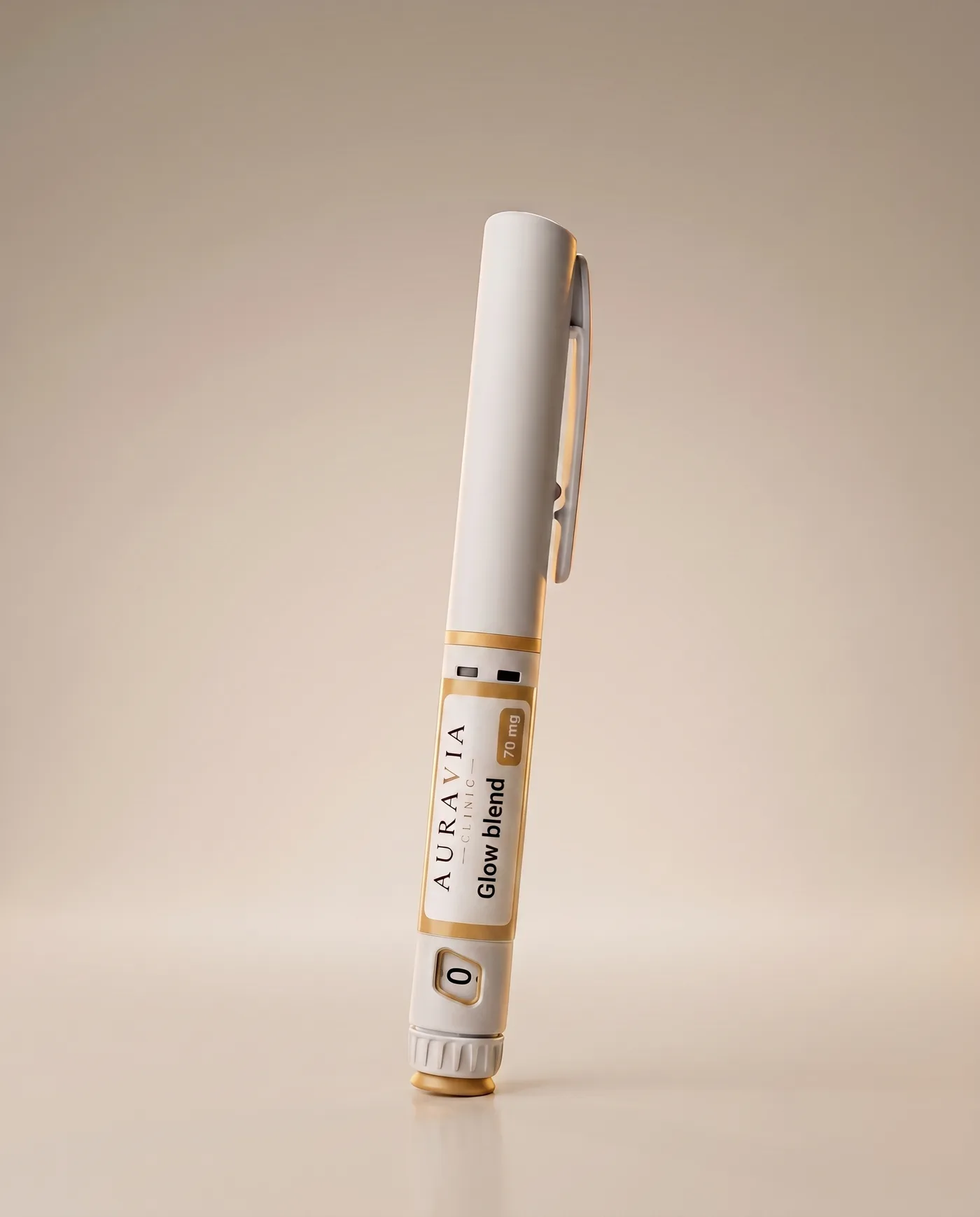
For Europe, AuraVia Research offers the Glow Pen: a pre-filled pen that combines TB-500, BPC-157 and GHK-Cu (70 mg in total, €169.99). It is not a pure BPC-157 + TB-500 blend: it adds GHK-Cu, a copper peptide studied for skin and the extracellular matrix. Stated purity: 99.2 percent (HPLC), certificate of analysis on every batch.
AuraVia ships from a warehouse located in the European Union, VAT included, in 2 to 4 business days. Shipping costs €9 to France, Spain and Portugal, and is free on orders from €200. AuraVia delivers within the European Union only.
The SwissChems blend is offered in two per-vial strengths and in single-vial or ten-vial (kit) formats:
| Product (SwissChems) | Format | Listed price (USD) |
|---|---|---|
| BPC-157 + TB-500 Blend, 5mg + 5mg | 1 vial | 119.95 |
| BPC-157 + TB-500 Blend, 10mg + 10mg | 1 vial | 134.95 |
| BPC-157 + TB-500 Blend, 5mg + 5mg | Kit (10 vials) | 1,199.50 |
| BPC-157 + TB-500 Blend, 10mg + 10mg | Kit (10 vials) | 1,349.50 |
You can browse current listings through our shop, which points to the supplier's live product pages. Prices change over time, so always confirm the current figure on the supplier site before ordering rather than relying on any static number.
If you would rather source the two peptides individually, SwissChems also lists BPC-157 (with arginine salt) and standalone TB-500 (Thymosin Beta-4) vials separately. Buying separately gives you control over the ratio but requires reconstituting and, if you want a combined preparation, correctly handling two products instead of one.
What Should You Expect for Price and Shipping?
Pricing for a BPC-157 + TB-500 blend reflects the fact that you are paying for two synthesized and purified peptides plus the blending and QC work. The SwissChems single-vial listings sit at 119.95 USD for the 5mg+5mg strength and 134.95 USD for the 10mg+10mg strength. The ten-vial kits bring the effective per-vial cost down, which is why bulk research purchasing typically favors kit formats.
It is worth comparing the blend against buying the components separately. At SwissChems, standalone TB-500 is listed from 23.96 USD (2mg) up to 42.36 USD (10mg per vial), and BPC-157 with arginine salt runs 39.99 USD (5mg) to 59.95 USD (10mg per vial). Buying separately can look cheaper on paper, but the pre-blended vial removes a preparation step and fixes the ratio, which some researchers value for consistency.
On shipping, the decisive factor is scope. SwissChems ships worldwide, which is the main reason it appears in guides aimed at both EU and US readers. Region-locked suppliers can be perfectly legitimate but simply will not reach part of the audience, so shipping range is a genuine selection criterion rather than a detail.
Factor in a few practical realities of peptide shipping. Lyophilized peptides are relatively stable for transit, but transit time and customs handling still matter, and cross-border orders can face import checks depending on jurisdiction. Reputable suppliers are transparent about their shipping regions and estimated timelines.
Finally, resist price-driven decisions. An unusually cheap blend is a reason for more scrutiny, not less: it may reflect lower purity, missing documentation, or an underfilled vial. On a two-peptide product, the cost of getting quality wrong is doubled, so the CoA and supplier checks described above should take priority over shaving a few dollars.
What Are the Red Flags to Avoid?
Certain patterns reliably distinguish suppliers and listings worth avoiding. Treat any single red flag as a reason to pause and several together as a reason to walk away.
No batch-specific CoA. If a vendor cannot provide a lot-matched Certificate of Analysis for the blend you are buying, you have no verifiable evidence of what is in the vial. This is the most important single filter.
Therapeutic or dosing claims. A research peptide marketed with human dosing protocols, disease claims, or language like guaranteed results is crossing the regulatory line. Reputable research suppliers describe the material as research use only and avoid medical promises. We never provide dosing guidance for research peptides, and neither should a compliant vendor.
Purity claims with no data. A bold purity percentage printed with no HPLC trace and no mass spectrometry confirmation is a marketing figure, not evidence. Ask for the underlying reports.
Opaque business identity. No functioning contact channel, no clear terms, or evasiveness about where the company ships from all point to accountability problems. Given that the FDA has issued warning letters to sellers of unapproved peptide products, this matters.
Prices that seem too good. A blend priced far below the market for two purified peptides is more likely to reflect a quality or quantity shortfall than a genuine bargain. Combined with any of the signals above, a suspiciously low price should end the evaluation.
What Is the Legal and Regulatory Status?
Both BPC-157 and TB-500 are classified as research-use-only compounds in the United States and the European Union. Neither is an approved drug, and there are no published Phase III human clinical trials for BPC-157 to establish human safety or efficacy. Most of the evidence base is preclinical, meaning animal and in-vitro studies rather than controlled human trials.
Legal status varies by jurisdiction, and it is your responsibility to understand the rules that apply where you are. Selling or importing these peptides for human consumption is generally not permitted, which is why compliant suppliers label them for laboratory research only. Both peptides are also monitored in sport: the World Anti-Doping Agency addresses peptides and growth factors under its prohibited categories, so athletes subject to testing should be aware that use can constitute a violation.
Because regulatory frameworks differ across countries and change over time, this guide cannot substitute for checking current local law. If you are considering these compounds in any context that touches human health, the appropriate step is to consult a qualified healthcare professional rather than relying on vendor marketing or community anecdote.
To reiterate the framing of this entire article: the information here is for educational purposes only. It describes how the BPC-157 + TB-500 blend is characterized and sold as a research material, and how to evaluate quality and suppliers. It is not medical advice, not an endorsement of human use, and not a dosing protocol. For related background, see our overview of what peptides are and the individual monographs for BPC-157 and TB-500.
Recommended products
Research peptides selected for quality and purity:
BPC-157 + TB-500
Healing Blend
BPC-157
Healing Peptide
BPC-157 Oral
Oral Healing Peptide
TB-500
Recovery Peptide
Test your knowledge
Quick quiz · 6 questions
Peptide Lab: free calculator & tracker
Calculate your reconstitution, track your peptides and injections. Free, no credit card required.
Frequently Asked Questions
What is a BPC-157 + TB-500 blend?
Why are BPC-157 and TB-500 combined in one product?
Where can I buy a BPC-157 + TB-500 blend?
How much does the blend cost in 2026?
What purity should a research-grade blend have?
What is a Certificate of Analysis and why does it matter?
How do I verify a peptide supplier is legitimate?
Is it cheaper to buy the peptides separately?
Are BPC-157 and TB-500 legal and approved?
Sources
- Sikiric P, et al. (2022). Stable Gastric Pentadecapeptide BPC 157 in the Treatment of Various Tissue Healing and Cytoprotection. Current Pharmaceutical Design.
- Staresinic M, et al. (2003). Gastric pentadecapeptide BPC 157 accelerates healing of transected rat Achilles tendon. Journal of Orthopaedic Research.
- Goldstein AL, Hannappel E, Kleinman HK. (2005). Thymosin beta4: actin-sequestering protein moonlights to repair injured tissues. Trends in Molecular Medicine.
- Xu TJ, Wang Q, Ma XW, et al. (2020). A novel dosage form of BPC-157 and its protective and healing effects. Drug Design, Development and Therapy.
- Crockford D, Turjman N, Allan C, Angel J. (2010). Thymosin beta4: structure, function, and biological properties supporting current and future clinical applications. Annals of the New York Academy of Sciences.
- U.S. Food and Drug Administration (2023). Certain Bulk Drug Substances for Use in Compounding: BPC-157 Review. FDA / Pharmacy Compounding Advisory Committee.