

- Collagen peptides are short amino acid chains produced by hydrolyzing animal collagen, which breaks the long protein into fragments that dissolve in cold water and are absorbed in the gut. Hydrolyzed collagen and collagen hydrolysate are synonyms for the same ingredient.
- Most commercial hydrolysates have an average molecular weight of roughly 3,000 to 6,000 daltons, against roughly 300,000 daltons for an intact type I collagen molecule.
- Absorption is documented, not hypothetical: hydroxyproline-containing di- and tripeptides such as Pro-Hyp and Gly-Pro-Hyp have been measured in human blood after ingestion of collagen hydrolysates.
- Human trials report measurable changes in skin hydration, elasticity and wrinkle depth, and some joint comfort trials report reduced activity-related pain, but the literature is heterogeneous and frequently industry funded.
- Collagen peptides are an oral food protein ingredient. They have nothing in common with injectable research peptides such as BPC-157 or TB-500, which are unapproved research chemicals.
- This page is educational only. It is not medical advice, and it does not cover product selection or how much to take.
What are collagen peptides?
Collagen peptides are short chains of amino acids obtained by breaking down collagen, the structural protein of animal skin, bone, tendon and cartilage, into fragments small enough to dissolve in cold water and to be absorbed across the intestinal wall. In practice, the terms collagen peptides, hydrolyzed collagen and collagen hydrolysate describe the same category of ingredient: a collagen protein that has been chemically and enzymatically cut into pieces. Hydrolyzed collagen is usually described in the food science literature as a group of low molecular weight peptides, typically in the range of about 3 to 6 kilodaltons, obtained by enzymatic action in an acid or alkaline medium at a controlled temperature.
The starting material matters because collagen is not an ordinary globular protein. It is built from three polypeptide chains wound into a triple helix, and each chain is a long repetition of the Gly-X-Y motif, where X is often proline and Y is often hydroxyproline. This gives collagen an unusual amino acid signature: roughly one residue in three is glycine, and hydroxyproline is almost unique to collagen among dietary proteins. When the helix is taken apart and the chains are cut, the resulting peptide mixture inherits that signature, which is why collagen peptides are glycine-rich and hydroxyproline-rich rather than nutritionally balanced.
A collagen peptide is therefore not one molecule with one formula. A jar of powder contains thousands of different fragments of varying length. Analytical work on absorbed fragments repeatedly highlights a small number of recurring species, notably the dipeptide Pro-Hyp (prolyl-hydroxyproline) and the tripeptide Gly-Pro-Hyp (glycyl-prolyl-hydroxyproline, C₁₂H₁₉N₃O₅, 285.30 g/mol). These are convenient reference molecules, but they represent a fraction of the mixture, not the whole product.
Functionally, this is a food protein. Collagen peptides are sold as powders, liquids, capsules and fortified foods, and they are regulated as food ingredients or dietary supplements rather than as medicines. They are also an incomplete protein: collagen contains essentially no tryptophan and is low in several other essential amino acids, so collagen peptides are not a substitute for whey, soy or egg protein when the goal is total protein quality.
How is collagen turned into peptides?
Industrial production usually runs in two stages. In the first, raw material such as bovine hide, porcine skin, fish skin or bone is pretreated in acid or alkaline conditions and then heated. This step denatures the triple helix: the three chains unwind and separate, and the insoluble, fibrous native collagen becomes gelatin, a protein that dissolves in hot water and forms a gel when it cools. Gelatin is already a partially degraded collagen, but its chains remain long.
The second stage is enzymatic hydrolysis. Food-grade proteases cut the gelatin chains at specific points, producing a distribution of much shorter peptides. The reaction is then stopped, and the liquid is filtered, concentrated, sterilized and spray-dried into the familiar off-white powder. Reviews of hydrolyzed collagen production describe this enzymatic step as the defining operation of the category, because it is what converts a gelling protein into a cold-water-soluble, non-gelling peptide mixture.
The choice of enzyme, the reaction time, the temperature and the pH all shape the final peptide profile. Two hydrolysates made from the same hide can differ in average chain length, in the proportion of di- and tripeptides, in taste and in solubility. This is the technical reason why manufacturers market branded hydrolysates with specific peptide profiles and why clinical trials are usually run on one named ingredient rather than on collagen peptides in general. A broader discussion of how collagen is classified by source and molecular family is available in our guide to collagen peptide classifications.
One consequence deserves emphasis. Because hydrolysis conditions are not standardized across the industry, the phrase collagen peptides on a label does not specify a defined molecule, a defined peptide distribution or a defined biological activity. It specifies a manufacturing route. Any claim about what collagen peptides do has to be traced back to the particular hydrolysate that was tested.
What does molecular weight mean here?
Molecular weight is the single most useful number for understanding what hydrolysis accomplished. An intact type I collagen molecule weighs on the order of 300,000 daltons. Gelatin, produced by unwinding that molecule, still consists of chains in the tens of thousands of daltons. Hydrolyzed collagen is reported in the review literature as a low molecular weight peptide group of roughly 3,000 to 6,000 daltons, which represents a reduction of about two orders of magnitude relative to native collagen.
Because a hydrolysate is a mixture, a single figure is always an average. A product described as 2,000 daltons contains fragments both heavier and lighter than that value, and the shape of the distribution is usually more informative than the mean. Some manufacturers go further and market low molecular weight or tripeptide-enriched hydrolysates designed to maximize the share of very short fragments, since di- and tripeptides have dedicated intestinal transport routes that longer peptides do not.
It is worth separating two claims that are often blurred. The claim that smaller peptides are absorbed more readily as intact fragments is biochemically reasonable and supported by absorption studies. The claim that a lower molecular weight automatically produces a larger clinical benefit on skin or joints is a different proposition, and head-to-head trials comparing molecular weight fractions on clinical endpoints remain scarce. Molecular weight is a quality descriptor, not a proof of efficacy.
Practically, molecular weight also explains the sensory differences consumers notice. Native collagen is insoluble in cold water. Gelatin gels. Collagen peptides dissolve clear in a cold drink and do not set, which is precisely why they can be added to coffee, water or yogurt without changing the texture.
How do native collagen, gelatin and collagen peptides differ?
These three words describe the same protein at three stages of degradation, and confusing them is the most common error in consumer discussions. Native collagen is the intact, triple-helical, insoluble protein as it exists in tissue. Gelatin is denatured collagen: the helix is gone, but the chains remain long. Collagen peptides are hydrolyzed gelatin: the chains have been cut into short fragments.
| Property | Native collagen | Gelatin | Collagen peptides |
|---|---|---|---|
| Structure | Intact triple helix | Unwound single chains | Short peptide fragments |
| Approximate molecular weight | Around 300,000 Da | Tens of thousands of Da | Roughly 3,000 to 6,000 Da |
| Cold water solubility | Insoluble | Poor, needs heat | Readily soluble |
| Gelling behavior | None (fibrous) | Forms a gel on cooling | Does not gel |
| Typical use | Biomaterials, food matrix | Confectionery, desserts, capsule shells | Powders, drinks, supplements |
A separate category causes additional confusion: undenatured or native type II collagen, sold at very low intake levels for joint research and studied for a proposed immune-mediated mechanism. That ingredient is deliberately not hydrolyzed, so it is not a collagen peptide, and evidence generated on it cannot be transferred to hydrolysates. When reading a study, the first question should always be which of these four materials was actually administered.
Nutritionally, gelatin and collagen peptides provide a very similar amino acid profile, since hydrolysis changes chain length rather than composition. The practical differences are solubility, dose convenience and the proportion of small fragments available for intact absorption.
Are collagen peptides actually absorbed?
Yes, and this is one of the better documented parts of the field. Iwai and colleagues gave healthy volunteers gelatin hydrolysates from porcine skin, chicken feet and cartilage after a 12-hour fast, at intakes of roughly 9 to 23 grams, then analyzed peripheral blood. They identified food-derived collagen peptides in plasma, with hydroxyproline-containing fragments such as Pro-Hyp dominating, and showed that a measurable share of circulating hydroxyproline was present in peptide form rather than as free amino acid. That finding matters because it demonstrates that not everything is digested down to single amino acids before crossing the gut wall.
Later work refined the picture. In a human plasma study using a tripeptide-rich hydrolysate, Yazaki and colleagues detected a set of collagen-derived peptides transiently in the circulation, with particular enrichment of the tripeptide Gly-Pro-Hyp, reaching peak blood concentrations around 15 minutes after ingestion. In the accompanying mouse experiments, Gly-Pro-Hyp and its hydrolyzed form Pro-Hyp were also recovered from skin, with peaks slightly later than in blood. Hydroxyproline-containing peptides resist complete breakdown by intestinal and plasma peptidases better than ordinary peptides, which is the biochemical reason they survive in detectable amounts.
Two cautions follow. First, absorption is fast and transient, not cumulative: these peptides appear in the blood for a short window after intake, and plasma detection is not evidence of long-term tissue storage. Second, the human data establish that fragments circulate; the step from circulating fragments to a clinical change in skin or cartilage is a separate inference. The two proposed mechanisms, namely that absorbed peptides supply collagen-specific building blocks and that they act as signaling molecules on fibroblasts and chondrocytes, are mostly supported by cell and animal work rather than by human mechanistic trials.
Put differently: bioavailability is established, bioactivity in humans is still being characterized. A page that presents absorption data as proof of a cosmetic or clinical outcome has skipped a step.
Where do collagen peptides come from?
All collagen peptides are animal derived, because collagen is an animal protein. The commercially important raw materials are bovine (hide, bone and sometimes cartilage), porcine (skin and bone), marine (fish skin and scales) and poultry (chicken sternal cartilage, and in some products eggshell membrane). Review work on hydrolyzed collagen notes that marine sources from skin, scales and bones have attracted growing interest alongside the long-established bovine and porcine streams.
Source affects which collagen family predominates. Bovine hide and porcine skin yield mostly type I with some type III. Fish skin yields predominantly type I. Chicken sternal cartilage is the usual route to type II, the collagen of articular cartilage. Source also drives practical considerations: fish-derived peptides are relevant to people avoiding bovine or porcine material for dietary or religious reasons, but they are unsuitable for anyone with a fish allergy. Our comparison of marine and bovine collagen covers those trade-offs in detail.
Claims about source superiority should be read carefully. Marine hydrolysates are frequently promoted as better absorbed on the basis of lower average molecular weight, but molecular weight is determined by the hydrolysis process as much as by the raw material, and a bovine hydrolysate can be cut to a smaller average size than a marine one. Without a comparative trial on a clinical endpoint, source alone does not settle the question.
Finally, there is no such thing as plant collagen. Vegan products marketed in this space supply amino acids or cofactors such as vitamin C, glycine and proline, which are precursors and helpers for endogenous collagen synthesis, not collagen peptides. Calling them collagen is a labeling shortcut, not a biochemical fact.
What does the research show for skin?
Skin is the most studied endpoint. In a double-blind, placebo-controlled trial, Proksch and colleagues randomized 69 women aged 35 to 55 to 2.5 g or 5 g of collagen hydrolysate daily or placebo for 8 weeks, with 23 subjects per group. Skin elasticity improved significantly in both hydrolysate groups compared with placebo, with no clear difference between the two intakes, and in older participants a higher elasticity level was still measurable four weeks after supplementation stopped.
A second trial from the same group tested a specific bioactive collagen peptide in 114 women aged 45 to 65, at 2.5 g daily for 8 weeks. Eye wrinkle volume fell significantly relative to placebo at 4 and 8 weeks, reported as a 20% reduction, and skin biopsies after 8 weeks showed higher content of procollagen type I (65%) and elastin (18%) in treated participants than in the placebo group. These remain among the most frequently cited human results in the field.
Pooled analyses point in the same direction with appropriate caution. A systematic review and meta-analysis by de Miranda and colleagues found favorable effects of hydrolyzed collagen versus placebo on skin hydration, elasticity and wrinkles. A later meta-analysis by Pu and colleagues, covering 26 randomized controlled trials and 1,721 participants at intakes of 2.5 to 10 g per day, reported improvements in skin hydration and elasticity. A 2026 systematic review by Slim and colleagues counted improvement in hydration in 10 of 15 trials, elasticity in 10 of 13 and wrinkle depth or volume in 9 of 10, while rating most of the included trials at high risk of bias.
What the literature does not show is equally important. Endpoints are mostly instrument-measured biophysical parameters over 8 to 12 weeks in healthy volunteers, often women in midlife, not long-term clinical outcomes. No trial establishes that collagen peptides prevent skin aging, and comparisons with established dermatological interventions are rare. Readers looking at how individual products have been studied can consult our review of collagen peptides and skin research, keeping in mind that an ingredient trial is not a product endorsement.
What does the research show for joints?
The joint literature is older and noisier. Clark and colleagues ran a 24-week randomized trial in 147 athletes with activity-related joint pain, comparing 10 g per day of liquid collagen hydrolysate with placebo. Among the subjects evaluated (n = 97), six parameters measured on a visual analogue scale, including joint pain at rest and joint pain when lifting, changed significantly in favor of the hydrolysate. The authors presented it as the first 24-week trial showing improvement of joint pain in athletes taking collagen hydrolysate.
Zdzieblik and colleagues later studied young, physically active adults with functional knee problems, giving 5 g of specific collagen peptides or placebo daily for 12 weeks in a cohort of 139 subjects, and reported a statistically significant improvement in activity-related pain intensity compared with placebo. Trials of this kind use subjective symptom scales rather than imaging or cartilage endpoints, so they describe reported discomfort, not demonstrated structural repair.
In osteoarthritis, García-Coronado and colleagues pooled five randomized placebo-controlled trials and concluded that collagen reduced the total WOMAC index and the visual analogue pain score. Their subgroup analysis is instructive: the stiffness subscore decreased significantly, while improvements in the pain and functional limitation subscores were less pronounced. In other words, the pooled signal was not uniform across the dimensions of the same instrument.
That meta-analysis also drew a published methodological rebuttal. Von Hippel argued in the same journal that the meta-analytic results do not support strong conclusions, citing analytical choices and the fragility of the pooled estimates. For a reader, the honest summary is that several trials report symptomatic benefit, that the pooled estimates are statistically significant but contested, and that no robust evidence shows modification of joint structure. Our dedicated page on collagen peptides and joint research examines these trials individually.
Why are they not injectable research peptides?
Search engines place collagen peptides next to compounds such as BPC-157, TB-500 and GHK-Cu, and the shared word peptide creates a misleading equivalence. The two categories differ in nearly every respect that matters, and conflating them is a genuine safety problem.
Collagen peptides are a food protein hydrolysate: an undefined mixture of thousands of fragments derived from animal tissue, taken orally in gram quantities, sold legally as a food ingredient or dietary supplement in most jurisdictions, and consumed for decades in the form of gelatin. Injectable research peptides are single synthetic molecules with a defined sequence, produced in milligram quantities, administered parenterally, and classified in the United States and the European Union as research chemicals that are not approved for human use. Several have no completed phase III human trials at all.
The regulatory consequence follows directly. A collagen peptide powder is subject to food law: compositional standards, allergen labeling and restrictions on health claims. A research peptide is not approved as a medicine, is not quality-controlled for human administration, and carries risks of contamination, incorrect identity and incorrect concentration that oral food ingredients do not. Evidence about one tells you nothing about the other.
Practical reading rule: if a page uses human efficacy data on collagen hydrolysates to support claims about injectable peptides, or the reverse, it is mixing two unrelated evidence bases. Known tolerability issues specific to oral collagen hydrolysates, which are generally mild and digestive, are discussed separately in our page on collagen peptide safety considerations.
What are the limits of the evidence?
Four structural weaknesses run through this literature, and a definition page should state them plainly.
Industry funding and conflicts of interest. A large share of the trials on branded hydrolysates were funded by the companies that sell the ingredient, used study material supplied by them, or included authors with commercial affiliations. Reviews of the field list industry funding explicitly among the factors that reduce confidence in the reported effect sizes. Industry funding does not make a result false, but it is a recognized source of bias that a careful reader weighs alongside the p value.
Heterogeneity. Trials differ in raw material, hydrolysis process, average molecular weight, intake, duration, population age and outcome instrument. Several also test multi-ingredient formulations that combine collagen peptides with vitamin C, hyaluronic acid or antioxidants, which makes the contribution of collagen itself impossible to isolate. Pooling such studies into a single estimate is statistically convenient and biologically questionable.
Methodological quality. The 2026 systematic review by Slim and colleagues rated most included skin trials at high risk of bias. A 2026 re-analysis published in the Journal of Cosmetic Dermatology went further, arguing that the major hydrolyzed collagen skin-aging meta-analyses pooled incompatible measures in methodologically inappropriate ways and concluding that current evidence does not support recommending oral hydrolyzed collagen as a treatment for skin aging. In the joint literature, the von Hippel letter makes a parallel argument. These critiques are part of the evidence base and should not be omitted.
Short duration and narrow endpoints. Most trials last 8 to 12 weeks and measure instrument-derived parameters or symptom scales in healthy or mildly symptomatic volunteers. Long-term outcomes, older populations, men, and comparisons against established interventions are underrepresented. Broader product overviews such as our market overview of collagen peptide products are useful for orientation, but they cannot resolve these evidentiary gaps.
Medical disclaimer. This article is for educational purposes only. It is not medical advice, it does not diagnose or treat any condition, and nothing here should be used to start, stop or modify any supplement or medication. Collagen peptides are a food ingredient, not an approved medicine for any indication. Consult a qualified healthcare professional before use, particularly during pregnancy or breastfeeding, with kidney or liver disease, with known allergies to fish, shellfish, eggs or bovine or porcine material, or when taking prescription medication. Regulatory status and permitted claims vary by jurisdiction.
Recommended products
Research peptides selected for quality and purity:

GHK-Cu
Anti-Aging Compound
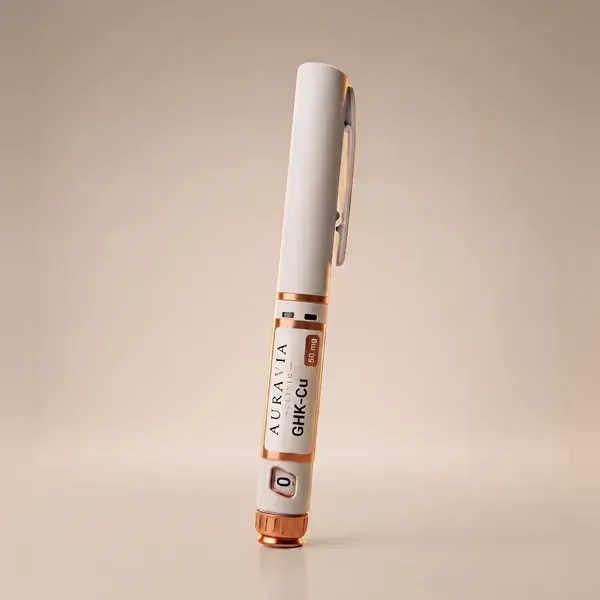
GHK-Cu Pen
Pre-filled Pen GHK-Cu
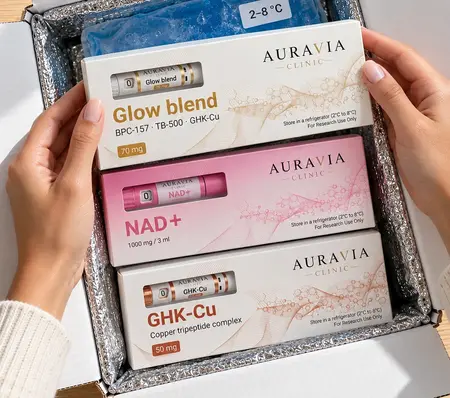
GLOW-UP Ritual
3-pen pack: Glow, NAD+, GHK-Cu
Test your knowledge
Quick quiz · 6 questions
Peptide Lab: free calculator & tracker
Calculate your reconstitution, track your peptides and injections. Free, no credit card required.
Frequently Asked Questions
Are collagen peptides the same thing as hydrolyzed collagen?
Do collagen peptides really reach the bloodstream?
What is the difference between gelatin and collagen peptides?
Are collagen peptides a complete protein?
Are collagen peptides the same as injectable research peptides such as BPC-157?
Does the molecular weight of a collagen peptide product matter?
Is there such a thing as vegan collagen peptides?
Are collagen peptides regulated as a medicine?
Sources
- Iwai K, Hasegawa T, Taguchi Y, et al. (2005). Identification of food-derived collagen peptides in human blood after oral ingestion of gelatin hydrolysates. Journal of Agricultural and Food Chemistry. (PubMed)
- Yazaki M, Ito Y, Yamada M, et al. (2017). Oral ingestion of collagen hydrolysate leads to the transportation of highly concentrated Gly-Pro-Hyp and its hydrolyzed form of Pro-Hyp into the bloodstream and skin. Journal of Agricultural and Food Chemistry. (pubs.acs.org)
- León-López A, Morales-Peñaloza A, Martínez-Juárez VM, et al. (2019). Hydrolyzed collagen: sources and applications. Molecules. (PubMed)
- Proksch E, Segger D, Degwert J, Schunck M, Zague V, Oesser S (2014). Oral supplementation of specific collagen peptides has beneficial effects on human skin physiology: a double-blind, placebo-controlled study. Skin Pharmacology and Physiology. (PubMed)
- Proksch E, Schunck M, Zague V, Segger D, Degwert J, Oesser S (2014). Oral intake of specific bioactive collagen peptides reduces skin wrinkles and increases dermal matrix synthesis. Skin Pharmacology and Physiology. (PubMed)
- de Miranda RB, Weimer P, Rossi RC (2021). Effects of hydrolyzed collagen supplementation on skin aging: a systematic review and meta-analysis. International Journal of Dermatology. (PubMed)
- Pu SY, Huang YL, Pu CM, Kang YN, Hoang KD, et al. (2023). Effects of oral collagen for skin anti-aging: a systematic review and meta-analysis. Nutrients. (PMC)
- Slim M, et al. (2026). Efficacy and safety of hydrolyzed collagen supplementation on skin health outcomes: a systematic literature review of randomized controlled trials. European Journal of Clinical Nutrition. (PubMed)
- Grimes et al. (2026). Hydrolyzed collagen for skin aging meta-analyses are unreliable. Journal of Cosmetic Dermatology. (DOI)
- Clark KL, Sebastianelli W, Flechsenhar KR, et al. (2008). 24-week study on the use of collagen hydrolysate as a dietary supplement in athletes with activity-related joint pain. Current Medical Research and Opinion. (PubMed)
- Zdzieblik D, Oesser S, Gollhofer A, König D (2017). Improvement of activity-related knee joint discomfort following supplementation of specific collagen peptides. Applied Physiology, Nutrition, and Metabolism. (PubMed)
- García-Coronado JM, Martínez-Olvera L, Elizondo-Omaña RE, et al. (2019). Effect of collagen supplementation on osteoarthritis symptoms: a meta-analysis of randomized placebo-controlled trials. International Orthopaedics. (PubMed)
- von Hippel PT (2021). Do collagen supplements reduce symptoms of osteoarthritis? Meta-analytic results do not support strong conclusions. International Orthopaedics. (PubMed)