
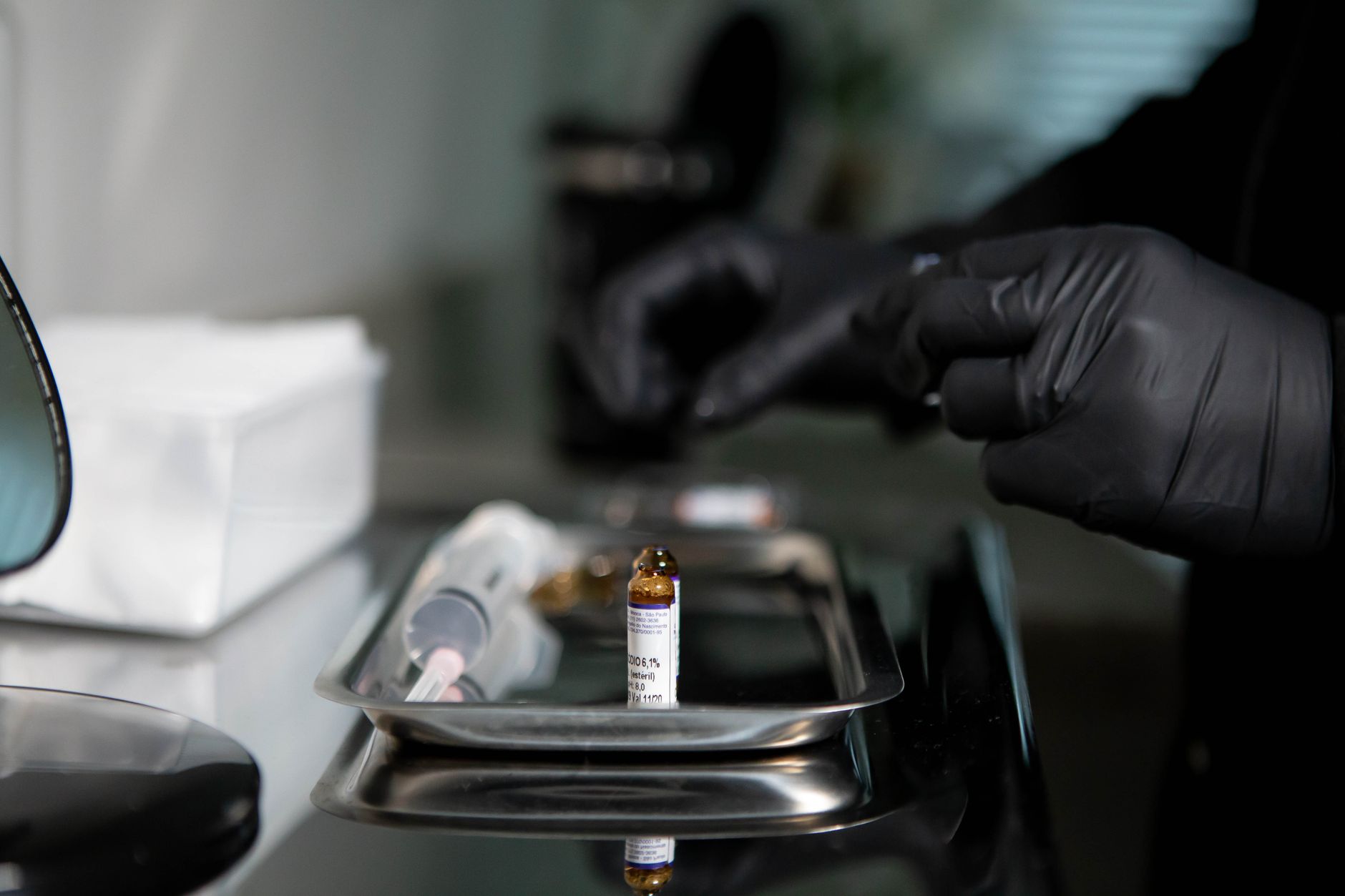
- "Safe" is not a property of peptides as a class — it depends on the specific compound, dose, purity, route of administration and the individual using it.
- Regulator-approved peptides (such as GLP-1 receptor agonists and insulin) have well-characterized safety profiles; most research peptides do not, because human clinical data is limited or absent.
- The most common reported side effects are injection-site reactions, transient nausea, water retention, flushing and changes in appetite or blood glucose.
- Serious concerns include unknown long-term effects, potential immunogenicity, theoretical effects on cell growth, and contamination or mislabeling in unregulated products.
- Pregnancy, breastfeeding, active cancer, and certain endocrine conditions are important contraindications — a healthcare professional should always be consulted before use.
What Does "Safe" Actually Mean for Peptides?
The question "are peptides safe?" sounds simple, but it cannot be answered with a single yes or no. Peptides are not one substance — they are an entire class of molecules made of short chains of amino acids, typically 2 to 50 residues long. The human body itself produces more than 7,000 known peptides that regulate everything from blood sugar to immune signaling. Asking whether peptides are safe is a little like asking whether "chemicals" or "plants" are safe: the honest answer is that it depends entirely on which one, at what dose, and in whom.
In pharmacology, safety is always relative and is expressed through the benefit–risk ratio. A compound is considered acceptably safe when its expected benefits outweigh its known and probable risks for a defined population, at a defined dose, for a defined purpose. This means a peptide can be genuinely safe for an approved medical indication under supervision, yet carry unknown or unacceptable risk when self-administered off-label for an unproven use.
Several variables shape the safety of any given peptide. These include the specific sequence and mechanism, the dose and frequency, the route of administration (oral, subcutaneous, intramuscular, topical or nasal), the purity of the product, and the health status of the individual. A peptide that is well tolerated in a healthy 30-year-old may be inappropriate for someone with a history of cancer, diabetes or kidney disease.
It is also important to distinguish between peptides you consume and peptides you inject. Dietary and cosmetic peptides — such as collagen peptides or the cosmetic peptides used in skincare — generally have a very reassuring safety record because they are broken down during digestion or act only at the skin surface. Injectable research peptides are a different category entirely and warrant far more caution.
This article is for educational purposes only and does not constitute medical advice. Always consult a qualified healthcare professional before starting any peptide.
Are Approved Peptides Safer Than Research Peptides?
One of the most useful distinctions for understanding peptide safety is the line between regulator-approved therapeutic peptides and research peptides. Approved peptides have passed through rigorous, multi-phase clinical trials in humans, where safety, effective dose and side effects are systematically measured. Familiar examples include insulin, GLP-1 receptor agonists like semaglutide and tirzepatide, and several hormone analogues. Their labels list documented adverse effects, contraindications and interactions precisely because these have been studied in thousands of participants.
Research peptides occupy a very different space. Compounds such as BPC-157, TB-500 and many growth-hormone secretagogues are widely discussed online but have little or no published human clinical trial data. For BPC-157, for instance, there are over 100 preclinical (animal and laboratory) studies but essentially zero completed Phase III human trials. Encouraging results in rats do not automatically translate into safety or efficacy in people, and animal doses cannot be directly scaled to humans.
This evidence gap is the core safety issue with research peptides. When a compound has not been formally studied in humans, its true rate of side effects, its safe dosing window, its long-term consequences and its behavior in people with underlying conditions are simply unknown. Absence of reported harm is not the same as evidence of safety — it often just reflects the absence of systematic monitoring.
The regulatory language reflects this. Most research peptides are legally classified "for research use only" and are not approved for human use in the United States, the European Union or most other jurisdictions. The FDA has issued warning letters to companies marketing unapproved peptide products for human consumption. This does not necessarily mean a peptide is dangerous, but it does mean no authority has verified that it is safe.
If you are new to the topic, our overview of what peptides are explains the biology in more depth and provides helpful context for the categories described here.
What Are the Most Common Peptide Side Effects?
Because peptides act through diverse mechanisms, their side effects vary widely. That said, several categories of adverse reactions appear repeatedly across both clinical data on approved peptides and anecdotal reports on research compounds. Understanding these helps set realistic expectations and recognize when something is wrong.
Injection-site reactions are among the most frequently reported effects for any injectable peptide. These include redness, itching, swelling, bruising and small lumps at the site. They are usually mild and transient but can indicate poor injection technique, non-sterile handling, or an irritant impurity in the product.
Gastrointestinal and systemic effects are common with metabolic peptides. GLP-1 receptor agonists, for example, frequently cause nausea, vomiting, diarrhea, constipation and reduced appetite, especially during dose escalation. Growth-hormone-related peptides can cause water retention, joint aches, tingling or numbness in the hands (carpal-tunnel-like symptoms), and temporary changes in insulin sensitivity. Some peptides trigger flushing, headache or dizziness shortly after administration.
The table below summarizes commonly reported side effects by peptide category. This is a general reference, not an exhaustive list, and individual responses differ.
| Peptide category | Commonly reported effects |
|---|---|
| GLP-1 / metabolic (e.g. semaglutide, tirzepatide) | Nausea, vomiting, diarrhea, constipation, appetite loss, gallbladder issues |
| Growth-hormone secretagogues (e.g. CJC-1295, ipamorelin) | Water retention, joint pain, tingling/numbness, altered blood glucose, fatigue |
| Repair/recovery peptides (e.g. BPC-157, TB-500) | Injection-site reactions, headache, nausea, dizziness (largely anecdotal) |
| Cosmetic/topical peptides | Local irritation, redness, contact sensitivity (rare) |
A key principle is that side effects are often dose-dependent. Higher doses, rapid escalation, and stacking multiple peptides together tend to increase both the likelihood and the severity of adverse effects. Anyone considering combining compounds should read our guide to peptide stacking to understand the added complexity and risk.
What Serious Risks and Long-Term Concerns Exist?
Beyond the common, mostly mild side effects, there are more serious theoretical and documented risks that deserve careful attention. These are the concerns that make clinicians cautious about unsupervised peptide use, even when day-to-day tolerability seems good.
The single largest concern for research peptides is the unknown long-term safety profile. Because these compounds have not been followed in humans over years, potential chronic effects on organs, hormones or metabolism remain uncharacterized. A substance can feel benign in the short term and still carry risks that only emerge with prolonged exposure — this is precisely what long-term clinical trials are designed to detect, and it is exactly the data that is missing.
Immunogenicity is a peptide-specific risk. Because peptides are biological molecules, the immune system can sometimes recognize them as foreign and mount an immune response. This can reduce effectiveness over time and, in rare cases, trigger allergic or hypersensitivity reactions. Reactions range from mild rashes to, very rarely, serious systemic responses. Anyone experiencing difficulty breathing, widespread swelling or severe rash after a peptide should seek emergency care.
Several peptides influence pathways involved in cell growth and angiogenesis (the formation of new blood vessels). Growth-promoting peptides and growth-hormone secretagogues raise a legitimate theoretical concern: any compound that stimulates tissue growth could, in principle, also promote the growth of existing but undetected tumors. This is why active or historical cancer is treated as a serious contraindication rather than a minor caution.
Metabolic and endocrine disruption is another real risk. Peptides that alter growth hormone, insulin sensitivity or appetite signaling can shift blood glucose, blood pressure and fluid balance in ways that are dangerous for susceptible individuals. Finally, with self-administered injectables there are procedural risks — infection, abscess, and vascular injury — that stem from technique and sterility rather than the molecule itself. For a deeper discussion of one widely used class, see our article on collagen peptide safety.
Who Should Avoid Peptides? Key Contraindications
Certain groups of people face substantially higher risk from peptides and should generally avoid them, or use them only under strict medical supervision for an approved indication. Recognizing these contraindications is one of the most important parts of using any peptide responsibly.
Pregnant and breastfeeding women should avoid research peptides entirely. There is virtually no safety data on peptide exposure during pregnancy or lactation, and the potential for harm to a developing fetus or infant cannot be ruled out. When safety data is absent, the responsible default in this population is non-use.
People with active or a history of cancer represent a critical contraindication, particularly for any peptide that promotes cell growth, tissue repair or angiogenesis. Because these mechanisms could theoretically accelerate tumor growth, these compounds should not be used without oncology input. Similarly, individuals with endocrine disorders — including uncontrolled diabetes, thyroid disease, or pituitary conditions — need specialist oversight because peptides can disrupt already-delicate hormonal balance.
Other groups requiring caution or avoidance include people with significant kidney or liver impairment (which affects how peptides are cleared from the body), those with known allergies or prior hypersensitivity reactions to a peptide or its excipients, and individuals taking medications with narrow therapeutic windows where an interaction could be dangerous. Adolescents and anyone whose skeletal growth is incomplete should also avoid growth-related peptides.
The table below summarizes major contraindication categories as a quick reference.
| Group | Concern |
|---|---|
| Pregnancy / breastfeeding | No safety data; potential harm to fetus or infant |
| Active or past cancer | Growth-promoting peptides may accelerate tumor growth |
| Endocrine disorders (diabetes, thyroid, pituitary) | Risk of disrupting hormonal balance and glucose control |
| Kidney or liver disease | Impaired clearance and unpredictable exposure |
| Known peptide allergy | Risk of hypersensitivity or anaphylaxis |
This list is not exhaustive. Only a qualified healthcare professional who knows your full medical history can determine whether a peptide is contraindicated for you.
How Do Purity and Sourcing Affect Safety?
For research peptides in particular, product quality may be a bigger safety factor than the molecule itself. Because these compounds are sold in a lightly regulated "research use only" market, there is no guarantee that what is on the label matches what is in the vial. Poor quality introduces risks that have nothing to do with the peptide's intended action.
Contamination is a primary concern. Peptides produced without pharmaceutical-grade controls can contain bacterial endotoxins, heavy metals, residual solvents or microbial contamination. Injecting a contaminated product can cause fever, infection, systemic inflammatory reactions and injection-site abscesses — risks that are entirely independent of the peptide's biological effect.
Mislabeling and dosing errors are also common in unregulated markets. Independent testing has repeatedly found products that contain less peptide than stated, more than stated, a different compound entirely, or significant impurities. An inaccurate label makes safe dosing impossible: a vial labeled as one strength but containing another can lead to accidental overdose or complete lack of the expected content.
To reduce these risks, buyers should look for suppliers that provide third-party certificates of analysis (COA) confirming identity, purity (typically reported as a percentage by HPLC) and, ideally, endotoxin testing. Reputable vendors are transparent about their testing, storage and handling. Even so, third-party testing verifies quality — it does not make an unapproved compound clinically safe or legal for human use.
Proper reconstitution and storage matter too. Many peptides are supplied as lyophilized (freeze-dried) powder and must be reconstituted with sterile or bacteriostatic water, kept refrigerated, and used within a limited window. Errors here degrade the peptide and can introduce contamination. Tools such as a reconstitution calculator can help avoid dosing mistakes; a general primer on the compounds is available in our peptide glossary.
Do Peptides Interact With Medications?
Peptides can and do interact with other medications, and these interactions are frequently overlooked by people who assume that "natural" biological molecules are automatically compatible with their prescriptions. Interactions can either amplify effects to a dangerous degree or blunt the effectiveness of essential medications.
The clearest examples come from metabolic peptides. GLP-1 receptor agonists slow gastric emptying and lower blood glucose; combining them with insulin or sulfonylureas can cause hypoglycemia, a potentially serious drop in blood sugar. Slowed gastric emptying can also change how quickly oral medications are absorbed, altering the effect of drugs that depend on predictable absorption timing.
Growth-hormone-related peptides can reduce insulin sensitivity and raise blood glucose, working against diabetes medications and complicating glycemic control. Peptides that affect fluid balance may interact with blood pressure medications and diuretics. Because many people who use peptides also take supplements, hormones or other performance compounds simultaneously, the number of possible interactions grows quickly and becomes difficult to predict.
There is also the issue of stacking multiple peptides at once. Combining compounds multiplies not only the potential benefits people are seeking but also the potential for additive side effects and unpredictable interactions. The more substances involved, the harder it becomes to attribute an adverse effect to a specific cause or to manage it safely.
The safest approach is full disclosure: anyone using or considering peptides should give their physician and pharmacist a complete list of everything they take, including research compounds, supplements and over-the-counter products. Pharmacists in particular are well positioned to flag interactions that might otherwise go unnoticed.
What Precautions Reduce the Risks?
While no precaution can make an unproven compound fully "safe," a set of sensible practices meaningfully reduces the likelihood of harm. These steps reflect standard clinical risk-management thinking applied to a context where formal oversight is often missing.
The most important precaution is medical supervision. Consulting a healthcare professional before starting — and ideally being monitored during use — allows for baseline health assessment, screening for contraindications, appropriate lab testing, and rapid response if problems arise. This is especially valuable for anyone with an underlying condition or on other medications.
A second principle is to start low and go slow. Beginning at the lowest reasonable dose and escalating gradually, if at all, gives the body time to reveal adverse reactions before they become severe. It also helps distinguish tolerable effects from warning signs. Introducing only one peptide at a time — rather than several simultaneously — makes it possible to identify the source of any side effect.
Other practical precautions include:
- Verify quality: obtain products only from suppliers who provide third-party certificates of analysis for identity, purity and endotoxin levels.
- Use sterile technique: proper reconstitution, sterile water, clean injection practices and correct storage prevent infection and product degradation.
- Track everything: keep a record of the compound, dose, batch, timing and any effects, so patterns and problems can be spotted early.
- Know the warning signs: stop use and seek care for severe allergic reactions, persistent chest pain, uncontrolled blood sugar, or signs of infection.
- Respect contraindications: avoid use during pregnancy, with active cancer, or with unmanaged chronic disease.
Finally, maintain realistic expectations and healthy skepticism. Marketing that promises dramatic, risk-free results is a red flag. A cautious, informed and monitored approach is the single best protection against the avoidable risks associated with peptides.
Are Peptides Legal and Regulated?
Legal status is a distinct question from biological safety, but the two are connected: the regulatory category of a peptide tells you a great deal about how thoroughly its safety has been vetted. Legal status also varies significantly by jurisdiction, so what is permissible in one country may be restricted in another.
Approved peptide medications — such as insulin and GLP-1 receptor agonists — are fully regulated pharmaceuticals available by prescription, with manufacturing standards, quality control and pharmacovigilance behind them. These are legal to prescribe and use for their approved indications, and their safety is actively monitored.
Most other peptides discussed in fitness, longevity and recovery contexts are sold as "research chemicals" or "for research use only" and are not approved for human use. In the United States and European Union, this means they may be legal to sell for laboratory research but are not legal to market or label for human consumption. The FDA has issued warning letters and has taken steps to restrict certain peptides from compounding pharmacies. Selling them for human use, or making health claims, generally violates regulations.
There is an additional consideration for athletes: the World Anti-Doping Agency (WADA) prohibits many peptides, including peptide hormones and growth factors, under its S2 category. Competitive athletes risk sanctions for using compounds that may be freely discussed elsewhere, regardless of any perceived safety.
The practical takeaway is that a peptide being available for purchase online does not mean it has been judged safe, effective or legal for human use. Regulatory approval is a signal of vetted safety; a "research use only" designation is a signal that such vetting has not occurred. For our full position and legal notes, see the medical disclaimer. Always consult a qualified healthcare professional and verify the legal status in your own jurisdiction before considering any peptide.
Recommended products
Research peptides selected for quality and purity:
GHK-Cu
Anti-Aging Compound
Test your knowledge
Quick quiz · 6 questions
Peptide Lab — free calculator & tracker
Calculate your reconstitution, track your peptides and injections. Free, no credit card required.
Frequently Asked Questions
Are peptides safe to take every day?
What are the most common side effects of peptides?
Can peptides cause cancer?
Are research peptides bought online safe?
Do I need to see a doctor before using peptides?
Sources
- Wang L, Wang N, Zhang W, et al. (2022). Therapeutic peptides: current applications and future directions. Signal Transduction and Targeted Therapy.
- Muttenthaler M, King GF, Adams DJ, Alewood PF (2021). Trends in peptide drug discovery. Nature Reviews Drug Discovery.
- Sikiric P, Rucman R, Turkovic B, et al. (2018). Novel cytoprotective mediator BPC 157: preclinical evidence and safety considerations. Current Pharmaceutical Design.
- Wilding JPH, Batterham RL, Calanna S, et al. (2021). Once-Weekly Semaglutide in Adults with Overweight or Obesity (STEP 1). New England Journal of Medicine.
- Ratih R, Wätzig H, El Deeb S, et al. (2022). Immunogenicity of therapeutic peptides and strategies to reduce it. Journal of Pharmaceutical and Biomedical Analysis.
- U.S. Food and Drug Administration (2023). Certain Bulk Drug Substances for Use in Compounding — Peptide-related regulatory actions and warning letters. FDA.gov (Compounding / Enforcement).