
- The strongest human evidence for collagen peptides in this niche is for nails: a controlled study found faster nail growth and fewer broken nails after daily supplementation.
- Evidence for hair is weaker and more indirect than for nails or skin, so expectations should stay modest and grounded in the current research.
- Marine (fish) and bovine collagen both supply the same key amino acids (glycine, proline, hydroxyproline); the source matters less than dose, quality, and consistency.
- Effective daily doses in studies generally range from 2.5 to 10 grams of hydrolyzed collagen, taken continuously.
- Realistic timelines are 8 to 12 weeks for nails and roughly 12 to 24 weeks for any hair change, because both grow slowly.
- Collagen peptides are a food-derived supplement, not a drug, and they are not a substitute for treating an underlying medical or nutritional cause.
What are collagen peptides and how do they reach hair and nails?
Collagen peptides, also called hydrolyzed collagen or collagen hydrolysate, are short chains of amino acids produced by breaking down whole collagen from animal sources. Native collagen is a large, tightly wound triple helix that the body cannot absorb intact. Enzymatic hydrolysis cuts it into much smaller fragments, typically in the range of 2,000 to 5,000 daltons, which dissolve easily in water and survive digestion far better than the parent protein.
What makes collagen distinctive is its amino acid profile. It is unusually rich in glycine, proline, and hydroxyproline, arranged in repeating Gly-Pro-Hyp motifs. When you consume collagen peptides, digestion releases free amino acids and small di- and tri-peptides, some of which (such as prolyl-hydroxyproline) can be detected in the bloodstream after ingestion. The current scientific hypothesis is twofold: these fragments provide raw building blocks for keratin and connective tissue, and certain peptides may act as signaling molecules that nudge fibroblasts toward producing more of the body's own collagen.
It is important to be precise about what collagen is and is not. Collagen is a structural protein, not a classic research peptide like the injectable compounds discussed in our introduction to peptides. Hydrolyzed collagen is sold as an oral dietary supplement and is generally regarded as food, which is a very different regulatory category from investigational injectables.
For hair and nails specifically, the logic is indirect. Nails are made largely of keratin, and hair shafts are keratinized structures anchored in follicles surrounded by a collagen-rich dermal matrix. Collagen does not become keratin directly, but supplying amino acids and potentially stimulating the surrounding matrix are the two mechanisms researchers point to. This article focuses strictly on that hair-and-nail use case. For a broader ranking across brands and formats, see our hub guide to the top 10 collagen peptides.
What does research say about collagen for nail strength and growth?
Nails are where the human evidence for collagen peptides is most direct. The most cited study is a 2017 open-label trial by Hexsel and colleagues, published in the Journal of Cosmetic Dermatology. Participants with brittle nails took 2.5 grams of specific bioactive collagen peptides daily for 24 weeks. The researchers reported a 12 percent increase in nail growth rate and a 42 percent decrease in the frequency of broken nails, with most participants also reporting improved nail appearance.
Those numbers are meaningful, but they deserve context. The study was open-label and did not include a placebo group, which limits how firmly cause and effect can be established. Brittle nail syndrome also fluctuates naturally with season, hydration, and hand exposure to water and detergents, so some improvement can occur independently of any supplement. Even so, the direction and size of the effect are consistent with the biological rationale, and the trial remains the strongest single piece of evidence in this niche.
Broader reviews reinforce a cautiously positive picture. A 2019 systematic review of oral collagen supplementation in dermatology by Choi and colleagues concluded that collagen showed favorable results for skin elasticity, hydration, and nail parameters, while calling for larger placebo-controlled trials. In practical terms, nails are a reasonable target because they are a keratin structure with a measurable, relatively fast growth rate compared with the deeper changes collagen is asked to produce elsewhere.
A realistic expectation for nails is fewer splits and peels and a modest increase in growth speed over roughly two to three months of daily use. Collagen is unlikely to fix nail problems caused by thyroid disorders, iron deficiency, fungal infection, or repeated cosmetic trauma. If your nails changed suddenly or are accompanied by other symptoms, that points toward a medical cause worth investigating rather than a supplement.
Can collagen peptides improve hair density and quality?
Hair is where enthusiasm often outruns the data. Unlike nails and skin, there are very few well-controlled human trials that measure collagen supplementation against objective hair outcomes such as follicle density, shaft diameter, or shedding counts. Most of what circulates online extrapolates from skin studies or relies on marketing claims rather than head-to-head clinical evidence.
The biological rationale is plausible but indirect. Hair follicles sit within the dermis, a tissue that is roughly 70 percent collagen by dry weight. The dermal papilla at the base of each follicle depends on a healthy surrounding matrix and blood supply to sustain the growth phase of the hair cycle. Improving the dermal environment could in theory support follicle function, and collagen also supplies amino acids like proline that the body uses across many tissues. What the evidence does not show is collagen acting as a direct hair-growth drug the way clinically approved treatments do.
There is a meaningful difference between hair that looks and feels better and hair that is measurably denser. Better hydration and skin quality of the scalp, or a modest reduction in breakage, can make hair appear healthier without changing the number of follicles producing hair. If your goal is treating pattern hair loss, collagen is not a substitute for evidence-based options, and this is worth an honest conversation with a clinician. For a dedicated overview of the peptide landscape in this area, see our article on peptides for hair.
The fair summary is this: collagen peptides may support the general condition of hair and scalp as part of adequate protein and micronutrient intake, but the direct evidence for increased hair density is currently thin. Anyone promising guaranteed regrowth from collagen alone is overstating what the research supports.
Marine or bovine collagen: which is better for hair and nails?
The two dominant sources on the market are marine collagen (from fish skin and scales) and bovine collagen (from cattle hide and bone). Both are hydrolyzed into peptides, and both deliver the same core amino acids that matter for keratin structures. For most people, the practical difference is smaller than marketing suggests.
Marine collagen is predominantly type I, the same collagen type that dominates skin, nails, and the dermal matrix around hair follicles. Its peptides are often reported to have a slightly lower average molecular weight and good solubility, and some studies suggest efficient absorption. It is also suitable for people who avoid beef for dietary or religious reasons, though not for those with fish or shellfish allergies. Bovine collagen supplies a mix of type I and type III, is generally less expensive per gram, and has a neutral taste that blends easily.
| Factor | Marine (fish) | Bovine (cattle) |
|---|---|---|
| Collagen types | Mainly type I | Type I and III |
| Relevance to nails and hair | High (type I dominant) | High |
| Typical cost | Higher | Lower |
| Allergy caution | Fish/shellfish allergy | Rarely an issue |
| Dietary notes | Fish-derived, beef-free and pork-free | Not for those avoiding beef |
No high-quality head-to-head trial has shown one source to be clearly superior for nails or hair. The variables that actually predict results are the daily dose, whether the product uses studied bioactive peptides, third-party purity testing, and above all consistency of use. Choose the source that fits your diet, budget, and allergy profile, then take it reliably. For a wider comparison across formats and brands, our collagen peptides hub ranks the leading options.
How do you choose an effective collagen peptide for hair and nails?
Because collagen is regulated as a food supplement rather than a drug, product quality varies widely. A few criteria separate a credible product from a poorly substantiated one, and none of them require you to pay a premium for hype.
First, check the dose per serving. Studies with positive nail or skin outcomes generally used 2.5 to 10 grams of hydrolyzed collagen per day. Many multi-ingredient beauty gummies contain only a few hundred milligrams, which is far below any tested amount. Look for a product that lets you reach a research-relevant dose without swallowing a dozen capsules.
Second, look for hydrolyzed or bioactive collagen peptides on the label rather than gelatin or unspecified collagen. Some brands use collagen that has been studied in trials, and while you should treat brand claims skeptically, a named, tested peptide is a better bet than a vague blend. Also favor products with independent third-party testing for heavy metals and contaminants, which is especially relevant for marine collagen sourced from fish.
Third, be realistic about added ingredients. Biotin, zinc, and vitamin C are commonly blended in. Vitamin C is a genuine cofactor for the body's own collagen synthesis, so it is a reasonable inclusion. Biotin only helps hair and nails if you are actually deficient, which is uncommon, and high-dose biotin can interfere with certain lab tests. More ingredients on a label is not the same as more benefit.
Finally, weigh format and cost per effective dose. Unflavored powders usually deliver the most collagen per dollar and let you control the amount, while capsules and gummies trade dose for convenience. Whatever you choose, the product only works if you take it daily for months, so pick something you will realistically stick with.
What dose and how long until you see results?
The two most common reasons people conclude that collagen does not work are underdosing and quitting too early. Both hair and nails grow slowly, so patience and consistency are not optional extras, they are the core of the protocol.
On dosing, the research range is 2.5 to 10 grams of hydrolyzed collagen per day. The nail study by Hexsel used 2.5 grams daily, while many skin studies use 2.5 to 5 grams and some general collagen protocols go higher. There is no strong evidence that megadosing beyond this range produces proportionally better hair and nail outcomes, so a moderate, sustained dose is sensible. Collagen can be taken at any time of day, with or without food, and mixing it with a vitamin C source is a reasonable, low-cost habit.
| Outcome | Realistic timeline | What to expect |
|---|---|---|
| Nail brittleness | 4 to 8 weeks | Fewer splits and peels reported first |
| Nail growth rate | 8 to 12 weeks | Modest increase in growth speed |
| Hair feel and quality | 8 to 12 weeks | Possible improvement in condition, not density |
| Hair density (if any) | 12 to 24 weeks | Uncertain; evidence is limited |
The timeline reflects biology. Fingernails grow roughly 3 millimeters per month, so replacing the visible nail plate takes months, and scalp hair grows about 1 centimeter per month within a growth cycle that spans years. Any honest assessment of collagen for these tissues requires at least a full 12-week trial before judging, and closer to 24 weeks for hair. Take a baseline photo of your nails and hair so you can compare objectively rather than relying on memory.
This information is educational and not medical advice. If you are pregnant, breastfeeding, managing a chronic condition, or taking medication, review any supplement with a qualified healthcare professional first, and see our medical disclaimer for details.
What are the limitations, risks, and who should be cautious?
Hydrolyzed collagen has a reassuring safety profile in the published literature. As a food-derived protein, it is generally well tolerated, and reported side effects are mild and infrequent, most commonly a feeling of fullness, mild digestive discomfort, or an unpleasant aftertaste with some marine products. It is not, however, free of considerations, and no supplement is completely without risk.
The most important limitation is evidentiary, not toxicological. Several key studies are open-label or industry-funded, sample sizes are often small, and the hair evidence in particular is thin. That does not mean collagen is ineffective, but it does mean claims should be framed as supported by preliminary evidence rather than proven. Be cautious of products that promise dramatic regrowth or guaranteed results, which the science does not back.
Certain groups should take extra care. People with fish or shellfish allergies must avoid marine collagen. Anyone with a history of kidney disease should discuss any high-protein supplement with their clinician. Collagen supplements are not standardized like medicines, so contaminant testing matters, and marine sources should be screened for heavy metals. This is another reason to favor third-party tested products. For a fuller discussion of potential downsides, see our article on collagen peptide safety and risks.
Finally, collagen cannot correct an underlying cause. Brittle nails and thinning hair are frequently signs of iron deficiency, thyroid dysfunction, rapid weight loss, or inadequate overall protein intake. If your symptoms are new, severe, or accompanied by fatigue or other changes, the priority is a medical evaluation, not a supplement. Collagen works best as a supporting player within an already adequate diet, not as a rescue remedy.
How can you maximize collagen's benefits for hair and nails?
Collagen peptides perform best when they sit on top of solid nutritional and lifestyle foundations. Because hair and nails are among the last tissues to receive nutrients, they are sensitive to overall deficits, and fixing the basics often does more than any single supplement.
Start with total protein. Keratin, the structural protein of hair and nails, is built from amino acids, so adequate daily protein intake is the non-negotiable baseline. Collagen is a useful supplemental protein but is incomplete on its own because it lacks tryptophan, so it should complement, not replace, high-quality dietary protein. Pairing collagen with a source of vitamin C is worthwhile because vitamin C is a required cofactor for the body's own collagen synthesis.
Micronutrients matter next. Iron, zinc, biotin, and vitamin D deficiencies are among the most common nutritional contributors to brittle nails and increased shedding. Rather than blindly stacking supplements, it is more effective to identify and correct any real deficiency, ideally guided by bloodwork. Supplementing a nutrient you already have in adequate amounts rarely helps and occasionally causes problems.
Lifestyle and topical care round out the picture. Protecting nails from prolonged water and detergent exposure, using gloves for wet work, minimizing harsh chemical treatments, and avoiding excessive heat styling all reduce mechanical damage that no supplement can undo. Some people also explore topical peptides such as copper peptides for scalp and skin support; you can read about one example in our guide to GHK-Cu. Combine these habits with a consistent, adequately dosed collagen routine and a realistic 12 to 24 week horizon, and you give yourself the best evidence-based chance of a visible result.
Recommended products
Research peptides selected for quality and purity:

GHK-Cu
Anti-Aging Compound
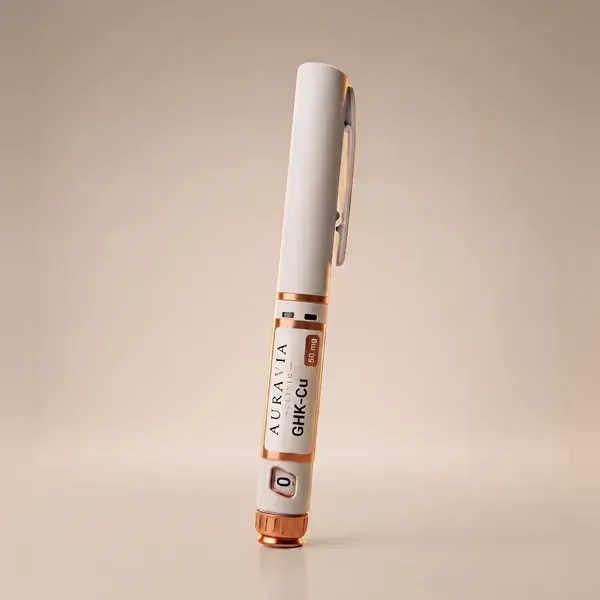
GHK-Cu Pen
Pre-filled Pen GHK-Cu
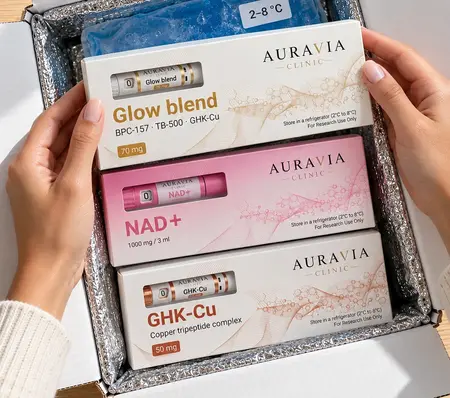
GLOW-UP Ritual
3-pen pack: Glow, NAD+, GHK-Cu
Test your knowledge
Quick quiz · 6 questions
Peptide Lab: free calculator & tracker
Calculate your reconstitution, track your peptides and injections. Free, no credit card required.
Frequently Asked Questions
Do collagen peptides actually work for nails?
Is collagen better than biotin for hair and nails?
Marine or bovine collagen for hair and nails?
How long before I see results in my nails and hair?
What is the right daily dose of collagen peptides?
Can collagen regrow hair or reverse hair loss?
Are collagen peptides safe to take daily?
Should I take collagen if my diet is already high in protein?
Sources
- Hexsel D, Zague V, Schunck M, Siega C, Camozzato FO, Oesser S (2017). Oral supplementation with specific bioactive collagen peptides improves nail growth and reduces symptoms of brittle nails. Journal of Cosmetic Dermatology. (PubMed)
- Choi FD, Sung CT, Juhasz ML, Mesinkovska NA (2019). Oral Collagen Supplementation: A Systematic Review of Dermatological Applications. Journal of Drugs in Dermatology. (PubMed)
- Proksch E, Segger D, Degwert J, Schunck M, Zague V, Oesser S (2014). Oral supplementation of specific collagen peptides has beneficial effects on human skin physiology: a double-blind, placebo-controlled study. Skin Pharmacology and Physiology. (PubMed)
- de Miranda RB, Weimer P, Rossi RC (2021). Effects of hydrolyzed collagen supplementation on skin aging: a systematic review and meta-analysis. International Journal of Dermatology. (PubMed)
- León-López A, Morales-Peñaloza A, Martínez-Juárez VM, Vargas-Torres A, Zeugolis DI, Aguirre-Álvarez G (2019). Hydrolyzed Collagen: Sources and Applications. Molecules. (PubMed)
- Wang H (2021). A Review of the Effects of Collagen Treatment in Clinical Studies. Polymers. (PubMed)