
- Native type I collagen weighs roughly 300,000 g/mol, far above the commonly cited 500 Dalton threshold for passive skin penetration, so the collagen in a mask stays on the surface of the stratum corneum.
- That surface position is not useless: collagen behaves as a humectant and a film former, which produces measurable short-term gains in hydration and in surface smoothness.
- Those gains are temporary. No published evidence shows that applying collagen to the skin increases the collagen content of your dermis.
- Collagen, hydrolyzed collagen and signal peptides such as Matrixyl are three different categories. Only the signal peptides are designed to act as messengers to fibroblasts, and even there the clinical literature is thin.
- Clinical data specific to collagen masks is limited, mostly short, often small and frequently industry sponsored. A 2019 systematic review found only 12 papers reporting 15 studies for the whole class of matrix-stimulating cosmetic peptides.
- Reading the INCI list matters more than the front label: if hydrolyzed collagen appears after the preservatives, it is present at a token level.
- Dry, dehydrated, mature and sensitive skin get the most comfort from these masks. Oily and acne-prone skin should be cautious with heavily occlusive overnight jelly formats.
- This article is for educational purposes only and does not replace advice from a dermatologist or pharmacist.
What exactly is a collagen face mask?
A collagen face mask is any leave-on or wear-and-remove facial product whose marketing centers on collagen as the hero ingredient. In practice the category covers four quite different objects: a non-woven or cotton sheet mask soaked in a serum that contains collagen or hydrolyzed collagen; a hydrogel mask, which is a soft gel sheet usually built on a polymer and water matrix; a dry native collagen sheet that you rehydrate with an activator liquid at the moment of use; and a thick leave-on overnight mask, often sold as a collagen jelly or sleeping mask.
Collagen itself is the most abundant protein in the human body and the structural backbone of the dermis. Type I collagen dominates adult skin, giving it tensile strength, while type III is more prominent in younger and in healing skin. Cosmetic collagen is not human collagen. It is extracted from bovine or porcine hides and bones, from fish skin and scales, or produced in recombinant systems such as yeast, bacteria or plants. A 2018 review in the Journal of Cosmetic Dermatology surveys these sources and the question of which collagen types are best suited to cosmetic use. If the animal origin matters to you, our comparison of marine versus bovine collagen covers the sourcing differences in detail.
Here is the part that most product pages leave out: the word "collagen" on a box tells you nothing useful on its own. It does not tell you the concentration, the molecular size, whether the protein is intact or hydrolyzed, or whether it is doing anything beyond holding water at the surface. Two masks can both claim collagen while one contains a few percent of soluble collagen and the other contains a trace amount added after the preservative system, purely so the word can appear on the front.
So the honest question is not whether collagen masks "work" in the abstract. It is: what specific effect does a layer of collagen sitting on your stratum corneum for twenty minutes actually produce, and what effect does it definitely not produce? The rest of this article answers both halves of that question, with the limits of the evidence stated as plainly as the findings.
Can topical collagen penetrate the skin?
For practical purposes, no. The reason is molecular size, and it is one of the better established constraints in topical delivery. In 2000, Bos and Meinardi published in Experimental Dermatology what became known as the 500 Dalton rule: for a compound to be absorbed through intact skin, its molecular weight should be under roughly 500 Dalton. Their argument rested on three observations. Virtually all common contact allergens weigh less than 500 Dalton, the pharmacological agents used in topical dermatology are all under 500 Dalton, and every drug then used in transdermal delivery systems also fell under that ceiling.
Now compare. A single native type I collagen molecule is a triple helix built from three polypeptide chains of about a thousand amino acids each, with a molecular weight in the region of 300,000 g/mol. That is roughly six hundred times the 500 Dalton threshold. The helix is also long and rod-like, around 300 nanometers end to end and only about 1.5 nanometers across, which is a poor shape for squeezing between corneocytes through the lipid lamellae of the stratum corneum. A molecule that size does not diffuse into living epidermis, let alone reach the dermal fibroblasts where new collagen is actually assembled.
Hydrolyzed collagen is smaller, but usually not small enough to change the conclusion. Cosmetic hydrolysates typically span a few hundred to a few thousand Dalton, and most of the mass sits above 500 Dalton. The smallest fragments, such as the Gly-Pro-Hyp tripeptide at 285.30 g/mol, are below the threshold on paper. In practice they are also small, highly hydrophilic and charged, which makes them poor candidates for passive diffusion through a lipid-rich barrier. Being under 500 Dalton is a necessary condition, not a sufficient one.
The consequence is worth stating bluntly, because a lot of advertising implies the opposite: the collagen you apply does not become the collagen in your dermis. Even if a fragment did cross the barrier, your fibroblasts do not import finished protein and install it into the matrix. They synthesize procollagen from free amino acids, assemble it intracellularly, secrete it, and crosslink it extracellularly. Any route to more dermal collagen has to go through those cells and their signaling, which is a different mechanism entirely and the subject of our article on how peptides signal collagen stimulation.
Reviews of collagen in cosmetic formulation are consistent on this point. Collagen and its derivatives are valued in cosmetics for their water-binding capacity, their film-forming behavior and their effect on the sensory feel of a product, not as a source of replacement structural protein.
What does a collagen mask actually do?
Three mechanisms explain essentially everything a collagen mask delivers, and none of them require penetration.
The first is humectancy. Collagen and hydrolyzed collagen are protein structures rich in hydroxyl and amide groups that bind water. Spread across the stratum corneum, they hold a reservoir of water against the surface, which raises the water content of the outermost layers. This is what a Corneometer measures when a study reports a hydration increase after masking.
The second is occlusion. A sheet, and especially a hydrogel sheet or a thick overnight jelly, physically limits evaporation. Transepidermal water loss drops for the duration of wear, which lets the serum underneath hydrate the corneocytes more effectively than the same serum applied bare. A 2025 clinical evaluation of a multi-component facial mask in the Journal of Cosmetic Dermatology tracked exactly these two parameters, hydration by Corneometer and transepidermal water loss by Vapometer, in a 28-day protocol with application every two days, and reported improvement in both immediately after use and at day 28.
The third is the film effect. As the water phase evaporates, collagen and other polymers leave a thin cohesive film on the surface. That film fills in the microrelief of the skin, so light reflects more evenly and fine lines appear shallower. Instrumental roughness measurements pick this up. It is a real, reproducible, optical and mechanical effect, and it is also an entirely superficial one that washes off.
Repeated use can build on these effects without changing their nature. A 2026 pilot study in the International Journal of Cosmetic Science followed a hydrogel facial mask over six weeks in people with sensitive and allergy-prone skin. The mask was based on polyvinylpyrrolidone, polyethylene glycol 400 and agar, with hyaluronic acid, ectoine, allantoin and tocopherol as actives. Repeated application produced progressive improvement in hydration and firmness, with no measurable adverse effect on barrier-related parameters, sebum, skin color or pH. Better hydrated skin is more supple and looks better, and that improvement accumulates while you keep masking. It is not the same claim as dermal remodeling.
Collagen masks are also widely used as a soothing step after procedures or sun exposure, where the goal is comfort and barrier support rather than anti-aging. In that role the cooling, occlusive, fragrance-free sheet is doing most of the work, and the collagen is one humectant among several.
Sheet, hydrogel or overnight collagen jelly: which format does what?
Format changes the experience and the degree of occlusion far more than the collagen content does. Here is how the main options compare.
| Format | How it works | Occlusion | Typical wear | Best suited to |
|---|---|---|---|---|
| Non-woven or cotton sheet | Fabric carrier pre-soaked in serum | Low to moderate | 15 to 20 min | Occasional hydration boost, travel, low cost |
| Bio-cellulose sheet | Fine fermented cellulose fiber, close skin contact | Moderate to high | 15 to 30 min | Better serum transfer, post-procedure comfort |
| Hydrogel sheet | Water-swollen polymer gel, usually two pieces | High | 20 to 40 min | Sensitive and reactive skin, cooling effect |
| Dry native collagen sheet plus activator | Collagen sheet rehydrated at point of use | High | 20 min | Highest collagen content per application |
| Overnight collagen jelly or sleeping mask | Thick leave-on gel or balm, no sheet | High and prolonged | 6 to 8 h | Very dry skin, dry climates, winter |
The dry native collagen sheet is the format where the collagen is genuinely the product rather than an additive. The 2024 evaluation published in the Journal of Cosmetic Dermatology studied a sheet composed of more than 92 percent native bovine collagen, rehydrated with an activator liquid. If you want maximum collagen on the skin, this is the architecture that delivers it. Whether more collagen on the surface translates into a better outcome than a well-formulated hydrogel is a separate question the literature has not settled.
Two practical points about the overnight collagen jelly category. Longer contact is not automatically better: once the stratum corneum is saturated, additional hours add occlusion rather than hydration, and prolonged occlusion is precisely what tends to cause problems on acne-prone skin. And a fabric sheet mask should never be left on overnight or allowed to dry on the face. A drying sheet reverses direction and pulls water out of the skin by evaporation, which is the opposite of the intended effect. If you want overnight occlusion, use a product formulated as a leave-on.
A plain cost observation: across formats, the price per application varies by an order of magnitude, while the measurable hydration difference between a cheap pre-soaked sheet and a premium one is usually modest. The 2024 study comparing a native collagen mask against a standard pre-soaked cellulose mask found that both produced measurable improvement in skin roughness and hydration at every time point assessed.
Collagen, collagen peptides and signal peptides: what is the difference?
These three terms get used interchangeably in marketing copy, and they should not be. They describe molecules with different sizes, different intended mechanisms and very different levels of supporting evidence.
Native collagen is the intact protein, around 300,000 g/mol, appearing on INCI lists as Collagen, Soluble Collagen or Atelocollagen. It is a film former and a humectant. It acts at the surface, by design and by physics.
Collagen peptides, also called hydrolyzed collagen, are enzymatic or acid breakdown fragments of that protein, typically a few hundred to a few thousand Dalton. In a topical product they are better humectants than intact collagen because they are more soluble and spread more evenly, and they leave a lighter, less tacky film. They are not messengers. They are a heterogeneous mixture of fragments with no specific receptor target in the skin. Note that oral collagen peptides are a different subject with a separate and considerably larger evidence base, which we handle in our review of collagen peptides for skin and in the ranking of oral collagen peptide supplements.
Signal peptides are short synthetic sequences, usually three to six amino acids, selected or designed to interact with fibroblast signaling. The best known is Matrixyl, whose INCI name is Palmitoyl Pentapeptide-4. Its peptide core, KTTKS, is a fragment of the carboxy-terminal propeptide of type I collagen, and the palmitoyl chain is attached specifically to improve its affinity for the lipid barrier. Matrixyl 3000 is a different material: a combination of Palmitoyl Tripeptide-1 and Palmitoyl Tetrapeptide-7. The supplier reports a 117 percent increase in collagen synthesis for that combination, which is in vitro manufacturer data, not an independent clinical result, and should be read as such.
Human data for Matrixyl does exist. A 2005 study in the International Journal of Cosmetic Science ran a 12-week, double-blind, placebo-controlled, split-face design in 93 Caucasian women aged 35 to 55, comparing a moisturizer control against the same vehicle with palmitoyl pentapeptide, and reported significant improvement in fine lines and wrinkles on self-assessment. That is a reasonable study for a cosmetic ingredient. It is also a single study, it tested one peptide in one vehicle, and it says nothing about collagen masks.
The classical cosmetic classification, set out by Lupo and Cole in Dermatologic Therapy in 2007, splits cosmeceutical peptides into signal peptides, carrier peptides and neurotransmitter-affecting peptides. Enzyme inhibitors are often added as a fourth group in more recent reviews. If your goal is an anti-wrinkle effect with an actual proposed mechanism rather than a surface effect, a signal peptide is the category to look at, and our guide to the best peptide serums for wrinkles compares those formulas. A collagen mask and a peptide serum are complementary products, not competitors.
What do the few clinical studies on collagen masks actually show?
The evidence base deserves a candid description. Clinical research on collagen masks specifically is sparse, and what exists tends to be small, short, industry sponsored, and frequently without a true placebo arm. That does not make the findings worthless. It does mean the conclusions should be stated narrowly.
The most comprehensive single publication is the 2024 evaluation of a native collagen sheet mask in the Journal of Cosmetic Dermatology, by Janssens-Böcker, Wiesweg and Doberenz. It bundles five separate clinical studies on a sheet made of more than 92 percent native bovine collagen: a comparison of skin microbiome diversity, tolerance and local irritation in atopic dermatitis, skin redness after ultraviolet exposure, wrinkle reduction, and hydration and roughness against a pre-soaked cellulose sheet mask. In that last comparison, 20 women aged 35 to 65 wore the masks once for 20 minutes, with measurements at 20, 40 and 120 minutes afterward. Both masks improved roughness and hydration at every time point. The authors conclude that collagen sheet masks can positively affect skin hydration, redness, the appearance of wrinkles, and the maintenance of the skin microbiome and barrier.
Read that carefully. It is a well-reported set of studies, and the parameters it moved are surface parameters measured over minutes to hours in small samples. It is not evidence of dermal collagen synthesis, and the paper does not claim to be.
For the broader class of cosmetic peptides claimed to stimulate extracellular matrix, Michalek, Lelen-Kaminska and Caetano Dos Santos published a PRISMA systematic review in the Australasian Journal of Dermatology in 2019. Searching three databases, they located only 12 papers reporting 15 independent studies for the entire ingredient class, and noted methodological limitations across them. For a category that appears in a large share of anti-aging products, that is a thin literature.
More recently, a 2026 systematic review and meta-analysis in Frontiers in Medicine pooled 19 randomized, double-blind, placebo-controlled trials of oral and topical peptides for skin aging. The direction of effect for peptides as a class is favorable in that analysis, but note what is being pooled: peptides, administered orally and topically, not collagen masks.
Putting it together, the defensible summary is this. Hydration and short-term surface smoothing from collagen masks are supported by small clinical studies and are consistent with well-understood physical mechanisms. Tolerance appears good, including in sensitive and atopic-prone skin in the studies that looked. Claims that a topical collagen mask increases dermal collagen are not supported by published human evidence. This section describes research findings and is not medical advice; discuss any specific skin concern with a dermatologist or pharmacist.
How do you read the INCI list on a collagen mask?
The INCI list is the one part of the packaging that is regulated rather than written by marketing, which makes it the most informative thing on the box. Two rules govern it. Ingredients present above 1 percent are listed in descending order of concentration. Ingredients at or below 1 percent may be listed in any order after that, which is why the tail of the list tells you very little about relative amounts.
Apply that to a collagen mask. If Hydrolyzed Collagen appears in the first five or six positions, after water and a humectant such as glycerin or butylene glycol, it is present at a meaningful level. If it appears after the preservative system, the fragrance or a chelating agent such as Disodium EDTA, you are looking at a trace addition whose main function is to justify the claim on the front of the pack. Neither case is fraud. Only one of them is worth paying extra for.
The collagen-related names you will encounter:
| INCI name | What it is |
|---|---|
| Collagen, Soluble Collagen, Atelocollagen | Intact or near-intact protein; film former and humectant |
| Hydrolyzed Collagen | Enzymatically cleaved fragments; better humectant, lighter film |
| Hydrolyzed Marine Collagen, Hydrolyzed Fish Collagen | Fish-derived hydrolysate; relevant if you have a fish allergy |
| Collagen Amino Acids | Full hydrolysis to free amino acids; a humectant, no longer collagen |
| Yeast or plant extracts marketed as "vegan collagen" | Not collagen; usually amino acids or botanical extracts, sometimes recombinant proteins |
Then look at what surrounds the collagen, because that is often where the performance comes from. Useful supporting ingredients include Glycerin, Butylene Glycol, Sodium Hyaluronate, Panthenol, Betaine, Trehalose, Allantoin, ceramides and Squalane. If you want an ingredient with a proposed signaling mechanism rather than a surface effect, look for Palmitoyl Pentapeptide-4, Palmitoyl Tripeptide-1, Palmitoyl Tetrapeptide-7, Acetyl Hexapeptide-8 or Copper Tripeptide-1.
What to treat with caution, particularly on reactive skin: Parfum or Fragrance high in the list, individual fragrance allergens such as Limonene and Linalool, essential oils, Alcohol Denat. in a leave-on mask, and the preservatives Methylisothiazolinone and Methylchloroisothiazolinone, which are common sensitizers. A fragrance-free hydrogel with glycerin and sodium hyaluronate near the top of the list will usually outperform a heavily perfumed sheet that lists collagen last.
Which skin types benefit most from a collagen mask?
Because the mechanism is hydration, occlusion and film formation, the people who benefit most are the people whose main complaint is dryness, tightness or dullness. The benefit is predictable in that group and much thinner elsewhere.
Dry and dehydrated skin is the clearest fit. Both humectancy and occlusion target exactly the deficit, and the immediate improvement in suppleness and light reflection is usually visible. An overnight collagen jelly makes sense here, especially in winter or in a dry indoor climate.
Mature skin gains comfort plus a temporary softening of fine lines through the film effect. This is worth having and worth describing accurately. It is cosmetic, it lasts hours rather than weeks, and it does not substitute for the ingredients with stronger photoaging evidence such as sunscreen and retinoids.
Sensitive and reactive skin often does well with hydrogel formats, which are cool, highly occlusive and typically formulated with short ingredient lists. The 2026 pilot study in sensitive and allergy-prone skin found progressive hydration and firmness gains over six weeks with no deterioration in barrier parameters, sebum, color or pH. Choose fragrance-free, and patch test behind the ear or on the inner forearm before a full-face application.
Oily and acne-prone skin calls for more caution, not because of the collagen but because of the occlusion. Prolonged occlusion of sebum-rich skin can aggravate comedones and sometimes provoke folliculitis. A 15 to 20 minute sheet session is generally unproblematic. A thick overnight jelly over the whole face is the format most likely to cause trouble, and if you want to try one, start on dry areas only.
Atopic or eczema-prone skin should prioritize simple, fragrance-free formulas and patch test every time. The 2024 collagen mask evaluation did include a tolerance and local irritation assessment in atopic dermatitis, which is encouraging for that specific product, and should not be generalized to the category.
Two sourcing considerations. Most cosmetic collagen is animal derived, so vegans will need to look at recombinant or non-collagen alternatives, and anyone with a fish allergy should read for marine collagen. Our article on collagen peptide safety and contraindications covers allergy and sourcing questions in more depth. If you have an active skin condition, are pregnant, or are using prescription topicals, consult a healthcare professional before adding a new product.
How should you choose and use a collagen mask?
Selection criteria first, because they matter more than the brand. Judge a collagen mask on five things: where collagen sits in the INCI list, which supporting humectants are present and how high, the format relative to your skin type, the absence of fragrance if you are reactive at all, and the cost per application rather than the cost per box. If the collagen is listed last and the humectants are weak, you are buying a wet wipe with a claim on it.
Beyond that, two honest caveats. Collagen concentration is almost never disclosed, so the INCI position is the only proxy you have. And no published data establishes a dose-response relationship between the amount of topical collagen in a mask and the magnitude of the hydration or smoothing effect, which means a higher collagen content is a plausible advantage rather than a demonstrated one.
For application, the following protocol gets the most out of any format:
- Cleanse and leave the skin slightly damp. Humectants perform better with water available to bind.
- Apply a thin hydrating serum underneath if you want; the mask will act as the occlusive layer over it.
- Wear a sheet for 15 to 20 minutes, a hydrogel for 20 to 40. Remove it before it starts to dry, since a drying sheet draws water back out of the skin.
- Pat the residue in rather than rinsing, then apply a moisturizer to seal. Without that step most of the gain evaporates within the hour.
- Two to three sessions per week is ample. There is no evidence that daily masking produces proportionally more benefit.
Expectations, stated on a timeline:
| When | What is realistic |
|---|---|
| Immediately after removal | Visibly plumper, smoother, more luminous skin; measurable hydration increase |
| A few hours later | Most of the optical effect has faded; comfort persists if you sealed with moisturizer |
| After 4 to 6 weeks of regular use | Better baseline hydration and suppleness, as seen in the hydrogel pilot study |
| Any timeframe | No documented increase in dermal collagen from topical collagen itself |
Finally, placement in a routine. A collagen mask is a hydration and comfort step, best used before an event, after sun exposure or a procedure, or as a regular winter habit. It is an adjunct. The interventions with the strongest evidence against photoaging remain daily broad-spectrum sunscreen and, where appropriate and tolerated, a retinoid. A mask does not replace either.
What are the limits, the risks and the realistic expectations?
Start with the regulatory frame, because it explains a lot about the claims you see. In the European Union and the United States, a collagen mask is a cosmetic. Cosmetics are regulated for safety and for labeling, and manufacturers must hold a safety assessment, but they are not required to demonstrate efficacy to the standard applied to drugs. A product may legally claim to improve the appearance of wrinkles on the basis of a short instrumental or self-assessment study. That is a different evidentiary bar from showing a change in skin structure, and the two are easy to confuse when reading an advertisement.
The safety profile of collagen masks is generally favorable, and the reported problems are mostly about everything except the collagen:
- Contact dermatitis, most often from fragrance, essential oils or preservatives such as methylisothiazolinone rather than from collagen itself.
- Folliculitis and comedone aggravation after prolonged occlusion, particularly with overnight formats on oily skin.
- Allergic reaction to animal-derived protein, which is uncommon but relevant for people with a fish allergy using marine collagen.
- Microbial contamination of a sachet that was opened and partly reused. Single-use products are single use, and masks sitting in a warm bathroom degrade faster than the expiry date suggests.
- Stinging on a compromised barrier, since occlusion increases the penetration of everything else in the serum, including fragrance and alcohol.
Patch testing on the inner forearm for 24 to 48 hours before a first full-face use is a reasonable precaution, and a necessary one if you have atopic, rosacea-prone or otherwise reactive skin.
What a collagen mask will not do, stated once more without hedging: it will not replace lost dermal collagen, it will not fill a static wrinkle, it will not lift sagging tissue, it will not substitute for sunscreen, and it will not produce a result comparable to injectable or energy-based procedures. Anyone claiming otherwise is selling, not informing. What it will do is make your skin measurably more hydrated and visibly smoother for a period of hours, pleasantly and at low risk, and that is a legitimate reason to use one.
Medical disclaimer: this article is for educational purposes only and does not constitute medical advice, diagnosis or treatment. Cosmetic products are not intended to treat any skin disease. If you have an active dermatological condition, a known allergy, are pregnant or breastfeeding, or take prescription topical or systemic medication, consult a physician, dermatologist or pharmacist before use. Regulatory status and permitted claims for cosmetic ingredients vary by jurisdiction.
Recommended products
Research peptides selected for quality and purity:

GHK-Cu
Anti-Aging Compound
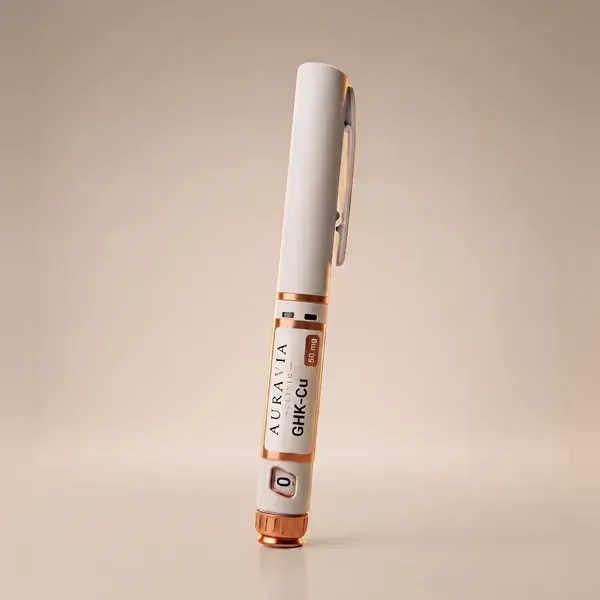
GHK-Cu Pen
Pre-filled Pen GHK-Cu
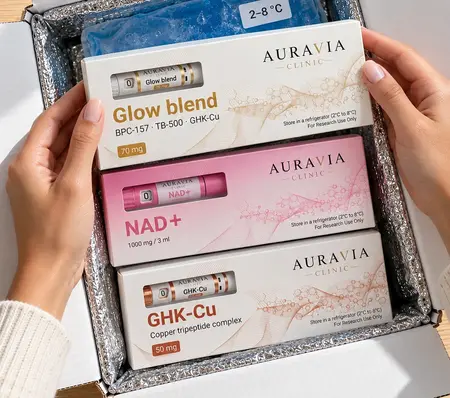
GLOW-UP Ritual
3-pen pack: Glow, NAD+, GHK-Cu
Test your knowledge
Quick quiz · 6 questions
Peptide Lab: free calculator & tracker
Calculate your reconstitution, track your peptides and injections. Free, no credit card required.
Frequently Asked Questions
Can a collagen face mask really increase the collagen in my skin?
Then why does my skin look visibly better right after a collagen mask?
What is the difference between a collagen mask and a mask with peptides like Matrixyl?
Are collagen hydrogel masks better than ordinary sheet masks?
Is it safe to leave a collagen mask on overnight?
How do I tell whether a mask contains a useful amount of collagen?
Which skin type should avoid collagen masks?
Should I use a collagen mask or take oral collagen peptides instead?
Scientific Sources
- Bos JD, Meinardi MM (2000). The 500 Dalton rule for the skin penetration of chemical compounds and drugs. Experimental Dermatology. (PubMed)
- Janssens-Böcker C, Wiesweg K, Doberenz C (2024). Native collagen sheet mask improves skin health and appearance: A comprehensive clinical evaluation. Journal of Cosmetic Dermatology. (PubMed)
- Avila Rodríguez MI, Rodríguez Barroso LG, Sánchez ML (2018). Collagen: A review on its sources and potential cosmetic applications. Journal of Cosmetic Dermatology. (PubMed)
- Sionkowska A, Adamiak K, Musiał K, Gadomska M (2020). Collagen Based Materials in Cosmetic Applications: A Review. Materials. (PMC)
- Rokita B, Kozłowska J, Adamus-Włodarczyk A, et al. (2026). Hydrogel facial mask for sensitive skin: A pilot study of long-term effects on hydration, barrier function and mechanical properties. International Journal of Cosmetic Science. (PubMed)
- Yang F, Guo M, Zhu J, Wang H (2025). Clinical Evaluation of a Multi-Component Facial Mask for Moisturizing, Repairing, and Anti-Aging Effects. Journal of Cosmetic Dermatology. (PubMed)
- Robinson LR, et al. (2005). Topical palmitoyl pentapeptide provides improvement in photoaged human facial skin. International Journal of Cosmetic Science. (PubMed)
- Michalek IM, Lelen-Kaminska K, Caetano Dos Santos FL (2019). Peptides stimulating synthesis of extracellular matrix used in anti-ageing cosmetics: Are they clinically tested? A systematic review of the literature. Australasian Journal of Dermatology. (PubMed)
- Lupo MP, Cole AL (2007). Cosmeceutical peptides. Dermatologic Therapy. (PubMed)
- Nukaly HY, Halawani IR, Irtaza HM, et al. (2026). Oral and topical peptides for skin aging: systematic review and meta-analysis of randomized controlled trials. Frontiers in Medicine. (PMC)
- Schagen SK (2017). Topical Peptide Treatments with Effective Anti-Aging Results. Cosmetics. (mdpi.com)