
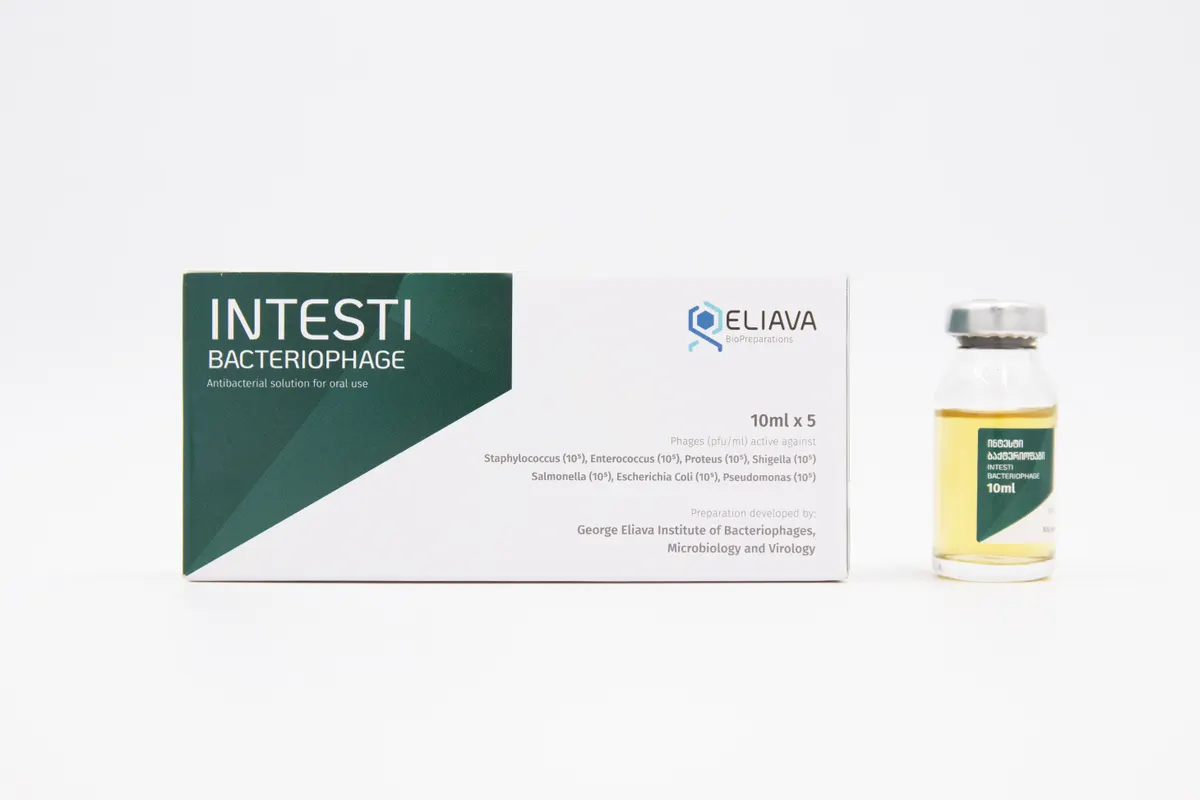
- Bacteriostatic Water for Injection, USP is sterile, nonpyrogenic water for injection to which benzyl alcohol has been added as a bacteriostatic preservative, most commonly at 0.9% (9 mg/mL), with a labeled pH of 5.7 (range 4.5 to 7.0).
- The preservative inhibits bacterial multiplication inside a vial that is punctured repeatedly. It does not sterilize the contents, it has no effect on bloodborne viruses according to the CDC, and it does not compensate for poor aseptic technique.
- Sterile Water for Injection contains no preservative and carries the label warning that it is hypotonic and hemolytic and must not be injected until made approximately isotonic. 0.9% sodium chloride is isotonic and is usually supplied preservative-free in single-dose containers.
- USP General Chapter <797> assigns a beyond-use date of 28 days from initial stopper penetration for an entered multiple-dose container with antimicrobial preservatives, unless the manufacturer specifies otherwise. The CDC position is less restrictive, so the printed label always takes precedence.
- Benzyl alcohol is contraindicated in newborns. Reports from 1982 linked flush solutions preserved with 0.9% benzyl alcohol to severe metabolic acidosis, encephalopathy and gasping respiration in premature infants, and current labeling states that these solutions must not be used in this population.
- A vial should be discarded if it shows particles, cloudiness, discoloration, container or stopper damage, an illegible label, an exceeded expiration or beyond-use date, or any suspected non-aseptic entry. A normal appearance never proves sterility.
- This article is educational. It does not state any volume, concentration or dose, and it is not a substitute for advice from a qualified healthcare professional.
What exactly is bacteriostatic water?
Bacteriostatic Water for Injection, USP is a sterile, nonpyrogenic preparation of water for injection to which benzyl alcohol has been added as a bacteriostatic preservative. The most widely distributed labels in the United States state a benzyl alcohol content of 0.9% (9 mg/mL), and some labels describe either 0.9% (9 mg/mL) or 1.1% (11 mg/mL). The Hospira prescribing information gives a pH of 5.7 with an acceptable range of 4.5 to 7.0, and describes the product as supplied in a multiple-dose container from which repeated withdrawals may be made.
The word bacteriostatic is doing precise work here. A bacteriostatic agent inhibits the multiplication of bacteria; a bactericidal agent kills them. Bacteriostatic water does not arrive at the user as a disinfectant. It arrives sterile, and the preservative is there to limit the growth of organisms that may be introduced later, during the repeated needle entries that a multiple-dose container is designed to tolerate.
The labeled indication is narrow and worth quoting in substance: this parenteral preparation is indicated only for diluting or dissolving drugs for intravenous, intramuscular or subcutaneous injection, according to the instructions of the manufacturer of the drug to be administered. The same labels state that preparations containing benzyl alcohol should not be used for fluid replacement and should not be used in epidural or spinal anesthesia procedures. In the United States, bacteriostatic water is a prescription (Rx only) product.
Many people encounter the term for the first time while handling lyophilized peptide vials rather than in a hospital pharmacy. This page deliberately stays on the question of what the fluid is: its composition, its preservative, how it compares with other diluents, how long it lasts, and where its documented safety limits lie. For the practical step-by-step procedure of preparing a lyophilized vial, see our dedicated guide on peptide reconstitution, and if you need to work out quantities, use the peptide calculator instead of any figure in this article, because this article states none.
Educational purposes only. Nothing here constitutes medical advice or a protocol. Research peptides are not approved for human use in most jurisdictions, and anyone with a clinical question should consult a qualified healthcare professional.
What does the 0.9% benzyl alcohol actually do?
Benzyl alcohol is a small aromatic alcohol, formula C₇H₈O and molecular weight 108.14 g/mol, with a faint sweet odor. It is one of the most widely used antimicrobial preservatives in multi-dose parenteral products, which is precisely why it turns up in bacteriostatic water, in bacteriostatic 0.9% sodium chloride, and in a long list of preserved injectable medicines.
Mechanistically, benzyl alcohol is a membrane-active agent. It partitions into microbial membranes and disrupts their integrity and permeability. At the low concentrations used for preservation, the practical consequence is inhibition of proliferation rather than rapid killing, which is exactly the behavior the word bacteriostatic describes. The preservative buys time against small inocula introduced at the stopper; it is not a terminal sterilization step and it cannot rescue a container that has already been grossly contaminated.
The limits matter as much as the function. The CDC states plainly that the antimicrobial preservative in a multi-dose vial helps limit the growth of bacteria and has no effect on bloodborne viruses such as hepatitis B, hepatitis C and HIV, and that it does not protect against contamination when safe injection practices are not followed. A preserved diluent is therefore a margin of safety layered on top of aseptic technique, never a replacement for it.
Preservative performance is not assumed, it is tested. In the United States Pharmacopeia framework, the ability of a preserved formulation to suppress microbial growth is established through Antimicrobial Effectiveness Testing under USP General Chapter <51>. That testing is the scientific basis on which a preserved multiple-dose container can be assigned a defined period of use after it is first entered, which is the subject of a later section.
One further point of hygiene in terminology: benzyl alcohol is a preservative, not a stabilizer. It is added to control microbial growth in the aqueous vehicle. It is not added to protect the dissolved substance, and as the section on protein stability explains, in some formulations it does the opposite.
How does it differ from sterile water and 0.9% sodium chloride?
Three fluids are routinely confused, and the differences come down to two axes: whether a preservative is present, and whether the fluid is isotonic. Getting these straight removes most of the confusion around diluent choice.
Sterile Water for Injection, USP contains no bacteriostatic or antimicrobial agent. Its label carries an unusually blunt warning in capital letters: hypotonic and hemolytic, do not inject until made approximately isotonic by addition of appropriate solute. The prescribing information notes that hemolysis may follow infusion and that hemoglobin-induced renal failure has been reported after hemolysis. Because there is no preservative, it is supplied for single-dose use, and any unused portion is discarded.
0.9% Sodium Chloride Injection, USP is isotonic with plasma and is most often supplied preservative-free in single-dose containers, including ampoules and flexible bags. A separate product, Bacteriostatic 0.9% Sodium Chloride Injection, USP, exists in multiple-dose vials and does contain 0.9% benzyl alcohol; its label states that each mL contains sodium chloride 9 mg plus benzyl alcohol, with a pH range of 4.5 to 7.0, and it carries the same neonatal contraindication and the same statement that it must not be used for fluid or sodium chloride replacement.
| Property | Bacteriostatic Water for Injection, USP | Sterile Water for Injection, USP | 0.9% Sodium Chloride Injection, USP |
|---|---|---|---|
| Composition | Water for injection plus benzyl alcohol (commonly 0.9%) | Water for injection only | Water for injection plus 0.9% sodium chloride |
| Antimicrobial preservative | Yes (benzyl alcohol) | No | Usually none; a separate bacteriostatic version with benzyl alcohol exists |
| Tonicity | Hypotonic | Hypotonic, labeled hemolytic | Isotonic |
| Container type | Multiple-dose vial | Single-dose | Single-dose (preservative-free) or multiple-dose (bacteriostatic version) |
| Labeled purpose | Only for diluting or dissolving drugs for IV, IM or SC injection per the drug manufacturer's instructions | Diluent, after being made approximately isotonic | Diluent and, for preservative-free presentations, fluid replacement |
| Repeated withdrawals | Intended, within the labeled period after first entry | Not intended | Only for the bacteriostatic multiple-dose version |
| Use in newborns | Contraindicated because of benzyl alcohol | No benzyl alcohol concern | Preservative-free versions have no benzyl alcohol concern; the bacteriostatic version is contraindicated |
Read that table in one direction and the logic of each product becomes obvious. A preservative is what makes repeated entry defensible, and isotonicity is what makes a fluid safe to introduce into the circulation without lysing red cells. Bacteriostatic water offers the first property and not the second, which is why its labeled role is strictly that of a diluent prepared according to the instructions of the drug being dissolved.
Why is it the standard fluid for multi-dose vials?
Every needle entry through a rubber closure is an opportunity for contamination. The stopper surface, the needle, the ambient air at the moment of withdrawal and the hands of the person holding the vial all contribute risk, and that risk accumulates across entries. A fluid intended to be entered many times therefore needs something the single-dose equivalent does not.
The scale of that risk is measurable. In a prospective study at a pulmonary teaching hospital in Iran, Baniasadi and colleagues sampled opened single- and multiple-dose vials across wards over two months and found microbial contamination in 11 of 205 vials, or 5.36%, with the highest rate, 14.28%, in the interventional bronchoscopy unit. Contamination of in-use vials is not a theoretical concern; it is an observed, quantifiable one in settings with trained staff.
Against that background, a bacteriostatic preservative changes the economics and the safety profile of a container. It allows a manufacturer to label a vial as multiple-dose, it allows a defined period of use after first entry, and it reduces the chance that a small inoculum introduced on day three has multiplied into a clinically relevant load by day ten. That is the entire reason benzyl alcohol is in the bottle.
What a preservative does not do is license sloppiness. The CDC's injection safety guidance is explicit that the preservative does not protect against contamination when safe injection practices are not followed, and the single most common failure modes are not exotic: skipping the alcohol wipe on the stopper, leaving a needle parked in the closure, sharing a vial across people, or pooling leftovers. Our overview of the most frequent mistakes made when preparing lyophilized vials covers these handling errors in detail.
It is also worth separating two distinct questions that often get merged. Whether a diluent is preserved governs how long the diluent vial can be entered. How long a dissolved substance remains chemically intact is a separate stability question that depends on the substance, the temperature and the container, and the preservative does not answer it.
How long can a vial be used after it is first entered?
This is the question with the most misinformation attached to it, and it has a documented answer that comes from compendial standards rather than from folklore.
USP General Chapter <797>, Pharmaceutical Compounding: Sterile Preparations, states that the beyond-use date for an opened or entered, meaning needle-punctured, multiple-dose container with antimicrobial preservatives is 28 days, with cross-reference to Antimicrobial Effectiveness Testing <51>, unless otherwise specified by the manufacturer. That 28-day figure is the standard most pharmacies and compounding operations apply, and it is where the widely repeated number originates.
The CDC takes a less restrictive position for conventionally manufactured products, indicating that multi-dose vials may be used until the manufacturer's expiration date unless there is a concern about the sterility of the product. The two positions are not contradictory so much as differently conservative: USP <797> governs compounding practice and assigns a fixed beyond-use date, while CDC guidance addresses general injection safety. Where they diverge, the manufacturer's printed labeling is the controlling document, and the more conservative of the applicable dates is the defensible choice.
Three practical consequences follow. First, the unopened expiration date printed on the vial still applies independently; an entered vial is never good past it. Second, the date of first entry is information that exists only if someone records it, so writing it on the vial at the moment of first puncture is what makes any beyond-use date enforceable. Third, a vial that has been stored outside its labeled conditions, or whose entry history is unknown, has no meaningful beyond-use date at all.
Note once more the distinction that matters most for anyone handling lyophilized material: the 28-day convention describes the preserved diluent container, not the stability of whatever has been dissolved in it. Those storage questions are covered separately in our peptide storage guide.
Why is benzyl alcohol contraindicated in newborns?
The contraindication printed on every bacteriostatic water label is not precautionary boilerplate. It rests on a cluster of neonatal deaths documented in the early 1980s and on the pharmacology that explains them.
In 1982, Gershanik and colleagues reported in the New England Journal of Medicine on ten premature infants in their neonatal intensive care unit who developed a similar clinical syndrome of multi-organ deterioration ending in death, which the authors attributed to benzyl alcohol exposure. The American Academy of Pediatrics statement published in Pediatrics in 1983 summarized the situation: two groups of investigators had independently concluded that intravascular infusion or flush solutions containing 0.9% benzyl alcohol caused severe metabolic acidosis, encephalopathy and respiratory depression with gasping, leading to the death of 16 infants in neonatal intensive care units, and in May 1982 the FDA, with the concurrence of the AAP and the CDC, urged pediatricians and hospital personnel not to use fluids preserved with benzyl alcohol as intravascular flush solutions for newborns. The clinical picture became known as the gasping syndrome.
The mechanism turns on immature metabolism. Benzyl alcohol is oxidized to benzoic acid, which is normally conjugated in the liver to hippuric acid and excreted renally. In neonates, and particularly in premature neonates, that conjugation capacity is limited, so benzoic acid accumulates and drives the severe metabolic acidosis that characterizes the syndrome. The same immaturity explains why the risk falls off sharply with age.
A follow-up analysis quantified the benefit of removing the preservative. Hiller and colleagues, writing in Pediatrics in 1986, reported that among infants under 1,000 g birth weight, those who did not receive the preservative showed a mortality rate of 45.7% versus 80.7% and a grade III or IV intraventricular hemorrhage incidence of 19% versus 46% compared with those who did.
Current regulatory language reflects all of this. United States labels state that because of the potential toxicity of benzyl alcohol in neonates, solutions containing benzyl alcohol must not be used in this population. The European Medicines Agency questions-and-answers document on benzyl alcohol as an excipient states that exposure above 90 mg/kg/day means a product should not be used in infants and children, notes that children under three years may not be mature enough to metabolize and eliminate benzyl alcohol as efficiently as adults, and advises that while the excipient should not be used in neonates it may be used with caution in children older than four weeks. The practical conclusion is simple and absolute: bacteriostatic water is never the appropriate diluent in neonatal care.
How should bacteriostatic water be stored?
Storage instructions for these diluents are set by the manufacturer and printed on the carton, and the carton is the authority. In general terms, United States labels for bacteriostatic water direct storage at controlled room temperature and advise avoiding excessive heat; freezing is not appropriate for an aqueous parenteral in a glass or plastic vial, both because of container stress and because freeze-thaw cycles are a stability variable nobody has characterized for an individual vial. Refrigeration is not required by the labeling and is not what makes the preservative work.
Keep the vial in its carton until use, store it upright, and leave the plastic flip-off cap in place until first entry. The cap is dust protection, not a sterile barrier: once it is removed, the exposed stopper should be wiped with an appropriate antiseptic before every single entry, not only the first. Never leave a needle in the stopper between uses, because a parked needle converts a self-sealing closure into an open channel.
At first entry, write the date on the vial. That one habit is what makes any beyond-use date meaningful, and it is also what tells a second person whether the container in front of them is usable. Do not transfer bacteriostatic water into another container, do not top up one vial from another, and do not share a vial between people. If a general handling walkthrough is useful, our five-step preparation overview sets out the sequence, and how to read the units on an insulin syringe covers the separate and frequently misread question of syringe graduations.
Two things are worth stating explicitly because they are so often conflated. First, how you store the diluent and how you store a dissolved peptide are different problems with different answers; the latter is addressed in our storage guide. Second, good storage does not extend a beyond-use date. Correct storage is a condition for the labeled period to apply, not a way to lengthen it.
Finally, provenance is part of storage. A vial of unknown origin, or one whose temperature history cannot be accounted for, cannot be made acceptable by careful handling after the fact. In the United States, bacteriostatic water is a prescription product, and obtaining it through the regulated supply chain is what makes its labeling, and therefore its storage and dating information, trustworthy.
What signs mean a vial should no longer be used?
Some reasons to discard a vial are visible, and some are purely documentary. Both categories are disqualifying, and the documentary ones are the easier to rationalize away.
Visible and physical signs that the vial should be discarded include:
- Any visible particulate matter, fibers, flakes or floating material in a fluid that should be completely clear
- Cloudiness, haze or turbidity, including a faint change that was not there at first entry
- Discoloration of any kind
- A cracked or chipped vial, a damaged neck, or evidence of leakage around the closure
- A stopper that is cored, torn, deformed or no longer resealing after a withdrawal
- A missing or illegible label, which makes the product unidentifiable and undatable
- Signs of freezing or of exposure to heat, such as a deformed container
Documentary and historical reasons to discard are equally decisive:
- The printed expiration date has passed, whether or not the vial has been entered
- The beyond-use date you recorded at first entry has passed, or no date was ever recorded
- The vial was entered without aseptic technique, or there is reason to think it was
- The vial was stored outside its labeled conditions for an unknown period
- The container was shared with another person, or leftovers were pooled into it
- The provenance of the vial cannot be established
The most important caveat is the one that is hardest to internalize: a clear, colorless, normal-looking fluid is not evidence of sterility. Bacterial loads far below the threshold of visual detection can be clinically significant, and the contamination rates measured in hospital vial studies were established by culture, not by inspection. Visual inspection is a screen that catches gross failures. It is not a release test, and it never substitutes for the expiration date, the recorded beyond-use date, and a known handling history.
When any doubt exists, the correct action is to discard the vial. The cost of a discarded diluent is trivial next to the cost of injecting a contaminated one, and no inspection you can perform at a kitchen counter changes that arithmetic.
Can benzyl alcohol affect peptides and proteins?
This is a legitimate scientific question, and the formulation literature has a clear partial answer: in some protein formulations, benzyl alcohol promotes aggregation.
Bis and colleagues, publishing in the Journal of Pharmaceutical Sciences in 2015, examined interferon α-2a and reported that benzyl alcohol induced aggregation in a concentration-dependent manner, that increasing benzyl alcohol concentration caused the apparent aggregation temperature of the protein to decrease linearly, and that the mechanism involved partial rather than global unfolding of the protein. The authors describe benzyl alcohol as the most widely used antimicrobial preservative in multi-dose protein formulations and note that it has been shown to cause protein aggregation.
That finding is not isolated. Work on α-chymotrypsinogen A showed that benzyl alcohol added to reconstitution buffer promotes undesirable aggregate formation in multi-dose protein formulations, and that PEGylation with 5,000 Da polyethylene glycol chains prevented it while 700 Da chains did not. Separate work on recombinant human interleukin-1 receptor antagonist in reconstituted lyophilized formulations concluded that structural perturbation during freeze-drying should be minimized and that storage at reduced temperature after reconstitution could limit preservative-induced aggregation.
Two cautions are essential when carrying this over to peptides. First, these studies examined proteins, which are large, folded and conformationally fragile in ways that short peptides generally are not; the degree to which these results generalize to a 15-residue or 30-residue peptide is not established by them. Second, the presence of benzyl alcohol in a licensed multi-dose protein product reflects a manufacturer's formulation decision supported by its own stability data for that specific molecule, buffer and container. That validation is not transferable to a different molecule, and for most research peptides no comparable public stability data in preserved diluents exists.
The honest conclusion is therefore narrow. There is no basis for claiming that bacteriostatic water degrades any particular peptide, and there is no basis for claiming it is inert for all of them either. What the literature supports is that the preservative is a chemically active component of the solution rather than a neutral spectator, and that this is a formulation variable rather than a settled fact. Anyone making decisions on this point should be working from the documentation for the specific material in hand and, where human use is contemplated, with a qualified healthcare professional.
What questions does bacteriostatic water not answer?
Understanding what this fluid is leaves several adjacent questions untouched, and keeping them separate is what prevents the most common errors.
It does not tell you how much liquid belongs in a given vial. That depends on the mass of lyophilized material, the concentration being targeted and the syringe being used, and it is arithmetic rather than pharmacology. Our peptide calculator handles that calculation, and the Peptide Lab app pairs it with a tracker so the numbers and the handling history live in the same place. No figure of that kind appears anywhere in this article, by design.
It does not tell you how to prepare a vial. The technique, meaning stopper antisepsis, needle choice, the angle and speed of fluid delivery, swirling rather than shaking, and inspection of the result, is a procedure in its own right and is documented in our guide to preparing lyophilized peptide vials.
It does not tell you whether a given substance is appropriate, legal or safe for you. Most research peptides are classified for research use only in the United States and the European Union, are not approved by the FDA or the EMA for human use, and the regulatory position varies by jurisdiction. Bacteriostatic water is itself a prescription product in the United States, and its own labeling restricts it to diluting or dissolving drugs according to the instructions of the drug's manufacturer.
And it does not substitute for clinical judgment. The documented facts in this article, the preservative concentration, the pH, the 28-day beyond-use convention, the neonatal contraindication, come from product labeling, compendial standards and the peer-reviewed literature, and they describe a pharmaceutical excipient rather than a course of action.
Medical disclaimer. This article is provided for educational purposes only and is not medical advice, a dosing recommendation or a protocol. It deliberately contains no recommended volumes, concentrations or doses. Research peptides are not approved for human use in most jurisdictions, legal status varies by country, and preclinical or formulation findings do not transfer directly to human outcomes. Consult a qualified healthcare professional before making any decision about an injectable product, and see our medical disclaimer for the full terms.
Recommended products
Research peptides selected for quality and purity:
GHK-Cu
Anti-Aging Compound
Test your knowledge
Quick quiz · 6 questions
Peptide Lab: free calculator & tracker
Calculate your reconstitution, track your peptides and injections. Free, no credit card required.
Frequently Asked Questions
Is bacteriostatic water the same thing as sterile water for injection?
What does the word bacteriostatic actually mean?
Why does bacteriostatic water contain benzyl alcohol specifically?
How long can a vial be used once a needle has entered it?
Can bacteriostatic water be used in newborns or young infants?
Does bacteriostatic water need to be refrigerated?
Is bacteriostatic water the same as saline?
Can you tell by looking whether a vial is still safe to use?
Sources
- Gershanik J, Boecler B, Ensley H, McCloskey S, George W (1982). The gasping syndrome and benzyl alcohol poisoning. New England Journal of Medicine, 307(22):1384-1388 (PMID 7133084).
- Hiller JL, Benda GI, Rahatzad M, Allen JR, Culver DH, Carlson CV, Reynolds JW (1986). Benzyl alcohol toxicity: impact on mortality and intraventricular hemorrhage among very low birth weight infants. Pediatrics, 77(4):500-506 (PMID 3515306).
- American Academy of Pediatrics, Committee on Fetus and Newborn and Committee on Drugs (1983). Benzyl Alcohol: Toxic Agent in Neonatal Units. Pediatrics, 72(3):356-358.
- Baniasadi S, Dorudinia A, Mobarhan M, Karimi Gamishan M, Fahimi F (2013). Microbial contamination of single- and multiple-dose vials after opening in a pulmonary teaching hospital. Brazilian Journal of Infectious Diseases, 17(1):69-73 (PMID 23294643).
- Bis RL, Singh SM, Cabello-Villegas J, Mallela KMG (2015). Role of benzyl alcohol in the unfolding and aggregation of interferon α-2a. Journal of Pharmaceutical Sciences, 104:407-415 (PMID 25100180).
- Rodríguez-Martínez JA, Solá RJ, Castillo B, Cintrón-Colón HR, Rivera-Rivera I, Barletta G, Griebenow K (2011). Prevention of benzyl alcohol-induced aggregation of chymotrypsinogen by PEGylation. Journal of Pharmacy and Pharmacology (PMID 21585378).
- Roy S, Jung R, Kerwin BA, Randolph TW, Carpenter JF (2005). Effects of benzyl alcohol on aggregation of recombinant human interleukin-1-receptor antagonist in reconstituted lyophilized formulations. Journal of Pharmaceutical Sciences (PMID 15614819).
- Hospira, Inc. (2026). Bacteriostatic Water for Injection, USP, prescribing information. DailyMed, U.S. National Library of Medicine.
- U.S. National Library of Medicine (2026). Sterile Water for Injection, USP, prescribing information (hypotonic and hemolytic warning). DailyMed.
- U.S. National Library of Medicine (2026). Bacteriostatic Sodium Chloride Injection, USP 0.9%, prescribing information. DailyMed.
- United States Pharmacopeia (2023). General Chapter <797> Pharmaceutical Compounding: Sterile Preparations (beyond-use date of 28 days for entered multiple-dose containers with antimicrobial preservatives) and General Chapter <51> Antimicrobial Effectiveness Testing. USP-NF.
- Centers for Disease Control and Prevention (2026). Preventing Unsafe Injection Practices: single-dose and multi-dose vials. CDC Injection Safety.
- European Medicines Agency (2017). Questions and answers on benzyl alcohol used as an excipient in medicinal products for human use. EMA Scientific Guideline (EMA/CHMP/508188/2013).