

- "Copper uglies" is community vocabulary, not a clinical diagnosis. There is no agreed definition, no severity scale, and no incidence figure for it.
- As of November 2026, a literature search returns no clinical study, case series, or case report describing a purge or adjustment phase attributable to topical GHK-Cu. The published GHK-Cu literature deals with wound repair, matrix synthesis, and gene expression, and none of it describes a flare phase.
- What is documented is ordinary cosmetic irritation: stinging, redness, dryness, and flaking from an active serum or its vehicle. Allergic contact dermatitis to copper itself is rare, and copper is considered a weak sensitizer.
- Chemistry gives a reason to separate copper peptides from low-pH acids and from L-ascorbic acid in a routine, because copper coordination is pH sensitive and ascorbate reacts with free transition metal ions. This is formulation logic, not a documented skin injury.
- Retinoid purging has an accepted mechanism and evidence that early irritation subsides. Copper peptides have neither, so "push through it" is not a justified default here.
- Spreading rash, blisters, weeping, swelling of the eyelids, or anything that worsens after you stop is a reason to see a clinician rather than to wait it out.
What Are the Copper Uglies, and Who Coined the Term?
"Copper uglies" is a phrase that circulates in skincare forums, subreddits, and short-form video to describe a temporary worsening of the skin after starting a topical copper peptide product, usually a serum containing GHK-Cu (INCI name Copper Tripeptide-1). The construction is borrowed directly from the older community term "tretinoin uglies," which describes the awkward first weeks of retinoid use. The borrowing is not accidental, and as you will see, it carries an assumption with it that the evidence does not support.
The reports are reasonably consistent in their description. People typically describe some combination of the following, appearing within days to a few weeks of starting a copper peptide:
- Small closed bumps, often on the forehead, cheeks, or jawline
- Rough or uneven texture that was not there before
- Diffuse redness or a warm, flushed look after application
- Occasional inflamed papules or small pustules
- Dryness, tightness, or fine flaking
- A sense that the skin looks worse before it looks better
It is worth being precise about what that body of reports is and is not. It is a large, informal, self-selected collection of personal accounts. People who have a problem post about it; people whose skin is fine generally do not. There is no denominator, no standardized photography, no control for everything else in the routine, and no way to confirm that the copper peptide was the variable that changed. That does not make the accounts worthless, because clusters of user reports have flagged genuine problems before. It does mean they cannot establish causation on their own.
So the useful question is not whether the words "copper uglies" describe something people experience. Clearly some people do experience a flare after starting these products. The useful question is what could plausibly produce it, and the candidate explanations fall into three buckets: genuine irritation from the product or its vehicle, a formulation or layering problem, and coincidence. A fourth explanation, the one the name itself implies, is a true purge driven by accelerated follicular turnover. That is the one with the least support, and it is where we will start. For background on what copper peptides are understood to do in skin, see our overview of copper peptides and GHK-Cu for skin.
Is There Any Published Evidence for a Copper Peptide Purge?
First, what "purging" actually means. In dermatological practice the term describes a specific sequence: an ingredient markedly accelerates follicular keratinocyte turnover, pre-existing microcomedones that were already present but invisible are pushed through their life cycle faster, and they surface as visible inflamed lesions earlier than they otherwise would have. The flare is therefore made of lesions that were already forming. It is time-limited by definition, because once the existing backlog has cleared there is nothing left to expel. This mechanism is well accepted for topical retinoids, which is why the concept exists at all.
Applying that definition to copper peptides requires evidence that GHK-Cu accelerates follicular turnover in a comparable way. We searched the indexed literature for this in preparing this article, using terms including "copper uglies," "GHK-Cu purge," "copper peptide purging," and combinations of copper tripeptide with acne, comedones, and flare. As of November 2026, that search returns no clinical trial, no case series, and no case report describing a purge or adjustment phase attributable to topical GHK-Cu. We state this as a negative finding rather than as proof of anything, because that is what it is.
What the GHK-Cu literature does contain is a different body of work. Review articles by Pickart and colleagues describe GHK as a tripeptide present in human plasma that declines with age, and report that the copper complex stimulates collagen, dermatan sulfate, chondroitin sulfate, and the small proteoglycan decorin, with broad effects on gene expression by the authors' own analysis. A 2018 review in the International Journal of Molecular Sciences summarizes a facial cream study in which 71 women with mild to advanced photoaging used a GHK-Cu cream for 12 weeks, with reported improvements in skin density, thickness, laxity, clarity, and fine lines. Note two things about that summary. It is reported within review literature co-authored by the peptide's discoverer rather than in an independently registered trial, and nowhere in it is an early worsening phase described as part of the expected course.
Nothing in the matrix-remodeling and gene-expression literature provides a mechanism for pushing microcomedones to the surface. Collagen and proteoglycan synthesis in the dermis is a different process from follicular keratinocyte turnover in the infundibulum. So the honest position is this: a copper peptide purge has not been demonstrated, no plausible mechanism for it has been published, and the one phenomenon the name is modeled on works by a pathway that has not been shown to apply here. It is also true that no study has gone looking, so this is unstudied rather than refuted. If you want the primary-literature picture of what this molecule has and has not been shown to do, our GHK-Cu guide covers it in more depth.
What Is Actually Documented: Irritation and Copper Sensitivity?
Move away from the purge framing and the documented explanations come into focus quickly. Irritant contact dermatitis is the most common adverse effect of applying an active cosmetic to facial skin, and it produces exactly the symptom list that people describe as copper uglies. It presents as stinging or burning on application, erythema, dryness, fine scaling, and sometimes small papules or pustules when hair follicles are involved. Its distinguishing features are useful: it tends to be diffuse rather than patterned like acne, it maps to where the product was applied, and it appears within hours to days rather than building over weeks.
There is real context for how often people attribute skin trouble to cosmetics. In a prospective study of 1 075 patients attending four Swedish patch test clinics, Lindberg and colleagues found that 47.3% reported current or previous adverse skin reactions to cosmetics or skin care products, with 54.2% of women and 30.8% of men reporting them. That population was referred for patch testing because contact dermatitis was already suspected, so the figure cannot be read as a general-population rate. What it does show is that cosmetic reactions are a frequent and frequently underweighted factor in exactly the kind of skin complaint under discussion here.
True allergic contact dermatitis to copper is a separate and much rarer matter. Karlberg and colleagues included 2% copper sulphate in a routine patch test series and found reactions in 13 of 1 190 eczema patients, about 1.1%, all of which they judged non-relevant. A later review of copper hypersensitivity by Fage and colleagues in Contact Dermatitis reported a weighted average of 3.8% positive patch test reactions to copper across the literature, concluded that copper is a very weak sensitizer compared with other metals, and cautioned that false positives arise from metal impurities in the test salt, nickel in particular. Clinically relevant copper allergy exists, but it is uncommon, and a positive test to copper needs careful interpretation rather than being taken at face value.
A third candidate is frequently overlooked: the rest of the formula. A copper peptide serum is not a solution of GHK-Cu in water. It contains preservatives, solubilizers, humectants, possibly fragrance or ethanol, and in richer textures occlusive esters and oils that some acne-prone users do not tolerate. Blaming the named active is natural, but the ingredient on the front of the bottle is only one of fifteen or twenty things you just put on your face. Our article on GHK-Cu side effects goes through the reported tolerability picture in more detail.
Can Acids, Vitamin C, or Retinoids Destabilize the Copper Complex?
This is where chemistry genuinely has something to say, and also where online advice tends to overshoot. GHK binds Cu²⁺ with high affinity, and the geometry of that coordination is pH dependent. Work on the solution chemistry of this system, including a 2021 study by Bossak-Ahmad and colleagues in Inorganic Chemistry on ternary Cu²⁺ complexes of human serum albumin and glycyl-L-histidyl-L-lysine, shows that GHK participates in defined copper species and in copper exchange with carrier proteins rather than acting as a reservoir of free ionic copper. The practical point is that the complex is a complex, and its speciation depends on the chemical environment it sits in.
Low-pH exfoliating acids are the first consideration. Glycolic, lactic, mandelic, and salicylic acid products are deliberately formulated at acidic pH to keep the acid in its active free form, while copper peptide serums are generally formulated nearer neutral. Layering them directly puts the copper complex into a proton-rich environment it was not formulated for. The reasonable conclusion is that you lose predictability over what either product is doing, not that you create something harmful. Separating them, one in the morning and one at night, or on alternating days, removes the question entirely at no cost.
L-ascorbic acid raises a redox question in addition to a pH one. Ascorbate is a reducing agent, and its relationship with transition metals is genuinely two-sided. The 2020 Nutrients review by Kaźmierczak-Barańska and colleagues, titled "Two Faces of Vitamin C," describes how the pro-oxidative behavior of ascorbic acid is tied to interaction with free transition metal ions, iron and copper in particular, where it can drive reduction of the metal and the formation of oxygen radicals. Two caveats matter. That literature concerns free metal ions in solution and in biological systems, not chelated copper in a cosmetic film on the stratum corneum, and no study has demonstrated skin damage from layering a vitamin C serum over a copper peptide serum. Treat the separation as prudent formulation hygiene, not as a warning about injury.
Retinoids are a different kind of problem. There is no specific chemical incompatibility to worry about. The issue is additive irritation on a barrier that is already being challenged. Kim and colleagues showed in Toxicology Letters that retinol-induced irritation is mediated substantially through the pro-inflammatory cytokines MCP-1 and IL-8 in cultured human fibroblasts, which is to say that a retinoid is actively generating an inflammatory signal in the skin. Adding a second active on top of that compounds the burden. Our comparison of GHK-Cu and tretinoin covers how these two sit relative to each other, and the practical sequencing questions are handled in our guide on using GHK-Cu in a routine.
| Combination | Nature of the concern | Evidence level | Sensible handling |
|---|---|---|---|
| Copper peptide + AHA/BHA | pH mismatch alters copper speciation and acid activity | Chemistry-based, no clinical data | Separate by time of day or alternate days |
| Copper peptide + L-ascorbic acid | Redox interaction between ascorbate and copper | Solution and biological chemistry only | Morning vitamin C, evening copper peptide |
| Copper peptide + retinoid | Additive irritation and barrier disruption | Irritation of retinoids well documented | Alternate nights, buffer over moisturizer |
| Copper peptide + niacinamide, ceramides, hyaluronic acid | No specific concern identified | No reported problem | Generally layered without issue |
Does Concentration or Application Frequency Explain the Flare?
Dose is the variable most often ignored in these discussions. Marketed copper peptide serums disclose concentrations spanning roughly an order of magnitude, commonly stated somewhere between 0.1% and 2% copper tripeptide-1, and a substantial share of products disclose nothing at all beyond an ingredient list position. Two products carrying the same hero ingredient on the label can therefore deliver very different amounts of it, which makes any claim that "copper peptides caused this" hard to evaluate without knowing which product at what strength.
The dose-response principle itself is well supported for other topical actives. In their review of topical retinoid tolerability, Culp and colleagues analyzed 34 clinical studies and found that lower retinoid concentrations were associated with less irritation, with cutaneous irritation typically appearing in the first weeks and then subsiding. That is a finding about retinoids, and we are not transferring it to copper peptides as evidence. We cite it because it establishes the general pattern that irritation from a topical active scales with how much of it you apply and how often, which is the most parsimonious explanation available for why some users flare and others do not on what is nominally the same ingredient.
Frequency compounds concentration. A once-daily application of a modest-strength serum is a different exposure from twice-daily use of a stronger one layered under an occlusive cream. Starting several new products in the same week, which is extremely common when someone decides to overhaul a routine, multiplies both the irritant load and the attribution problem.
Two practices deserve specific caution. The first is applying DIY preparations made by dissolving research-grade GHK-Cu powder in water or saline. These have no pH buffering, no preservative system, no stability testing, and no compatibility work behind them, and they are a markedly less controlled exposure than a finished cosmetic. Research-grade peptides are sold for laboratory use and are not approved for human application. The second is applying copper peptides immediately after microneedling or derma rolling. Deliberately breaching the stratum corneum removes the barrier that normally limits how much of anything gets in, and a reaction under those conditions tells you little about how the product behaves on intact skin. If you are evaluating finished products, our overview of copper peptide serums covers what to look for on a label.
How Do Copper Uglies Differ From Retinoid Purging?
Because the name is modeled on "tretinoin uglies," it carries an implied promise: that this is a known, temporary, mechanistically explained phase that ends in better skin if you persist. That implication is the single most consequential thing about the term, and it is worth taking apart.
Retinoid purging rests on an accepted mechanism. The retinoid normalizes follicular keratinization and accelerates turnover, the existing microcomedone load surfaces faster, and the flare is self-limiting once that backlog clears. It has a characteristic appearance, lesions that look like the user's usual acne appearing in the user's usual acne-prone areas, and a characteristic timeline of roughly two to six weeks. Crucially, there is evidence behind the advice to continue: the tolerability literature consistently describes retinoid irritation as concentrated in the early weeks and then subsiding.
Copper uglies have none of that scaffolding. There is no published mechanism, no documented timeline, no characteristic lesion morphology, and no evidence that continuing leads to resolution. The accounts themselves describe something that often sounds less like acne and more like texture, diffuse bumps, and redness, which is more consistent with irritation than with comedone expulsion.
| Retinoid purging | Copper uglies | |
|---|---|---|
| Proposed mechanism | Accelerated follicular turnover expelling existing microcomedones | None published |
| Supporting literature | Established concept, extensive tolerability data | No study, case series, or case report found |
| Typical lesions described | Inflamed papules and pustules in the user's usual acne pattern | Variable: closed bumps, rough texture, diffuse redness |
| Reported timeline | About 2 to 6 weeks, then improvement | Self-reported only, no data |
| Is persisting justified? | Often yes, with evidence that irritation subsides | Not supported by evidence |
The practical consequence is a different default. With a retinoid, where the mechanism is understood and the irritation is known to settle, moderating frequency and continuing is a defensible plan. With a cosmetic copper peptide producing an unexplained flare, the sensible default is to stop, let the skin settle, and reintroduce deliberately. You are not interrupting a therapeutic process that needs to run its course, because no such process has been shown to exist here.
What Else Could Be Causing the Breakout?
Attribution is the weakest link in every anecdotal skincare report, including the ones that gave rise to this term. Skin is not stable from week to week. Acne fluctuates with hormonal cycling, stress, sleep, illness, climate, and season, entirely independently of what you put on it. If you introduce a new product and your skin worsens eleven days later, the new product is the most salient candidate, but salience is not evidence. Some proportion of copper uglies reports are almost certainly ordinary variation that happened to coincide with a new bottle.
Several specific alternatives deserve consideration before settling on the peptide:
- Other simultaneous changes. Copper peptides are rarely introduced alone. A new cleanser, sunscreen, or moisturizer added in the same window is an equally plausible culprit.
- The vehicle rather than the active. Richer formulations containing certain esters and oils are poorly tolerated by some acne-prone users, regardless of what active they carry.
- Malassezia folliculitis, often called fungal acne. It presents as uniform small bumps, frequently on the forehead and upper back, often itchy, and it can be aggravated by occlusive, lipid-rich products. It does not respond to acne treatment and needs antifungal management.
- Perioral dermatitis. Small papules and pustules around the mouth or nose, frequently triggered by heavy occlusives or topical steroids, and easily mistaken for a breakout.
- Contamination or degradation. Home-prepared or improperly stored preparations lack preservative systems and can support microbial growth.
Testing attribution properly requires discipline that is unusual in a normal routine but not difficult. Change one variable at a time and hold it for four to six weeks. Photograph in the same light at the same distance and time of day, because memory is a poor instrument for tracking gradual skin change. Patch test a new product on the inner forearm or behind the ear for three to five consecutive days before putting it on your whole face. None of this is exciting, and all of it is more informative than a forum thread.
If after a careful single-variable test the flare reliably follows the copper peptide and reliably resolves when you stop, you have a personal answer that is worth acting on. That answer is "this product does not suit my skin," which is a perfectly good conclusion, and it is a different claim from "copper peptides cause a purge."
How Long Does It Reportedly Last, and What Does a Sensible Reset Look Like?
The timelines circulating online cluster around two to six weeks, with a minority of accounts describing longer. We report that range as what people say, not as a finding, because there is no study measuring it and no definition of what is being measured. Treat any specific number you see attached to copper uglies with suspicion, including that one.
What can be offered with more confidence is a structured way to get back to a clean baseline. The logic is simply to remove every variable, let the barrier recover, and then reintroduce deliberately so that any future reaction is interpretable.
| Phase | Duration | What it involves |
|---|---|---|
| Full stop | Days 1 to 14 | Discontinue the copper peptide and all other actives: acids, retinoids, vitamin C, exfoliants |
| Barrier support | Days 1 to 14 | Gentle non-foaming cleanser, a simple moisturizer with ceramides or glycerin, daily sunscreen, nothing else |
| Assess | Around day 14 | Compare photographs. If the skin has clearly settled, the routine was the driver. If it has not, reconsider the diagnosis |
| Patch test | 3 to 5 days | Reintroduce one product only, applied to the inner forearm or behind the ear |
| Reintroduce | Weeks 3 to 6 | Twice weekly on the face, buffered over moisturizer, no other new product in the same window |
| Build | Week 6 onward | Increase frequency only if fully tolerated; keep acids and vitamin C at a different time of day |
Two notes on that table. The fourteen-day settling period is a practical convention, not a validated interval, and skin that is genuinely irritated may need longer. And if the skin does not improve at all during a full stop with a bland routine, that is informative in itself: a reaction that persists or worsens once the suspected trigger is gone is unlikely to be caused by that trigger, and is worth having looked at.
This section describes general skincare practice for educational purposes and is not medical advice. It is not a treatment protocol for acne, dermatitis, or any skin condition. If your skin is inflamed, painful, or not improving, consult a dermatologist or qualified healthcare professional rather than following a self-directed plan.
When Is the Reaction a Reason to See a Clinician?
Most cosmetic irritation settles on its own once the product is stopped. Some presentations should not be managed by waiting, and the distinction is not subtle. Seek medical assessment if you notice any of the following:
- A rash spreading beyond the area where you applied the product, or appearing on the neck, chest, or eyelids
- Vesicles or blisters, weeping, oozing, or crusting
- Marked swelling, particularly periorbital swelling
- Skin that continues to worsen after you have stopped the product
- Significant pain, heat, or signs of secondary infection such as yellow crusting or fever
- Deep nodules or cysts, or any lesion that is leaving scars or lasting pigmentation
- Any reaction that lasts beyond a few weeks despite a simplified routine
If allergic contact dermatitis is suspected, patch testing performed by a dermatologist is the appropriate investigation, and it should be interpreted by someone who knows the pitfalls. As noted earlier, the copper hypersensitivity literature specifically warns that positive reactions to copper salts can be false positives driven by nickel impurities in the test material, and that reactions should be confirmed rather than accepted on a single reading. This is not something to self-diagnose from a home kit or an online quiz.
It is also worth naming the possibility that what you are dealing with is simply acne that needs treating. Copper peptides are a cosmetic ingredient studied in the context of tissue repair and matrix synthesis, not an acne therapy, and no peptide has clinical trial evidence for clearing inflammatory acne. If the picture is persistent acne rather than a transient reaction, the appropriate response is established acne care from a clinician, not adjustments to a peptide serum.
Medical disclaimer: this article is for educational purposes only and does not constitute medical advice, diagnosis, or treatment. GHK-Cu is used as a cosmetic ingredient and is not an approved drug for acne, dermatitis, or any skin disease. Research-grade peptides sold for laboratory use are not approved for human use, and their legal status varies by jurisdiction. Much of the GHK-Cu literature is preclinical or consists of small studies reported in review articles rather than independently registered clinical trials. Always consult a dermatologist or qualified healthcare professional about your own skin.
Recommended products
Research peptides selected for quality and purity:

GHK-Cu
Anti-Aging Compound
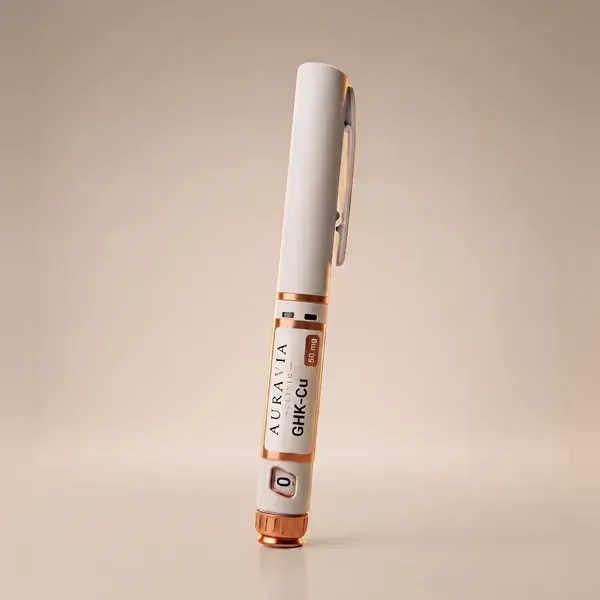
GHK-Cu Pen
Pre-filled Pen GHK-Cu
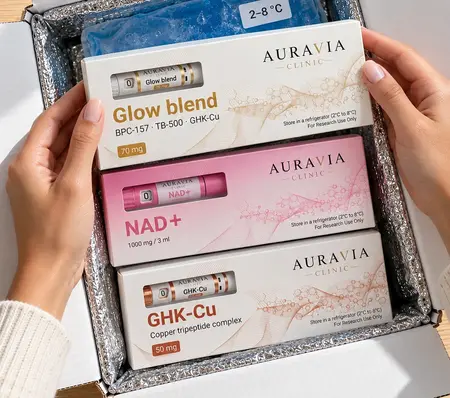
GLOW-UP Ritual
3-pen pack: Glow, NAD+, GHK-Cu

Glutathione
Antioxidant Compound

NAD+
Longevity Compound
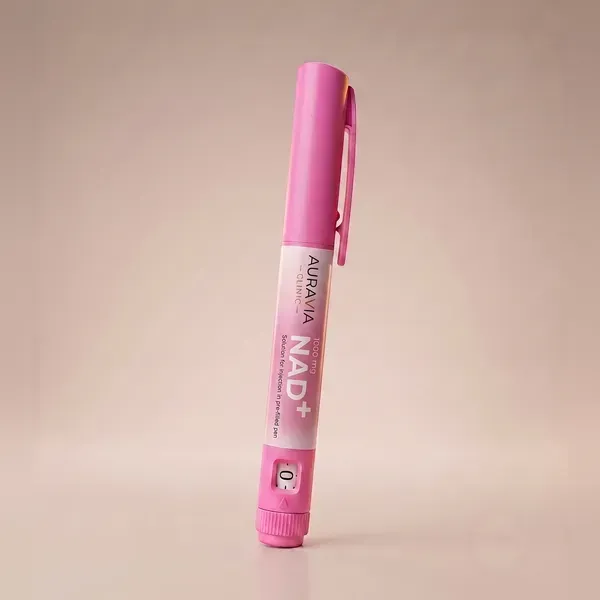
NAD+ Pen
Pre-filled Pen NAD+
Test your knowledge
Quick quiz · 6 questions
Peptide Lab: free calculator & tracker
Calculate your reconstitution, track your peptides and injections. Free, no credit card required.
Frequently Asked Questions
Are copper uglies a real, documented phenomenon?
How long do copper uglies last?
Can copper peptides cause acne or clogged pores?
Should I stop using the product or push through the reaction?
Can I use copper peptides with vitamin C or exfoliating acids?
Does a reaction to a copper peptide mean I am allergic to copper?
Is a homemade copper peptide solution more likely to irritate than a finished serum?
How can I tell copper uglies apart from fungal acne or a retinoid purge?
Sources
- Pickart L, Margolina A (2018). Regenerative and Protective Actions of the GHK-Cu Peptide in the Light of the New Gene Data. International Journal of Molecular Sciences. (PMC)
- Pickart L, Vasquez-Soltero JM, Margolina A (2015). GHK Peptide as a Natural Modulator of Multiple Cellular Pathways in Skin Regeneration. BioMed Research International. (PMC)
- Fage SW, Faurschou A, Thyssen JP (2014). Copper hypersensitivity. Contact Dermatitis. (PubMed)
- Karlberg AT, Boman A, Wahlberg JE (1983). Copper: a rare sensitizer. Contact Dermatitis. (PubMed)
- Lindberg M, Tammela M, Boström Å, Fischer T, Inerot A, Sundberg K, Berne B (2004). Are Adverse Skin Reactions to Cosmetics Underestimated in the Clinical Assessment of Contact Dermatitis? A Prospective Study among 1075 Patients Attending Swedish Patch Test Clinics. Acta Dermato-Venereologica. (PubMed)
- Kim BH, Lee YS, Kang KS (2003). The mechanism of retinol-induced irritation and its application to anti-irritant development. Toxicology Letters. (PubMed)
- Kaźmierczak-Barańska J, Boguszewska K, Adamus-Grabicka A, Karwowski BT (2020). Two Faces of Vitamin C: Antioxidative and Pro-Oxidative Agent. Nutrients. (PubMed)
- Bossak-Ahmad K, Bal W, Frączyk T, Drew SC (2021). Ternary Cu2+ Complexes of Human Serum Albumin and Glycyl-L-histidyl-L-lysine. Inorganic Chemistry. (PubMed)
- Culp L, Moradi Tuchayi S, Alinia H, Feldman SR (2015). Tolerability of Topical Retinoids: Are There Clinically Meaningful Differences Among Topical Retinoids?. Journal of Cutaneous Medicine and Surgery. (journals.sagepub.com)