
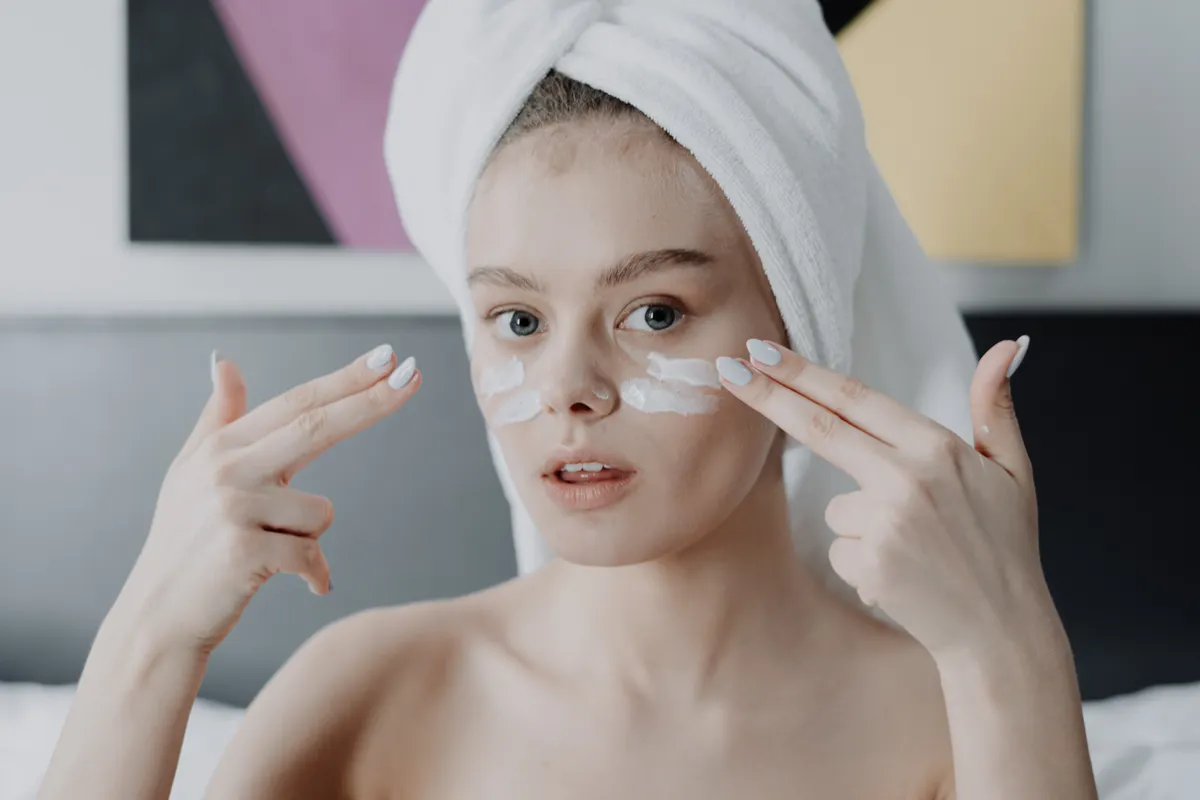
- Tretinoin is an FDA-approved retinoid with the strongest clinical evidence for photoaging; GHK-Cu is a copper-binding tripeptide used as a cosmetic ingredient with supportive but less rigorous data.
- The two work through opposite logics: tretinoin drives forced epidermal turnover via retinoic acid receptors, while GHK-Cu promotes gentle matrix remodeling and repair through gene modulation.
- Tretinoin causes retinoid dermatitis (redness, peeling, dryness) in most new users; GHK-Cu is generally well tolerated and often used to calm irritated skin.
- The two can be combined — typically on alternating nights or GHK-Cu on retinoid 'off' nights — to improve tolerance while keeping retinoid benefits.
- Retinoid-experienced skin seeking maximal wrinkle correction favors tretinoin; sensitive, reactive, or barrier-compromised skin often does better starting with GHK-Cu.
What Are GHK-Cu and Tretinoin?
GHK-Cu (copper tripeptide-1) and tretinoin (all-trans retinoic acid) are two of the most discussed anti-aging actives in dermatology, yet they belong to entirely different families and sit on opposite ends of the regulatory spectrum. Understanding what each molecule actually is provides the foundation for a fair comparison.
GHK-Cu is a small copper-binding tripeptide composed of the amino acids glycine, histidine, and lysine, complexed with a copper(II) ion. It was first identified in 1973 by Loren Pickart, who observed that this fragment — naturally present in human plasma at roughly 200 ng/mL in young adults — declined with age and appeared to influence tissue repair. Today it is used primarily as a cosmetic peptide in serums and creams, where it is valued for its collagen-stimulating and skin-conditioning properties.
Tretinoin, by contrast, is the biologically active form of vitamin A. It is a prescription drug in most jurisdictions, approved by the FDA for acne and, in specific formulations, for the treatment of photoaging (fine wrinkling, mottled hyperpigmentation, and roughness). It has decades of randomized controlled trial data behind it and is widely regarded as the reference-standard topical retinoid against which newer molecules are measured.
The central distinction is one of philosophy. Tretinoin forces the skin to accelerate its renewal cycle through direct receptor activation, producing rapid but often irritating change. GHK-Cu nudges the skin's own repair machinery through gentler signaling, producing slower, better-tolerated remodeling. This difference — forced turnover versus gentle stimulation — runs through every part of the comparison that follows.
This article is for educational purposes only and does not constitute medical advice. Tretinoin is a prescription medication; consult a healthcare professional or dermatologist before starting any retinoid.
How Do Their Mechanisms Differ?
The mechanistic contrast between these two ingredients is the single most important thing to understand, because it predicts almost everything about their benefits and side effects.
Tretinoin works through nuclear receptors. Once absorbed, all-trans retinoic acid binds to retinoic acid receptors (RARs) inside the cell nucleus. These activated receptors act as transcription factors, switching genes on and off. The downstream effects are dramatic: keratinocyte proliferation and differentiation accelerate, the epidermis compacts and normalizes, melanin transfer is disrupted (fading pigmentation), and dermal fibroblasts are stimulated to produce new collagen while matrix-degrading enzymes (MMPs) are suppressed. This is forced turnover — the skin is pushed to renew faster than it otherwise would, which is precisely why early users experience peeling and irritation.
GHK-Cu works through copper delivery and gene modulation. Rather than commanding a single receptor pathway, GHK-Cu appears to act as a copper carrier and a broad signaling molecule. Gene expression studies attributed to Pickart and colleagues suggest GHK-Cu can influence the expression of a large number of human genes, tilting the balance toward tissue repair, collagen and elastin synthesis, antioxidant defense, and resolution of inflammation. Fibroblast studies have reported collagen synthesis increases of up to 70% under GHK-Cu stimulation. This is gentle stimulation — the peptide supports the skin's endogenous remodeling program rather than overriding its pace.
A useful way to frame the difference: tretinoin is a top-down instruction that reprograms the epidermis, whereas GHK-Cu is a bottom-up supply of signal and cofactor that helps the dermis rebuild. Tretinoin excels at resurfacing and normalizing the epidermis; GHK-Cu is oriented toward extracellular matrix quality and repair.
Because their targets barely overlap, the two are not redundant. In principle their mechanisms are complementary — a point that becomes relevant when we discuss combination protocols. For a broader look at how these two ingredient classes stack up, see our overview of peptides versus retinol.
Which Is More Effective for Anti-Aging?
On the question of raw, proven efficacy for photoaging, the honest answer is that tretinoin has the stronger evidence base — but the picture is more nuanced than a simple winner-takes-all verdict.
Tretinoin is supported by multiple large, well-controlled clinical trials dating back to the late 1980s. These studies consistently demonstrate measurable reductions in fine wrinkles, improvement in mottled hyperpigmentation, increased dermal collagen (confirmed on biopsy), and smoother skin texture over 24 to 48 weeks of use. Its status as the reference retinoid is earned: few topical anti-aging actives have been validated to the same standard.
GHK-Cu's evidence is genuinely supportive but methodologically weaker. Clinical studies — several conducted or funded by parties with commercial interest — report improvements in skin firmness, density, fine lines, and clarity, alongside faster wound healing (roughly 30% faster epithelialization in some reports). Mechanistic and fibroblast data are robust, but large independent randomized trials comparing GHK-Cu head-to-head with tretinoin are lacking. As a result, GHK-Cu should be viewed as a well-tolerated adjunct with promising data rather than a proven equivalent to prescription retinoids.
| Endpoint | Tretinoin | GHK-Cu |
|---|---|---|
| Fine wrinkles | Strong clinical evidence | Supportive evidence |
| Hyperpigmentation | Strong (RAR-mediated) | Modest / indirect |
| Collagen synthesis | Confirmed on biopsy | Up to 70% in fibroblasts |
| Skin barrier / repair | Initially impaired, then improves | Supports barrier and healing |
| Evidence quality | Multiple RCTs (reference) | Smaller / industry studies |
The practical takeaway: if the goal is maximal, evidence-backed correction of established wrinkles and sun damage, tretinoin leads. If the goal is gradual firming, improved skin quality, and repair with minimal disruption, GHK-Cu is a reasonable primary choice — and an excellent complement. For a deeper look at the copper peptide's evidence, consult the full GHK-Cu guide.
How Do They Compare on Irritation and Tolerance?
If efficacy favors tretinoin, tolerance decisively favors GHK-Cu — and for many people, tolerance is what determines whether a product is actually used long enough to work.
Tretinoin reliably produces what dermatologists call retinoid dermatitis or the 'retinization' period during the first two to eight weeks: redness, flaking, dryness, stinging, and sometimes a temporary flare of breakouts. This is a direct consequence of its forced-turnover mechanism. For most users these effects subside as the skin adapts, but a meaningful minority cannot tolerate tretinoin at full strength, and it is generally contraindicated in pregnancy and while breastfeeding.
GHK-Cu sits at the opposite pole. It is generally very well tolerated, non-sensitizing for most users, and is frequently marketed specifically to calm reactive or compromised skin. Because it supports rather than disrupts the barrier, it rarely causes the peeling and stinging associated with retinoids. The main practical cautions are its blue-green color (which can tint formulations) and formulation incompatibility with certain other actives — notably strong direct-acid vitamin C and high concentrations of exfoliating acids, which can destabilize the copper complex.
This tolerance gap has a strategic consequence. GHK-Cu is often used as a buffering or recovery active alongside retinoids: applied on nights when the skin needs a break, or layered to reduce retinoid-induced irritation. Its barrier-supportive profile is one reason it appears in many peptide-based skincare routines aimed at sensitive skin.
A word of caution on stacking: combining potent actives amplifies irritation risk. Anyone layering multiple products should introduce them one at a time. Our guide to peptide stacking covers sequencing principles in more detail.
Can You Combine GHK-Cu and Tretinoin?
Yes — and because their mechanisms are complementary rather than redundant, combining them is one of the more compelling reasons to consider both. The goal of a combination protocol is to keep tretinoin's proven resurfacing power while borrowing GHK-Cu's repair and barrier support to blunt irritation.
The key formulation caveat is timing and separation. GHK-Cu's copper complex can be destabilized by very low pH and by direct oxidizing or reducing agents. While tretinoin itself is not a low-pH acid, applying two potent actives in the same layer increases both instability and irritation risk. Most dermatologists therefore recommend temporal separation rather than same-layer mixing.
Three practical protocols are commonly used:
- Alternating nights: tretinoin on night one, GHK-Cu on night two. This is the simplest approach for retinoid beginners and gives the barrier a scheduled recovery window.
- GHK-Cu on 'off' nights: for those using tretinoin two to three times per week, GHK-Cu fills the non-retinoid nights to support repair between doses.
- AM/PM split: GHK-Cu in the morning (repair, antioxidant support, under sunscreen) and tretinoin at night. This keeps the two actives in separate applications entirely and is often the best-tolerated structure.
Whichever protocol is chosen, tretinoin should always be paired with diligent daily broad-spectrum sunscreen, since retinoids increase photosensitivity. Introduce the combination gradually — start with GHK-Cu to establish barrier resilience, then add tretinoin at low frequency and titrate up. If persistent irritation, dermatitis, or pigmentary changes occur, stop and consult a dermatologist.
These are general educational frameworks, not personalized prescriptions. Because tretinoin is a prescription drug with specific contraindications, any combination regimen should be reviewed with a qualified healthcare professional.
Which Ingredient Suits Which Skin Type?
The right choice depends less on which molecule is 'better' in the abstract and more on your skin's current resilience, your goals, and your tolerance for a break-in period.
Tretinoin tends to suit: retinoid-experienced skin, oilier or acne-prone skin that tolerates active ingredients well, and anyone whose primary goal is maximal correction of established wrinkles, sun damage, or hyperpigmentation and who is willing to work through the retinization phase. It is the logical choice when evidence-backed, high-impact results matter most.
GHK-Cu tends to suit: sensitive, reactive, rosacea-prone, or barrier-compromised skin; anyone who has failed retinoids due to irritation; those focused on firmness, skin density, and overall quality rather than aggressive resurfacing; and people who prefer a gentle, gradual approach. It is also a strong option for post-procedure recovery, given its repair-oriented profile.
Both, in combination, tend to suit: users who want retinoid-grade results but need the barrier support to get there comfortably. For many people, GHK-Cu is what makes long-term tretinoin adherence possible.
Age and history matter too. A retinoid-naive person in their forties with significant photoaging may still benefit most from tretinoin, but starting with GHK-Cu for a few weeks to build tolerance is a sensible on-ramp. Conversely, a younger person focused on prevention and skin quality with reactive skin may get most of what they want from GHK-Cu alone. If you are weighing peptides against retinoids more broadly for your routine, our comparison of peptides versus retinol puts these trade-offs in context.
How Do You Use Each One in Practice?
Correct application meaningfully affects both efficacy and tolerability. The two ingredients have different ideal usage patterns.
Using tretinoin: apply a pea-sized amount to clean, dry skin at night (dampness increases penetration and irritation). Start low and slow — for example, two nights per week for the first two weeks — and increase frequency as tolerance builds. A moisturizer can be applied before or after to buffer ('sandwich' method). Expect an adjustment period; consistency over months, not weeks, is what produces results. Daily sunscreen is non-negotiable, both because retinoids increase photosensitivity and because unprotected sun exposure undoes their benefit.
Using GHK-Cu: apply to clean skin, typically as a serum, once or twice daily. Because it is gentle, no ramp-up period is usually needed. Avoid layering it in the same step as strong vitamin C (L-ascorbic acid) or high-strength exfoliating acids, which can destabilize the copper complex; separate them by time of day or by minutes if layering. GHK-Cu pairs well under moisturizer and, in the morning, under sunscreen.
Storage and formulation: both actives are sensitive to light and air. Retinoids degrade with UV and oxygen exposure, so opaque, air-restricting packaging matters. GHK-Cu formulations should likewise be kept away from destabilizing co-ingredients. Reputable products account for these constraints in their packaging and formulation.
For readers who track cycles and routines methodically, a structured log helps identify what actually moves the needle over time; a simple tool such as our peptide tracker can make cause and effect easier to see across weeks of use.
What Are the Safety and Regulatory Considerations?
Safety and regulatory status differ sharply between these two ingredients, and understanding the distinction is important before choosing either.
Tretinoin is a regulated prescription drug in most countries, including the United States (FDA) and across the EU. This means its manufacturing, dosing, and labeling are controlled, and its efficacy for approved indications is established. The trade-off is that it requires a prescription and medical oversight. It is contraindicated in pregnancy and breastfeeding, can cause significant irritation, and increases photosensitivity. It should not be combined casually with other strong actives without guidance.
GHK-Cu occupies a different category. As a topical cosmetic ingredient (copper tripeptide-1), it is widely available without prescription and has a strong tolerability record in that use. However, its cosmetic status also means it is not held to the same efficacy-proof standard as an approved drug, and higher-concentration or injectable forms marketed for research use are not approved for human therapeutic use and fall into a legal grey area that varies by jurisdiction. Consumers should treat non-cosmetic forms with appropriate caution.
For both ingredients, a few universal principles apply: patch test before full-face use, introduce one active at a time, avoid combining with incompatible ingredients, and stop use if you experience persistent irritation, allergic reaction, or unexpected pigmentary change. People who are pregnant, breastfeeding, or managing a dermatological condition should seek professional advice before starting either product.
This content is for educational purposes only and is not a substitute for professional medical advice. GHK-Cu in non-cosmetic forms is not approved for human use in many jurisdictions, and legal status varies by country. Always consult a qualified healthcare professional or dermatologist before starting tretinoin or any new active ingredient. See our medical disclaimer for details.
Recommended products
Research peptides selected for quality and purity:
GHK-Cu
Anti-Aging Compound

Glutathione
Antioxidant Compound
NAD+
Longevity Compound
Test your knowledge
Quick quiz · 6 questions
Peptide Lab: free calculator & tracker
Calculate your reconstitution, track your peptides and injections. Free, no credit card required.
Frequently Asked Questions
Is GHK-Cu as effective as tretinoin for wrinkles?
Can I use GHK-Cu and tretinoin together?
Why does tretinoin cause peeling and GHK-Cu doesn't?
Which is better for sensitive or rosacea-prone skin?
Should I avoid mixing GHK-Cu with vitamin C?
Is GHK-Cu safe during pregnancy when tretinoin isn't?
How long until I see results from each ingredient?
Is GHK-Cu FDA approved?
Sources
- Pickart L, Margolina A (2018). Regenerative and Protective Actions of the GHK-Cu Peptide in the Light of the New Gene Data. International Journal of Molecular Sciences.
- Pickart L, Vasquez-Soltero JM, Margolina A (2015). GHK Peptide as a Natural Modulator of Multiple Cellular Pathways in Skin Regeneration. BioMed Research International.
- Mukherjee S, Date A, Patravale V, et al. (2006). Retinoids in the Treatment of Skin Aging: An Overview of Clinical Efficacy and Safety. Clinical Interventions in Aging.
- Kang S, Fisher GJ, Voorhees JJ (1997). Photoaging and Topical Tretinoin: Therapy, Pathogenesis, and Prevention. Archives of Dermatology.
- Pickart L, Thaler MM (1973). Tripeptide in Human Serum Which Prolongs Survival of Normal Liver Cells and Stimulates Growth in Neoplastic Liver. Nature New Biology.
- Fisher GJ, Kang S, Varani J, et al. (2002). Mechanisms of Photoaging and Chronological Skin Aging. Archives of Dermatology.