
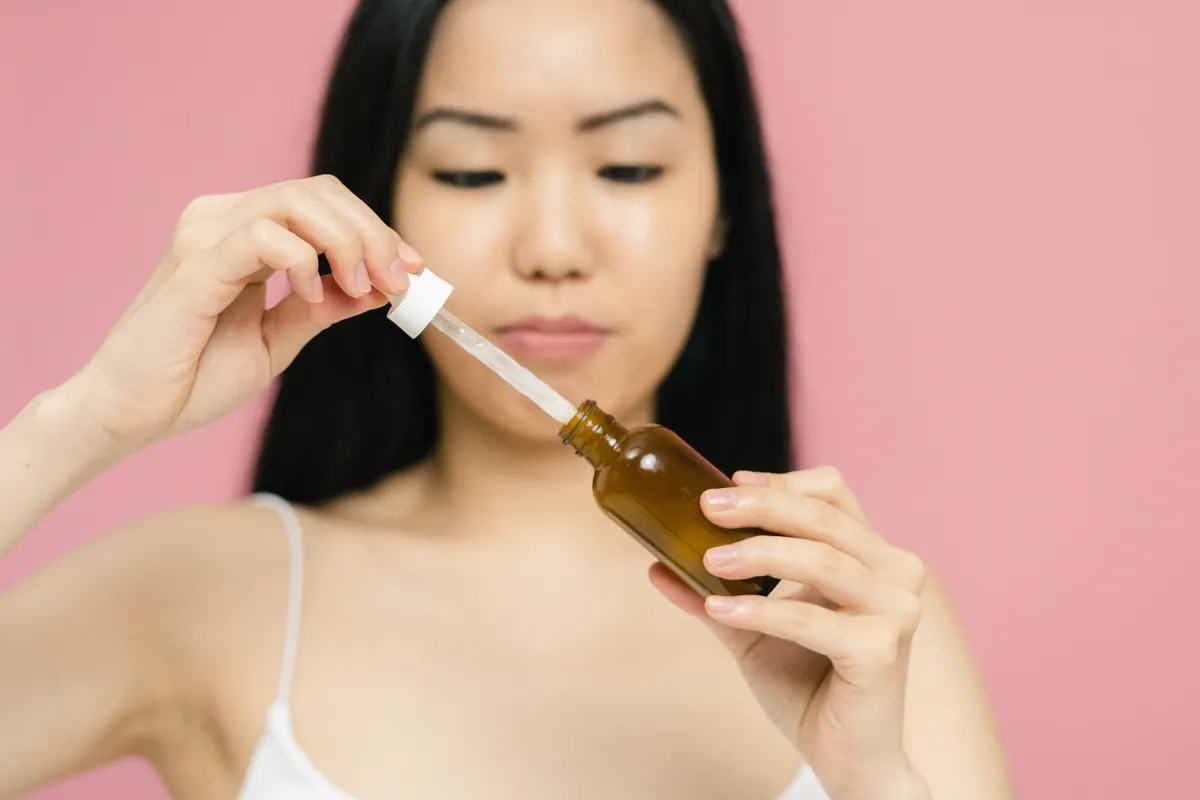
- GHK-Cu is a naturally occurring copper-binding tripeptide (Gly-His-Lys) shown in laboratory and small clinical studies to support collagen synthesis, wound healing and antioxidant defenses.
- For most people the single best copper peptide serum is a stable 1-2% GHK-Cu formula with a low, non-irritating pH and minimal competing actives: concentration alone is not a reliable measure of quality.
- Higher concentrations (3%+) are best reserved for experienced users or targeted use, as they raise the risk of irritation and staining without clearly proportional benefits.
- GHK-Cu should generally be separated from direct-acid vitamin C (L-ascorbic acid) and used in a different routine or time slot from strong retinoids to preserve stability and comfort.
- Expect to pay roughly 25-75 USD for a well-formulated 30 mL serum; price should track stability, packaging and supporting ingredients rather than marketing.
- GHK-Cu is widely used in cosmetics and considered well tolerated topically, but it is not a medical treatment; consult a healthcare professional for skin conditions.
What is GHK-Cu and why does it matter for your skin?
GHK-Cu is a small molecule with an outsized reputation in skincare. It is a naturally occurring tripeptide (glycyl-L-histidyl-L-lysine) that binds a single copper(II) ion to form a stable complex. First isolated from human plasma in 1973 by biochemist Loren Pickart, GHK was originally noticed for its ability to make aged liver tissue behave more like young tissue in culture. Decades of follow-up work turned it into one of the most studied peptides in cosmetic science.
The reason it matters for your skin is biological rather than promotional. Plasma levels of GHK are estimated at around 200 ng/mL at age 20 and decline steadily with age, which coincides with the slowdown in collagen production and wound repair that characterizes aging skin. Copper, meanwhile, is an essential cofactor for enzymes such as lysyl oxidase and superoxide dismutase that build and protect the dermal matrix. GHK-Cu is, in effect, a delivery vehicle that pairs a signaling peptide with the trace metal those enzymes need.
In laboratory and preclinical studies, GHK-Cu has been reported to stimulate collagen synthesis in dermal fibroblasts, support production of glycosaminoglycans and elastin, and accelerate epithelialization in wound models. Gene-expression research from Pickart and colleagues suggests GHK can influence the activity of a large set of human genes (commonly cited as more than 60), many of them involved in tissue remodeling, antioxidant response and inflammation control.
It is important to be precise about the evidence. Much of the strongest data comes from cell cultures, animal wound models and small human studies. Topical cosmetic use is well established and generally well tolerated, but GHK-Cu is not a drug and has not been approved to treat any medical condition. For a deeper mechanistic breakdown, see our GHK-Cu monograph. This article focuses on a narrower, practical question: which serum should you actually buy in 2026?
What is the best copper peptide serum in 2026?
If you have arrived here from a search like "what is the best copper peptide" or "best GHK-Cu copper peptide serum brands 2026," here is the direct answer before the nuance: for the majority of users, the best copper peptide is a stable 1-2% GHK-Cu serum formulated at a mildly acidic pH, packaged to protect the peptide from light and air, and kept relatively simple so the copper complex is not competing with aggressive actives. Concentration is not the same as quality, and the highest number on the label is rarely the best purchase.
The reason there is no single "winner" brand is that copper peptide serums vary along several axes at once: concentration, chelation form, pH, texture, supporting ingredients and price. A 1% serum in an opaque airless bottle with a clean formula will usually outperform a poorly stabilized 3% serum that has oxidized on a shelf. Copper peptides are sensitive: light, heat and incompatible ingredients can degrade the complex and turn the product an unpleasant brown.
Rather than crown one product, the practical approach is to match a formula to your goals and skin tolerance. Established, science-forward copper peptide lines in 2026 include Skin Biology (founded by GHK's discoverer, Loren Pickart), NIOD's Copper Amino Isolate Serum, The Ordinary's copper peptide offering, and several professional and clinical brands such as Biopelle. Each occupies a different point on the price-and-strength spectrum, and we compare representative options in the table below.
One caveat worth internalizing: marketing claims in this category outpace the clinical evidence. Treat before-and-after promises with skepticism, prioritize formulation fundamentals over hype, and remember that consistency over months matters more than any single "best" bottle. For a broader survey beyond copper peptides, our roundup of the best peptide serums puts GHK-Cu in context alongside signal and carrier peptides.
1% vs 2% vs 3%: which GHK-Cu concentration is right for you?
Concentration is the single most misunderstood number on a copper peptide label. Higher is not automatically better, and beyond a certain point additional GHK-Cu mostly adds irritation risk, cost and the potential for a bluish or brownish tint on the skin. Understanding the practical differences between 1%, 2% and 3% helps you buy intelligently instead of chasing the biggest number.
1% GHK-Cu is the entry point and, for many people, the sweet spot. It is the concentration most commonly found in well-known consumer serums, it is generally the best tolerated, and it is appropriate for beginners, sensitive skin, and anyone layering it into an existing routine. At this level the risk of copper staining or reactive irritation is low, and daily use is realistic.
2% GHK-Cu represents a middle ground favored by users who have tolerated 1% well and want a somewhat stronger signal for firmness and texture. It is a reasonable step up for normal-to-resilient skin, but the incremental benefit over 1% is not dramatic and depends heavily on the quality of the surrounding formula. Introduce it gradually (every other day at first) to gauge tolerance.
3% (and higher) formulas are best treated as targeted or advanced products rather than everyday staples. Higher copper loads increase the chance of stinging, dryness, transient tint on the skin, and interaction problems when layered with acids. They can suit experienced users focused on specific concerns, but they are not a default recommendation. As a rule of thumb, start low, use consistently, and only escalate if a lower concentration is well tolerated and you have a specific reason to. Whatever the strength, patch test first and introduce it slowly.
How do the top GHK-Cu serums compare in 2026?
The table below compares representative copper peptide serums across the factors that actually matter: concentration, approximate price for a standard size, texture, and the standout consideration for each. Prices are approximate 2026 figures in USD for roughly 15-30 mL and vary by region and retailer, so verify current pricing before purchasing. This is a category orientation, not an endorsement of any single brand.
| Serum (representative) | GHK-Cu % | Approx. price | Texture | Best for |
|---|---|---|---|---|
| The Ordinary Copper Peptides | ~1% | $28-32 | Light emulsion | Budget-conscious beginners |
| NIOD Copper Amino Isolate Serum | ~1% (high-purity) | $60-75 | Watery gel | Purity-focused, experienced users |
| Skin Biology (Pickart line) | ~1-3% range | $25-50 | Cream/lotion | Research-grounded formulas, scaling up |
| Biopelle / clinical brands | Varies | $70-120 | Serum/cream | Professional-grade routines |
| Multi-peptide blends | ~1% + others | $30-60 | Serum | Those wanting synergy with signal peptides |
A few patterns emerge from this comparison. First, the price gap is not primarily about concentration: a premium serum at 1% may cost more than a budget serum at the same strength because of purity, chelation form, packaging and formulation know-how. Second, texture correlates loosely with the rest of the routine: watery serums layer easily under other products, while cream formats double as light moisturizers. Third, blends that combine GHK-Cu with signal peptides such as Matrixyl-type ingredients aim for complementary pathways, though they make it harder to attribute results to copper alone.
When reading any comparison, prioritize what the table cannot fully capture: packaging (opaque, airless, or dropper), ingredient list length, and pH. A shorter, cleaner formula in protective packaging is usually the safer bet for a sensitive, oxidation-prone ingredient like GHK-Cu. For help layering these into a wider regimen, our cosmetic peptides guide covers sequencing and pairing in depth.
What makes a good GHK-Cu formulation and texture?
Formulation quality is where copper peptide serums genuinely separate themselves, and it is the factor most shoppers overlook. Because the GHK-Cu complex is sensitive to oxidation, light and pH extremes, the container and the supporting chemistry can matter as much as the headline percentage. A thoughtfully built 1% serum will consistently beat a carelessly built 3% one.
Packaging is the first thing to check. Copper peptides degrade with exposure to air and light, so opaque, airless pump bottles or tinted glass with a dropper are strongly preferred over clear jars. If a serum arrives already tinted brown or smells off, that can indicate oxidation. Well-made formulas hold a characteristic light blue color from the copper.
pH and the ingredient list come next. GHK-Cu is most stable in a mildly acidic to near-neutral environment, and it does not coexist well with strong direct acids in the same layer. The best formulas keep the ingredient list relatively short and avoid piling on competing actives that could destabilize the complex or overload the skin. Humectants such as glycerin and soothing agents are welcome; a long list of aggressive actives is a warning sign.
Texture is partly preference and partly practical. Watery and gel serums absorb quickly and layer cleanly under moisturizer and sunscreen, making them easy to slot into a routine. Cream or lotion formats provide more slip and can serve as a light moisturizer in themselves, which suits drier skin. Neither is inherently superior. Choose the texture you will actually use consistently, since adherence over months drives results more than any single formulation detail. If a serum stings, pills under other products, or feels unpleasant, you will stop using it, and an unused serum has no efficacy at any concentration.
Can you use GHK-Cu with vitamin C and retinol?
Layering is where many copper peptide routines go wrong. GHK-Cu can be combined with most of your skincare, but two popular actives, vitamin C and retinol, require thought. The core principle is chemical: copper is a redox-active metal, and pairing it carelessly with strong acids or potent oxidizers/reducers in the same layer can destabilize one or both ingredients and increase irritation.
With vitamin C, the concern applies mainly to pure L-ascorbic acid, which is used at a low, acidic pH. Applying it in the same layer as GHK-Cu can compromise the stability of both and, in theory, drive unwanted oxidation. The practical solution is separation: use vitamin C in the morning and GHK-Cu in the evening, or leave a meaningful gap between them. More stable vitamin C derivatives at higher pH are generally friendlier to copper peptides, but when in doubt, keep them in different time slots.
With retinol and retinoids, the issue is less about chemical destabilization and more about cumulative irritation and routine complexity. Both ingredients are working on skin renewal and comfort, and stacking them in one layer can overwhelm sensitive skin. Many users alternate nights (retinoid one evening, GHK-Cu the next) or apply retinoid at night and copper peptide in the morning. This preserves the benefits of each while limiting irritation. Our comparison of peptides vs retinol explains why the two are complementary rather than interchangeable.
GHK-Cu generally pairs well with hydrators such as hyaluronic acid, niacinamide (well tolerated for most people despite older myths about copper interactions), ceramides and sunscreen. The safe default for any new combination is to introduce one active at a time, watch for irritation, and separate anything acidic or potent into a different routine. For structured pairing strategies, see our guide to peptides for skin.
How much should a GHK-Cu serum cost, and what is good value?
Copper peptide serums span a wide price range, and understanding what you are paying for prevents both overspending and false economy. As a benchmark, a well-formulated 30 mL serum typically costs roughly 25 to 75 USD, with clinical and luxury brands climbing higher. The extremes at both ends deserve scrutiny.
At the budget end (under about 30 USD), you can find genuinely good 1% serums from mass-market brands that prioritize formulation over frills. These are excellent entry points and often the smartest first purchase. The trade-offs tend to be simpler packaging and shorter supporting ingredient lists, which for a beginner is not necessarily a downside.
In the mid to premium range (roughly 50-120 USD), you are usually paying for higher-purity peptides, more sophisticated chelation and stabilization, protective airless packaging, and complementary actives. Whether that premium is justified depends on your skin and goals; the incremental benefit over a solid budget option is real but rarely dramatic. Be wary of prices driven purely by branding.
Good value is best judged on a cost-per-use basis over the life of the product, not the sticker price. Factor in size, how many pumps you use, and how long a bottle lasts. Also weigh stability: a slightly pricier serum in opaque, airless packaging that stays effective for months can be better value than a cheaper one that oxidizes before you finish it. When purchase intent is genuine, buy from reputable retailers with good storage and turnover. Our shop and the wider best peptide serums roundup can help you compare. Avoid deeply discounted, unbranded copper peptides of unknown provenance, where you cannot verify concentration or freshness.
Which GHK-Cu serum is best for your profile?
Because the "best" copper peptide depends on who is buying, here is a verdict organized by user profile. Each recommendation prioritizes tolerance and formulation quality over raw concentration, consistent with the evidence discussed above.
The beginner or sensitive skin: Start with a 1% GHK-Cu serum in protective packaging with a short ingredient list. Use it every other evening at first, and pair only with a gentle moisturizer and daytime sunscreen. This minimizes irritation and staining risk while you learn how your skin responds. A budget-to-mid-range option is entirely sufficient here.
The experienced user targeting firmness and texture: A 1-2% serum from a purity-focused or research-grounded line is a sensible upgrade once 1% is well tolerated. Consider a formula that pairs GHK-Cu with complementary signal peptides, and build a routine that alternates it with a retinoid on separate nights. Reserve 3% products for specific, deliberate use rather than daily default.
The value-driven shopper: A reputable mass-market 1% serum offers the best cost-per-use ratio and covers the fundamentals well. Spend the savings on consistency (buying a second bottle so you never lapse) rather than on a marginally stronger or more expensive formula.
The results-focused, budget-flexible user: A clinical or premium serum with high-purity peptides and airless packaging is a reasonable investment, provided you commit to months of consistent use and realistic expectations. Remember that no topical copper peptide is a substitute for sun protection, sleep and overall skin care. Across every profile, the through-line is the same: a well-formulated, well-packaged serum used consistently beats a stronger serum used sporadically. Whatever you choose, patch test, introduce it slowly, and consult a dermatologist if you have a specific skin condition.
Is GHK-Cu safe, and what are its limitations?
Topical GHK-Cu has a long track record in cosmetics and is generally considered well tolerated by most people when used as directed. It is a naturally occurring compound in the human body, and the concentrations used in serums are low. That said, "well tolerated" is not the same as "risk-free," and responsible buyers should understand both the safety profile and the limits of the evidence.
The most common issues are cosmetic and mild: transient stinging or redness, dryness, and occasionally a faint bluish or brownish tint on the skin from the copper, particularly at higher concentrations. These usually resolve by lowering frequency or concentration. As with any active, patch testing on a small area before full-face use is prudent, and anyone with very reactive skin or a known copper sensitivity should be cautious. Discontinue use and consult a professional if you develop persistent irritation.
The key limitation is evidentiary rather than safety-related. Much of the enthusiasm for GHK-Cu rests on laboratory studies, animal wound models and small human trials, not large randomized controlled trials of cosmetic anti-aging outcomes. The collagen and gene-expression findings are genuinely interesting, but translating them into guaranteed visible results on your face is a leap the current data does not fully support. Approach marketing claims accordingly and expect gradual, modest changes over months rather than rapid transformation.
Finally, a note on scope and regulation. GHK-Cu as used in topical serums is a cosmetic ingredient, not an approved drug, and it is not intended to diagnose, treat or cure any condition. Injectable or systemic use of copper peptides is investigational, carries different risks, and is outside the scope of cosmetic use. This article is for educational purposes only and is not medical advice. Consult a healthcare professional or dermatologist before starting any new active, especially if you are pregnant, breastfeeding, or managing a skin condition. See our medical disclaimer for full details.
Recommended products
Research peptides selected for quality and purity:
GHK-Cu
Anti-Aging Compound

Glutathione
Antioxidant Compound
NAD+
Longevity Compound
Test your knowledge
Quick quiz · 6 questions
Peptide Lab: free calculator & tracker
Calculate your reconstitution, track your peptides and injections. Free, no credit card required.
Frequently Asked Questions
What is the best copper peptide serum overall?
Is 1%, 2% or 3% GHK-Cu better?
Can I use GHK-Cu with vitamin C?
Can I use GHK-Cu with retinol?
How much should a good GHK-Cu serum cost?
How long does GHK-Cu take to show results?
Why is my copper peptide serum turning brown?
Does GHK-Cu really stimulate collagen?
Is GHK-Cu safe for sensitive skin?
Can I make my own GHK-Cu serum from powder?
Sources
- Pickart L, Margolina A (2018). Regenerative and Protective Actions of the GHK-Cu Peptide in the Light of the New Gene Data. International Journal of Molecular Sciences.
- Pickart L, Vasquez-Soltero JM, Margolina A (2015). GHK Peptide as a Natural Modulator of Multiple Cellular Pathways in Skin Regeneration. BioMed Research International.
- Pickart L, Thaler MM (1973). Tripeptide in Human Serum Which Prolongs Survival of Normal Liver Cells and Stimulates Growth in Neoplastic Liver. Nature New Biology.
- Pickart L, Vasquez-Soltero JM, Margolina A (2012). The Human Tripeptide GHK-Cu in Prevention of Oxidative Stress and Degenerative Conditions of Aging. Oxidative Medicine and Cellular Longevity.
- Badenhorst T, Svirskis D, Wu Z (2014). Pharmaceutical Strategies for the Topical Dermal Delivery of Peptides/Proteins for Cosmetic and Therapeutic Applications. Austin Journal of Pharmacology and Therapeutics.
- Pickart L, Vasquez-Soltero JM, Margolina A (2014). GHK and DNA: Resetting the Human Genome to Health. BioMed Research International.