
- Collagen-boosting peptides are not collagen — they are short signal molecules that act like messengers, prompting dermal fibroblasts to synthesize new collagen and other matrix proteins.
- Matrixyl (Palmitoyl Pentapeptide-4, Pal-KTTKS) is a fragment of type I procollagen that triggers a feedback loop stimulating collagen I, collagen III and fibronectin production.
- Matrixyl 3000 combines Palmitoyl Tripeptide-1 (collagen signaling) with Palmitoyl Tetrapeptide-7 (anti-inflammatory), and GHK-Cu adds copper-driven tissue remodeling and antioxidant gene regulation.
- Peer-reviewed studies report measurable reductions in wrinkle depth and improvements in skin roughness over 8-12 weeks, though effect sizes are modest compared with prescription retinoids.
- Realistic results take roughly 8-12 weeks of consistent twice-daily use, because fibroblast-driven collagen remodeling is slow by biological design.
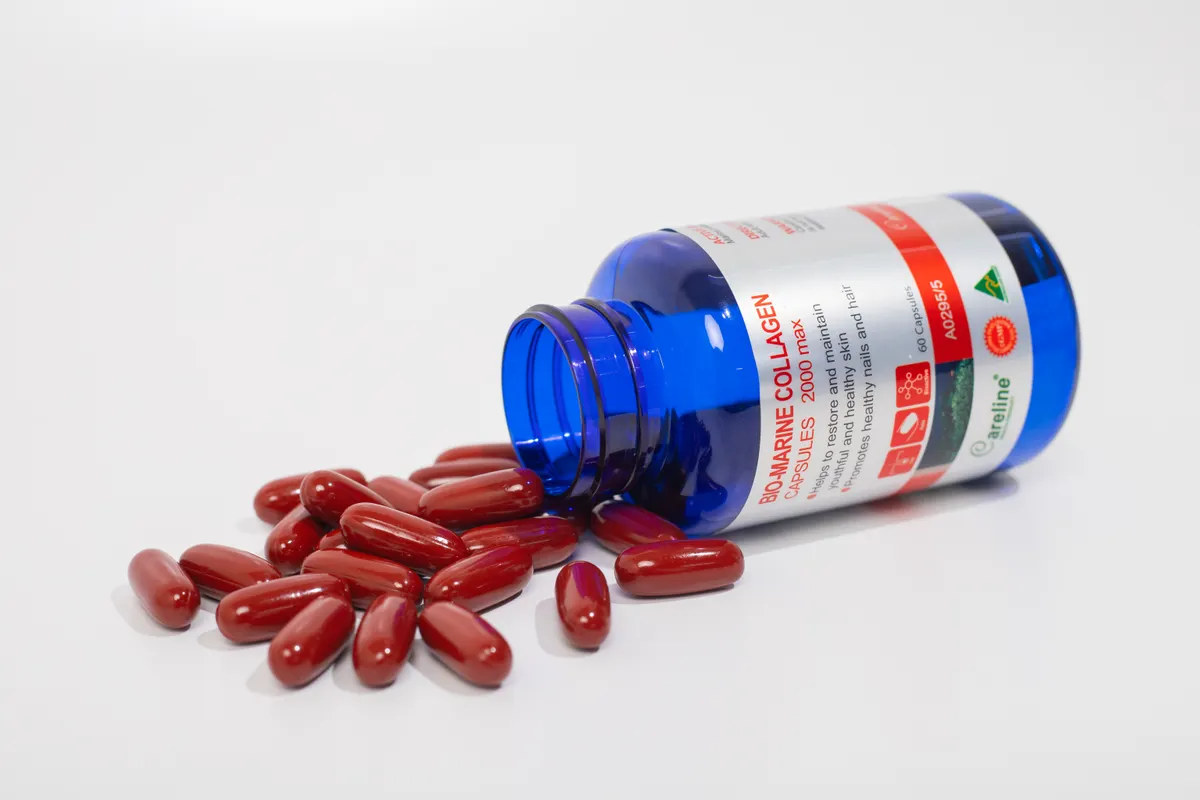
- Topical signal peptides and oral/topical hydrolyzed collagen work through entirely different mechanisms and should not be treated as interchangeable.
- These ingredients are cosmetic, not medical treatments; anyone with a skin condition, pregnancy, or known sensitivity should consult a healthcare professional.
Why Does Skin Lose Collagen — and Can Peptides Help?
Collagen is the structural scaffold of the dermis. Type I and type III collagen together account for the majority of the skin's dry weight, and they are what give young skin its firmness, elasticity and smooth surface. This scaffold is manufactured and maintained by specialized cells called fibroblasts, which continuously produce collagen, elastin, hyaluronic acid and other components of the extracellular matrix.
The problem is that this production slows with age. From roughly the mid-twenties onward, dermal collagen content declines by an estimated 1% per year, and the balance between synthesis and breakdown tips toward degradation. Enzymes called matrix metalloproteinases (MMPs) become more active, chronic low-grade inflammation rises, and ultraviolet exposure accelerates the whole process — a phenomenon known as photoaging. The visible result is thinner skin, loss of firmness, and the formation of fine lines and wrinkles.
This is where collagen-boosting peptides enter the picture. Rather than delivering collagen to the skin (which the skin cannot absorb intact in any meaningful amount), these ingredients act as biological messengers. They are short chains of amino acids designed to mimic the signals that naturally tell fibroblasts to ramp up matrix production. In effect, they attempt to nudge aging skin back toward a more youthful, synthesis-dominant state.
This article focuses on the most studied and widely used signal peptides for collagen: Matrixyl (Palmitoyl Pentapeptide-4), the Matrixyl 3000 blend of Palmitoyl Tripeptide-1 and Palmitoyl Tetrapeptide-7, and the copper peptide GHK-Cu. We will examine how each signals fibroblasts, what the clinical literature reports about dermal thickness and wrinkle depth, how long results realistically take, how to combine them, and how they differ from oral and topical collagen. If you want a foundational primer first, see our overview of what peptides are.
This content is for educational purposes only and is not medical advice. Consult a qualified healthcare professional before starting any new skincare regimen.
How Do Peptides Signal Fibroblasts to Build Collagen?
To understand collagen-boosting peptides, it helps to understand how the body naturally regulates collagen turnover. When collagen breaks down, the fragments that are released are not simply waste — some of them act as signaling molecules. The skin uses these fragments as feedback: their presence tells fibroblasts that repair is needed, prompting fresh matrix synthesis. Signal peptides in skincare are engineered to imitate exactly these repair signals.
Mechanistically, most collagen-stimulating peptides fall into the category of matrikines or matrikine-mimetics. A matrikine is a peptide fragment derived from the extracellular matrix that carries biological information. When a matrikine-mimetic such as Pal-KTTKS reaches the dermis, it engages fibroblast signaling pathways associated with wound healing and matrix production, upregulating genes for collagen I, collagen III, fibronectin, elastin and glycosaminoglycans. The result is not a single burst of activity but a sustained shift toward synthesis.
A second, distinct mechanism involves modulating the enzymes and inflammatory mediators that degrade the matrix. Some peptides, notably Palmitoyl Tetrapeptide-7, help dampen the pro-inflammatory signals (such as interleukin-6) that drive MMP activity. By reducing breakdown at the same time synthesis is encouraged, these blends shift the net collagen balance more effectively than stimulation alone.
A third and critical design element is delivery. Peptides are hydrophilic and relatively large, which normally makes it hard for them to cross the lipid-rich stratum corneum. This is why most cosmetic peptides are attached to a fatty acid — the palmitoyl group in "Palmitoyl Pentapeptide-4," for instance. This lipid tail dramatically improves skin penetration so that a meaningful amount of the active peptide can actually reach living cells in the epidermis and upper dermis. Without it, the peptide would largely sit on the surface.
It is worth being precise about the evidence here: much of the receptor-level and gene-expression data comes from cultured fibroblast (in vitro) studies and manufacturer research, while human clinical data measures downstream outcomes like wrinkle depth and skin roughness. Both matter, but they answer different questions, and we distinguish them throughout this article.
What Is Matrixyl and How Does Palmitoyl Pentapeptide-4 Work?
Matrixyl is the trade name for Palmitoyl Pentapeptide-4, developed by the ingredient house Sederma. Its active portion is the pentapeptide sequence KTTKS (Lysine-Threonine-Threonine-Lysine-Serine), attached to a palmitic acid chain to aid penetration. The full molecule, Pal-KTTKS, has a molecular weight of approximately 802 g/mol and the formula C₃₉H₇₅N₇O₁₀.
What makes KTTKS special is its origin. It is a naturally occurring subfragment of the C-terminal propeptide of type I procollagen — the very molecule fibroblasts secrete when they build collagen. In other words, KTTKS is a piece of the collagen-production machinery repurposed as a signal. When it reaches fibroblasts, it participates in a feedback loop that stimulates the synthesis of collagen I, collagen III and fibronectin. The foundational work by Katayama and colleagues in 1993 demonstrated that this pentapeptide could promote extracellular matrix production in cultured cells.
Because the palmitoyl-modified form penetrates far better than the bare peptide, Matrixyl became one of the first commercially successful "biomimetic" cosmetic peptides. It is typically used at concentrations of a few parts per million to a fraction of a percent of the active peptide, which is why serums list it far down the ingredient panel yet still claim activity — these molecules are effective at low concentrations.
The clinical highlight for Palmitoyl Pentapeptide-4 comes from a double-blind, placebo-controlled study by Robinson and colleagues, published in the International Journal of Cosmetic Science in 2005. Over 12 weeks, twice-daily application to photoaged facial skin produced statistically significant improvements in wrinkles and skin texture compared with the vehicle alone. The effect was real but moderate — a useful benchmark for setting expectations. For a broader look at how peptides fit into skincare, see our guide to peptides for skin.
It is important to note that Matrixyl is a cosmetic ingredient regulated as such, not an approved drug for treating any medical condition. Its role is to support the appearance of aging skin, not to cure or reverse it.
How Do Palmitoyl Tripeptide-1 and Palmitoyl Tetrapeptide-7 Work (Matrixyl 3000)?
Matrixyl 3000 is a second-generation blend that combines two complementary peptides: Palmitoyl Tripeptide-1 and Palmitoyl Tetrapeptide-7. Rather than relying on a single signal, it pairs a matrix-building peptide with an anti-inflammatory one, targeting both sides of the collagen balance equation. You can read more in our dedicated Matrixyl 3000 guide.
Palmitoyl Tripeptide-1 (Pal-GHK) carries the sequence Glycine-Histidine-Lysine — the same core tripeptide found in GHK-Cu, but here attached to a palmitoyl chain instead of complexed with copper. It functions as a messenger that mimics matrix-breakdown fragments, signaling fibroblasts to restore collagen, elastin and hyaluronic acid. It is, in essence, a "rebuild" signal.
Palmitoyl Tetrapeptide-7 (Pal-GQPR) carries the sequence Glycine-Glutamine-Proline-Arginine. Its main contribution is anti-inflammatory: it helps reduce the excess production of interleukin-6 and related mediators that would otherwise drive matrix metalloproteinase activity and glycation-related damage. By calming this low-grade inflammation, it slows collagen degradation while its partner peptide encourages synthesis.
According to manufacturer (Sederma) research, this combination increased collagen synthesis by up to 117% in laboratory testing and reduced wrinkle volume in use studies. These figures come from in vitro and sponsor-conducted data, so they should be read as indicative of the mechanism rather than as guaranteed clinical outcomes. Independent clinical trials on the finished blend are fewer, which is a common limitation across the cosmetic peptide category.
The practical takeaway is that Matrixyl 3000 was designed as a dual-action system — stimulate and protect — which is conceptually more complete than stimulation alone. When formulators want to also target expression lines, they frequently combine it with Argireline (Acetyl Hexapeptide-3), a neuromodulating peptide that works by a completely different mechanism.
What Makes GHK-Cu (Copper Peptide) Different?
GHK-Cu is a copper complex of the tripeptide Glycine-Histidine-Lysine. It was discovered in 1973 by biochemist Loren Pickart, who observed that this small molecule, naturally present in human plasma, could influence tissue regeneration. GHK's plasma concentration is roughly 200 ng/mL around age 20 and declines steadily with age — a decline that parallels the skin's diminishing capacity for repair. Our full GHK-Cu guide covers its chemistry in more depth.
What sets GHK-Cu apart from purely peptide-based signals is the copper ion. Copper is a cofactor for lysyl oxidase, the enzyme that cross-links collagen and elastin fibers into a stable, mature matrix. It also supports superoxide dismutase, an important antioxidant enzyme. By delivering copper in a bioavailable, cell-permeable form, GHK-Cu contributes not only a "build more collagen" signal but also the raw material needed to properly assemble and stabilize that collagen.
GHK-Cu's activity is unusually broad at the genetic level. Gene-expression research has reported that GHK-Cu modulates the activity of more than 60 genes involved in tissue remodeling, antioxidant defense, and wound repair — resetting aged skin cells toward a more youthful expression pattern. In fibroblast studies, GHK-Cu has been reported to stimulate collagen synthesis by up to 70%, and it is well documented in wound-healing contexts, where it accelerates epithelialization.
The comprehensive reviews by Pickart and Margolina (2018) summarize this body of work, though it is worth stressing that a substantial portion is preclinical (cell culture and animal models). The human cosmetic evidence is supportive but more limited, and copper peptides can be formulation-sensitive — they may be destabilized or deactivated when combined carelessly with certain other actives, a point we return to in the combinations section.
Notably, GHK-Cu is one of the fastest-rising ingredients in the space: consumer search interest grew by over 1,000% year over year into 2026, reflecting broad interest in copper peptides for skin. Popularity, however, is not the same as clinical proof — the two should be kept distinct.
What Does Clinical Research Show About Dermal Thickness and Wrinkles?
When evaluating collagen-boosting peptides, the most meaningful endpoints are objective measures of skin structure and appearance: dermal thickness (often measured by high-frequency ultrasound), wrinkle depth and volume (measured by 3D surface profilometry), skin roughness, and elasticity. Here is a summary of what the peer-reviewed and industry literature reports for the leading peptides.
Palmitoyl Pentapeptide-4 (Matrixyl): The Robinson et al. (2005) double-blind, vehicle-controlled trial found statistically significant reductions in wrinkles and improvements in skin appearance over 12 weeks of twice-daily use. Later clinical evaluations, such as work summarized by Trookman and colleagues, reported measurable improvements in fine lines and skin smoothness. Effect sizes are consistently described as mild to moderate.
GHK-Cu: The reviews by Pickart and Margolina document collagen stimulation, increased dermal thickness in some studies, improved skin firmness, and reduced fine lines, alongside strong wound-healing data. Much of the mechanistic and thickness data derives from cell-culture and animal work, with smaller human cosmetic studies supporting appearance benefits.
Matrixyl 3000 blend: Manufacturer studies report up to 117% increased collagen synthesis in vitro and visible wrinkle reduction in use tests. Independent, large-scale randomized trials on the finished blend remain limited.
| Peptide | Primary mechanism | Key reported outcome | Strength of human evidence |
|---|---|---|---|
| Palmitoyl Pentapeptide-4 | Procollagen fragment signal (collagen I/III, fibronectin) | Significant wrinkle/texture improvement over 12 weeks | Moderate (controlled trial) |
| Palmitoyl Tripeptide-1 | Matrix-rebuild signaling | Increased collagen synthesis in vitro | Limited (mostly in vitro/sponsor) |
| Palmitoyl Tetrapeptide-7 | Anti-inflammatory (lowers IL-6, MMP activity) | Reduced matrix breakdown | Limited (mostly in vitro) |
| GHK-Cu | Copper-cofactor remodeling + 60+ gene regulation | Up to 70% collagen stimulation; wound healing | Moderate mechanistic, mixed clinical |
The honest overall picture is this: collagen-boosting peptides have credible, mechanistically grounded evidence for modest improvements in wrinkle depth, texture and firmness. They are not a substitute for prescription retinoids or procedures when significant photoaging correction is the goal, and they do not "cure" wrinkles. They are best understood as evidence-supported maintenance and prevention actives with an excellent tolerability profile.
Statistics cited here reflect published and manufacturer research at the time of writing; individual results vary and are not guaranteed.
What Is the Realistic Timeline for Results?
One of the most common sources of disappointment with peptide skincare is a mismatch between expectations and biology. Collagen remodeling is inherently slow, because fibroblasts synthesize, secrete, cross-link and organize collagen fibers over weeks — not days. Setting a realistic timeline is essential.
The table below reflects a typical trajectory with consistent twice-daily application of a well-formulated peptide serum. Individual response depends on age, baseline skin condition, sun exposure, the rest of the routine, and consistency of use.
| Timeframe | What is happening biologically | What you may notice |
|---|---|---|
| Days 1-14 | Improved surface hydration and barrier support | Smoother, softer, more hydrated skin; no structural change yet |
| Weeks 2-4 | Fibroblast signaling ramps up; early matrix synthesis | Subtle improvements in radiance and texture |
| Weeks 4-8 | New collagen and matrix proteins accumulate | Beginning of fine-line softening and firmness |
| Weeks 8-12 | Meaningful collagen remodeling; this is the window most clinical studies measure | Visible reduction in wrinkle depth and improved firmness |
| 3-6 months+ | Sustained remodeling and maintenance | Cumulative, maintained improvement with continued use |
The critical point is that the 8-to-12-week mark is when the structural benefits typically become visible, which is exactly why well-designed clinical trials run for that duration. If you evaluate a peptide serum after two weeks, you are almost certainly judging it before it has had a chance to work.
Consistency matters more than concentration. Because these peptides act as ongoing signals, they need to be present regularly to maintain the stimulus. Stopping use allows collagen turnover to drift back toward its age-appropriate baseline over subsequent months. Think of peptides as maintenance, not a one-time correction.
Finally, results are meaningfully amplified by daily broad-spectrum sunscreen. UV exposure is the single largest driver of collagen breakdown, so protecting skin from photoaging protects the collagen your fibroblasts are working to build.
What Are the Optimal Peptide Combinations?
Because different peptides act through different mechanisms, thoughtful combinations can outperform any single ingredient. The goal is to stack complementary signals — build collagen, calm inflammation, relax expression lines, and protect — without pairing ingredients that destabilize one another. Our guide to peptide stacking covers the general principles.
Signal peptide + copper peptide. Matrixyl-type peptides and GHK-Cu target collagen from complementary angles: Matrixyl provides the procollagen-mimicking signal, while GHK-Cu contributes copper-driven cross-linking, antioxidant support and broad gene regulation. Together they address both the instruction and the raw material for collagen assembly.
Collagen builders + a neuromodulating peptide. Pairing collagen-stimulating peptides with Argireline combines structural rebuilding with reduced dynamic wrinkling from repetitive facial movement — a rationale behind many "complete" anti-aging serums. See our Matrixyl vs. Argireline comparison for how these two differ.
Peptides + supporting actives. Peptides layer well with hyaluronic acid (hydration), niacinamide (barrier and tone), and antioxidants such as vitamin E. Many people also alternate peptides with a retinoid — using the retinoid at night and peptides in the morning, or on alternate nights — to gain the benefits of both without excessive irritation. Our peptides vs. retinol article explains how the two compare and complement each other.
Combinations to approach with caution. Copper peptides like GHK-Cu are formulation-sensitive. High concentrations of pure vitamin C (L-ascorbic acid) and strong exfoliating acids in the same layer can, in some formulations, interact with or destabilize the copper complex, so many dermatologists suggest applying them at different times of day rather than mixing them in one step. When in doubt, use products as formulated by the manufacturer rather than layering many strong actives at once. For a curated overview of options, see our top collagen peptides roundup.
How Do Signal Peptides Differ From Oral or Topical Collagen?
A frequent point of confusion is the difference between signal peptides (like Matrixyl and GHK-Cu) and collagen products — whether oral collagen supplements or topical creams that list "collagen" as an ingredient. They are fundamentally different, and understanding the distinction prevents wasted money and false expectations.
Signal peptides are messengers, not building blocks. As covered above, they are tiny fragments engineered to instruct fibroblasts to produce more collagen. They do not add collagen to the skin; they attempt to increase your own collagen output. Their small size and lipid modification are specifically designed to reach living cells.
Topical collagen is largely a surface moisturizer. Intact collagen is an enormous molecule — far too large to penetrate the stratum corneum. When collagen is listed in a face cream, it functions mainly as a humectant and film-former that sits on the surface, temporarily improving smoothness and hydration. It does not enter the dermis or become new structural collagen. This is a genuine, if limited, cosmetic benefit — but it is not collagen "replacement."
Oral (hydrolyzed) collagen works through a different route entirely. When you ingest collagen peptides, they are broken down in digestion into amino acids and small di-/tri-peptides that are absorbed systemically. There is growing evidence that some of these peptides (such as prolyl-hydroxyproline) may reach the skin via the bloodstream and act as signals or substrates that support fibroblast activity. Several randomized trials report improvements in skin elasticity and hydration with oral collagen — but this is a systemic, whole-body approach, not a targeted topical one, and it is a separate category from the signal peptides discussed here. Our article on collagen peptide safety looks at oral collagen considerations in detail.
The bottom line: topical signal peptides and oral collagen are not competitors or substitutes — they are different tools that operate by different mechanisms. Some people use both. What neither category should be is confused with the other, and no reputable evidence supports the idea that any of them are miracle solutions.
Are Collagen-Boosting Peptides Safe, and Who Should Avoid Them?
Among cosmetic actives, signal peptides are notable for their excellent tolerability. Because they mimic molecules the body already produces and are used at very low concentrations, topical peptides like Matrixyl, Matrixyl 3000 and GHK-Cu are generally well tolerated, with a low incidence of irritation compared with retinoids or strong exfoliating acids. This makes them a reasonable option for people with sensitive skin who cannot comfortably use retinoids.
That said, "generally well tolerated" is not the same as "risk-free for everyone." Possible issues include contact irritation or allergy to a specific peptide or to other ingredients in the formulation, and, with copper peptides, occasional sensitivity or interactions with other actives as noted earlier. Anyone with known allergies should review the full ingredient list, and it is always wise to patch-test a new product on a small area for several days before applying it to the whole face.
Certain groups should be more cautious. If you are pregnant or breastfeeding, have an active skin condition (such as eczema, rosacea or dermatitis), or are undergoing dermatological treatment, you should consult a healthcare professional or dermatologist before adding new actives. This is a general principle of good skincare practice rather than evidence of specific harm from these peptides.
It is also important to place these ingredients in their proper regulatory context. Cosmetic peptides such as Palmitoyl Pentapeptide-4 and GHK-Cu are regulated as cosmetic ingredients, intended to improve the appearance of the skin. They are not approved drugs and are not intended to diagnose, treat, cure or prevent any disease. Claims should be read accordingly, and any product promising dramatic, guaranteed or overnight transformation should be treated with skepticism.
For a fuller statement of the limitations and context that apply to all of our content, please see our medical disclaimer. This article is educational and does not replace personalized advice from a qualified professional.
Recommended products
Research peptides selected for quality and purity:

Paula's Choice Pro-Collagen Multi-Peptide Booster
Peptide serum

Drunk Elephant Protini Polypeptide Cream
Peptide cream

The Ordinary Multi-Peptide + HA Serum
Peptide serum
Test your knowledge
Quick quiz · 6 questions
Peptide Lab: free calculator & tracker
Calculate your reconstitution, track your peptides and injections. Free, no credit card required.
Frequently Asked Questions
Do collagen-boosting peptides actually work, or is it marketing?
How long before I see results from a peptide serum?
What is the difference between Matrixyl and GHK-Cu?
Can I use peptides together with retinol or vitamin C?
Is topical collagen the same as a collagen-boosting peptide?
Are collagen peptides in skincare safe for sensitive skin?
Sources
- Katayama K, Armendariz-Borunda J, Raghow R, Kang AH, Seyer JM (1993). A pentapeptide from type I procollagen promotes extracellular matrix production. Journal of Biological Chemistry.
- Robinson LR, Fitzgerald NC, Doughty DG, Dawes NC, Berge CA, Bissett DL (2005). Topical palmitoyl pentapeptide provides improvement in photoaged human facial skin. International Journal of Cosmetic Science.
- Pickart L, Margolina A (2018). Regenerative and protective actions of the GHK-Cu peptide in the light of the new gene data. International Journal of Molecular Sciences.
- Pickart L (2008). The human tri-peptide GHK and tissue remodeling. Journal of Biomaterials Science, Polymer Edition.
- Schagen SK (2017). Topical peptide treatments with effective anti-aging results. Cosmetics.
- Trookman NS, Rizer RL, Ford R, Ho E, Gotz V (2009). Immediate and long-term clinical benefits of a topical treatment for facial lines and wrinkles. Journal of Clinical and Aesthetic Dermatology.