
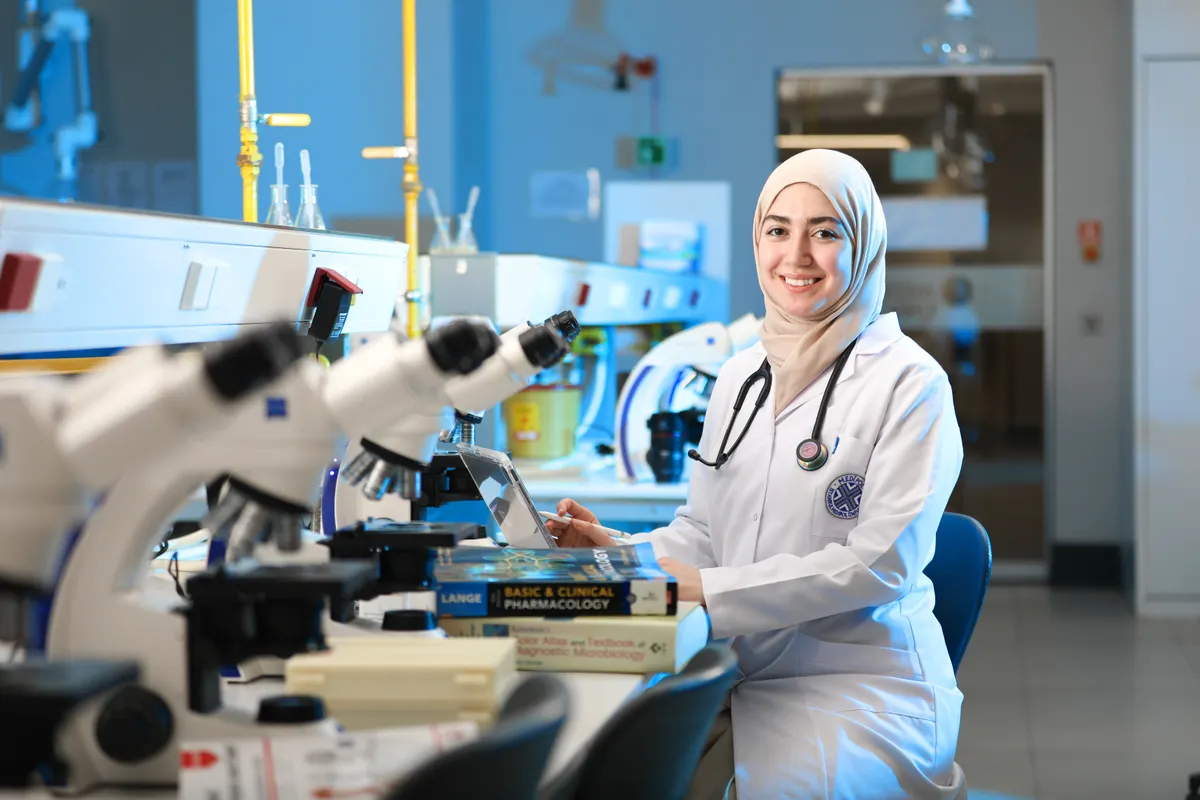
- BPC-157, TB-500 and GHK-Cu are the three peptides most often discussed for post-surgical healing, each acting on a different repair pathway: angiogenesis, cell migration, and collagen remodeling.
- The strongest evidence comes from preclinical (animal and cell) studies — for example BPC-157 accelerated tendon healing 60-80% in rat models — but human clinical trials remain scarce or absent.
- GHK-Cu is the most clinically validated of the three, with human wound-healing and skin-regeneration data, and appears in approved cosmetic and dermatological products.
- None of these peptides is FDA- or EMA-approved as a drug for recovery, and BPC-157 and TB-500 are classified for research use only; TB-500 is prohibited by WADA.
- Any peri-operative use must be discussed with your surgeon, as peptides may interact with anesthesia, anticoagulation, and wound-management protocols.
- This article is for educational purposes only and is not medical advice — always consult a qualified healthcare professional before, during, and after any surgical procedure.
Why do people look to peptides for post-surgery recovery?
Surgical recovery is fundamentally a wound-healing problem. Whether the procedure is an orthopedic repair, an abdominal operation, or a cosmetic intervention, the body has to move through the same overlapping phases: hemostasis, inflammation, proliferation, and remodeling. Each phase depends on a precisely timed cascade of signaling molecules, and many of those signals are themselves short chains of amino acids — in other words, peptides. This biological reality is why researchers have become interested in whether administering specific peptides could support or accelerate parts of the healing process.
The three peptides most frequently discussed in this context are BPC-157, TB-500 (a fragment of Thymosin Beta-4), and GHK-Cu, the copper-binding tripeptide. Each is studied for a distinct mechanism: BPC-157 for its effects on blood-vessel formation and gastrointestinal protection, TB-500 for cell migration and actin regulation, and GHK-Cu for collagen synthesis and skin remodeling. Together they map onto different points of the healing timeline.
It is important to frame this interest honestly. The global peptide therapeutics market reached roughly $48.1 billion in 2025 and search interest in recovery peptides has grown sharply — BPC-157 alone draws about 165,000 searches per month. But market enthusiasm is not the same as clinical proof. For most of these compounds, the evidence base is dominated by animal and laboratory studies rather than large randomized human trials.
This article summarizes what is actually known, where the evidence is strong and where it is thin, and what considerations matter if a surgical patient and their physician were to discuss these compounds. If you are new to the topic, our primer on what peptides are provides useful background. Nothing here is a recommendation to use any unapproved substance.
How does BPC-157 accelerate wound healing?
BPC-157 (Body Protection Compound-157) is a synthetic pentadecapeptide — a 15-amino-acid sequence (Gly-Glu-Pro-Pro-Pro-Gly-Lys-Pro-Ala-Asp-Asp-Ala-Gly-Leu-Val) derived from a protein found in human gastric juice. Its molecular weight is approximately 1,419 Daltons. Unlike many peptides, it is notably stable in gastric acid, which is part of why it has attracted attention for both oral and injectable research use.
The proposed mechanism most relevant to surgery is angiogenesis — the formation of new blood vessels. Preclinical work suggests BPC-157 upregulates vascular endothelial growth factor receptor 2 (VEGFR2) and modulates the nitric oxide (NO) system, both of which are central to delivering oxygen and nutrients to healing tissue. Better perfusion at a wound site theoretically supports faster granulation and closure.
The animal data on connective tissue are the most cited. In rat models of tendon and ligament injury, BPC-157 accelerated healing by roughly 60-80% compared with controls, with improved tensile strength and faster functional recovery. Studies have also reported protective effects on the gastrointestinal tract, muscle, and even bone healing. For a surgical patient, the appeal is obvious: many operations involve exactly these tissues.
However, the honest caveat is decisive. There are over 100 preclinical studies on BPC-157 but zero completed Phase III human clinical trials. Almost everything promising about BPC-157 comes from rodents and cell cultures. Human pharmacokinetics, optimal dosing, and long-term safety are not established. BPC-157 is sold strictly as a research chemical, not approved for human use, and it is not a medicine you can be prescribed for recovery. Our full BPC-157 guide covers the mechanistic literature in more depth.
What is TB-500 and how does it support tissue repair?
TB-500 is a synthetic peptide based on the active region of Thymosin Beta-4 (TB4), a naturally occurring 43-amino-acid protein present in nearly every human cell except red blood cells. Full Thymosin Beta-4 has a molecular weight of about 4,963 Daltons; the TB-500 fragment reproduces the key actin-binding domain responsible for much of the parent molecule's regenerative activity.
The defining function of Thymosin Beta-4 is regulation of actin, the cytoskeletal protein that cells use to change shape and move. Because wound healing depends heavily on cells migrating into the injured area — endothelial cells forming vessels, fibroblasts laying down matrix, keratinocytes closing the surface — a molecule that promotes cell migration is mechanistically interesting for recovery. Preclinical studies also point to anti-inflammatory activity and promotion of angiogenesis, overlapping somewhat with BPC-157.
Thymosin Beta-4 itself has been studied in humans more than TB-500, including trials for dermal wounds, pressure ulcers, and corneal injuries, as well as cardiac repair after ischemia. These studies suggest the parent molecule can support epithelial and endothelial regeneration. That said, TB-500 as sold for research is a fragment, and data specific to the fragment — rather than the full protein — remain limited and largely preclinical.
For surgical recovery, TB-500 is often discussed alongside BPC-157 as a complementary agent, the idea being that one supports vessel formation and the other supports cell mobility and matrix deposition. This pairing is popular in peptide stacking discussions, but it is worth stressing that combination safety and efficacy in humans have not been formally tested. TB-500 is not approved for human use and, importantly for athletes, is prohibited by the World Anti-Doping Agency (WADA). See our TB-500 guide for the underlying research.
Can GHK-Cu reduce scarring and inflammation after surgery?
GHK-Cu is a copper-binding tripeptide — glycyl-L-histidyl-L-lysine complexed with a copper(II) ion. It was discovered in 1973 by Loren Pickart, who found that a factor in human plasma helped older tissue behave more like younger tissue. GHK is naturally present in blood at roughly 200 ng/mL at age 20, and this concentration declines steadily with age — a decline that parallels the slower healing seen in older adults.
Of the three peptides in this article, GHK-Cu has the strongest human evidence base. It is well documented to stimulate collagen and glycosaminoglycan synthesis, and fibroblast studies report increases in collagen production of up to 70%. Gene-expression research suggests GHK-Cu influences the activity of more than 60 genes involved in tissue remodeling, antioxidant defense, and wound repair, effectively nudging cells toward a regenerative rather than degenerative program.
For post-surgical patients, the most relevant properties are its effects on scar quality and inflammation. Clinical and dermatological studies report faster epithelialization — on the order of 30% faster in some wound models — along with improved skin firmness and reduced fine lines. Because copper peptides also help regulate matrix metalloproteinases, they may support more organized collagen deposition, which is what distinguishes a fine scar from a thick, disorganized one. This is why GHK-Cu appears in many approved topical products, not just research vials.
The practical distinction is that GHK-Cu is most often used topically on healed or nearly healed incisions rather than injected, and topical cosmetic use sits in a very different regulatory space than injectable research peptides. Even so, applying anything to a surgical wound should be cleared by your surgeon, since incisions have specific closure and dressing requirements. Our GHK-Cu guide and article on peptides for skin expand on this.
What does the clinical evidence actually show?
The single most important thing to understand about recovery peptides is the gap between preclinical promise and clinical proof. Enthusiasm online often treats rodent findings as though they were human outcomes. They are not. Animal models can point research in a direction, but many compounds that shine in rats never reproduce those effects in controlled human trials.
For BPC-157, the literature is almost entirely preclinical. PubMed lists well over 100 studies, and the number of annual publications has grown quickly — from about 45 results in 2020 to more than 180 in 2025 — yet there are still no completed Phase III human trials. The healing accelerations reported (such as the 60-80% faster tendon repair) are rat data. They are genuinely interesting and mechanistically coherent, but they are not evidence of efficacy or safety in surgical patients.
For Thymosin Beta-4 / TB-500, there is somewhat more human work, but it concerns the full-length protein and specific indications like chronic wounds and corneal or cardiac injury, generally in early-phase studies. Results have been mixed to modestly encouraging, and none of this establishes TB-500 the fragment as a validated recovery aid.
For GHK-Cu, the human evidence is comparatively robust, especially for skin and wound healing, and copper peptides are used in dermatology and cosmetics with a reasonable safety record when applied topically. This makes GHK-Cu the outlier: the one compound of the three with meaningful clinical grounding, albeit primarily for skin and scar outcomes rather than deep surgical repair.
The takeaway is not that these peptides do nothing — it is that the certainty simply is not there yet. Regulators reflect this: most of these compounds are classified "for research use only" in the US and EU, and the FDA has issued warning letters to companies marketing unapproved peptide products. Any decision must weigh preliminary, mostly animal-based evidence against unknown human risks, and that calculus belongs to you and your physician, not to a marketing page.
What do pre-op and post-op protocols look like in the literature?
Because none of these peptides is an approved medicine, there is no official, validated dosing protocol for surgical recovery. What circulates online are extrapolations from animal studies and anecdotal user reports, neither of which is a substitute for clinical guidance. We present the following purely to describe what appears in the research and community literature, not as instructions.
In principle, a peri-operative approach is discussed in two windows. A pre-operative window is proposed on the theory that priming healing pathways and tissue perfusion before the trauma of surgery could improve early recovery. A post-operative window is proposed to support the inflammatory and proliferative phases once the wound exists. In practice, most preclinical work simply administers the peptide around the time of injury and continues through early healing.
A timeline commonly referenced in discussions looks like this:
| Phase | Window | Stated rationale (theoretical) |
|---|---|---|
| Pre-op | Days before surgery | Prime angiogenesis and tissue readiness |
| Early post-op | Inflammatory phase (days 0-5) | Modulate inflammation, support perfusion |
| Proliferative | Weeks 1-3 | Support collagen and matrix deposition |
| Remodeling | Weeks 3+ | Topical GHK-Cu for scar quality |
Several practical concerns make self-directed protocols risky. Peptides that promote angiogenesis and modulate inflammation could theoretically interfere with the controlled inflammatory response surgeons rely on, and they may interact with anesthesia, anticoagulants, and antiplatelet drugs used around surgery. Sterility of reconstituted injectable peptides is another serious issue near a fresh incision. Tools such as our Peptide Lab reconstitution calculator exist for research contexts, but they do not make an unapproved compound safe for a surgical patient.
The only responsible protocol advice is this: do not introduce any peptide around a surgery without the explicit knowledge and approval of your surgical team. They need a complete picture of everything entering your body to manage bleeding risk, healing, and drug interactions.
How do BPC-157, TB-500 and GHK-Cu compare?
Although these three peptides are often grouped together, they are quite different in structure, primary mechanism, evidence level, and typical route of use. Understanding those differences clarifies why they are sometimes discussed as complementary rather than interchangeable.
| Property | BPC-157 | TB-500 | GHK-Cu |
|---|---|---|---|
| Size | 15 amino acids | ~17 aa fragment of TB4 | 3 amino acids + copper |
| Molecular weight | ~1,419 Da | ~4,963 Da (TB4) | ~340 Da (peptide) |
| Primary mechanism | Angiogenesis, GI protection | Cell migration (actin) | Collagen synthesis, remodeling |
| Best-supported evidence | Preclinical (animal) | Preclinical / early human (TB4) | Human (skin/wound) |
| Typical route studied | Injection / oral | Injection | Topical / injection |
| Regulatory status | Research only | Research only, WADA-banned | Cosmetic + research |
In a simplified model of the healing cascade, each peptide is associated with a different emphasis. BPC-157 is the vascular and connective-tissue player, most discussed for tendons, ligaments, gut, and muscle. TB-500 is framed as the cell-mobility agent, helping cells reach and repopulate the injured zone. GHK-Cu is the remodeling and skin-quality agent, most relevant late in healing and for the appearance of the final scar.
This mechanistic complementarity is exactly why BPC-157 and TB-500 are frequently mentioned as a pair, with GHK-Cu added topically for the incision itself. But complementary mechanisms on paper do not guarantee additive benefits or safety in a living patient — combination effects have not been rigorously tested in humans, and stacking multiplies the unknowns rather than dividing the risk.
If you want a broader landscape of what different peptides do, our overview of the most-studied peptides puts these three in context alongside others.
Is it safe to combine these peptides for recovery?
The concept of "stacking" — using more than one peptide at once for synergistic effect — is central to how recovery peptides are marketed. The most common recovery stack pairs BPC-157 with TB-500, on the logic that angiogenesis plus cell migration should support faster, more complete tissue repair, with topical GHK-Cu applied later for scar quality.
Mechanistically, the rationale is not unreasonable: the peptides act on different, non-redundant pathways. In principle, non-overlapping mechanisms are the ideal basis for a rational combination, and this is the standard argument you will find in peptide stacking guides. The problem is that a plausible rationale is not clinical evidence.
There are no controlled human trials evaluating a BPC-157 + TB-500 stack for surgical recovery. That means the combined pharmacology, the potential for compounded side effects, and any interaction with the drugs used around surgery are essentially uncharacterized. Two compounds that each modulate blood-vessel growth and inflammation could, in combination, have effects on bleeding or the healing timeline that are difficult to predict — and a fresh surgical wound is precisely the wrong place to discover them.
There is also a quality-control dimension that stacking amplifies. Research peptides are not manufactured to pharmaceutical standards, and independent testing has repeatedly found products that are underdosed, contaminated, or mislabeled. Every additional compound in a stack adds another opportunity for an impurity or a sterility failure near a healing incision. If you are considering multiple compounds, the risk does not simply add — it interacts.
The balanced conclusion: the theoretical case for combining these peptides is coherent, but the human safety data required to endorse it does not exist. Anyone weighing a stack around surgery should treat it as an experimental decision to be made only with a physician who can monitor for complications. Review our medical disclaimer before acting on any of this information.
What are the risks, side effects and legal considerations?
Peptides as a class are sometimes described as having favorable safety profiles because they are highly specific and are broken down into ordinary amino acids. There is a kernel of truth to this — the FDA has noted that peptides can have fewer off-target effects than many small-molecule drugs. But specificity is not the same as being risk-free, and for BPC-157 and TB-500 the human safety data needed to make strong safety claims simply have not been generated.
Reported and theoretical concerns include injection-site reactions, dizziness or blood-pressure changes, and — critically for compounds that promote angiogenesis — a theoretical risk relating to tumor growth, since new blood vessels can also feed abnormal tissue. Anyone with a history of cancer should regard pro-angiogenic peptides with particular caution. Because these compounds affect inflammation and vessel formation, their interaction with the tightly controlled physiology of the peri-operative period is genuinely unknown.
Product quality is a first-order safety issue. Most research peptides are labeled "for research use only" and are not manufactured under pharmaceutical (GMP) conditions. Contamination, incorrect dosing, and non-sterile reconstitution are real hazards, and they are magnified when the product is injected near a surgical site. The FDA has issued warning letters to sellers of unapproved peptide products, which underscores that this is an unregulated corner of the market.
Legally and in sport, the picture is restrictive. BPC-157, TB-500 and injectable GHK-Cu are not approved as drugs by the FDA or EMA for human use, their legal status varies by jurisdiction, and TB-500 is banned by WADA under the S2 category for competitive athletes. Purchasing, possessing, or using these compounds may carry legal and professional consequences depending on where you live and what you do.
Medical disclaimer: This article is for educational purposes only and does not constitute medical advice. BPC-157, TB-500 and injectable GHK-Cu are research compounds not approved for human use, and this content is not a recommendation to use them. Always consult a qualified healthcare professional — and specifically your surgical team — before making any decision related to your recovery. See our full medical disclaimer for details.
Recommended products
Research peptides selected for quality and purity:
GHK-Cu
Anti-Aging Compound
Test your knowledge
Quick quiz · 6 questions
Peptide Lab: free calculator & tracker
Calculate your reconstitution, track your peptides and injections. Free, no credit card required.
Frequently Asked Questions
Which peptide is best for healing after surgery?
Can I take BPC-157 before or after an operation?
How long does it take for recovery peptides to work?
Are BPC-157 and TB-500 legal?
Is GHK-Cu safe to use on a surgical scar?
Do these peptides have side effects?
Can I stack BPC-157 with TB-500 for faster recovery?
Are these peptides FDA approved for recovery?
Sources
- Sikiric P, Rucman R, Turkovic B, et al. (2018). Novel Cytoprotective Mediator, Stable Gastric Pentadecapeptide BPC 157: Vascular Recruitment and Gastrointestinal Tract Healing. Current Pharmaceutical Design.
- Staresinic M, Sebecic B, Patrlj L, et al. (2003). Gastric pentadecapeptide BPC 157 accelerates healing of transected rat Achilles tendon and in vitro stimulates tendocytes growth. Journal of Orthopaedic Research.
- Goldstein AL, Hannappel E, Sosne G, Kleinman HK (2012). Thymosin β4: a multi-functional regenerative peptide. Basic properties and clinical applications. Expert Opinion on Biological Therapy.
- Pickart L, Margolina A (2018). Regenerative and Protective Actions of the GHK-Cu Peptide in the Light of the New Gene Data. International Journal of Molecular Sciences.
- Pickart L, Vasquez-Soltero JM, Margolina A (2015). GHK Peptide as a Natural Modulator of Multiple Cellular Pathways in Skin Regeneration. BioMed Research International.
- Chang CH, Tsai WC, Hsu YH, Pang JS (2014). Pentadecapeptide BPC 157 enhances the growth hormone receptor expression in tendon fibroblasts. Molecules.
- Sosne G, Qiu P, Goldstein AL, Wheater M (2010). Biological activities of thymosin beta4 defined by active sites in short peptide sequences. FASEB Journal.