
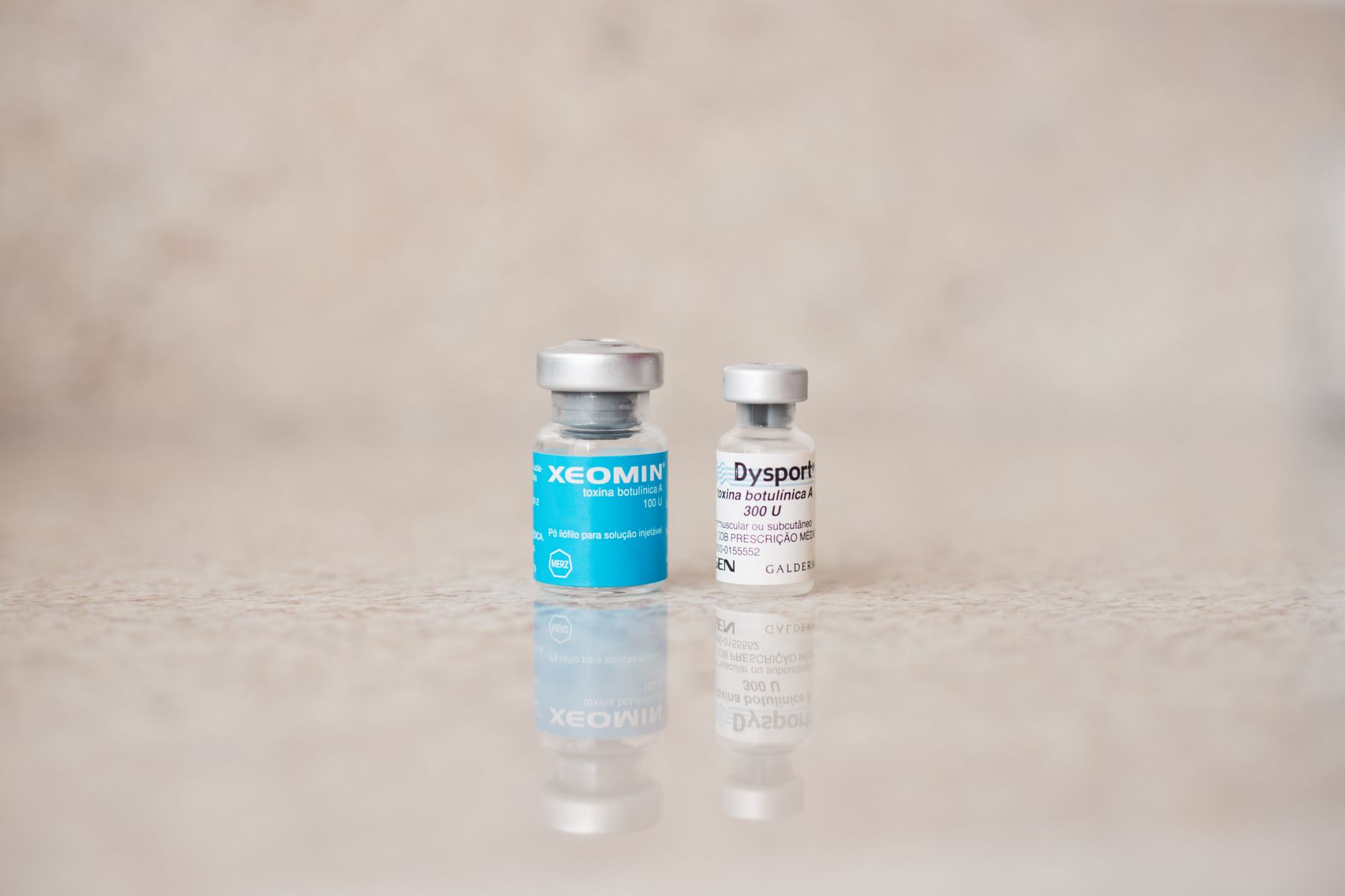
- Peptides are short chains of amino acids that typically bind cell-surface receptors and trigger signaling cascades; anabolic steroids are lipid molecules derived from cholesterol that enter cells and act directly on nuclear receptors to change gene expression.
- Steroids exert broad, powerful, and well-documented effects on muscle and secondary sex characteristics — along with well-documented cardiovascular, hormonal, and hepatic risks.
- Many peptides act more selectively and generally show narrower off-target effects, but most performance-related peptides are not approved for human use and have limited long-term human safety data.
- Anabolic-androgenic steroids are Schedule III controlled substances in the United States and prescription-only in most jurisdictions; peptide legality varies widely, and many are sold only as 'research use only' chemicals.
- The World Anti-Doping Agency bans anabolic agents (Category S1) and peptide hormones and growth factors (Category S2), so both classes are prohibited in competitive sport.
- Neither class is 'completely safe.' Any use for health, performance, or aesthetic reasons should involve a qualified healthcare professional and, where relevant, appropriate lab monitoring.
What Are Peptides and Steroids, and Why Are They Compared?
Peptides and steroids are two completely different classes of molecules that often get grouped together in fitness and biohacking conversations — usually because both are associated with muscle growth, recovery, and body composition. Understanding their differences starts with basic biochemistry. A peptide is a short chain of amino acids — typically between 2 and 50 — joined by peptide bonds. Proteins are simply longer chains (generally 50+ amino acids). If you want a foundational refresher, see our overview of what peptides are.
Steroids, in the context of this article, refer to anabolic-androgenic steroids (AAS) — synthetic derivatives of the hormone testosterone. Chemically, they belong to the steroid family, a group of lipid (fat-soluble) molecules built around a characteristic four-ring carbon skeleton derived from cholesterol. This is a fundamentally different molecular architecture from a peptide's amino-acid chain.
The confusion is understandable. Both classes are used — legitimately in medicine and illegitimately in sport and bodybuilding — to influence how the body builds tissue, recovers from stress, and regulates hormones. Athletes and consumers frequently ask which is 'better' or 'safer,' as if they were interchangeable tools. They are not. They differ in how they are absorbed, how they signal cells, how long they act, what side effects they produce, and how the law treats them.
It is worth emphasizing that 'peptides' is an enormous and diverse category. It includes FDA-approved medicines such as insulin and GLP-1 receptor agonists, cosmetic ingredients, and a large gray-market of research compounds like growth-hormone secretagogues. 'Steroids' in the anabolic sense is a narrower, more chemically uniform group. Comparing them fairly means comparing categories, not single products.
This article is for educational purposes only and is not medical advice. Always consult a qualified healthcare professional before using any peptide or steroid. See our medical disclaimer for details.
How Do Peptides and Steroids Work in the Body?
The single most important difference between these classes is where and how they act on cells. Anabolic steroids are lipophilic (fat-soluble), which means they pass easily through the fatty cell membrane. Once inside, they bind to the intracellular androgen receptor. The steroid-receptor complex then travels to the cell nucleus, where it acts as a transcription factor — binding DNA and directly switching genes on or off. This is called a genomic mechanism, and it leads to increased muscle protein synthesis, retention of nitrogen, and the development of androgenic (male) characteristics.
Peptides, by contrast, are generally too large and too water-soluble to cross the cell membrane freely. Most act on cell-surface receptors — such as G-protein-coupled receptors — triggering intracellular signaling cascades (second messengers like cyclic AMP) that produce a downstream effect. Because a peptide's shape is highly specific to its target receptor, this signaling tends to be more selective, affecting a narrower set of pathways than a steroid's broad genomic action.
A useful example is the difference in how each class promotes muscle. Testosterone-based steroids directly and continuously stimulate the anabolic machinery of muscle cells. Growth-hormone-related peptides such as CJC-1295 and ipamorelin work indirectly: they signal the pituitary gland to release the body's own growth hormone in natural pulses, which then raises IGF-1. In principle this preserves more of the body's own feedback control, though it also makes the effect more modest and more dependent on an intact endocrine system.
Half-life is another practical distinction. Unmodified peptides are broken down quickly by enzymes (peptidases) and often have half-lives measured in minutes to hours, which is why many require frequent dosing or chemical modifications such as PEGylation to last longer. Many injectable steroids are esterified to slow their release, giving effects that persist for days or weeks. This difference shapes dosing schedules, the speed of onset, and how long side effects linger after stopping.
Some peptides — such as BPC-157 or TB-500 — are studied primarily for tissue repair rather than muscle building, acting on pathways related to angiogenesis, cell migration, and healing. This illustrates why 'peptides vs steroids' is not a like-for-like matchup: the peptide category spans healing, metabolic, cosmetic, and hormonal roles, whereas anabolic steroids are focused on androgen-receptor-driven anabolism.
What Are the Chemical and Structural Differences?
At the molecular level, the two classes could hardly be more different. A steroid is a relatively small, rigid molecule built on the cyclopentanoperhydrophenanthrene nucleus — four fused carbon rings. Testosterone, the parent anabolic steroid, has the formula C₁₉H₂₈O₂ and a molecular weight of just 288.42 g/mol. Synthetic AAS are variations on this ring structure, modified to enhance anabolic activity, slow metabolism, or allow oral dosing.
Peptides are chains, not rings. They are assembled from amino acids linked by peptide bonds (a covalent C–N bond formed between the carboxyl group of one amino acid and the amino group of the next). Their molecular weights range from a few hundred g/mol for the smallest di- and tripeptides to several thousand for larger sequences. This chain structure is far more flexible and far more water-soluble than a steroid ring system.
The table below summarizes the core structural contrasts:
| Property | Peptides | Anabolic Steroids |
|---|---|---|
| Building block | Amino acids (2–50) | Cholesterol-derived ring system |
| Structure | Linear or cyclic chain | Four fused carbon rings |
| Solubility | Usually water-soluble | Lipophilic (fat-soluble) |
| Typical MW | ~300–5,000+ g/mol | ~250–400 g/mol |
| Receptor site | Cell surface | Intracellular / nuclear |
| Typical half-life | Minutes to hours | Hours to weeks (esterified) |
These structural facts explain many downstream differences. Because peptides are protein-like, they are usually destroyed in the digestive tract, which is why most are injected rather than taken orally (though some are being reformulated for oral or intranasal delivery). Steroids, being lipid-soluble and chemically stable, can more readily be formulated as oral tablets — but oral 17-alpha-alkylated steroids are also the most hepatotoxic form because that same chemical modification stresses the liver.
The bottom line: structure dictates behavior. A steroid's compact, stable, fat-soluble ring lets it slip into cells and act directly on genes, while a peptide's larger, water-soluble chain keeps it at the cell surface, signaling with more specificity but less permanence.
How Do Their Effects on Muscle, Recovery, and Performance Differ?
Anabolic steroids have decades of documented, potent effects on muscle mass and strength. By directly amplifying muscle protein synthesis and nitrogen retention, and by increasing satellite-cell activity, AAS produce large and relatively rapid gains — often well beyond what is achievable naturally. This effectiveness is precisely why they are misused and why they are so tightly controlled. The trade-off is that the same mechanism drives their androgenic and systemic side effects.
Peptides used for performance tend to produce more gradual and modest results. Growth-hormone secretagogues raise endogenous GH and IGF-1, which can support recovery, lean-mass maintenance, sleep quality, and fat metabolism — but the magnitude is far smaller than that of exogenous steroids, and it depends on the individual's own pituitary function. Because the body's feedback loops still operate, GH pulses from secretagogues stay closer to physiological ranges.
Recovery and tissue repair are areas where certain peptides attract the most research interest. Compounds like BPC-157 and TB-500 are studied (largely in animal models) for accelerating healing of tendon, muscle, and gut tissue. Steroids are not primarily healing agents; while they can improve overall tissue quality through anabolism, they are not selective repair tools, and some can impair connective-tissue integrity relative to the strength gains they produce.
Another difference is predictability. Steroid effects, side effects, and dose-response relationships are comparatively well-characterized after decades of clinical and non-clinical use. Many performance peptides lack large, controlled human trials — much of the evidence is preclinical (animal or cell studies) or anecdotal. This means the reported benefits of some peptides remain emerging rather than established, and readers should treat strong claims with caution.
Finally, stacking behavior differs. In bodybuilding communities, both classes are sometimes combined with each other or within their class. Combining compounds multiplies unknowns and risks, and there is little rigorous human data on many peptide combinations. Our peptide stacking guide discusses why combining bioactive compounds should never be treated casually.
Which Is Safer: Peptides or Steroids?
This is the most common question, and the honest answer is nuanced: neither class is 'safe' in absolute terms, and the comparison depends heavily on which specific compound, dose, source, and duration you mean. That said, some clear patterns emerge from the literature.
The risks of anabolic-androgenic steroids are extensively documented. According to an Endocrine Society scientific statement, long-term or high-dose AAS use is associated with cardiovascular effects (adverse cholesterol changes, left-ventricular hypertrophy, and increased risk of major cardiac events), suppression of the natural hormone axis (testicular atrophy and impaired fertility that can persist after stopping), liver strain (especially with oral 17-alpha-alkylated compounds), gynecomastia in men, virilization in women, mood changes, and polycythemia (thickened blood). These are not rare edge cases — they are well-established consequences of the mechanism.
Peptides, because they generally act more selectively, often show a narrower side-effect footprint for a given target. But this apparent advantage comes with major caveats. First, most performance peptides are not approved for human use and lack the long-term safety studies that would reveal rare or delayed harms. Second, the biggest real-world danger with peptides is often not the molecule itself but the source: unregulated 'research use only' products can be underdosed, mislabeled, or contaminated with bacteria, endotoxins, or unknown compounds. The FDA has issued warning letters to companies selling unapproved peptide products.
Specific peptide classes carry their own risks. Growth-hormone-related peptides can cause water retention, joint pain, carpal-tunnel-like symptoms, and — importantly — insulin resistance or elevated blood glucose. Because GH and IGF-1 promote cell growth broadly, there is a theoretical concern about stimulating the growth of pre-existing tumors, which is one reason medical supervision matters. GLP-1 peptides, though FDA-approved for diabetes and obesity, commonly cause nausea and gastrointestinal effects and have their own labeled warnings.
A fair summary: steroids offer larger, more predictable effects with correspondingly larger and better-documented risks; peptides may offer more targeted action with a narrower side-effect profile per compound, but with far more uncertainty and significant risks from unregulated supply. In both cases, medical supervision and, where relevant, blood-work monitoring are essential. Anyone considering either should consult a healthcare professional — self-experimentation with unapproved compounds is inherently risky.
What Is the Legal Status of Peptides vs Steroids?
Legally, the two classes sit in very different places. In the United States, anabolic-androgenic steroids are Schedule III controlled substances under the Anabolic Steroid Control Act (1990, expanded in 2004). This means it is a federal crime to possess, distribute, or import them without a valid prescription. Many other countries impose similar prescription-only or controlled-substance frameworks. Medically, steroids are legitimately prescribed for conditions such as hypogonadism, delayed puberty, and certain wasting diseases.
Peptides occupy a far murkier legal landscape that varies enormously by compound and jurisdiction. A few peptides are fully approved medicines — insulin, and GLP-1 agonists such as semaglutide (approved by the FDA in 2017 for diabetes and 2021 for weight loss) and tirzepatide. These are legal with a prescription. Many others — including BPC-157, TB-500, and various growth-hormone secretagogues — are not approved for human use and are typically sold only as 'research use only' chemicals, not for human consumption.
This 'research use only' label is a crucial legal distinction. It means the product has not been evaluated for safety or efficacy in humans and is not legally marketed as a drug or supplement. Selling such peptides for human consumption, or making therapeutic claims about them, can violate drug and food regulations, which is why the FDA has taken action against numerous vendors. Buyers in the gray market also have no guarantee of purity or dosage accuracy.
Because rules differ so much between countries — and even change over time — you cannot assume that a peptide legal to purchase in one region is legal to import or use in another. Some jurisdictions treat certain peptide hormones as controlled or prescription-only substances. Always verify the current status in your own country and remember that legality of purchase does not equal safety or approval for use.
This section is general information, not legal advice. Regulations vary by jurisdiction and change over time; consult local regulations and a qualified professional before purchasing or using any of these compounds.
How Do Anti-Doping Agencies Treat Peptides and Steroids?
For competitive athletes, the distinction between peptides and steroids largely disappears at the anti-doping level — both are prohibited. The World Anti-Doping Agency (WADA) publishes an annually updated Prohibited List, and both classes appear on it, just in different categories.
Anabolic agents, including anabolic-androgenic steroids and compounds such as SARMs, fall under Category S1. These are banned at all times, both in and out of competition. Peptide hormones, growth factors, related substances, and mimetics fall under Category S2 — this includes growth-hormone-releasing peptides, GH secretagogues, and similar compounds. Erythropoietin-type agents also sit in this general area of the list.
The practical implication is important: an athlete cannot avoid a doping violation simply by choosing a peptide over a steroid. Both classes are subject to testing, and detection science for peptide hormones has advanced considerably. Even substances marketed as 'natural' boosters can contain prohibited peptide fragments. Athletes are held to a standard of strict liability, meaning they are responsible for whatever is found in their system regardless of intent.
WADA also monitors emerging peptides that are not yet fully banned but are under surveillance, and the Prohibited List evolves as new compounds appear. Any competitive athlete considering a peptide — even a cosmetic or recovery-oriented one — should check the current WADA list and consult their sport's anti-doping authority, because inadvertent use of a contaminated or mislabeled product can still trigger a sanction.
Peptides vs Steroids: Which Should You Consider?
Framed correctly, this is less a question of 'which is better' and more a question of 'what is the legitimate goal, and what is the safest, legal, medically supervised path to it?' For a genuine medical indication — clinically diagnosed low testosterone, growth-hormone deficiency, type 2 diabetes, or obesity — the answer is whichever approved therapy a physician prescribes and monitors, whether that is prescription testosterone therapy or an approved peptide such as a GLP-1 agonist.
For performance, aesthetics, or 'biohacking' goals, the calculus is different. Anabolic steroids are more effective at building muscle but carry serious, well-documented health and legal risks and are controlled substances. Performance peptides are generally more selective and may have a narrower per-compound side-effect profile, but most are unapproved for human use, backed by limited human evidence, and sourced from an unregulated market where purity is not guaranteed. Neither is a shortcut without consequences.
A few principles apply regardless of which class someone is weighing. First, get a proper medical evaluation and baseline blood work — many people pursuing these compounds have addressable underlying issues (sleep, nutrition, training, genuine hormonal deficiency). Second, understand the legal status in your jurisdiction before acquiring anything. Third, never treat an unregulated product as safe simply because it is available online. Fourth, avoid stacking multiple bioactive compounds, which multiplies unknown risks.
If your interest is in the science and legitimate applications of peptides rather than performance enhancement, our educational library — including what peptides are and specific monographs like the GLP-1 guide — provides evidence-based background without hype. The goal of this comparison is not to endorse either class, but to help you understand two frequently confused categories accurately.
Reminder: This article is educational and does not constitute medical or legal advice. Many peptides discussed are not approved for human use. Consult a qualified healthcare professional before making any decision involving peptides or steroids.
Recommended products
Research peptides selected for quality and purity:
GHK-Cu
Anti-Aging Compound
Test your knowledge
Quick quiz · 6 questions
Peptide Lab — free calculator & tracker
Calculate your reconstitution, track your peptides and injections. Free, no credit card required.
Frequently Asked Questions
Are peptides a type of steroid?
Are peptides safer than steroids?
Are peptides legal to buy?
Can peptides build muscle like steroids?
Are peptides and steroids banned in sports?
Sources
- Kicman AT (2008). Pharmacology of anabolic steroids. British Journal of Pharmacology.
- Pope HG Jr, Wood RI, Rogol A, Nyberg F, Bowers L, Bhasin S (2014). Adverse health consequences of performance-enhancing drugs: an Endocrine Society scientific statement. Endocrine Reviews.
- Drucker DJ (2018). Mechanisms of action and therapeutic application of glucagon-like peptide-1. Cell Metabolism.
- Fink J, Schoenfeld BJ, Nakazato K (2018). The role of hormones in muscle hypertrophy. The Physician and Sportsmedicine.
- Sikiric P, Seiwerth S, Rucman R, et al. (2011). Stable gastric pentadecapeptide BPC 157: novel therapy in gastrointestinal tract. Current Pharmaceutical Design.
- Sinha DK, Balasubramanian A, Tatem AJ, et al. (2020). Beyond the androgen receptor: the role of growth hormone secretagogues in the modern management of body composition in hypogonadal males. Translational Andrology and Urology.