
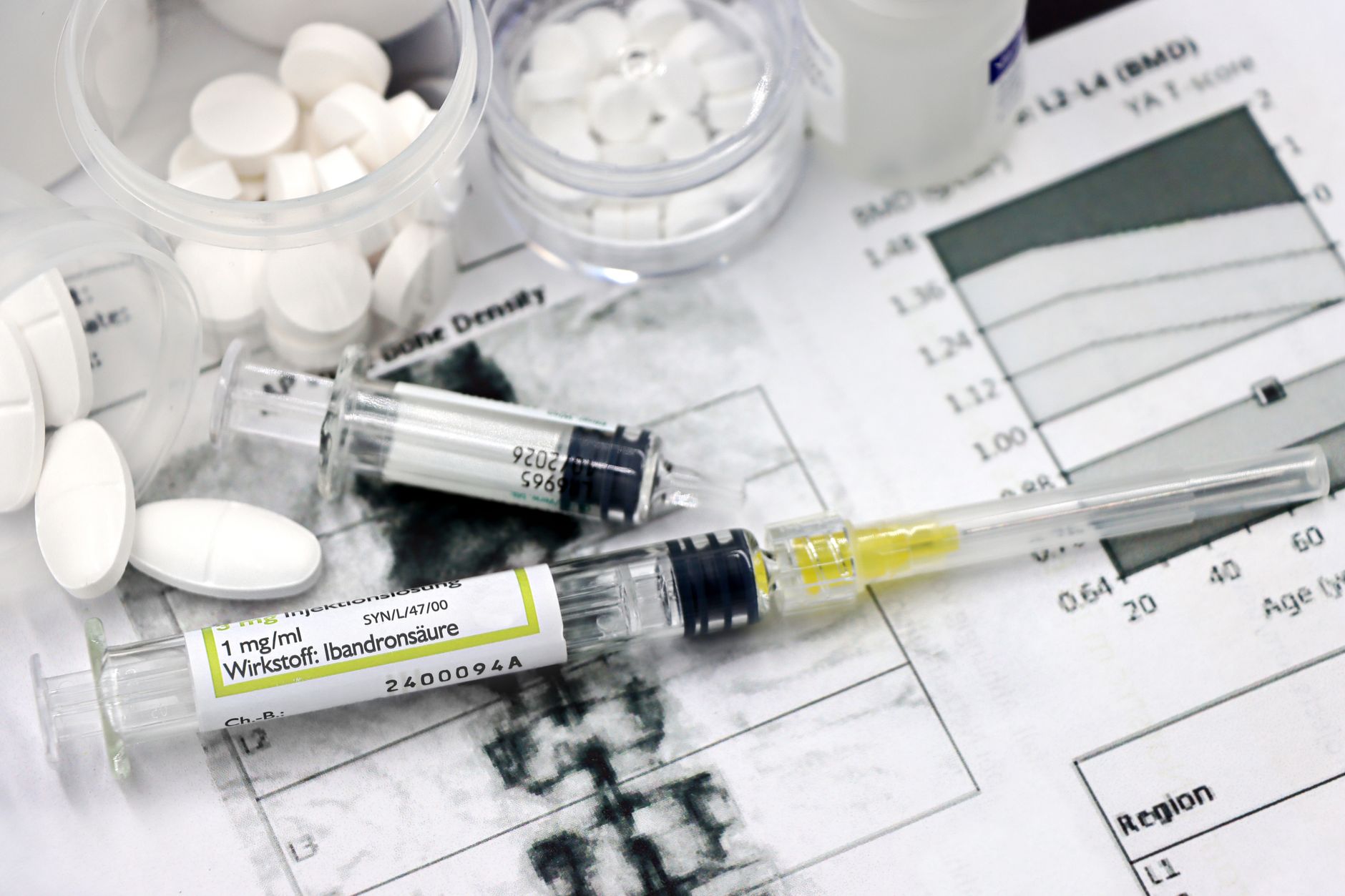
- Sermorelin is a growth hormone-releasing hormone (GHRH) analog, while Ipamorelin is a growth hormone-releasing peptide (GHRP) that mimics ghrelin — they act on two different receptors.
- Both raise the body's own growth hormone (GH) in a pulsatile way rather than injecting synthetic GH directly.
- Ipamorelin is prized for its selectivity: in preclinical work it stimulated GH with little effect on cortisol, prolactin, or aldosterone.
- Because their pathways are complementary, the two mechanisms (typically Ipamorelin paired with a GHRH analog like CJC-1295) are often studied together for synergistic GH release.
- Neither peptide is approved for anti-aging, body composition, or performance use; both are sold for research purposes and their legal status varies by country.
- Choice between them depends on goals, tolerance, and whether a GHRH-side, ghrelin-side, or combined approach is desired — always under professional medical guidance.
What Are Sermorelin and Ipamorelin?
Sermorelin and Ipamorelin are both classed as growth hormone (GH) secretagogues — compounds that prompt the pituitary gland to release more of the body's own growth hormone rather than supplying synthetic GH from outside. Despite sharing this end goal, they belong to two structurally and pharmacologically distinct families, which is exactly why they are so often compared.
Sermorelin is a synthetic analog of growth hormone-releasing hormone (GHRH). It reproduces the first 29 amino acids of natural human GHRH (hence the name GHRH 1-29), the shortest fragment that retains full biological activity. Historically, sermorelin acetate was marketed as Geref and used as a diagnostic and therapeutic agent for growth hormone deficiency, particularly in children, before being withdrawn from several markets for commercial reasons rather than safety concerns.
Ipamorelin, by contrast, is a growth hormone-releasing peptide (GHRP) — a short synthetic pentapeptide (Aib-His-D-2-Nal-D-Phe-Lys-NH₂) that mimics ghrelin, the so-called "hunger hormone," at the growth hormone secretagogue receptor. It was developed specifically as a selective secretagogue, designed to trigger GH release while avoiding the hormonal "noise" (cortisol, prolactin) seen with earlier GHRPs.
To understand the comparison, it helps to be clear on what a peptide is in the first place. If you are new to this area, our overview of what peptides are provides useful background before diving into the mechanistic differences below.
This article is for educational purposes only. Neither peptide is approved for general human use in most jurisdictions, and nothing here should be taken as medical advice.
How Do Sermorelin and Ipamorelin Work?
The core difference between these two peptides lies in which receptor they activate. The pituitary gland's release of growth hormone is governed by two main signals: GHRH, which stimulates release, and somatostatin, which inhibits it. Ghrelin acts as a third, amplifying signal through a separate receptor.
Sermorelin binds to the GHRH receptor on somatotroph cells in the anterior pituitary. By occupying this receptor just as endogenous GHRH would, it stimulates the synthesis and pulsatile secretion of growth hormone. Because it works through the natural GHRH pathway, sermorelin-induced GH release is still subject to normal negative feedback — somatostatin can still put the brakes on — which is thought to preserve the physiological, pulse-like rhythm of GH secretion and reduce the risk of runaway levels.
Ipamorelin binds to a completely different target: the growth hormone secretagogue receptor (GHS-R1a), the same receptor that ghrelin activates. Stimulating this receptor both triggers GH release directly and suppresses somatostatin's inhibitory tone, effectively releasing two brakes at once. This is why GHRPs like ipamorelin can produce a robust GH pulse.
The critical practical point is that these two mechanisms are complementary, not redundant. Activating the GHRH receptor and the ghrelin receptor at the same time produces a larger, synergistic GH pulse than either alone — which is the rationale behind the widely discussed pairing of a GHRH analog with a GHRP. You can read more about how such combinations are approached in our guide to peptide stacking.
A key selectivity advantage is attributed to ipamorelin: in the original characterization studies it stimulated GH strongly while showing minimal effect on adrenocorticotropic hormone (ACTH), cortisol, and prolactin — hormones that older GHRPs such as GHRP-6 tended to elevate. Sermorelin, working purely through the GHRH pathway, likewise does not directly drive cortisol or prolactin.
What Are the Key Differences Between Sermorelin and Ipamorelin?
While both peptides ultimately raise growth hormone, they differ in origin, structure, receptor target, and behavioral profile. The table below summarizes the head-to-head comparison.
| Attribute | Sermorelin | Ipamorelin |
|---|---|---|
| Class | GHRH analog (GHRH 1-29) | GHRP / ghrelin mimetic (pentapeptide) |
| Receptor target | GHRH receptor | Growth hormone secretagogue receptor (GHS-R1a) |
| Amino acids | 29 | 5 |
| Molecular weight | ≈ 3357.9 g/mol | ≈ 711.85 g/mol |
| Molecular formula | C₁₄₉H₂₄₆N₄₄O₄₂S | C₃₈H₄₉N₉O₅ |
| Approx. half-life | ~10-20 minutes | ~2 hours |
| Preserves GH feedback | Yes (GHRH pathway) | Partially (also suppresses somatostatin) |
| Effect on cortisol/prolactin | Minimal | Minimal (selective GHRP) |
| Historical clinical use | Diagnostic/therapeutic for GH deficiency (as Geref) | Investigational; no marketed drug |
The most consequential distinction is the pathway. Sermorelin amplifies the "go" signal (GHRH), whereas ipamorelin both amplifies a parallel "go" signal (ghrelin) and reduces the "stop" signal (somatostatin). Because ipamorelin's mechanism partially bypasses one of the body's regulatory checkpoints, some researchers consider it slightly more potent per microgram, while sermorelin is often described as producing a more "physiological" pulse.
Structurally, the size difference is striking: sermorelin is a 29-residue peptide roughly five times the mass of the compact five-residue ipamorelin. This influences stability and handling in the laboratory, though both are typically supplied as lyophilized powders requiring reconstitution.
Half-life also differs. Sermorelin clears quickly (on the order of minutes), while ipamorelin's action is somewhat more sustained. Neither, however, offers the prolonged exposure of a modified GHRH analog such as CJC-1295, which is engineered for extended activity.
What Does the Research Say About Each Peptide?
The evidence bases for the two peptides differ in depth and maturity, and it is important to distinguish preclinical (animal) work from human clinical data.
Sermorelin has the longer clinical track record. As GHRH 1-29, it was studied and used for decades — notably as a diagnostic tool to assess pituitary GH reserve and as a therapy for pediatric growth hormone deficiency. Reviews of its use describe it as an effective stimulant of endogenous GH with a favorable tolerability profile in these approved historical contexts. Its withdrawal from various markets reflected commercial decisions, not emergent safety signals. However, robust modern clinical trials for the anti-aging and body-composition uses now popularly associated with it are lacking.
Ipamorelin is characterized primarily by foundational preclinical pharmacology. The landmark 1998 study by Raun and colleagues described it as "the first selective growth hormone secretagogue," demonstrating potent, dose-dependent GH release in animal models with a clean hormonal profile — critically, without the cortisol and prolactin spikes of earlier GHRPs. Subsequent investigational work explored ghrelin-receptor agonists like ipamorelin for conditions such as postoperative ileus, but ipamorelin never reached an approved marketed indication.
Much of the most compelling data actually concerns combination approaches. Studies of GHRH analogs paired with GHRPs consistently show synergistic GH release — more than the additive sum of each agent alone — which underpins the popular pairing of ipamorelin with a GHRH-side molecule. Teichman and colleagues, for example, documented prolonged and amplified GH and IGF-1 secretion using a long-acting GHRH analog, illustrating how the GHRH side of the equation can be optimized.
The honest summary: sermorelin has more historical human clinical use, ipamorelin has stronger mechanistic selectivity data, and the strongest physiological rationale for either is arguably in combination. Neither has the large, modern, randomized-controlled-trial base that would support the wellness claims frequently made online. For a broader landscape of what is and is not well-supported, see our overview of the most-studied peptides.
Which Is Better for Your Goals?
There is no universal winner — the "better" peptide depends on what a research protocol is trying to model and how an individual responds. Below are the considerations most often discussed, framed strictly as informational context rather than recommendations.
For a physiological, feedback-preserving profile: Sermorelin's GHRH-pathway mechanism keeps the pituitary's normal regulatory checks in place, which appeals to those prioritizing a pulse pattern that most closely resembles natural GHRH signaling. Because it is subject to somatostatin feedback, the risk of pushing GH to supraphysiological levels is theoretically lower.
For selectivity and potency per dose: Ipamorelin's reputation rests on delivering a strong, clean GH pulse through the ghrelin receptor while sparing cortisol and prolactin. For those specifically concerned about the side-effect burden of older GHRPs, ipamorelin's selectivity is its defining advantage.
For appetite considerations: Because ipamorelin acts on the ghrelin receptor, some ghrelin-mimetic effects (including mild appetite stimulation) are theoretically possible, though ipamorelin is considered relatively mild on this front compared with GHRP-6. Sermorelin, acting on GHRH, does not engage the hunger pathway.
For half-life and dosing rhythm: Sermorelin's very short half-life means its effect is brief and tightly tied to the timing of administration; ipamorelin's somewhat longer duration gives a slightly more extended window. Neither matches long-acting engineered analogs.
In practice, many protocols do not treat this as an either/or decision at all, and instead combine the two mechanisms — a point covered in the next section. Any decision about which molecule, if either, is appropriate must be made with a qualified healthcare professional who can account for individual physiology, contraindications, and local law.
Can Sermorelin and Ipamorelin Be Combined?
Yes — and combining a GHRH-side agent with a GHRP is arguably where the science is most interesting. Because sermorelin and ipamorelin act on entirely separate receptors that both feed into GH release, pairing them produces a synergistic effect: the total GH pulse exceeds what either peptide generates alone.
The physiological logic is straightforward. The GHRH signal (sermorelin) tells the pituitary to release GH, while the ghrelin signal (ipamorelin) both adds a second release stimulus and lifts somatostatin's inhibitory brake. Together they push in the same direction through independent channels, and the combined output is more than additive.
In popular protocols, ipamorelin is more frequently paired with the longer-acting GHRH analog CJC-1295 than with sermorelin, precisely because CJC-1295's extended half-life better matches the somewhat longer window of ipamorelin, keeping both signals "on" at once. Pre-mixed CJC-1295 and ipamorelin blends are common in the research-peptide market for this reason. Sermorelin's very short duration makes precise co-timing more demanding when paired with a GHRP.
Anyone exploring combinations should understand the general principles and pitfalls of stacking first. Our dedicated guide to peptide stacking explains timing, sequencing, and why more is not automatically better. Combining compounds also compounds uncertainty: interaction data in humans is limited, and the absence of large trials means dosing conventions are largely empirical rather than evidence-based.
Combination use amplifies both the theoretical benefits and the unknowns. It should only be considered under professional medical supervision.
How Are Sermorelin and Ipamorelin Dosed and Administered?
Because neither peptide is an approved medicine for the uses discussed here, there is no official consumer dosing guideline; what circulates online reflects historical clinical protocols and empirical convention rather than validated regimens. The information below is descriptive, not prescriptive.
Both peptides are supplied as lyophilized (freeze-dried) powder that must be reconstituted with bacteriostatic water before use, and both are typically administered by subcutaneous injection. Their short half-lives mean timing matters: administration is conventionally described around bedtime or after fasting, aiming to align the induced pulse with the body's own nocturnal GH release and to avoid the GH-blunting effect of elevated insulin after meals.
A recurring practical theme is pulsatility. Both molecules are intended to produce a discrete GH pulse rather than a constant elevation, which is generally viewed as more physiological than continuous exposure. This is why frequency and timing feature so heavily in protocol discussions.
Regarding the market itself: research-grade sermorelin and ipamorelin are widely listed by peptide suppliers. As a rough reference, some suppliers list Ipamorelin from around $17.56 USD for a 2 mg vial and Sermorelin around $25.95 USD for a 2 mg vial, though prices and availability change constantly — always check the current price on the supplier's own site rather than relying on any figure quoted in an article. Product purity, third-party testing, and correct cold-chain handling matter far more than headline price.
Reconstitution, dosing, and administration of research peptides carry real risks if done incorrectly. This section is educational only and is not a protocol to follow. Consult a healthcare professional.
What Are the Safety, Side Effects, and Legal Considerations?
Growth hormone secretagogues are generally described as better tolerated than exogenous synthetic GH, largely because they work through the body's own regulatory machinery and preserve at least some negative feedback. That does not make them risk-free.
Commonly reported effects for both peptides include injection-site reactions (redness, itching, swelling), transient flushing, headache, lightheadedness, and water retention. Because ipamorelin engages the ghrelin receptor, mild appetite changes are theoretically possible. Elevating GH and downstream IGF-1 also carries broader theoretical concerns — including effects on insulin sensitivity and glucose metabolism, and the general caution that any growth-promoting signal warrants care in anyone with a history of, or predisposition to, cancer. These concerns are based on GH physiology generally rather than large safety trials of these specific peptides, which do not exist.
A distinguishing safety point in ipamorelin's favor is its selectivity: unlike older GHRPs, it was characterized as not meaningfully raising cortisol or prolactin, which reduces one category of hormonal side effect. Sermorelin's long historical clinical use in GH-deficient patients also gave it a well-documented tolerability profile within that specific approved context.
On the regulatory side, the situation is clear and important. In most jurisdictions these are classed as research chemicals, "for research use only," and are not approved for anti-aging, athletic, or body-composition purposes. Both are prohibited in sport: growth hormone secretagogues fall under the World Anti-Doping Agency's S2 category (peptide hormones and growth factors) and are banned at all times. Legal status for possession and sale varies significantly by country.
Before considering any research peptide, review our medical disclaimer and speak with a qualified clinician. This article is for educational purposes only, does not constitute medical advice, and does not endorse use of these compounds outside of appropriately authorized research or clinical settings.
Recommended products
Research peptides selected for quality and purity:
GHK-Cu
Anti-Aging Compound
Test your knowledge
Quick quiz · 6 questions
Peptide Lab — free calculator & tracker
Calculate your reconstitution, track your peptides and injections. Free, no credit card required.
Frequently Asked Questions
What is the main difference between Sermorelin and Ipamorelin?
Is Ipamorelin stronger than Sermorelin?
Can you take Sermorelin and Ipamorelin together?
Are Sermorelin and Ipamorelin FDA approved?
Do Sermorelin or Ipamorelin raise cortisol or prolactin?
Sources
- Raun K, Hansen BS, Johansen NL, et al. (1998). Ipamorelin, the first selective growth hormone secretagogue. European Journal of Endocrinology.
- Walker RF. (2006). Sermorelin: a better approach to management of adult-onset growth hormone insufficiency?. Clinical Interventions in Aging.
- Prakash A, Goa KL. (1999). Sermorelin: a review of its use in the diagnosis and treatment of children with idiopathic growth hormone deficiency. BioDrugs.
- Teichman SL, Neale A, Lawrence B, et al. (2006). Prolonged stimulation of growth hormone (GH) and insulin-like growth factor I secretion by CJC-1295, a long-acting analog of GH-releasing hormone, in healthy adults. Journal of Clinical Endocrinology & Metabolism.
- Sinha DK, Balasubramanian A, Tatem AJ, et al. (2020). Beyond the androgen receptor: the role of growth hormone secretagogues in the modern management of body composition in hypogonadal males. Translational Andrology and Urology.