

What is exenatide and where does it come from?
Exenatide is a synthetic peptide of 39 amino acids whose sequence is identical to exendin-4, a molecule of reptilian origin. Its full sequence is HGEGTFTSDLSKQMEEEAVRLFIEWLKNGGPSSGAPPPS with a C-terminal amide, giving a molecular formula of C₁₈₄H₂₈₂N₅₀O₆₀S and a molecular weight of approximately 4,187 g/mol. Despite its biological ancestry, the exenatide used in medicine is manufactured entirely by chemical synthesis, not extracted from any animal.
The story begins in 1992, when John Eng, Wasyl Kleinman and colleagues at the Veterans Affairs Medical Center in the Bronx reported the isolation and characterization of exendin-4 from the venom of the Gila monster, Heloderma suspectum, a slow-moving venomous lizard of the south-western United States and north-western Mexico. Their paper in the Journal of Biological Chemistry described exendin-4 as an analogue of the earlier exendin-3 and provided further evidence for an exendin receptor on dispersed pancreatic acini from guinea pig.
Popular accounts often say exenatide comes from Gila monster saliva rather than venom, and both descriptions have some basis: the lizard's venom glands sit in the lower jaw, so the secretion mixes with oral fluid. The original isolation paper, however, worked with venom. What made the finding so consequential was not its exotic source but its sequence: exendin-4 shares roughly 53 percent of its residues with human glucagon-like peptide-1 (GLP-1), with the closest resemblance at the N-terminus, the region that engages the receptor.
That partial homology turned a curiosity of reptile biochemistry into the template for an entire drug class. Readers new to this biology may want to start with our overview of GLP-1 physiology before continuing, since almost everything that follows depends on how the incretin system behaves after a meal.
This article is for educational purposes only. It is not medical advice and contains no dosing guidance. Decisions about any prescription medicine belong to you and a qualified healthcare professional.
How does exenatide work in the body?
Exenatide is a GLP-1 receptor agonist, meaning it binds and activates the same G-protein-coupled receptor as the body's own incretin hormone GLP-1. Native GLP-1 is released from intestinal L-cells in response to nutrients and acts on pancreatic beta cells, where receptor activation raises intracellular cyclic AMP and amplifies glucose-dependent insulin secretion.
The phrase glucose-dependent matters. Because the insulinotropic effect requires elevated glucose, GLP-1 receptor agonists do not drive insulin release when glucose is already low, which is why they carry a much lower intrinsic hypoglycemia risk than sulfonylureas or insulin. Alongside this, receptor activation suppresses inappropriately high glucagon secretion from alpha cells, slows gastric emptying, and acts on central pathways that promote satiety and reduce food intake.
Native GLP-1 is almost useless as a medicine because dipeptidyl peptidase-4 (DPP-4) cleaves it within a couple of minutes. Here exendin-4 has a decisive structural advantage: its second residue is glycine, whereas human GLP-1 has alanine in that position. DPP-4 cannot efficiently cut the glycine-containing bond, so exendin-4 survives in circulation far longer and is also notably more stable against kidney brush-border proteolysis.
Clearance instead happens mainly through glomerular filtration followed by proteolytic degradation in the kidney. According to the US prescribing information for exenatide injection, the mean terminal half-life after subcutaneous administration is about 2.4 hours, with median peak plasma concentrations at roughly 2.1 hours and measurable concentrations for about 10 hours. Elimination slows in renal impairment, with mean half-life rising to around 6 hours in end-stage renal disease, which is why renal function is central to how clinicians think about this peptide.
For a broader view of how this receptor family behaves across molecules, see our guide to GLP-1 receptor agonists.
Why were there two different exenatide products?
A 2.4-hour half-life is long enough to be useful but far too short for once-daily coverage. The first commercial answer was simply to dose more often. Byetta, exenatide given by subcutaneous injection twice daily before meals, received FDA approval on April 28, 2005 as an adjunct to diet and exercise in adults with type 2 diabetes inadequately controlled on metformin, a sulfonylurea, or both. It was the first GLP-1 receptor agonist of any kind to reach patients, which is the single most important fact in exenatide's history.
The second answer was pharmaceutical engineering. Bydureon encapsulated the same peptide in biodegradable poly(lactide-co-glycolide) microspheres that release exenatide slowly after injection, converting a twice-daily peptide into a once-weekly one. The FDA approved Bydureon on January 27, 2012, the first once-weekly GLP-1 receptor agonist. A later autoinjector presentation, Bydureon BCise, simplified the reconstitution and injection steps that had made the original tray format awkward to use.
The two formulations behaved differently in more than convenience. The immediate-release product produced sharp post-injection peaks that blunted post-meal glucose excursions, while the extended-release product produced steadier concentrations that acted more on fasting glucose. Their safety labelling also diverged: the extended-release product carries a boxed warning about thyroid C-cell tumours based on rodent carcinogenicity findings, whereas twice-daily Byetta does not. Whether sustained exenatide exposure causes thyroid C-cell tumours in humans is not known.
This split, one peptide and two delivery strategies, previewed the central engineering problem of the whole class. Every later GLP-1 drug solved duration differently, through albumin binding, fatty-acid acylation, or Fc fusion, rather than through microsphere depots.
What did the diabetes trials show?
The pivotal programme for twice-daily exenatide was the AMIGO series of 30-week placebo-controlled trials in adults whose type 2 diabetes was inadequately controlled on oral agents. In the metformin-treated arm of that programme, reported by Ralph DeFronzo and colleagues in Diabetes Care in 2005, exenatide reduced HbA1c relative to placebo and produced progressive, dose-dependent weight loss of 2.8 kg with the higher dose and 1.6 kg with the lower dose, with no weight gain and no increase in hypoglycemia incidence.
Weight loss as a consistent side finding was unusual for a glucose-lowering drug in 2005, when most alternatives either added weight or were weight-neutral. It is worth remembering that this effect was characterized years before obesity became the commercial centre of gravity for the class, and that exenatide itself was never approved for weight management.
The extended-release formulation was tested in the DURATION programme. DURATION-1, published by Daniel Drucker and colleagues in The Lancet in 2008, was a randomised, open-label, non-inferiority study comparing once-weekly with twice-daily exenatide over 30 weeks. Once-weekly dosing achieved a significantly greater HbA1c reduction, 1.9 percent versus 1.5 percent, with a between-group difference favouring the weekly formulation (95 percent CI 0.54 to 0.12 percent, p=0.0023), no increase in hypoglycemia risk, and similar reductions in body weight.
Subsequent DURATION trials compared once-weekly exenatide against sitagliptin, pioglitazone, insulin glargine and metformin, establishing it as a credible second-line option through the early 2010s. Taken together, the programme showed solid but moderate glycemic efficacy: real, reproducible, and later clearly surpassed by the molecules that followed.
What did EXSCEL reveal about cardiovascular outcomes?
After 2008, regulators required large cardiovascular outcomes trials for new diabetes drugs. For exenatide this was EXSCEL (Exenatide Study of Cardiovascular Event Lowering), reported by Rury Holman and colleagues in the New England Journal of Medicine in 2017. It randomised 14,752 adults with type 2 diabetes, with or without previous cardiovascular disease, to once-weekly extended-release exenatide or matching placebo added to usual care.
Over a median follow-up of 3.2 years, a primary composite event (cardiovascular death, non-fatal myocardial infarction, or non-fatal stroke) occurred in 839 of 7,356 patients in the exenatide group (11.4 percent) and 905 of 7,396 in the placebo group (12.2 percent), a hazard ratio of 0.91. The result established cardiovascular safety and met the non-inferiority criterion, but the difference did not reach statistical significance for superiority.
That outcome placed exenatide in an awkward middle position. Trials of liraglutide, semaglutide and dulaglutide reported significant reductions in major adverse cardiovascular events, and those findings reshaped diabetes guidelines toward agents with demonstrated cardiovascular benefit. Exenatide, having shown a numerically favourable but non-significant trend, was not able to claim that advantage.
EXSCEL remains scientifically valuable for a different reason: it is one of the largest pragmatic trials in the field, with broad enrolment and high real-world relevance, and its data continue to support secondary analyses on heart failure, ejection fraction and baseline risk stratification. Readers comparing cardiovascular evidence across the class may find our comparison of semaglutide and liraglutide products a useful companion piece.
What has exenatide research in Parkinson's disease found?
GLP-1 receptors are expressed in the central nervous system, and preclinical work suggested that activating them might reduce neuroinflammation, support mitochondrial function and improve neuronal insulin signalling. That rationale made exenatide one of the most closely watched candidates for disease modification in Parkinson's disease, a goal no drug has yet achieved.
In 2017, Dilan Athauda and colleagues published a single-centre, randomised, double-blind, placebo-controlled phase 2 trial in The Lancet. Sixty-two patients were randomised (32 to exenatide, 30 to placebo). The primary outcome was the adjusted difference in MDS-UPDRS part 3 motor scores in the practically defined off-medication state at 60 weeks. Off-medication motor scores improved by 1.0 point in the exenatide group and worsened by 2.1 points in the placebo group, an adjusted mean difference of 3.5 points favouring exenatide (95 percent CI 0.3 to 6.7, p=0.0318).
That signal, which appeared to persist after dosing stopped, generated substantial attention and justified a definitive trial. Exenatide-PD3, published by Nirosen Vijiaratnam and colleagues in The Lancet in February 2025, was a UK multicentre, double-blind, parallel-group phase 3 trial. It randomised 194 participants to once-weekly extended-release exenatide (n=97) or placebo (n=97) for 96 weeks. The result was unambiguously negative: there was no difference between exenatide and placebo on the primary outcome or on any secondary or exploratory outcome. Exenatide was well tolerated, with serious adverse events in 9 percent of the exenatide group and 11 percent of the placebo group.
One important caveat now attaches to that publication. On May 18, 2026, The Lancet was informed of findings from a regulatory inspection at King's College Hospital NHS Foundation Trust, one of the participating sites, and subsequently issued an Expression of Concern about the phase 3 article while the investigation and the assessment of any impact on the data and conclusions remain ongoing. An Expression of Concern is not a retraction and does not establish that the findings are wrong, but it does mean the paper should be read as provisional until the review concludes.
The scientific lesson stands regardless of how that review resolves. A promising 62-patient phase 2 result did not survive a properly powered phase 3 trial, which is the normal and necessary function of confirmatory research rather than a failure of it.
What adverse effects and safety signals are documented?
The dominant adverse effects of exenatide are gastrointestinal, a consequence of the mechanism rather than an incidental toxicity. Nausea is the most frequent, typically strongest in the early weeks and often diminishing with continued exposure. Vomiting, diarrhoea, constipation, reduced appetite and dyspepsia are also commonly reported. Because delayed gastric emptying is part of how the drug works, these effects are intrinsic to GLP-1 receptor agonism as a whole and are discussed across the class in our review of GLP-1 side effects.
Hypoglycemia is uncommon with exenatide used alone, reflecting the glucose-dependence of its insulinotropic effect, but the risk rises substantially when it is combined with a sulfonylurea or insulin. Injection-site reactions, including nodules with the microsphere formulation, were a recognised and formulation-specific issue for the extended-release product.
Several labelled warnings deserve explicit mention. Cases of acute pancreatitis, including necrotising and haemorrhagic pancreatitis, have been reported in post-marketing surveillance across GLP-1 receptor agonists. Because exenatide is cleared by glomerular filtration, renal events including altered creatinine, worsening chronic renal failure and acute renal failure have been reported, and the peptide is not recommended in severe renal impairment. The extended-release formulation additionally carries the boxed warning on thyroid C-cell tumours derived from rodent studies, and both formulations have been associated with hypersensitivity reactions and with antibody formation, which in a minority of patients was linked to attenuated glycemic response.
None of this is a basis for self-assessment. Exenatide is a prescription-only medicine whose risk profile is managed through clinical evaluation, and the legal status of peptide products varies considerably between jurisdictions. Anyone with questions about these risks should raise them with a qualified healthcare professional rather than relying on an article.
How does exenatide compare with semaglutide and tirzepatide?
The clearest comparison is a direct one. SUSTAIN 3, published by Andrew Ahmann and colleagues in Diabetes Care in 2018, was a 56-week, open-label, randomised trial in 813 adults with type 2 diabetes comparing once-weekly semaglutide 1.0 mg with once-weekly exenatide extended-release 2.0 mg as add-on to one or two oral agents. Semaglutide reduced HbA1c by 1.5 percent versus 0.9 percent for exenatide, and 67 percent of semaglutide-treated participants reached HbA1c below 7.0 percent compared with 40 percent on exenatide. Body weight fell by 5.6 kg with semaglutide versus 1.9 kg with exenatide.
Those are not marginal differences, and they explain a great deal about what happened next. Semaglutide went on to be approved for diabetes in 2017 and for weight management in 2021, and the dual GIP and GLP-1 receptor agonist tirzepatide was approved for diabetes in 2022 and for weight management in 2023. Across their respective trial programmes, semaglutide produced average weight reductions in the range of 15 to 17 percent of body weight and tirzepatide in the range of 20 to 22 percent, figures that exenatide never approached.
Exenatide was also inconvenienced by its own pharmacology. The twice-daily product required two injections timed to meals, and the weekly microsphere product involved a more demanding injection and a slower onset of full effect than the acylated peptides that followed.
The comparison that matters historically, though, runs the other way. Exenatide demonstrated that a peptide hormone mimetic could lower glucose durably, reduce body weight as a consistent secondary effect, and be tolerated well enough for chronic outpatient use. Every molecule that has since outperformed it was developed on the receptor biology exenatide validated commercially first.
Is exenatide still available in 2026?
The originator brands are gone. AstraZeneca withdrew the original Bydureon tray presentation from sale in March 2021, and then discontinued both remaining products in autumn 2024: Byetta on October 25, 2024 and Bydureon BCise on October 28, 2024, with the FDA having been notified of the Byetta discontinuation plan in August 2024. These were commercial decisions, not safety withdrawals, and payer communications at the time explicitly noted that the products were not removed for safety reasons.
The molecule itself did not disappear. On November 21, 2024, the FDA approved Amneal Pharmaceuticals' exenatide prefilled pen injection referencing Byetta, the first generic injectable GLP-1 receptor agonist in the United States and a notable milestone in synthetic peptide generics. Availability of the once-weekly extended-release form has been far more constrained, and supply notifications in some markets, including a UK Medicines Supply Notification issued in October 2025, have signalled the practical end of that presentation.
What this means in practice is that exenatide has become a legacy option rather than a mainstream one. Clinical guidelines now favour agents with demonstrated cardiovascular or kidney benefit and greater glycemic and weight efficacy, and prescribers in most settings reach for those first.
Exenatide's lasting importance is therefore historical and scientific rather than commercial. It converted a 1992 observation about lizard venom into the first approved incretin mimetic, established that GLP-1 receptor agonism was a viable therapeutic strategy in humans, and generated the pharmacology, trial infrastructure and regulatory precedent that the current generation of GLP-1 and dual-agonist medicines was built on.
This guide is educational and does not constitute medical advice. It intentionally contains no dosing recommendations or usage protocols. Exenatide is a prescription medicine, its regulatory and legal status varies by country, and any decision involving it should be made with a qualified healthcare professional.
Recommended products
Research peptides selected for quality and purity:

GHK-Cu
Anti-Aging Compound
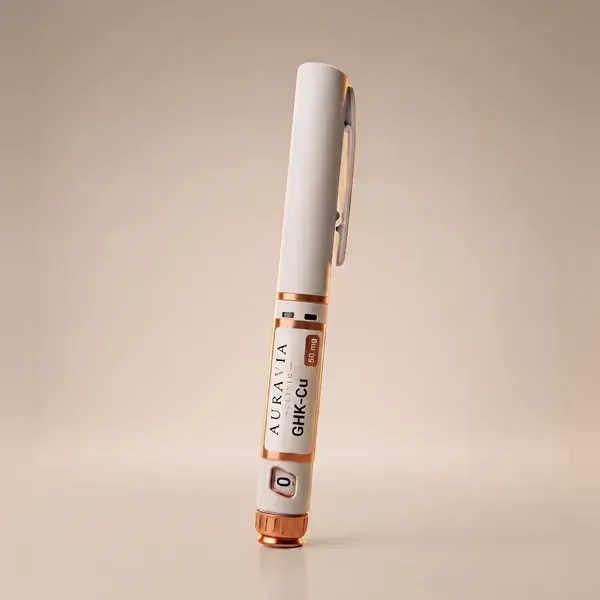
GHK-Cu Pen
Pre-filled Pen GHK-Cu

GLOW-UP Ritual
3-pen pack: Glow, NAD+, GHK-Cu
Test your knowledge
Quick quiz · 6 questions
Frequently Asked Questions
Is exenatide really made from Gila monster venom?
Why does exenatide last longer in the body than natural GLP-1?
What was the difference between Byetta and Bydureon?
Did EXSCEL show that exenatide protects the heart?
Does exenatide slow Parkinson's disease?
Why is exenatide less effective than semaglutide for weight?
Can I still get exenatide in 2026?
What are the most common side effects reported with exenatide?
Scientific Sources
- Eng J, Kleinman WA, Singh L, Singh G, Raufman JP (1992). Isolation and characterization of exendin-4, an exendin-3 analogue, from Heloderma suspectum venom. Further evidence for an exendin receptor on dispersed acini from guinea pig pancreas. Journal of Biological Chemistry (PMID: 1313797). (PubMed)
- DeFronzo RA, Ratner RE, Han J, Kim DD, Fineman MS, Baron AD (2005). Effects of exenatide (exendin-4) on glycemic control and weight over 30 weeks in metformin-treated patients with type 2 diabetes. Diabetes Care (PMID: 15855572). (PubMed)
- Drucker DJ, Buse JB, Taylor K, Kendall DM, Trautmann M, Zhuang D, Porter L; DURATION-1 Study Group (2008). Exenatide once weekly versus twice daily for the treatment of type 2 diabetes: a randomised, open-label, non-inferiority study. The Lancet (PMID: 18782641). (PubMed)
- Holman RR, Bethel MA, Mentz RJ, et al.; EXSCEL Study Group (2017). Effects of Once-Weekly Exenatide on Cardiovascular Outcomes in Type 2 Diabetes. New England Journal of Medicine (PMID: 28910237). (PubMed)
- Athauda D, Maclagan K, Skene SS, et al. (2017). Exenatide once weekly versus placebo in Parkinson's disease: a randomised, double-blind, placebo-controlled trial. The Lancet (PMID: 28781108). (PubMed)
- Ahmann AJ, Capehorn M, Charpentier G, Dotta F, Henkel E, Lingvay I, Holst AG, Annett MP, Aroda VR (2018). Efficacy and Safety of Once-Weekly Semaglutide Versus Exenatide ER in Subjects With Type 2 Diabetes (SUSTAIN 3): A 56-Week, Open-Label, Randomized Clinical Trial. Diabetes Care (PMID: 29246950). (PubMed)
- Vijiaratnam N, Girges C, Auld G, et al. (2025). Exenatide once a week versus placebo as a potential disease-modifying treatment for people with Parkinson's disease in the UK: a phase 3, multicentre, double-blind, parallel-group, randomised, placebo-controlled trial. The Lancet (PMID: 39919773). (PubMed)
- The Lancet Editors (2026). Expression of Concern: Exenatide once a week versus placebo as a potential disease-modifying treatment for people with Parkinson's disease in the UK: a phase 3, multicentre, double-blind, parallel-group, randomised, placebo-controlled trial. The Lancet (PMID: 42330995). (PubMed)
- US Food and Drug Administration (2014). Byetta (exenatide) injection, highlights of prescribing information: clinical pharmacology, warnings and adverse reactions. FDA Drug Label (NDA 021773).
- US Food and Drug Administration (2012). Bydureon (exenatide extended-release) for injectable suspension, highlights of prescribing information: boxed warning on thyroid C-cell tumours. FDA Drug Label (NDA 022200).