
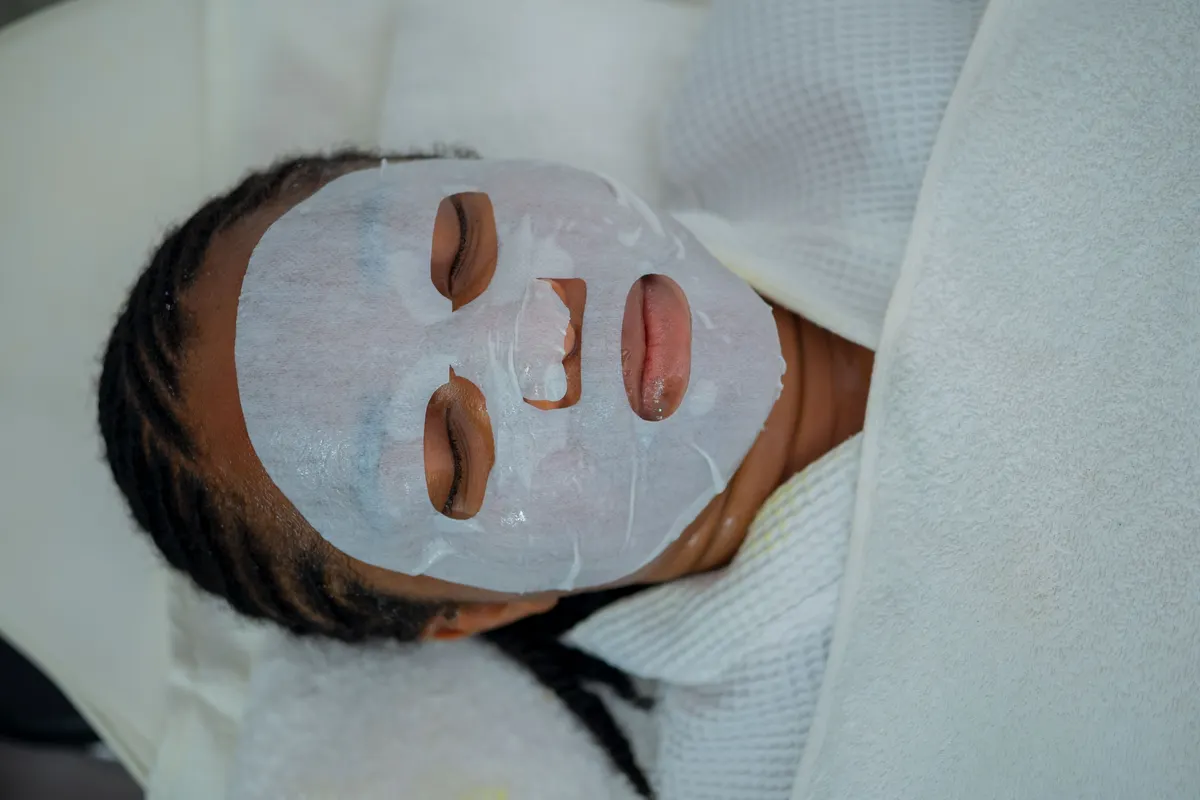
- Argireline (Acetyl Hexapeptide-8) is a topical cosmetic peptide, while Botox is an injected prescription drug (botulinum toxin type A). They are regulated, dosed, and delivered in fundamentally different ways.
- Both are described as acting on the SNARE complex, but Argireline is proposed to interfere with SNAP-25 assembly from the skin surface, whereas botulinum toxin enzymatically cleaves SNAP-25 inside the nerve terminal after injection.
- The biggest practical question for Argireline is skin penetration: as a relatively large, charged peptide it does not easily cross the stratum corneum, and delivery is a recognized limitation.
- Published studies report modest reductions in wrinkle depth (commonly cited around 30% over roughly a month), which is meaningful but generally smaller and slower than the effect of botulinum toxin injections.
- This article is for educational purposes only and is not medical advice. Cosmetic outcomes vary, and any injectable procedure should be discussed with a qualified healthcare professional.
What Is Argireline and Why Is It Called 'Botox in a Bottle'?
Argireline is the trade name for Acetyl Hexapeptide-8 (historically marketed as Acetyl Hexapeptide-3), a synthetic six-amino-acid peptide developed for cosmetic use. Its sequence, acetyl-Glu-Glu-Met-Gln-Arg-Arg-amide, was designed to mimic the N-terminal end of a nerve protein called SNAP-25. That structural mimicry is the entire basis for the marketing nickname you have probably seen: 'Botox in a bottle.'
The comparison is catchy because it points at a real biological overlap. Both Botox (a brand of botulinum toxin type A) and Argireline are said to reduce the appearance of expression lines by dialing down the muscle contractions that fold the skin. In theory, a muscle that contracts less forcefully creates a shallower crease, and over time a shallower crease means a less visible wrinkle.
Where the nickname becomes misleading is in almost every practical detail. Botox is a prescription biologic drug injected by a trained clinician directly into a targeted muscle. Argireline is a cosmetic ingredient dissolved in a serum or cream and applied to the skin surface. One crosses the skin barrier through a needle; the other has to survive and diffuse through the skin's outer layers on its own. That difference in delivery, which we will return to repeatedly, is where most of the honest debate lives.
It is also worth being precise about regulation. In the United States and the European Union, botulinum toxin for cosmetic wrinkle reduction is an approved medicine with defined indications, dosing, and a documented safety profile. Argireline is a cosmetic peptide ingredient, not an approved drug, and cosmetic claims are held to a different, lower evidentiary standard than pharmaceutical claims. If you want the broader context on how peptides are used in skincare, our overview of peptides in cosmetics is a useful companion to this comparison.
This article walks through the mechanism, the penetration problem, the measured size of the effect, the specific wrinkles involved, reversibility, and the cost and safety trade-offs, so you can decide whether Argireline is best thought of as an alternative to Botox or simply a gentler complement. Nothing here is medical advice.
How Does Argireline Work Compared to Botox?
To compare the two fairly, you need to understand the machinery they both target: the SNARE complex. When a nerve signals a muscle to contract, the nerve terminal releases acetylcholine. That release depends on tiny vesicles fusing with the cell membrane, and the fusion is orchestrated by a set of SNARE proteins, chiefly SNAP-25, syntaxin, and VAMP/synaptobrevin. No functional SNARE complex means less neurotransmitter release, which means a weaker muscle contraction.
Botulinum toxin attacks this system with surgical precision. After injection, the toxin's light chain acts as an enzyme (a protease) that permanently cleaves SNAP-25 inside the nerve terminal. The cut protein can no longer help vesicles fuse, so acetylcholine release is blocked until the nerve grows new terminals and synthesizes fresh SNAP-25. This is a potent, catalytic, and essentially irreversible-until-turnover effect, which is why a single injection can last for months.
Argireline is proposed to work on the same complex but through competition rather than destruction. Because its sequence imitates the N-terminal of SNAP-25, the hypothesis is that it competes for a place in the SNARE assembly, producing a less stable or less efficient complex and therefore a modestly reduced release of neurotransmitter. Crucially, this is a reversible, occupancy-based mechanism: the peptide is not an enzyme, it does not cut anything, and its effect depends on enough intact peptide being present at the right place at the right concentration.
That mechanistic difference has large consequences. An enzyme like botulinum toxin can keep cutting SNAP-25 molecule after molecule, so a very small amount of toxin produces a very large effect. A competitive mimic like Argireline has to be present in meaningful quantity at the neuromuscular junction to matter, and each peptide molecule blocks at most its own share of the process. In pharmacological terms, one is catalytic and amplifying, the other is stoichiometric and self-limiting.
There is a second, often overlooked point. Botox is delivered exactly where it needs to act because a needle places it inside the muscle. Argireline has to reach dermal nerve endings from the skin surface, which is a very different and much harder journey. So even if the two share a conceptual target, the amount of active molecule that actually arrives at that target is not remotely comparable. That leads directly to the single most important question about topical 'Botox alternatives.'
Can Argireline Actually Reach Its Target Through the Skin?
This is the question that separates marketing from pharmacology. The skin's outermost layer, the stratum corneum, is a highly effective barrier evolved to keep large, water-loving molecules out. As a rough rule of thumb, passive absorption favors small molecules (often cited as under about 500 Daltons) that are reasonably lipophilic. Argireline has a molecular weight near 889 g/mol and carries multiple charges at skin pH, which makes it both large and hydrophilic. Those are precisely the properties that struggle to cross the barrier.
In other words, the same features that let Argireline mimic SNAP-25 also make it hard to deliver. A peptide that cannot reach the dermal nerve endings in sufficient concentration cannot meaningfully modulate the SNARE complex there, no matter how elegant the mechanism looks on paper. This is not a fringe criticism; skin penetration is repeatedly flagged in the literature as the central limitation of topical neuromodulating peptides.
Formulators try to narrow this gap in several ways. Penetration enhancers, encapsulation in liposomes or other carriers, higher peptide concentrations, and occlusive vehicles are all used to push more peptide past the barrier. Some studies and formulation patents report improved permeation with these strategies, but improved is a relative term, and independent, standardized data on how much active peptide reaches living dermal tissue in real-world products remains limited.
It also matters that a serum is not an injection. When Botox is injected, essentially all of the delivered dose is placed in the target muscle. When a serum is applied, only a small and variable fraction of the peptide crosses the stratum corneum, and only a fraction of that reaches the relevant depth. The effective dose at the neuromuscular junction is therefore many orders of magnitude lower than what a needle achieves, which helps explain why topical effects are subtle even when they are real.
The honest summary is that penetration is Argireline's Achilles heel, not a solved problem. If you are comparing topical peptides on this basis, our discussion of peptides for skin covers the general delivery challenge, and the dedicated Argireline guide goes deeper on formulation specifics.
What Do the Clinical Studies Actually Measure?
Despite the penetration challenge, Argireline is not evidence-free. Early work by Blanes-Mira and colleagues described the peptide's design and reported wrinkle reduction in a topical formulation, and this study is the source of the frequently repeated figure that Argireline reduced wrinkle depth by up to roughly 30% over about 30 days of twice-daily use. Later studies, including work in Chinese subjects, similarly reported measurable improvements in fine periocular lines with continued application.
These numbers deserve careful reading rather than headline treatment. A 30% reduction in the depth of a specific wrinkle, measured by skin replica and image analysis, is a genuine and welcome cosmetic change, but it is a percentage of a small baseline, applied to fine expression lines, and it accrues gradually over weeks of consistent use. It is not the near-complete relaxation of a muscle that a well-placed injection can produce within days.
Study quality is the next thing to weigh. Several of the most-cited Argireline trials are small, industry-associated, or lack the large randomized, placebo-controlled, independently funded design that anchors the botulinum toxin evidence base. That does not make the results false, but it does mean the effect size should be treated as a modest and somewhat optimistic estimate rather than a guaranteed outcome. Cosmetic claims are also permitted to rest on lower-tier evidence than drug claims.
By contrast, botulinum toxin for glabellar and periocular lines has been studied in large, well-controlled clinical trials, with reproducible and clinically obvious reductions in dynamic wrinkles and a well-mapped duration and side-effect profile. When people say Botox 'works,' they are drawing on a far deeper and more rigorous evidence base than the one supporting any topical peptide.
So the fair framing is this: the science supports Argireline producing a small, real, cumulative softening of fine lines in many users, while it does not support the claim that a serum matches the magnitude, speed, or reliability of an injection. Both statements can be true at once, and holding them together is the key to a realistic expectation.
Which Wrinkles Does Argireline Target, and Which It Cannot?
Both Argireline and Botox are aimed at dynamic wrinkles, the lines created by repeated muscle movement: crow's feet at the corners of the eyes, horizontal forehead lines, and the vertical 'frown' lines between the brows. Because their shared premise is reducing muscle contraction, they are most relevant where a wrinkle is caused by expression rather than by structural aging.
Neither ingredient is designed for static wrinkles, the creases that remain visible even when your face is completely relaxed. Static lines reflect cumulative collagen loss, sun damage, and volume changes, and they respond better to different tools: retinoids, collagen-supporting peptides, sunscreen, and in-office procedures. If your main concern is a deep, permanent fold, a neuromodulating peptide is aimed at the wrong problem.
Within the dynamic category, Argireline tends to perform best on fine, superficial expression lines in thin-skinned areas such as around the eyes, where the target nerves are relatively shallow and the penetration hurdle is a little lower. Deeper, stronger muscle groups, such as the ones that drive pronounced glabellar frown lines, are exactly where a topical falls furthest short of an injection, because those muscles need substantial force reduction that a low effective dose cannot deliver.
This is also where the two products can be positioned as complementary rather than competing. Some people use topical peptides for maintenance and prevention on fine lines while reserving injections for the stronger, more stubborn areas. For readers weighing peptides against other proven anti-aging actives, our comparison of peptides versus retinol and the note on Matrixyl versus Argireline help clarify which ingredient suits which type of line.
The practical takeaway is to match the tool to the wrinkle. Argireline is a reasonable option for softening fine dynamic lines gradually, but it is not a substitute for the targeted force reduction that injections provide on deep expression lines, and it does nothing meaningful for static, structural wrinkles.
How Do Reversibility and Duration Compare?
Reversibility is one of the clearest differences between the two, and for some people it is a feature rather than a flaw. Botulinum toxin produces a durable effect because it permanently cleaves SNAP-25; the muscle regains function only as nerve terminals regenerate and rebuild the protein, which typically takes on the order of three to four months. During that window the effect is largely fixed, which is why an unwanted result from an injection cannot simply be washed off.
Argireline's proposed mechanism is inherently reversible and short-acting. Because it competes for the SNARE assembly rather than destroying a protein, its effect depends on the continued presence of peptide at the target. Stop applying it and, as the peptide clears, muscle function returns to baseline. There is no lingering block that outlasts use, which also means there is no built-in reservoir of effect.
This translates into very different usage patterns. Botox is an episodic procedure: a session every few months maintains the result. Argireline is a daily-maintenance ingredient: it generally must be applied once or twice a day, indefinitely, to sustain any softening, and the improvement observed in studies accrues only with weeks of consistent use. Miss applications and the modest benefit fades.
Neither pattern is universally better. The reversibility of a topical is reassuring for people who are cautious about a semi-permanent change or who dislike needles, and the low per-application intensity means mistakes are self-correcting. The durability of an injection is efficient for people who want a strong, hands-off result and do not want to think about a product every morning.
The core trade-off, then, is depth of effect versus commitment and control. Botox offers a large, durable, procedure-based change you cannot easily undo, while Argireline offers a small, fully reversible change that requires ongoing daily effort to maintain. That framing matters more than any single 'does it work' verdict.
How Do Cost and Safety Compare?
On cost, the two live in different worlds, and the comparison depends heavily on time horizon. A botulinum toxin session is a professional procedure with a per-visit fee that varies by region, provider, and the number of units used, repeated several times a year. A peptide serum is a retail product with a lower unit price but an open-ended, ongoing cost because it only works while you keep buying and applying it. Over several years, diligent daily serum use can add up, though it usually remains below the cumulative cost of regular injections.
On safety, the profiles differ in kind, not just degree. Because Argireline stays largely at the skin surface and reaches deeper tissue only in tiny amounts, its most common issues are local and mild: irritation, redness, or sensitivity, often driven by the overall formulation rather than the peptide itself. Patch testing a new product is sensible, and anyone with reactive skin should introduce it gradually. This is not the same as saying it is free of any effect, only that topical exposure is low-dose and localized.
Botulinum toxin, as an injected drug, carries the risk profile of a medical procedure. Well-documented possibilities include bruising, headache, temporary eyelid or brow droop from unintended spread, and asymmetry, most of which are transient and technique-dependent. Serious adverse events are rare when the injection is performed by a qualified professional using approved product, which is precisely why it is a prescription treatment rather than a retail one.
Two safety caveats apply specifically to comparison shopping. First, buying botulinum toxin or 'injectable peptides' from unregulated online sources is genuinely dangerous and should be avoided; approved toxin is administered by licensed clinicians for a reason. Second, cosmetic peptide products vary widely in concentration, formulation quality, and delivery, so results and tolerability are not consistent across brands. Our page on choosing peptide serums discusses what to look for.
The bottom line on cost and safety is that Argireline is the lower-intensity, lower-risk, lower-commitment option with a smaller payoff, while Botox is the higher-cost, procedure-based option whose risks are medical but well characterized in trained hands. This section is educational only and not a recommendation; any injectable decision belongs in a conversation with a qualified healthcare professional, as noted in our medical disclaimer.
Argireline vs Botox: Complement or Alternative?
Pulling the threads together, the 'Botox in a bottle' label is best read as a metaphor about mechanism, not a claim of equivalence. Argireline and botulinum toxin do gesture at the same biological target, the SNARE complex and SNAP-25, but they differ so profoundly in delivery, potency, dose reaching the target, and evidence quality that treating them as interchangeable sets you up for disappointment.
If you want a large, fast, reliable reduction of a specific deep expression line, the evidence points firmly to injections, and no topical currently matches that. If you want a gentle, needle-free, fully reversible way to soften fine dynamic lines over time, accept a modest effect, and are willing to apply a product consistently, Argireline is a reasonable and low-risk choice with some supporting data behind it.
For most people the most honest positioning is complement, not alternative. A topical peptide can serve as maintenance, prevention on fine lines, or a between-treatment adjunct, while injections handle the stronger muscles where topicals cannot deliver enough active molecule. Argireline also pairs logically with collagen-supporting and barrier-supporting actives in a broader routine rather than being asked to replace a procedure on its own.
A realistic expectation is the most valuable thing you can take from this comparison. Expect Argireline to subtly soften fine lines with consistent use, not to freeze a muscle. Expect Botox to produce a pronounced, durable change through a medical procedure with medical trade-offs. Judged against those correct benchmarks, both 'work'; judged against each other, they are not the same category of intervention.
Finally, a reminder that this article is for educational purposes only and is not medical advice. Cosmetic responses are individual, product quality varies, and any decision about injectables should be made with a qualified healthcare professional who can assess your skin, your goals, and your medical history.
Recommended products
Research peptides selected for quality and purity:
GHK-Cu
Anti-Aging Compound
Test your knowledge
Quick quiz · 6 questions
Peptide Lab: free calculator & tracker
Calculate your reconstitution, track your peptides and injections. Free, no credit card required.
Frequently Asked Questions
Is Argireline really 'Botox in a bottle'?
Does Argireline actually work on wrinkles?
Why is skin penetration such a big issue for Argireline?
Which wrinkles does Argireline help with?
How long does Argireline last compared to Botox?
Is Argireline safer than Botox?
Can I use Argireline and Botox together?
How much does Argireline cost versus Botox?
Can Argireline prevent wrinkles from forming?
Is Argireline approved like Botox?
Sources
- Blanes-Mira C, Clemente J, Jodas G, et al. (2002). A synthetic hexapeptide (Argireline) with antiwrinkle activity. International Journal of Cosmetic Science.
- Wang Y, Wang M, Xiao S, et al. (2013). The anti-wrinkle efficacy of argireline, a synthetic hexapeptide, in Chinese subjects: a randomized, placebo-controlled study. American Journal of Clinical Dermatology.
- Lim SH, Sun Y, Thiruvallur Madanagopal T, et al. (2018). Enhanced skin permeation of anti-wrinkle peptides via molecular modification and delivery strategies. Pharmaceutics.
- Carruthers J, Carruthers A. (2004). Botulinum toxin type A for the treatment of glabellar and periocular rhytides: efficacy and safety. Journal of the American Academy of Dermatology.
- Reddy BY, Jow T, Hantash BM. (2012). Bioactive oligopeptides in dermatology: mechanisms of action and clinical evidence. Experimental Dermatology.
- Pai VV, Bhandari P, Shukla P. (2017). Topical peptides as cosmeceuticals: mechanisms, penetration and clinical relevance. Indian Journal of Dermatology, Venereology and Leprology.