
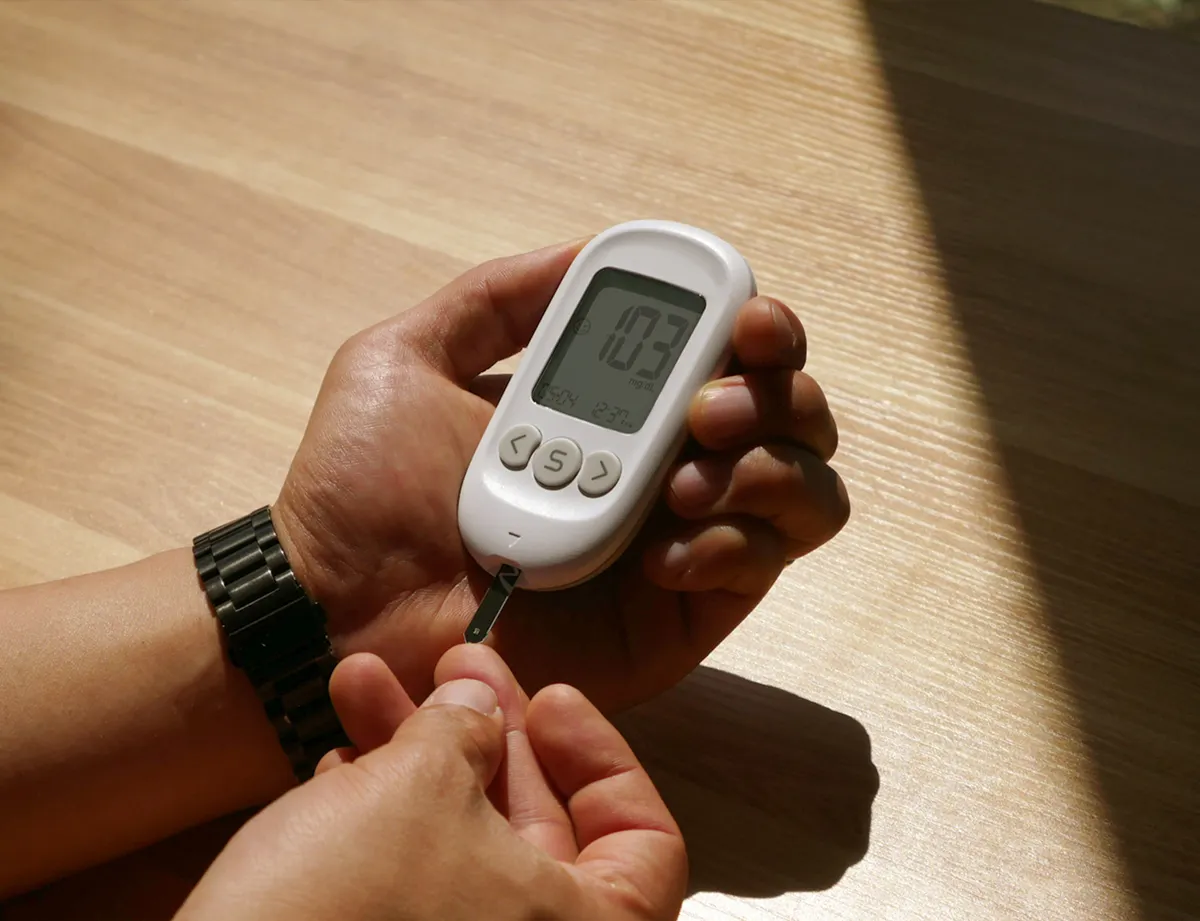
- Alopecia appears in the adverse-event tables of some GLP-1 obesity trials, but the reported frequency varies widely by molecule and formulation: about 7% versus 3% on placebo for oral semaglutide 50 mg in OASIS 1, and roughly 5% versus 0.9% on placebo across the tirzepatide arms of SURMOUNT-1.
- A 2026 systematic review that pooled hair outcomes across more than 626,000 GLP-1 users found hair loss reported in 1.6% of them, so the typical experience is still no reported shedding.
- The leading hypothesis is telogen effluvium triggered by rapid weight loss and reduced intake of protein and micronutrients, the same pattern seen after bariatric surgery, where pooled incidence of hair loss reaches 57%.
- A direct follicular effect cannot be excluded: GLP-1 receptors have been described in murine hair follicles, and a 2026 Mendelian randomization analysis linked genetically predicted higher GLP1R expression to a 7% higher risk of male-pattern hair loss.
- Pharmacovigilance results conflict. One FAERS study found no positive signal for hair loss, while a 2026 decade-long FAERS analysis found statistically significant signals for semaglutide and tirzepatide in specific years.
- Survey data suggest most people who notice shedding notice it in the first one to three months, but no prospective study with dermatological examination has measured onset, severity or reversibility in GLP-1 users.
- This article is educational. It does not recommend any product, supplement, regimen or medical decision, and nobody should stop a prescribed medicine without speaking to their prescriber.
Is hair loss a recognized side effect of GLP-1 medications?
Hair shedding has become one of the most discussed complaints among people taking GLP-1 receptor agonists, and unlike many internet-born worries it does have a trace in the clinical literature. The term alopecia appears in the adverse-event tables of several pivotal obesity trials of semaglutide and tirzepatide, it appears in spontaneous safety reports submitted to drug regulators, and it is now the subject of multiple systematic reviews published in 2025 and 2026.
What the literature does not yet contain is a clean answer. Reported frequencies swing from well under 1% to 7% depending on the molecule, the formulation and the trial. A systematic review published in the International Journal of Dermatology in 2026 pooled studies covering 626,894 patients treated with a GLP-1 receptor agonist for whom hair outcomes were reported, and found hair loss in 9,933 of them, or 1.6%. Reports of hair regrowth existed too, in 52 patients, which is a reminder that databases built from complaints capture complaints far better than they capture improvements.
The scientific question underneath the headlines is mechanistic rather than statistical. Any medicine that produces 15% to 20% body weight loss in a year also produces a strong metabolic and nutritional shock, and that shock alone is a long-established trigger for diffuse hair shedding. So the honest framing is not "does this drug cause hair loss" but "how much of the observed shedding is explained by the weight loss itself, and is there anything left over that points to the drug acting on the follicle."
This article looks only at the hair question. For the broader tolerability picture, including gastrointestinal effects and the issues that dominate discontinuation, see our overview of GLP-1 side effects. Nothing here is medical advice, no regimen or product is recommended, and anyone experiencing hair loss while on a prescribed medicine should raise it with the clinician who prescribed it.
What did the semaglutide and tirzepatide trials actually report?
Randomized trials are the only setting where a placebo comparison exists, which makes their numbers the most informative figures available. They also come with an important limitation: alopecia in these trials was an adverse event recorded from what participants spontaneously told investigators, not a diagnosis confirmed by a dermatologist with trichoscopy or standardized photography. Nobody counted hairs.
In OASIS 1, the phase 3 trial of oral semaglutide 50 mg once daily in adults with overweight or obesity published in The Lancet in 2023, alopecia was reported by 23 of 334 participants on active treatment (about 7%) compared with 9 of 333 on placebo (about 3%). In SURMOUNT-1, the phase 3 obesity trial of tirzepatide published in the New England Journal of Medicine in 2022, alopecia was reported by 5.1%, 4.9% and 5.7% of participants in the 5 mg, 10 mg and 15 mg arms respectively, versus 0.9% on placebo.
| Trial | Molecule and regimen studied | Alopecia, active arm | Alopecia, placebo |
|---|---|---|---|
| OASIS 1 (Lancet, 2023) | Oral semaglutide 50 mg once daily | 23/334 (about 7%) | 9/333 (about 3%) |
| SURMOUNT-1 (NEJM, 2022) | Tirzepatide 5, 10 and 15 mg weekly | 5.1%, 4.9%, 5.7% | 0.9% |
Those regimens are described here only to identify which trial produced which number. They are study protocols, not recommendations, and nothing in this article should be read as guidance on how any medicine is used.
The injectable semaglutide 2.4 mg programme is where the picture becomes genuinely inconsistent. A 2025 scoping review in Cureus summarizing the semaglutide weight-management studies described hair loss in roughly 3% of semaglutide-treated participants against roughly 1% on placebo, yet several individual trials of the weekly injection did not show an excess of alopecia over placebo at all. Part of this comes from reporting thresholds, since adverse events below a frequency cutoff often never reach the published table, and part of it probably comes from real differences in how fast weight is lost. Readers interested in that pace can compare our semaglutide results timeline with the tirzepatide results timeline.
A systematic review and meta-analysis published in Skin Appendage Disorders in 2026 pulled cohort studies, disproportionality analyses and case series together and concluded that GLP-1 receptor agonist use was associated with a meaningfully increased risk of non-scarring alopecia, in the region of 40% relative to comparators, driven by telogen effluvium and androgenetic alopecia. Its authors interpreted the association as mediated primarily by weight-loss-related micronutrient deficiency rather than by a direct drug effect.
Why would rapid weight loss make hair fall out?
Hair follicles cycle. Each one spends years in a growth phase (anagen), a short regression phase (catagen), and then a resting phase (telogen) of a few months, after which the hair is released and a new one starts. At any moment the large majority of scalp follicles are in anagen, and because the cycles are out of step with each other, daily shedding goes unnoticed.
Telogen effluvium is what happens when a systemic stressor pushes an unusually large share of follicles out of anagen at the same time. The shedding is diffuse rather than patchy, it does not scar, and crucially it is delayed: hairs pushed into telogen are typically released two to three months after the triggering event, which is why people often cannot connect the shedding to anything recent. Classic triggers include high fever, surgery, childbirth, severe illness, psychological stress, and abrupt caloric restriction.
Weight-loss-related shedding is therefore not a new phenomenon discovered with these medicines. A systematic review and meta-analysis in Obesity Surgery found a pooled incidence of hair loss after metabolic and bariatric surgery of 57%, with higher rates in younger women and in patients with low serum zinc, folic acid and ferritin. Review literature on nutrition and hair, including a widely cited paper in Dermatology Practical & Conceptual, links diffuse non-scarring shedding to deficiencies in iron, zinc, protein and several other nutrients, while also noting that supplementation in the absence of a documented deficiency has not been shown to help.
GLP-1 receptor agonists act on exactly the inputs that drive this. They slow gastric emptying and suppress appetite, which reduces total energy intake sharply, and that reduction is not always nutritionally balanced: protein intake often falls, nausea and vomiting can further restrict what gets eaten, and in some users intake drops faster than any dietary plan intended. Rapid loss of fat mass is accompanied by loss of lean mass. From a hair-cycle perspective this looks like a textbook effluvium setup, and it would be expected after an equivalent weight loss achieved by any other means.
This is the core of the dominant hypothesis, and it has a testable implication: if the shedding is an effect of weight loss, then faster or larger weight loss should produce more of it, and matched weight loss by other routes should produce the same amount. The first half of that prediction is loosely consistent with the data. The second half has never been directly tested.
Could GLP-1 medications affect hair follicles directly?
A pure weight-loss explanation is attractive but not airtight, and several strands of evidence keep a direct follicular effect on the table.
The first is receptor biology. GLP-1 receptor expression has been described in and around murine hair follicles, and GLP-1 receptor activation engages signalling pathways such as MAPK/ERK that are involved in cell proliferation and differentiation in many tissues. What this means for the human hair cycle is unresolved. Human follicular data are sparse, the direction of any effect is unclear, and receptor presence alone does not establish that a systemically administered agonist reaches the follicle in a concentration that matters.
The second is genetic. A two-sample Mendelian randomization analysis published in the Journal of Investigative Dermatology in September 2026 used 22 genetic variants associated with higher GLP1R expression as proxies and reported that genetically predicted higher GLP1R expression was associated with a 7% higher risk of androgenetic alopecia in men, drawing on genetic data from more than 205,000 individuals. That design is powerful against confounding by lifestyle, but it has its own limits: it models lifelong genetically determined receptor expression rather than exposure to a drug, the estimate is modest, it concerns male-pattern hair loss rather than effluvium, and it was restricted to men. It is a hypothesis-generating result, not a demonstration that these medicines cause baldness.
The third strand is the pattern of alopecia subtypes being reported. The 2026 meta-analysis in Skin Appendage Disorders reported significant associations not only with telogen effluvium (adjusted odds ratio around 1.76) but also with androgenetic alopecia (adjusted odds ratio around 1.64) at 12 months. Androgenetic alopecia is a chronic, progressive, hormonally mediated condition, so an association with it is harder to explain purely as a transient nutritional effluvium. One plausible reading is unmasking: heavy shedding can reveal pre-existing pattern thinning that was previously camouflaged by density, which would generate androgenetic alopecia diagnoses without the drug causing them. Another is a genuine shared pathway. The data do not distinguish between these.
Finally, isolated case reports describe alopecia areata, an autoimmune form of hair loss, appearing after semaglutide was started. Single cases establish temporal sequence, not causation, and alopecia areata is common enough that coincidence in a population of tens of millions of users is expected. They are worth monitoring, not worth concluding from.
When does shedding start, and does hair grow back?
The most detailed timing data available come from a cross-sectional survey published in the Journal of Cosmetic Dermatology in 2026. Among 254 participants using GLP-1 receptor agonists, 193 (76.0%) reported current hair loss. Of those, 75 (38.8%) first noticed it between one and three months after starting injections, 29 (15%) within the first month, 25 (13%) between three and six months, and 4 (2.1%) after more than six months, while 43 (22.3%) reported hair loss that predated the medication entirely. Severity was self-rated as moderate by 43.5%, severe by 35.8% and mild by 20.7%.
Those figures need a firm caveat. A survey of people who agreed to answer questions about hair loss while on these medicines is not a cohort study, and the 76% figure is not an incidence rate. It reflects who chose to respond. What the survey is more useful for is the shape of the timeline, and that shape is consistent with telogen effluvium: a lag of roughly one to three months between the metabolic insult and visible shedding, which is what the hair cycle predicts.
On reversibility, the honest answer is that the mechanism predicts recovery but the studies have not measured it. Telogen effluvium is by nature self-limited: once the trigger resolves, follicles re-enter anagen and density typically recovers over several months, and the condition does not destroy follicles or scar the scalp. If GLP-1 associated shedding is effluvium from rapid weight loss, it should behave the same way, particularly once weight stabilizes and intake normalizes.
What is missing is any prospective study that followed GLP-1 users with standardized photographs, hair counts or trichoscopy from before initiation through weight stabilization. Without that, statements about reversibility rest on analogy with other effluvia rather than on direct observation. The 2026 FAERS analysis discussed below reported the first dechallenge and rechallenge information for this adverse event, meaning cases where hair loss improved after stopping or recurred after restarting, which is suggestive but drawn from uncontrolled spontaneous reports. And if part of what people are seeing is pre-existing androgenetic alopecia becoming visible, that component follows its own chronic course and would not simply reverse.
One asymmetry is worth keeping in mind. In the 2026 International Journal of Dermatology review, hair loss was reported by 1.6% of patients with hair outcomes and regrowth by 0.008%. Nobody files a safety report to say their hair looks fine, so that ratio describes reporting behaviour as much as biology.
What do pharmacovigilance databases show?
Spontaneous reporting systems such as the FDA Adverse Event Reporting System (FAERS), the WHO database VigiBase and the European EudraVigilance collect unverified reports from clinicians, companies and the public. Analysts look for disproportionality: whether a given adverse event is reported more often for one drug than expected relative to all other drugs. These systems have no denominator, no control group, and are strongly affected by media attention, which matters enormously for a class of medicines that has been in the news continuously.
The results are genuinely contradictory. A real-world pharmacovigilance study published in Cardiovascular Drugs and Therapy examined FAERS reports for suicide, hair loss and aspiration with GLP-1 receptor agonists compared with other diabetes agents and found no positive signal for hair loss. Reviews that have surveyed several databases together, including FAERS, VigiBase, EudraVigilance and Australia's adverse event notification database, have repeatedly described the same split: hair loss is reported more often for GLP-1 receptor agonists than for other antidiabetic medicines, yet formal disproportionality analyses frequently come back negative.
The most granular analysis to date is a 2026 study in the Journal of Cosmetic Dermatology covering FAERS data from 2016 to 2025 for seven GLP-1 receptor agonists. It identified 1,941 alopecia-related reports across 1,929 cases and found that semaglutide and tirzepatide were the only two molecules in the class to generate statistically significant signals, with semaglutide flagged in 2022 and 2024 and tirzepatide in 2024 and 2025. Analyses of VigiBase have similarly tended to isolate semaglutide as the one molecule reaching significance. Adjusted estimates across these studies vary in both size and direction depending on the comparator group chosen, which is itself informative: a signal that flips sign when the reference group changes is not a robust one.
Two features of this pattern deserve attention. The signals appear in the years of peak public discussion of each molecule, which is exactly what notoriety bias produces, and they appear for the two molecules that produce the largest and fastest weight loss, which is exactly what the weight-loss hypothesis predicts. Both explanations fit, and disproportionality analysis cannot separate them.
On the regulatory side, readers should be careful with secondhand claims in either direction. We did not identify a published European or United States regulatory conclusion establishing alopecia as a causally confirmed adverse reaction of semaglutide or tirzepatide, while alopecia does appear in the adverse-event tables of the pivotal obesity trials described above. Regulatory assessments are revisited continuously, so the authoritative source for any given product at any given time is its current official product information, not an article.
Who reports hair loss most often, and how reliable is that picture?
Across the available data, women report GLP-1 associated hair loss far more often than men. A Canadian cohort analysis released as a preprint in 2025 compared new users of semaglutide with new users of bupropion-naltrexone as an active comparator, covering 1,926 and 1,348 patients respectively. Incidence rates of hair loss were 26.5 per 1,000 person-years with semaglutide and 11.8 per 1,000 person-years with the comparator. The adjusted hazard ratio was 1.52 (95% CI 0.86 to 2.69) overall, which does not reach statistical significance, and 2.08 (95% CI 1.17 to 3.72) in women, which does. In men the estimate was 0.86 with an extremely wide confidence interval, reflecting how few male events there were. The authors suggested the difference may relate to semaglutide producing faster weight loss than the comparator. This analysis has not completed peer review, and preprint results can change.
The 2026 cross-sectional survey pointed the same way, with male sex associated with substantially lower odds of reporting hair loss (adjusted odds ratio 0.36). It also reported higher odds among users of one particular branded product, but in a self-selected sample with modest numbers, product-level comparisons are fragile.
Several forms of confounding make this sex difference hard to interpret cleanly. Women are more likely to notice and report hair changes and more likely to seek care for them. Women in this population also carry a higher background burden of competing causes: iron deficiency, thyroid disorders, polycystic ovary syndrome, postpartum effluvium, and female pattern hair loss that may be subclinical until density drops. Obesity itself is associated with androgenetic alopecia, so the baseline risk in anyone starting a weight-loss medicine is already above the general population average.
Then there is ascertainment. The clinical trial data were collected before hair loss became a viral topic, while most of the cohort, survey and pharmacovigilance data were collected after. Once a side effect is widely discussed, it gets noticed, attributed and reported more, independent of any change in biology. This is not a reason to dismiss the signal, but it is a reason to treat frequency estimates from recent self-report studies as upper bounds rather than measurements.
What is still unknown about GLP-1 associated hair loss?
The gaps here are larger than the findings, and it is worth stating them explicitly rather than filling them with plausible-sounding inference.
No study has examined the scalp. Every frequency estimate currently in the literature rests on patient report, billing codes or safety reports. There is no published prospective cohort that followed GLP-1 users with trichoscopy, hair pull tests, standardized global photography or biopsy, which means the actual subtype distribution, the true incidence and the objective severity of shedding in this population are all unmeasured.
Drug effect versus weight-loss effect has never been separated. The decisive comparison would look at hair outcomes in people losing a matched amount of weight at a matched rate through a GLP-1 receptor agonist, through dietary restriction, and through metabolic surgery. Without it, the weight-loss hypothesis remains the most parsimonious explanation rather than a verified one, and the small Mendelian randomization signal keeps a direct pathway alive.
Duration, exposure-response and reversibility are uncharacterized. Nobody has published how long shedding lasts in this population, what proportion of people recover their baseline density, whether recovery depends on weight stabilization, or what happens to hair over multi-year maintenance therapy. Nor is there evidence on whether the rate of weight loss, as opposed to the total amount, is the operative variable.
No intervention has been tested. There is no published randomized evidence for preventing or managing hair loss specifically in people taking GLP-1 receptor agonists. That includes nutritional strategies, supplements, topical agents and peptides. Our overview of peptides studied in the context of hair growth covers that research area, and it should be read with a clear caveat: none of it has been evaluated in GLP-1 users, and nothing in it constitutes a recommendation for this situation. Correcting a documented nutritional deficiency is a clinical matter for a clinician, and supplementing in the absence of a documented deficiency has not been shown to benefit hair in the general literature.
Given all of this, the defensible summary is narrow: hair shedding is a real, reported, mostly non-scarring and plausibly self-limited event in a minority of GLP-1 users, most consistent with telogen effluvium from rapid weight loss, with a possible but unproven direct contribution from the drug itself.
What is reasonable to discuss with a healthcare professional?
Hair loss has dozens of causes, several of which are common, manageable and entirely unrelated to any medication. Thyroid dysfunction, iron deficiency, androgenetic alopecia, autoimmune alopecia, recent illness, postpartum changes and other medicines can all produce shedding, and in the 2026 survey discussed above, more than a fifth of respondents who reported hair loss had it before they ever started a GLP-1 receptor agonist. Attributing new shedding to the most recently started drug is intuitive and frequently wrong.
That is the main argument for raising it with a clinician rather than self-managing. A clinician can examine the scalp, establish whether the pattern is diffuse or patterned, scarring or non-scarring, and decide whether laboratory evaluation is appropriate. They are also the only person positioned to judge whether nutritional intake during weight loss is adequate for a specific individual, and whether anything about an ongoing prescription should change.
What this article deliberately does not do is tell anyone what to take or how to adjust a prescription. Nobody should stop or alter a prescribed medicine on their own because of a side effect read about online. For GLP-1 receptor agonists prescribed for type 2 diabetes or obesity, the clinical benefits being pursued are substantial, and weighing them against a potentially transient cosmetic effect is an individual judgment, not a general rule. Equally, nobody should feel obliged to tolerate a distressing symptom without having it assessed.
A final note on sourcing. Much of the online writing on this topic cites percentages without naming the trial they came from, and those numbers are often attached to the wrong molecule or formulation. The figures in this article are tied to the specific publications listed in the sources below, and where the literature contradicts itself we have said so rather than picking the more quotable number.
Medical disclaimer: this content is for educational purposes only and is not medical advice, diagnosis or treatment. It contains no dosing information, no protocol and no product recommendation. Semaglutide and tirzepatide are prescription medicines whose approved indications, labelling and legal status vary by country. Consult a qualified healthcare professional for any question about your own health or medication.
Recommended products
Research peptides selected for quality and purity:

GHK-Cu
Anti-Aging Compound
GHK-Cu Pen
Pre-filled Pen GHK-Cu
GLOW-UP Ritual
3-pen pack: Glow, NAD+, GHK-Cu
Test your knowledge
Quick quiz · 6 questions
Peptide Lab: free calculator & tracker
Calculate your reconstitution, track your peptides and injections. Free, no credit card required.
Frequently Asked Questions
Does semaglutide cause hair loss?
How common is hair loss with tirzepatide?
Is GLP-1 related hair loss permanent?
How soon after starting does shedding usually begin?
Is the hair loss caused by the medication or by losing weight quickly?
Do men and women report it at the same rate?
Why do different studies report such different numbers?
Should someone stop their GLP-1 medication if their hair starts shedding?
Sources
- Knop FK, et al. (2023). Oral semaglutide 50 mg taken once per day in adults with overweight or obesity (OASIS 1): a randomised, double-blind, placebo-controlled, phase 3 trial. The Lancet. (PubMed)
- Jastreboff AM, et al. (2022). Tirzepatide Once Weekly for the Treatment of Obesity (SURMOUNT-1). New England Journal of Medicine. (PubMed)
- Branyiczky, et al. (2026). Effects of GLP-1 Receptor Agonists on Hair Loss and Regrowth: A Systematic Review. International Journal of Dermatology. (PubMed)
- Rojas Lopez RF, Lynett Barrera D, Amaya Muñoz MC, Saavedra Diaz MP (2025). Alopecia as an Emerging Adverse Effect Associated With Glucagon-Like Peptide-1 (GLP-1) Receptor Agonists for Weight Loss: A Scoping Review. Cureus. (PMC)
- Viquez Burboa GU, Flores Guillén MAR, Duardo González VS (2026). GLP-1 Receptor Agonists and Alopecia: A Systematic Review and Meta-Analysis of Incidence, Risk, Subtypes, and Mechanisms. Skin Appendage Disorders. (PubMed)
- Gupta AK, et al. (2026). Alopecia Risk With GLP-1 Receptor Agonists: A Disproportionality Analysis Using the FDA Adverse Event Reporting System (FAERS). Journal of Cosmetic Dermatology. (PMC)
- Nakhla M, Nair A, Balani P, Ujjawal A, et al. (2025). Risk of Suicide, Hair Loss, and Aspiration with GLP1-Receptor Agonists and Other Diabetic Agents: A Real-World Pharmacovigilance Study. Cardiovascular Drugs and Therapy. (PubMed)
- Argobi Y, Jadaan NS, Alshalhoob HB, Alyousef MS (2026). Predictors and Characteristics of Hair Loss Among Users of GLP-1 Receptor Agonists: A Cross-Sectional Analysis. Journal of Cosmetic Dermatology. (PubMed)
- University of British Columbia investigators (preprint, not peer reviewed) (2025). Risk of Hair Loss with Semaglutide for Weight Loss. medRxiv preprint. (medrxiv.org)
- Zhang W, Fan M, Wang C, Mahawar K, Parmar C, Chen W, Yang W; Global Bariatric Research Collaborative (2021). Hair Loss After Metabolic and Bariatric Surgery: a Systematic Review and Meta-analysis. Obesity Surgery. (PubMed)
- Guo EL, Katta R (2017). Diet and hair loss: effects of nutrient deficiency and supplement use. Dermatology Practical & Conceptual. (dpcj.org)
- Two-sample Mendelian randomization analysis of GLP1R expression and androgenetic alopecia (2026). Genetically predicted GLP1R expression and male-pattern hair loss (Mendelian randomization study). Journal of Investigative Dermatology.