
Prices and stock are set by each vendor and can change. Always confirm third-party testing on the vendor site.
- Selank is a synthetic heptapeptide (Thr-Lys-Pro-Arg-Pro-Gly-Pro) derived from the immunomodulatory peptide tuftsin, studied mainly in Russian preclinical and early clinical research.
- The single most important buying criterion is documented purity: look for a batch-specific Certificate of Analysis (CoA) showing HPLC purity, ideally 98 percent or higher, plus mass spectrometry identity confirmation.
- A trustworthy supplier publishes third-party testing, labels vials clearly as research use only, states net peptide content, and provides transparent shipping and return policies.
- For worldwide shipping (including the EU and US), SwissChems lists Selank 5mg vials; for US-only buyers, AminoClub is an alternative that carries Selank.
- Selank is not approved by the FDA or EMA for human use, and legal status varies by country, so this guide is educational and not medical or dosing advice.
What Is Selank and Why Does Sourcing Matter?
Selank is a synthetic heptapeptide with the sequence Thr-Lys-Pro-Arg-Pro-Gly-Pro (TKPRPGP). It was developed at the Institute of Molecular Genetics of the Russian Academy of Sciences as a stabilized analog of tuftsin, a naturally occurring immunomodulatory tetrapeptide. The additional amino acid residues were added to slow enzymatic degradation and extend the compound's activity, which is a common strategy for turning a short-lived endogenous peptide into a more stable research molecule.
In the published literature, Selank has been investigated primarily for its effects on anxiety-related behavior, neuroimmune signaling, and the expression of brain-derived neurotrophic factor in animal models, alongside a smaller body of early human research conducted mostly in Russia. It is important to be clear from the outset: Selank is classified as a research compound and is not approved for human use by the FDA, the EMA, or most other regulators. Nothing in this article should be read as medical advice or as a dosing recommendation.
Because Selank sits outside the conventional pharmaceutical supply chain, the question of where and how you buy it carries unusual weight. Unlike an approved medication produced under strict pharmacopeial standards, research peptides are sold by a fragmented market of suppliers whose quality control can vary enormously. Two vials labeled "Selank 5mg" can differ substantially in actual peptide content, purity, and the presence of process-related impurities.
This guide focuses on the practical criteria a careful buyer uses to reduce that variability: how to read a certificate of analysis, how to recognize a supplier that stands behind its product, what shipping and pricing realities to expect, and how to store the material properly once it arrives. If you are new to this class of molecules, our overview of what peptides are provides useful background before you evaluate any supplier.
What Quality Criteria Should You Check Before Buying?
The first and most decisive criterion is documented purity. Reputable suppliers characterize each production batch by high-performance liquid chromatography (HPLC), which separates the target peptide from truncated sequences, deletion products, and other impurities. A credible listing states an HPLC purity figure, and for a well-made research peptide that figure is typically 98 percent or higher. A supplier that shows no purity data at all, or only a vague marketing claim like "pharmaceutical grade" without a number, has not given you the information you need.
Second, look for a batch-specific Certificate of Analysis (CoA). A CoA is a laboratory document tied to a specific lot number that reports the analytical results for that exact batch. The most useful CoAs include the HPLC chromatogram, the measured purity percentage, and a mass spectrometry (MS) result confirming that the molecular weight matches Selank's expected value of roughly 751.9 g/mol. Mass spectrometry matters because HPLC confirms how clean the sample is, while MS confirms that the peptide is actually the correct molecule and not a mislabeled or incorrectly synthesized sequence.
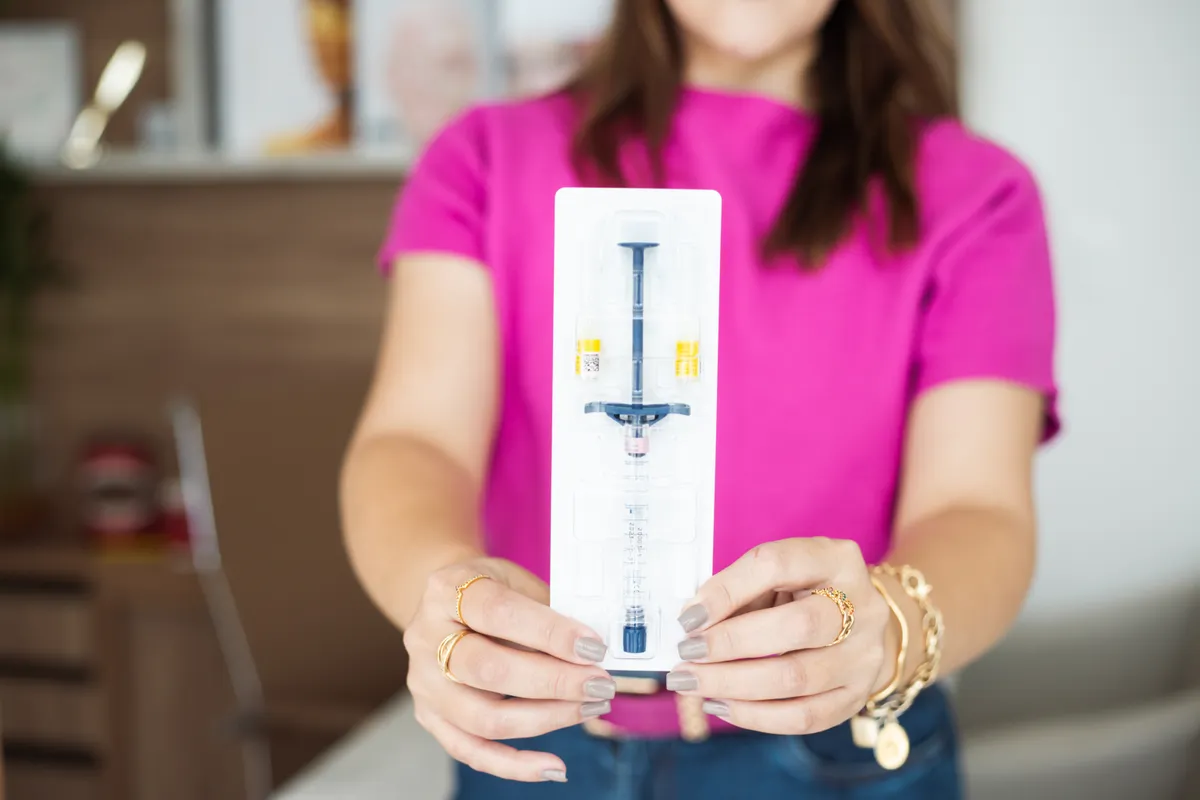
Third, evaluate the form and presentation. Research Selank is normally supplied as a lyophilized (freeze-dried) white powder sealed in a glass vial, most commonly at 5mg per vial. Good presentation includes a clearly printed label with the compound name, the net peptide amount, a lot number, and "research use only" language. The vial should be properly sealed with an intact flip-cap, and the powder should be a consistent solid or fine cake rather than discolored or partially liquefied, which can indicate poor handling or moisture exposure.
Fourth, confirm the supplier states net peptide content. Lyophilized peptides are often co-formulated with residual salts and counterions from synthesis, so "5mg" can mean total vial mass rather than 5mg of pure peptide. A transparent supplier distinguishes between gross and net content or reports peptide content as part of the CoA. This distinction matters for anyone doing quantitative research, and our free reconstitution calculator can help you work with whatever net amount is declared.
Finally, note that third-party or independent testing adds a layer of confidence beyond in-house results. A supplier willing to submit batches to an outside laboratory, and to publish those results, is demonstrating that its quality claims can be checked rather than simply asserted.
How Do You Identify a Reliable Selank Supplier?
Beyond the data on a single vial, the character of the supplier itself is a strong signal of quality. A reliable vendor is transparent about testing: certificates of analysis are easy to find, current, and matched to lot numbers rather than being a single generic document reused across every product. If you cannot locate any analytical documentation, or if the same undated CoA appears for unrelated peptides, treat that as a warning sign.
A second marker is clear and honest labeling. Trustworthy suppliers describe Selank consistently as a research compound not intended for human consumption, avoid therapeutic claims, and never promise specific outcomes. Language that oversells results, or that markets a research peptide as if it were an approved medicine, is both a scientific and a regulatory red flag. The absence of hype is, paradoxically, a sign of credibility in this market.
Third, assess operational transparency: a physical or verifiable business presence, responsive customer support, a stated shipping origin and destination policy, clear pricing, and a defined refund or replacement process for damaged or incorrect orders. Suppliers that accept traceable payment methods and provide tracking numbers tend to be more accountable than anonymous storefronts. Reading independent customer feedback across multiple platforms, rather than only the testimonials on the seller's own site, gives a more balanced picture.
Fourth, consider consistency over time. A supplier that has maintained stable sourcing, packaging, and testing practices across many batches is generally safer than a brand-new storefront with no track record. Longevity is not a guarantee, but combined with published CoAs it substantially lowers the risk of receiving an off-spec product.
A note on transparency from our side: this article contains affiliate links to the suppliers we discuss, meaning we may earn a commission if you purchase through them at no additional cost to you. That relationship does not change the quality criteria above, and you can read more in our affiliate disclosure. We recommend applying the same checklist to any vendor, including the ones named here.
Where Can You Actually Buy Selank?
Once you know what to look for, the practical question becomes which suppliers carry Selank and where they ship. Two affiliate partners in our network stock it, and they serve different regions, so the right choice depends largely on where you are located.
SwissChems ships worldwide, including to the European Union and the United States, which makes it the more flexible option for most international buyers. It lists Selank as a 5mg lyophilized vial, available both as a single vial and as a 10-vial kit for buyers who want fewer separate shipments. Worldwide availability is genuinely useful for Selank, because many suppliers that carry it are restricted to a single country. You can compare its current listings alongside other research peptides through our shop overview.
AminoClub is a United States-only supplier, and Selank is one of the specific compounds it carries. For buyers based in the US who prefer a domestic source with domestic shipping, AminoClub is a straightforward alternative. Because it ships only within the US, it is not an option for European or other international buyers, who should default to SwissChems.
In short, the decision usually reduces to geography. If you are outside the United States, or you want a single supplier that can reach both the EU and US, SwissChems is the practical default. If you are inside the United States and want a domestic-only option, AminoClub carries Selank as well. Whichever you choose, apply the same purity and CoA checks described above rather than assuming that any listed supplier automatically meets them.
Before purchasing, verify the current product page details directly on the supplier's site, since presentation, stock, and terms can change. Regardless of vendor, remember that this is a research compound and that legal status depends on your jurisdiction, a point we return to at the end of this guide.
What Does Selank Cost and Where Does It Ship?
Selank is one of the more affordable research peptides, which reflects its relatively simple synthesis compared with larger, more complex molecules. At SwissChems, a single 5mg vial is listed at 25.95 USD, while the 10-vial kit is listed at 259.50 USD. The kit works out to the same per-vial price as buying singly, so its value is mainly convenience and fewer separate shipments rather than a bulk discount. At AminoClub, Selank is listed at 31.99 USD for its US-only offering.
The table below summarizes current listed prices from our affiliate partners. Prices change frequently, so always confirm the live figure on the supplier's product page before ordering.
| Supplier | Presentation | Listed price | Ships to |
|---|---|---|---|
| SwissChems | Selank 5mg, 1 vial | 25.95 USD | Worldwide (incl. EU, US) |
| SwissChems | Selank 5mg, kit of 10 vials | 259.50 USD | Worldwide (incl. EU, US) |
| AminoClub | Selank (US listing) | 31.99 USD | United States only |
On shipping zones, the key distinction is coverage. SwissChems shipping worldwide means it can serve buyers in the EU, the US, and many other regions from a single storefront, which is why it is the default recommendation for international buyers. AminoClub ships within the United States only, so it is relevant exclusively to US-based buyers who want a domestic source.
When budgeting, factor in more than the sticker price. International orders may incur shipping fees, customs handling, or import duties depending on the destination country, and delivery times vary with distance and customs processing. A slightly higher headline price from a supplier that ships reliably to your region, with tracking and a clear replacement policy, is often better value than a marginally cheaper listing that cannot clear customs where you live. Do not treat any price here as permanent; treat it as a starting reference to check against the live listing.
What Forms and Presentations Does Selank Come In?
In the research market, Selank is supplied almost universally as a lyophilized powder in a sealed glass vial. Lyophilization, or freeze-drying, removes water from the peptide and leaves a stable dry cake that tolerates shipping and storage far better than a liquid would. The most common presentation is 5mg per vial, which is the format both SwissChems and AminoClub list.
You may also encounter Selank in combination products. For example, some European suppliers offer a Semax plus Selank blend that packages both nootropic-adjacent peptides together in a single vial. Blends can be convenient for researchers studying the two compounds side by side, but they also make it harder to characterize each peptide independently, so a standalone 5mg Selank vial remains the cleaner choice when purity and single-compound identity are priorities.
A small number of vendors market intranasal or spray-format research preparations, reflecting the fact that much of the original Selank literature involved intranasal administration in study settings. Presentation format does not change the underlying quality questions: whatever the form, you still want a batch CoA, an HPLC purity figure, and mass spectrometry confirmation of identity. A convenient format with no analytical documentation is not a good purchase.
When your vial arrives, inspect it before doing anything else. The powder should look like a uniform white or off-white solid or cake, the vial should be intact and properly sealed, and the label should carry the compound name, net amount, lot number, and research-use language. Discoloration, a cracked seal, or a vial that has partially liquefied in transit are reasons to contact the supplier rather than proceed. For any reconstitution work, our peptide reconstitution calculator helps translate the declared net content into accurate working concentrations.
How Should Selank Be Stored?
Proper storage protects the investment you made in a high-purity product, because even an excellent peptide degrades if it is handled carelessly. In its lyophilized (dry powder) state, Selank is relatively stable and is generally kept refrigerated, though it tolerates short periods at room temperature during shipping. For longer-term storage of the sealed powder, a freezer is the conservative choice, and keeping the vial away from light and moisture helps preserve integrity.
The situation changes considerably once a peptide is reconstituted into solution. In liquid form, peptides are far more susceptible to hydrolysis and microbial contamination, so a reconstituted vial is typically refrigerated and used within a much shorter window than the dry powder would keep. Repeated warming and cooling stresses the molecule, so minimizing temperature cycling is a sensible general practice for any peptide in solution.
A few practical habits reduce avoidable losses. Keep vials upright, labeled, and dated so you can track how long a given batch has been open. Avoid leaving vials on a benchtop in direct sunlight or near heat sources. Handle seals cleanly to limit contamination risk. These are the same storage principles that apply across research peptides generally, and they are covered in more depth in our discussion of key peptide terms and handling concepts.
Always defer to the specific storage instructions printed on the vial or provided by the supplier, since exact recommendations can vary with formulation. Because Selank is a research compound and not an approved therapeutic, there is no standardized pharmacy-grade storage monograph the way there is for licensed medicines, which makes careful handling and supplier guidance all the more important.
How Does Selank Compare to Semax?
Selank is frequently discussed alongside Semax, another Russian-developed research peptide, because the two are often studied in the same neuropeptide and nootropic-adjacent context. They are, however, distinct molecules with different origins. Selank is derived from the immunomodulatory peptide tuftsin, whereas Semax is a fragment analog of adrenocorticotropic hormone (ACTH). Their amino acid sequences and molecular structures are entirely different, even though both are short synthetic peptides investigated for effects on the central nervous system.
From a buyer's standpoint, the two are usually sourced the same way and evaluated by the same criteria. SwissChems lists Semax as a 30mg vial at 73.95 USD, shipping worldwide, and AminoClub carries Semax as well for US buyers. That means a researcher interested in both compounds can often obtain them from a single supplier and apply an identical checklist: HPLC purity, batch CoA, mass spectrometry identity, clear net-content labeling, and appropriate storage.
The most notable practical difference is presentation and price per vial. Semax is commonly sold at a higher milligram amount per vial (30mg in the SwissChems listing) than the typical 5mg Selank vial, which is reflected in the higher headline price. When comparing cost, look at price per milligram of net peptide rather than the sticker price alone, since the two compounds are packaged at different strengths.
Because the research contexts overlap, some buyers evaluate the two together before deciding what to source. We cover the scientific and practical distinctions in more detail in our dedicated Selank vs Semax comparison. As with Selank, Semax is a research compound that is not approved for human use, and the same legal and safety considerations apply to both.
Is Selank Legal and Approved?
Selank is not approved by the FDA, the EMA, or most other national regulators for human use. The bulk of its evidence base comes from Russian preclinical studies and a limited set of early human trials, and it has not gone through the large, multi-phase clinical trial process required for approval in the United States or European Union. For that reason, it is sold and should be treated as a research compound labeled "for research use only," not as a medicine.
Legal status varies by jurisdiction. In many countries research peptides occupy a gray area: they may be legal to possess and handle for laboratory research while not being approved for sale as human therapeutics or supplements. In other places, import or sale may be restricted. It is your responsibility to understand the rules that apply where you live before ordering, including any customs and import considerations, since a compound that ships freely from one country may be held or refused at another country's border.
It is also worth distinguishing between preclinical and human evidence. Much of what is described about Selank comes from animal models, and results in animals do not automatically translate to humans. Where human data exist, they are limited in scale. Reading the primary literature, some of which is listed in the sources below, gives a more accurate picture than marketing summaries do.
This article is provided for educational purposes only and does not constitute medical advice, a recommendation to use Selank, or any dosing guidance. If you have health questions, consult a qualified healthcare professional. For our full terms, see the medical disclaimer. Approaching Selank with realistic expectations, rigorous quality checks, and awareness of its unapproved status is the responsible way to engage with any research peptide.
Recommended products
Research peptides selected for quality and purity:

Semax + Selank
Cognitive Blend

Selank
Cognitive Compound

Semax
Cognitive Compound
Test your knowledge
Quick quiz · 6 questions
Peptide Lab: free calculator & tracker
Calculate your reconstitution, track your peptides and injections. Free, no credit card required.
Frequently Asked Questions
What purity should I look for when buying Selank?
Where can I buy Selank if I am outside the United States?
How much does Selank cost?
Is there a US-only supplier for Selank?
What is a Certificate of Analysis and why does it matter?
How should Selank be stored?
What form does Selank come in?
How is Selank different from Semax?
Is Selank approved for human use?
Does this article offer dosing or medical advice?
Sources
- Zozulya AA, Neznamov GG, Syunyakov TS, et al. (2008). Efficacy and possible mechanism of action of a new peptide anxiolytic Selank in the therapy of generalized anxiety disorder and neurasthenia. Bulletin of Experimental Biology and Medicine.
- Kolomin T, Shadrina M, Slominsky P, et al. (2013). A new generation of drugs: synthetic peptides based on natural regulatory peptides. Neuroprotective and anxiolytic effects of Selank. Neuroscience and Medicine.
- Volkova A, Shadrina M, Kolomin T, et al. (2016). Selank administration affects the expression of some genes involved in GABAergic neurotransmission in healthy rats. Frontiers in Pharmacology.
- Kozlovskii II, Danchev ND. (2003). The optimizing action of the synthetic peptide Selank on a conditioned active avoidance reflex in rats. Neuroscience and Behavioral Physiology.
- Semenova TP, Kozlovskaya MM, Zuikov AV, et al. (2010). Experimental optimization of the analgesic and anxiolytic effects of the peptide Selank. Bulletin of Experimental Biology and Medicine.
- Vyunova TV, Andreeva L, Shevchenko K, Myasoedov N. (2018). Peptide-based anxiolytics: the molecular aspects of the Selank interaction with the GABA system. Current Pharmaceutical Design.