
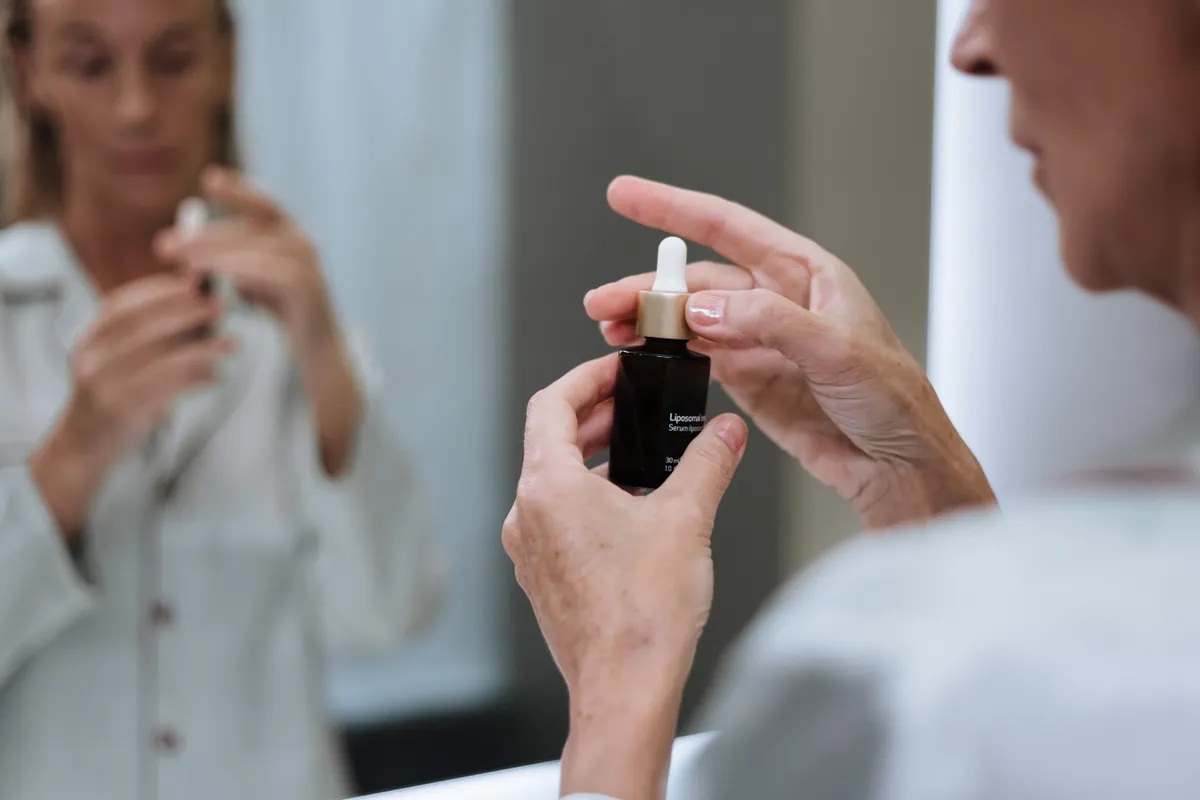
- Peptides are signaling ingredients: they tell skin cells to build more collagen and support the skin barrier, rather than exfoliating or resurfacing.
- Apply products from thinnest to thickest — cleanser, toner, peptide serum, moisturizer — and always finish the morning routine with broad-spectrum SPF.
- Peptides layer well with hyaluronic acid, niacinamide, and — with care — retinol; keep them away from the same-minute application of strong direct acids or high-strength vitamin C.
- Most peptides are gentle enough for daily use across skin types, but sensitive and reactive skin should still patch test and introduce actives one at a time.
- Visible firmness and texture changes typically emerge over 4-12 weeks of consistent use, mirroring the skin's natural collagen renewal cycle.
- Consistency and sun protection matter more than the number of products; a simple, well-ordered routine outperforms a crowded, conflicting one.
Why Build a Routine Around Peptides?
An anti-aging skincare routine with peptides is built around a simple idea: short chains of amino acids can act as messengers that signal skin cells to behave the way they did when they were younger. Where an exfoliating acid removes dead cells and a retinoid accelerates cell turnover, a peptide typically works by signaling — nudging fibroblasts to produce more collagen, elastin, and other structural proteins. This makes peptides one of the more tolerable categories of active ingredients, and a sensible anchor for a routine you can sustain for months.
The cosmetic peptide category has grown accordingly. The global cosmetic peptides market reached roughly $3.2 billion in 2025, and industry analysis suggests that around 8 out of 10 anti-aging products now contain at least one peptide. Signal peptides such as Matrixyl 3000 (a blend built around Palmitoyl Pentapeptide-4) have been reported to increase collagen synthesis substantially in laboratory fibroblast studies, while copper peptides like GHK-Cu are studied for their role in skin remodeling and wound repair.
It helps to know which family you are working with. Broadly, cosmetic peptides fall into signal peptides (collagen stimulation), carrier peptides (such as copper-bound GHK-Cu), enzyme-inhibitor peptides (which slow the breakdown of matrix proteins), and neurotransmitter-inhibiting peptides like Acetyl Hexapeptide-3, marketed as Argireline, which are studied for softening expression lines. Understanding this taxonomy tells you what a product can realistically do — and what it cannot. If you are new to the topic, our overview of what peptides are and our guide to peptides in cosmetics are good starting points.
The purpose of a routine, rather than a single product, is layering these effects intelligently while avoiding ingredient conflicts and irritation. The rest of this guide walks through timing, order, compatibility, skin-type adjustments, common mistakes, and a realistic results timeline. This article is for educational purposes only and is not medical advice; consult a dermatologist or healthcare professional before starting a new regimen, especially if you have a skin condition or are pregnant.
Morning vs. Evening: What Changes?
Your skin does different work at different times of day, and a good routine respects that rhythm. In the morning, the primary job is protection: shielding the barrier and the collagen you are trying to preserve from ultraviolet light, pollution, and oxidative stress. In the evening, the job shifts toward repair and renewal, when the skin's regenerative processes are most active and when photosensitizing ingredients can be used without sun exposure.
Peptides are unusually flexible in this regard. Because most cosmetic peptides are not photosensitizing and do not increase sun sensitivity, a peptide serum can be used both morning and night. This is a meaningful advantage over ingredients like retinol or certain acids, which are usually confined to the evening. Many people apply their peptide serum twice daily and reserve their more reactive actives for one part of the day.
A practical division looks like this. The morning routine pairs peptides with antioxidants and, critically, sunscreen: a gentle cleanse, an optional vitamin C or niacinamide step, the peptide serum, moisturizer, and broad-spectrum SPF. The evening routine pairs peptides with renewal actives on alternating schedules: cleanse (double cleanse if you wear makeup or sunscreen), an active such as retinol or an exfoliating acid on designated nights, the peptide serum, and a richer moisturizer to support overnight barrier repair.
The reason to keep sunscreen non-negotiable in the morning is that UV exposure is the single largest driver of extrinsic skin aging. Using peptides to encourage collagen production while allowing UV to degrade that same collagen is self-defeating. Think of SPF as the step that protects the return on everything else you apply.
In What Order Do You Apply Each Step?
The governing rule of application order is thinnest to thickest — or more precisely, from the most water-based to the most occlusive. Lighter, water-soluble formulas need to reach the skin first; heavier creams and oils create a film that can slow the penetration of anything applied afterward. Within that principle, the standard sequence is cleanser, toner, treatment serum, moisturizer, and (in the morning) sunscreen.
Here is a typical order with peptides positioned correctly:
| Step | Product | Purpose |
|---|---|---|
| 1 | Cleanser | Remove dirt, oil, and sunscreen; prepare a clean surface |
| 2 | Toner / essence | Rebalance and hydrate; prime skin for absorption |
| 3 | Peptide serum | Deliver signaling peptides to well-hydrated skin |
| 4 | Moisturizer | Seal in hydration; support barrier function |
| 5 (AM) | Sunscreen (SPF 30+) | Protect collagen from UV degradation |
Peptide serums belong in the serum step, applied to clean, slightly damp skin before your moisturizer. Damp skin can improve the spread and comfort of a serum, though you should follow the specific product's directions. Give each layer a short moment to absorb before applying the next; you do not need to wait long, but pressing straight from one heavy layer to the next tends to cause pilling.
If you use more than one serum, apply them lightest to heaviest as well — for example, a watery hydrating essence before a slightly thicker peptide serum. Sunscreen is always the final skincare step in the morning, applied generously as the outermost layer. Makeup, if worn, goes on top of sunscreen. Our guide to choosing a peptide serum covers formulation and texture in more detail.
How Do You Layer Peptides With Other Actives?
The most common question about peptide routines is compatibility: can you use them alongside retinol, vitamin C, and exfoliating acids? The short answer is yes, with attention to timing. Peptides are relatively robust and combine well with most ingredients, but a few pairings benefit from separation to preserve efficacy and minimize irritation.
Peptides + retinol. These are complementary rather than conflicting: retinol drives cell turnover while peptides support the collagen matrix. Many modern serums deliberately combine them. If you use separate products, apply the peptide serum first to hydrate and buffer, then retinol, or use them at different times of day. Because retinol can be irritating, introduce it gradually — this is a frequent point in our comparison of peptides versus retinol.
Peptides + vitamin C. Both are useful in the morning, but strong L-ascorbic acid formulas are acidic (low pH) and can, in principle, be less compatible with certain copper peptides applied in the same layer. A simple solution is to separate them: vitamin C in the morning, peptides in the evening — or apply one, wait for it to absorb, then the other. Niacinamide, by contrast, pairs comfortably with peptides at any time.
Peptides + acids (AHA/BHA). Exfoliating acids work at a low pH, and applying them in the same minute as some peptides is generally avoided so the peptides are not exposed to a strongly acidic environment. The practical fix is to alternate nights — acids on some evenings, peptides plus retinol on others — or to apply the acid, let the skin's pH normalize, then follow with peptides. This spacing also reduces cumulative irritation. For building multi-active regimens, see our peptide stacking guide.
A reasonable default for most people: use peptides twice daily as your reliable base, add vitamin C in the morning, and rotate retinol and acids on separate evenings. That structure captures the benefits of each active while limiting the conflicts and irritation that come from stacking everything at once.
How Do You Adapt the Routine to Your Skin Type?
The skeleton of the routine stays the same across skin types; what changes is texture, frequency, and which supporting actives you add. Peptides themselves are well tolerated by most skin types, which is part of their appeal, but the products they are formulated into vary widely in richness.
Dry and mature skin benefits from cream-based peptide products, richer moisturizers, and complementary humectants such as hyaluronic acid and glycerin. Copper peptides and signal peptides paired with ceramides can help support a barrier that tends to lose moisture more easily with age. Layering a hydrating essence before the peptide serum improves comfort.
Oily and combination skin generally does better with lightweight, water-based peptide serums and gel moisturizers that will not feel heavy or contribute to congestion. Niacinamide is a useful partner here, helping to regulate the appearance of oil while complementing peptides. Avoid heavy occlusives except where the skin is genuinely dry.
Sensitive and reactive skin should treat peptides as one of the gentler entry points into anti-aging care, but still proceed carefully: patch test any new product on the inner forearm or behind the ear for a few days, introduce one active at a time, and keep fragrance and strong acids to a minimum. Peptides can sometimes replace harsher actives entirely for those who cannot tolerate retinoids. Our article on peptides for skin discusses tolerability across skin types in more depth.
Across all skin types, the constant is sun protection and consistency. Adjust the vehicle and the frequency of your strong actives to your skin's tolerance, but keep the peptide base and the daily SPF fixed. If you have a diagnosed skin condition such as eczema, rosacea, or acne, consult a dermatologist before adding actives.
What Are the Most Common Mistakes?
Most disappointing results come not from the peptides themselves but from how they are used. A handful of avoidable mistakes account for the majority of problems.
Skipping sunscreen. This is the single most consequential error. Building collagen with peptides while letting UV break it down means running on a treadmill. Broad-spectrum SPF 30 or higher every morning is what protects your investment in every other step.
Overloading actives at once. Applying peptides, retinol, vitamin C, and two acids in the same routine tends to cause irritation, a compromised barrier, and — paradoxically — worse-looking skin. When the barrier is inflamed, nothing works well. Fewer, well-chosen actives applied consistently beat a crowded shelf.
Other frequent mistakes include:
- Impatience. Expecting results in days rather than weeks, and abandoning a product before the skin's renewal cycle has had time to respond.
- Wrong order. Applying a heavy cream before a peptide serum, which blocks absorption, or putting sunscreen underneath other products instead of last.
- Inconsistency. Using a peptide serum sporadically. Signal peptides depend on repeated, sustained messaging to influence collagen production.
- Ignoring the barrier. Pushing through stinging, redness, or peeling instead of scaling back. Irritation is a signal to simplify, not to persevere.
- Product pilling. Layering too much too fast so products roll off; use less, and let each layer settle.
The correction for nearly all of these is the same: simplify, sequence correctly, protect from the sun, and give the routine time. A minimalist routine done properly consistently outperforms an elaborate one done haphazardly.
What Results Can You Expect (4-12 Weeks)?
Realistic expectations are essential, and they are set by skin biology rather than marketing. The skin renews its surface roughly every four weeks, while the deeper remodeling of collagen and the dermal matrix unfolds over months. This is why peptide results follow a predictable arc measured in weeks, not days.
| Timeframe | What typically changes |
|---|---|
| Weeks 1-2 | Improved hydration, smoother surface, more comfortable skin; little to no change in lines yet |
| Weeks 4-6 | Better texture and radiance; skin looks plumper and more even as surface renewal completes |
| Weeks 8-12 | Gradual improvement in firmness and the appearance of fine lines as collagen support accumulates |
| 3+ months | More established, cumulative firmness with continued consistent use |
The earliest changes — around 2 to 4 weeks — are usually improvements in hydration, softness, and surface smoothness. These are real and encouraging, but they are surface effects. The changes people care about most, in firmness and fine lines, tend to appear between weeks 8 and 12, once the effect on the collagen matrix has had time to translate into visible structure.
Several factors influence how quickly and how much you respond: your age and baseline collagen, the concentration and formulation of the peptide, whether you use it consistently twice daily, and how well you protect the skin from sun damage. Peptides support and gradually improve skin appearance; they do not replace the structural results of clinical or surgical procedures, and honest expectations should reflect that.
The most important variable is consistency. Peptide benefits are cumulative and reversible: they build with steady use and fade if you stop. Photographing your skin under consistent lighting every few weeks is a more reliable way to judge progress than day-to-day mirror checks, which rarely capture gradual change.
What Does a Sample Weekly Routine Look Like?
Putting it together, here is a balanced weekly structure that uses peptides as a twice-daily base while rotating stronger actives on separate evenings to avoid conflicts and irritation. Adjust frequency to your tolerance.
Every morning:
- Gentle cleanser
- Optional antioxidant (vitamin C or niacinamide), allowed to absorb
- Peptide serum
- Moisturizer suited to your skin type
- Broad-spectrum sunscreen, SPF 30 or higher
Evenings, rotating:
| Night | Focus | Sequence after cleansing |
|---|---|---|
| Mon / Thu | Retinol night | Peptide serum → retinol → moisturizer |
| Tue / Fri | Exfoliation night | Exfoliating acid (let pH settle) → peptide serum → moisturizer |
| Wed / Sat / Sun | Recovery / peptide-only | Peptide serum → moisturizer |
Beginners should start slower — perhaps retinol once or twice weekly and acids once weekly — and build up as the skin adapts. If any night leaves the skin red or stinging the next morning, reduce the frequency of the active involved rather than the peptides. On recovery nights, peptides and a supportive moisturizer let the barrier consolidate.
This framework is a template, not a prescription. The right routine is the one you can sustain: it protects the skin every morning, uses peptides consistently, and introduces stronger actives at a pace your skin tolerates. When in doubt, simplify. For product selection and blends, see our roundup of the best peptide serums, and always review the full medical disclaimer before acting on any skincare guidance.
Recommended products
Research peptides selected for quality and purity:
GHK-Cu
Anti-Aging Compound
Test your knowledge
Quick quiz · 6 questions
Peptide Lab: free calculator & tracker
Calculate your reconstitution, track your peptides and injections. Free, no credit card required.
Frequently Asked Questions
Can I use a peptide serum every day, morning and night?
Do peptides go on before or after moisturizer?
Can I use peptides and retinol together?
Should I use peptides or vitamin C in the morning?
How long until I see results from peptides?
Can I layer peptides with exfoliating acids (AHA/BHA)?
Are peptides safe for sensitive skin?
Do I still need sunscreen if I use peptides?
What order do I apply everything in the morning?
Will peptide results disappear if I stop using them?
Sources
- Pickart L, Margolina A (2018). Regenerative and Protective Actions of the GHK-Cu Peptide in the Light of the New Gene Data. International Journal of Molecular Sciences.
- Robinson LR, Fitzgerald NC, Doughty DG, et al. (2005). Topical palmitoyl pentapeptide provides improvement in photoaged human facial skin. International Journal of Cosmetic Science.
- Schagen SK (2017). Topical Peptide Treatments with Effective Anti-Aging Results. Cosmetics.
- Errante F, Ledwoń P, Latajka R, et al. (2020). Cosmeceutical Peptides in the Framework of Sustainable Wellness Economy. Frontiers in Chemistry.
- Blanes-Mira C, Clemente J, Jodas G, et al. (2002). A synthetic hexapeptide (Argireline) with antiwrinkle activity. International Journal of Cosmetic Science.
- Zhang L, Falla TJ (2009). Cosmeceuticals and peptides. Clinics in Dermatology.