

- "Testosterone peptide" is a marketing umbrella, not a pharmacological class. The molecules grouped under that label act at completely different levels of the reproductive axis, and several of them do not affect testosterone at all.
- Kisspeptin (as kisspeptin-54 and kisspeptin-10) is the only genuine peptide with published human data showing increases in LH, FSH and testosterone after intravenous administration in healthy men. It remains investigational and is not an approved medicine anywhere.
- Gonadorelin is synthetic GnRH, a prescription drug substance whose effect depends entirely on pulsatile delivery. Continuous exposure desensitizes the pituitary and shuts the axis down instead of stimulating it.
- hCG is included here only for context: it is a heterodimeric glycoprotein hormone of roughly 36 kDa, not a peptide, and it acts directly on the testicular LH receptor rather than on the brain.
- CJC-1295 and ipamorelin act on the GHRH receptor and the ghrelin receptor respectively. Preclinical characterization of ipamorelin found no effect on LH or FSH, and human CJC-1295 data report growth hormone and IGF-I endpoints only.
- WADA prohibits kisspeptin, GnRH and its agonist analogues, and chorionic gonadotrophin and LH at all times in male athletes. Growth hormone releasing factors and GH secretagogues are prohibited at all times for everyone.
- No peptide, approved or investigational, substitutes for a structured medical evaluation of suspected hypogonadism. This article is educational and contains no dosing information, no protocols and no cycle guidance.
What does "testosterone peptide" actually mean?
Search for testosterone peptides and you will find lists that mix together molecules with almost nothing in common: a hypothalamic neuropeptide, a synthetic releasing hormone used in fertility clinics, a placental glycoprotein hormone, and two growth hormone secretagogues that have no documented effect on the gonadal axis whatsoever. The phrase is a commercial convenience rather than a scientific category.
It is worth being precise about the biochemistry, because the differences determine what each molecule can and cannot do. A peptide is conventionally a chain of roughly 2 to 50 amino acids. Kisspeptin-10 (10 residues) and gonadorelin (10 residues) sit comfortably inside that definition. Human chorionic gonadotropin does not: it is a two-subunit glycoprotein of around 237 amino acids with extensive sugar chains, closer to a small protein hormone. Grouping all of these as "peptides for testosterone" obscures the fact that they enter the system at three different points.
This article walks through the four molecules most often named in that context, plus the two growth hormone secretagogues that are frequently misattributed to the gonadal axis. For each one we cover the receptor-level mechanism, what controlled human studies have actually reported, and the regulatory and anti-doping status as of 2026. We deliberately do not discuss amounts, schedules, routes or combinations, because that information has no legitimate place in a consumer-facing article about hormonal manipulation.
Educational purposes only. Nothing here is medical advice, and nothing here should be read as encouragement to self-administer any of these substances. If you have symptoms you associate with low testosterone, the correct next step is a clinician, not a vial. Several of the compounds below are prescription-only medicines; others are classified for laboratory research use and are not approved for human use in any jurisdiction we are aware of.
How does the brain control testosterone production?
Testosterone is not produced on demand by the testis in isolation. It is the output of a three-level control loop called the hypothalamic-pituitary-gonadal (HPG) axis, and every molecule discussed in this article acts at one specific level of that loop.
At the top, a small population of hypothalamic neurons releases gonadotropin-releasing hormone (GnRH) in discrete pulses, roughly every 60 to 120 minutes in adult men. The pulsatility is not a quirk, it is the signal itself. Upstream of those neurons sit kisspeptin neurons, which are now understood to be the principal gatekeepers that permit GnRH pulse generation. Kisspeptin signals through the KISS1R receptor (formerly GPR54), and loss-of-function mutations in that receptor cause congenital hypogonadotropic hypogonadism, which is how its role was first identified.
In the middle, the anterior pituitary responds to each GnRH pulse by secreting luteinizing hormone (LH) and follicle-stimulating hormone (FSH). At the bottom, LH binds the LH/chorionic gonadotropin receptor (LHCGR) on testicular Leydig cells and drives steroidogenesis, while FSH acts on Sertoli cells to support spermatogenesis. Testosterone and its metabolites then feed back negatively on both the hypothalamus and the pituitary, which is why exogenous testosterone suppresses LH, FSH and endogenous production.
This architecture explains two things that most "testosterone peptide" lists get wrong. First, a molecule can only influence testosterone if it engages one of these specific receptors: KISS1R, the GnRH receptor, or LHCGR. The growth hormone axis runs on entirely separate receptors and is not part of this loop. Second, where a molecule acts determines what it preserves. Acting high in the axis (kisspeptin, GnRH) keeps the downstream signalling intact; acting at the bottom (hCG) bypasses the brain and the pituitary entirely. Neither position is inherently superior, but they are not interchangeable.
What does kisspeptin do to testosterone in humans?
Kisspeptin is the one molecule on this list that is a true peptide, acts upstream of GnRH, and has published controlled data in men. In a placebo-controlled study of healthy male volunteers, intravenous infusion of kisspeptin-54 significantly increased plasma LH, FSH and testosterone compared with saline (Dhillo et al., JCEM, 2005). A later dose-ranging study of kisspeptin-10 in men reported that intravenous boluses potently evoked LH secretion, and that continuous infusion increased testosterone along with LH pulse frequency and pulse size (George et al., JCEM, 2011). The direction of effect is therefore reasonably well established over short administration windows in healthy physiology.
What has not been established is anything resembling a clinical role in low testosterone. The 2024 Endocrine Reviews synthesis of kisspeptin and neurokinin B biology frames kisspeptin as a promising diagnostic and therapeutic tool across reproductive medicine, while making clear that development remains investigational; the most advanced human work sits in assisted reproduction and in functional hypothalamic disorders rather than in male hypogonadism. There is no approved kisspeptin medicine, no long-term safety dataset in men, and open questions about tachyphylaxis during sustained exposure. We cover the receptor pharmacology, the full human trial record and the tolerability data in depth in our dedicated kisspeptin guide, so this article does not duplicate it.
Why is gonadorelin (GnRH) a prescription molecule?
Gonadorelin is synthetic gonadotropin-releasing hormone: the native human decapeptide pGlu-His-Trp-Ser-Tyr-Gly-Leu-Arg-Pro-Gly-NH₂, identical to what the hypothalamus secretes. Because it is the natural ligand for the pituitary GnRH receptor, it does exactly what endogenous GnRH does, including the part that most online summaries omit.
GnRH receptor signalling is frequency-dependent. Delivered in pulses that mimic physiology, GnRH drives LH and FSH release, and downstream testosterone. The foundational demonstration came from men with GnRH deficiency, in whom long-term pulsatile administration of low-dose GnRH induced puberty, with testicular growth and rising testosterone (Hoffman and Crowley, NEJM, 1982). Pulsatile GnRH delivered by pump remains a recognized option for inducing spermatogenesis in congenital hypogonadotropic hypogonadism, and it works precisely because the pump reproduces an intermittent signal.
Delivered continuously, the same molecule produces the opposite outcome. Sustained receptor occupancy causes downregulation and desensitization of pituitary gonadotrophs, which suppresses LH, FSH and testosterone. This is not a theoretical concern; it is the entire basis for the therapeutic use of long-acting GnRH agonists such as leuprorelin to achieve medical castration in prostate cancer. A molecule whose net effect on testosterone inverts depending on the timing of exposure is not a candidate for casual self-administration, and that is a large part of why gonadorelin sits behind a prescription.
Practical availability has also narrowed. Gonadorelin was historically marketed both as a diagnostic agent for evaluating pituitary gonadotropin reserve and as a pulsatile therapy, but dedicated branded products have been discontinued in several markets, and current access varies by country and often runs through compounding or veterinary channels. Material sold outside a pharmacy supply chain carries the usual identity, purity and sterility problems that apply to all unregulated injectables, a topic we treat separately in are peptides safe.
Where does hCG fit, and why is it not a peptide?
Human chorionic gonadotropin (hCG) appears on nearly every "testosterone peptide" list, and it does not belong there on biochemical grounds. hCG is a heterodimeric glycoprotein hormone: a non-covalently associated alpha subunit of 92 amino acids and a beta subunit of 145 amino acids, heavily N- and O-glycosylated, with a total molecular mass in the region of 36 to 37 kDa. That is an order of magnitude larger than any peptide discussed here, and the carbohydrate chains are functionally essential, since they govern circulating half-life. We include it only because readers encounter it in the same conversations, and because it illustrates the third point of entry into the axis.
Mechanistically, hCG shares a receptor with LH. Its beta subunit is structurally homologous to LH beta, and it binds and activates LHCGR on Leydig cells, driving steroidogenesis directly. In other words, hCG bypasses both the hypothalamus and the pituitary. That is why it continues to raise testicular testosterone in men whose own gonadotropin secretion has been shut down.
The clearest demonstration of that comes from a study in 29 healthy men in whom gonadotropin secretion was deliberately suppressed with weekly exogenous testosterone, with intratesticular testosterone then measured by testicular aspiration (Coviello et al., JCEM, 2005). Across three ascending low-dose hCG arms, post-treatment intratesticular testosterone ranged from about 25% below baseline to about 26% above baseline, whereas the placebo arm fell markedly. The authors concluded that relatively low-dose hCG maintains intratesticular testosterone within the normal range under gonadotropin suppression.
Two caveats matter. First, hCG is a prescription medicine with approved indications that differ by jurisdiction, and in men those approvals centre on hypogonadotropic hypogonadism and cryptorchidism rather than on general testosterone optimization. Second, using it to manipulate the axis carries real consequences, including erythrocytosis, oestradiol elevation and gynaecomastia, and testicular desensitization with prolonged stimulation. These are clinical decisions requiring monitoring, not self-directed experiments.
Why do CJC-1295 and ipamorelin not raise testosterone?
This is the most common misconception in the category, and it is worth addressing directly, because CJC-1295 and ipamorelin are routinely marketed in the same breath as testosterone support. They operate on a different axis, through different receptors, with different outputs.
CJC-1295 is a modified analogue of GHRH (1-29) that binds the GHRH receptor on pituitary somatotrophs. Ipamorelin is a pentapeptide agonist of the ghrelin receptor (GHS-R1a), a distinct receptor expressed on somatotrophs and elsewhere. Neither receptor is part of the HPG axis. Somatotrophs and gonadotrophs are separate pituitary cell populations with separate secretory products, so stimulating one does not recruit the other.
The human pharmacodynamic data on CJC-1295 are consistent with this. In healthy adults, a single subcutaneous injection produced dose-dependent increases in mean plasma growth hormone of 2- to 10-fold sustained for six days or more, and in mean plasma IGF-I of 1.5- to 3-fold for nine to eleven days (Teichman et al., JCEM, 2006). The reported endpoints are GH and IGF-I. Testosterone and the gonadotropins were not the outcomes the compound was developed to move.
For ipamorelin the evidence is more pointed. The original pharmacological characterization that introduced it as the first selective growth hormone secretagogue reported that none of the GH secretagogues tested affected plasma FSH, LH, prolactin or TSH, and that ipamorelin did not release ACTH or cortisol even at exposures more than 200-fold above those producing half-maximal GH release (Raun et al., Eur J Endocrinol, 1998). The selling point of ipamorelin is precisely its lack of spillover onto other pituitary axes, including the gonadal one.
If anything, the ghrelin pathway pushes the other way. In healthy volunteers, ghrelin administration lowered peak LH levels and reduced the number of LH pulses relative to placebo, indicating a suppressive central effect on the gonadal axis (Kluge et al., JCEM, 2007). Whether a selective agonist such as ipamorelin shares that effect at the exposures people use is not established, but the notion that ghrelin receptor agonism boosts testosterone has no support. Readers comparing categories may find our overviews of peptides for bodybuilding and peptides versus steroids useful for keeping the two axes separate.
How do these molecules compare side by side?
The table below summarizes class, target, what controlled human data report, and status. It is a comparison of evidence and regulation only. It contains no amounts, no schedules and no recommendations, and it should not be read as a ranking of things to use.
| Molecule | Class | Primary target | Reported effect on testosterone in humans | Regulatory status | WADA 2026 (male athletes) |
|---|---|---|---|---|---|
| Kisspeptin-54 / Kisspeptin-10 | Peptide (54 or 10 residues) | KISS1R (GPR54), upstream of GnRH neurons | Increased LH, FSH and testosterone after intravenous administration in healthy men; short exposure windows only | Investigational; not approved for any indication | Prohibited at all times (S2.2.1, kisspeptin and agonist analogues) |
| Gonadorelin (GnRH) | Peptide (10 residues) | Pituitary GnRH receptor | Raises LH, FSH and testosterone when pulsatile; suppresses the axis when exposure is continuous | Prescription drug substance; availability varies by country | Prohibited at all times (S2.2.1, GnRH and agonist analogues) |
| hCG | Glycoprotein hormone (~36 kDa, not a peptide) | LHCGR on Leydig cells, downstream of the pituitary | Maintains intratesticular testosterone during gonadotropin suppression; raises serum testosterone | Prescription medicine; approved indications differ by jurisdiction | Prohibited at all times (S2.2.1, chorionic gonadotrophin and LH) |
| CJC-1295 | Peptide (GHRH 1-29 analogue) | GHRH receptor on somatotrophs | No testosterone effect reported; human data describe GH and IGF-I increases | Research use only; not approved for human use | Prohibited at all times for all athletes (S2.1, GH releasing factors) |
| Ipamorelin | Pentapeptide | Ghrelin receptor (GHS-R1a) | No testosterone effect reported; preclinical work found no change in LH or FSH | Research use only; not approved for human use | Prohibited at all times for all athletes (S2.1, GH secretagogues) |
Read column four carefully. Only three of the five molecules have any documented relationship with testosterone, and of those three, two are prescription-controlled for good pharmacological reasons while the third has no approved form at all. The two compounds most heavily marketed to general consumers are the two with no gonadal effect.
Column six is also worth noting by any competing athlete. The gonadal-axis stimulators are prohibited specifically in males, reflecting their use as testosterone-stimulating agents, while the growth hormone compounds are prohibited across the board. There is no out-of-competition window for either group, since category S2 applies at all times.
Can any peptide replace a medical workup for low testosterone?
No. This section is the most important one in the article, and it is deliberately unambiguous.
The symptoms people attribute to low testosterone (fatigue, low libido, low mood, reduced strength, poor sleep, difficulty concentrating) are among the least specific in medicine. They overlap substantially with depression, obstructive sleep apnoea, thyroid dysfunction, iron deficiency, chronic sleep restriction, excessive alcohol intake, poorly controlled diabetes, opioid use and simple overtraining. None of those are improved by stimulating the gonadal axis, and some are made worse by delaying diagnosis.
Where testosterone deficiency is genuinely suspected, the established approach is diagnostic rather than pharmacological. The Endocrine Society clinical practice guideline on testosterone therapy in men with hypogonadism recommends making the diagnosis only in men with consistent symptoms and signs together with unequivocally and consistently low morning fasting total testosterone, confirmed on a repeat measurement, and measuring LH and FSH to distinguish primary testicular failure from a hypothalamic or pituitary cause (Bhasin et al., JCEM, 2018). That distinction is not academic. It determines whether the problem lies in the testis, in the pituitary, or in a pituitary lesion, hyperprolactinaemia, haemochromatosis or opioid-induced suppression that needs its own management.
A self-administered research peptide cannot produce that information, and it can actively obscure it. Manipulating LH, FSH or testicular steroidogenesis before baseline measurements are taken removes the very data a clinician needs to interpret the axis. In men who care about future fertility, the stakes are higher still, because the choice between gonadotropin-based approaches and testosterone therapy depends on the diagnosis and on an informed discussion of spermatogenesis.
The honest summary of the evidence is this: kisspeptin is a legitimate and interesting research avenue in reproductive endocrinology with no established place in managing male hypogonadism; gonadorelin and hCG are real medicines with narrow, diagnosis-dependent roles that belong in a clinician's hands; and growth hormone secretagogues are simply the wrong axis. Consult a healthcare professional. That advice is not a disclaimer appended for legal comfort, it is the only step in this article with evidence behind it.
What is the legal and anti-doping status?
Legal status differs by molecule and by country, and conflating the categories leads people into avoidable trouble.
Gonadorelin and hCG are prescription medicines or prescription drug substances in the major regulated markets. Obtaining or supplying them outside that framework is a regulatory matter, not a grey area. Kisspeptin, CJC-1295 and ipamorelin are sold as research chemicals labelled for laboratory use only. None of the three is approved by the FDA or the EMA for human use for any indication, and the FDA has issued warning letters to firms marketing unapproved peptide products. A "research use only" label is not a quiet permission; it is a statement that the material has not been assessed for human administration.
Product quality follows from that status. Material outside the pharmaceutical supply chain has no guaranteed identity, purity, endotoxin limit or sterility, and independent testing of consumer peptide products has repeatedly found content deviating from the label. Injecting an unverified preparation adds contamination and immunogenicity risk on top of whatever the pharmacology does.
For anyone subject to anti-doping rules, the 2026 WADA Prohibited List is unambiguous. Section S2.2.1 covers testosterone-stimulating peptides in males, naming chorionic gonadotrophin and LH, GnRH (gonadorelin) and its agonist analogues, and kisspeptin and its agonist analogues; these are prohibited at all times in male athletes. Section S2.1 covers growth hormone releasing factors including GHRH analogues such as CJC-1295, and GH secretagogues including ipamorelin, prohibited at all times for all athletes. Category S2 has no in-competition-only carve-out, and no amount is too small to constitute a violation.
One last point on interpretation. The fact that a substance appears on the Prohibited List tells you it is believed to be performance-affecting and detectable. It tells you nothing about whether it is safe, effective for a clinical complaint, or appropriate for an individual. Those remain separate questions, and for male hypogonadism they are answered with a workup, not with a purchase.
Recommended products
Research peptides selected for quality and purity:

GHK-Cu
Anti-Aging Compound
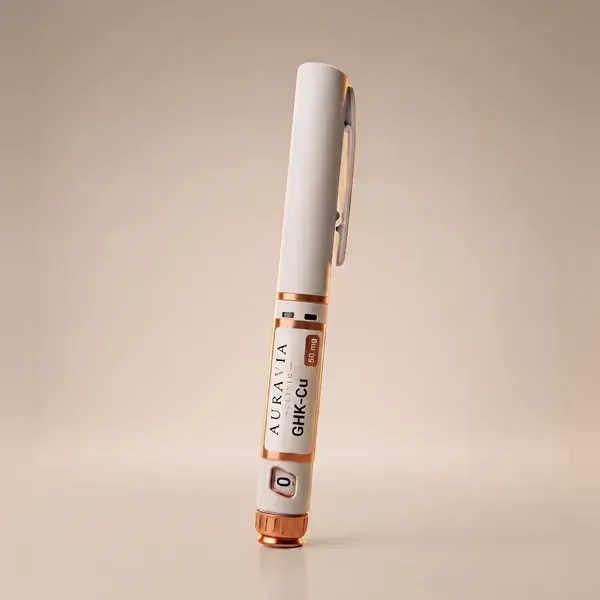
GHK-Cu Pen
Pre-filled Pen GHK-Cu
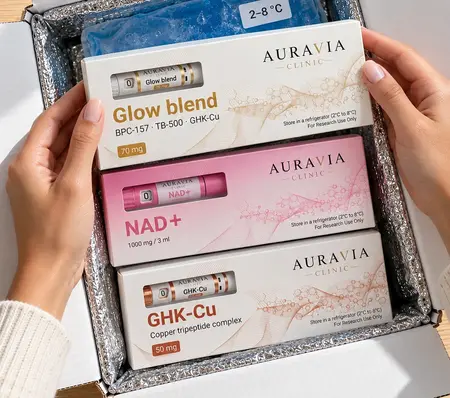
GLOW-UP Ritual
3-pen pack: Glow, NAD+, GHK-Cu
Test your knowledge
Quick quiz · 6 questions
Frequently Asked Questions
Is there a peptide that increases testosterone?
Does kisspeptin raise testosterone in men?
Is gonadorelin the same thing as hCG?
Do CJC-1295 and ipamorelin increase testosterone?
Are testosterone peptides legal to buy?
Can a peptide replace testosterone replacement therapy?
Are these substances allowed in competitive sport?
What should someone with symptoms of low testosterone do first?
Sources
- Dhillo WS, Chaudhri OB, Patterson M, et al. (2005). Kisspeptin-54 stimulates the hypothalamic-pituitary gonadal axis in human males. Journal of Clinical Endocrinology & Metabolism (PMID 16174713). (PubMed)
- George JT, Veldhuis JD, Roseweir AK, et al. (2011). Kisspeptin-10 is a potent stimulator of LH and increases pulse frequency in men. Journal of Clinical Endocrinology & Metabolism (PMID 21632807). (PubMed)
- Patel B, Koysombat K, Mills EG, et al. (2024). The Emerging Therapeutic Potential of Kisspeptin and Neurokinin B. Endocrine Reviews, 45(1):30-68. (academic.oup.com)
- Hoffman AR, Crowley WF Jr (1982). Induction of puberty in men by long-term pulsatile administration of low-dose gonadotropin-releasing hormone. New England Journal of Medicine (PMID 6813732). (PubMed)
- Coviello AD, Matsumoto AM, Bremner WJ, et al. (2005). Low-dose human chorionic gonadotropin maintains intratesticular testosterone in normal men with testosterone-induced gonadotropin suppression. Journal of Clinical Endocrinology & Metabolism (PMID 15713727). (PubMed)
- Bhasin S, Brito JP, Cunningham GR, et al. (2018). Testosterone Therapy in Men With Hypogonadism: An Endocrine Society Clinical Practice Guideline. Journal of Clinical Endocrinology & Metabolism, 103(5):1715-1744 (PMID 29562364). (PubMed)
- Teichman SL, Neale A, Lawrence B, et al. (2006). Prolonged stimulation of growth hormone (GH) and insulin-like growth factor I secretion by CJC-1295, a long-acting analog of GH-releasing hormone, in healthy adults. Journal of Clinical Endocrinology & Metabolism (PMID 16352683). (PubMed)
- Raun K, Hansen BS, Johansen NL, et al. (1998). Ipamorelin, the first selective growth hormone secretagogue. European Journal of Endocrinology, 139(5):552-561 (PMID 9849822). (PubMed)
- Kluge M, Schüssler P, Uhr M, Yassouridis A, Steiger A (2007). Ghrelin suppresses secretion of luteinizing hormone in humans. Journal of Clinical Endocrinology & Metabolism, 92(8):3202-3205. (academic.oup.com)
- World Anti-Doping Agency (2026). World Anti-Doping Code International Standard: Prohibited List 2026 (sections S2.1 and S2.2.1). WADA. (wada-ama.org)