
- Zepbound and Mounjaro are two brand names for the same active ingredient, tirzepatide, made by the same company, Eli Lilly. The molecule, the molecular weight and the mechanism are identical.
- In the United States, Mounjaro carries the type 2 diabetes indication (FDA approval 13 May 2022), while Zepbound carries chronic weight management (8 November 2023) and moderate to severe obstructive sleep apnea in adults with obesity (20 December 2024).
- In the European Union there is no Zepbound brand. A single marketing authorisation for Mounjaro, valid since 15 September 2022, covers both type 2 diabetes and weight management.
- The pivotal evidence sits in two separate programs: SURPASS for glycemic control in type 2 diabetes, and SURMOUNT for obesity, with SURMOUNT-OSA supporting the sleep apnea indication.
- Because the active ingredient is the same, the adverse event profile and the boxed warning for thyroid C-cell tumors are the same for both brands, and the two should never be combined.
- The practical difference for most people is administrative rather than pharmacological: which indication is on the label determines what a prescriber can write and what an insurer or health system will fund.
- This article is educational only. Tirzepatide is a prescription-only medicine, and any decision about it belongs to a qualified healthcare professional.
Are Zepbound and Mounjaro the same medication?
Yes, in the only sense that matters chemically. Zepbound and Mounjaro are two trade names for the same active substance, tirzepatide, developed and marketed by the same company, Eli Lilly. Tirzepatide is a 39-amino-acid synthetic peptide with a fatty acid side chain that acts as a dual agonist at the glucose-dependent insulinotropic polypeptide (GIP) receptor and the glucagon-like peptide-1 (GLP-1) receptor. The molecular formula (C₂₂₅H₃₄₈N₄₈O₆₈), the molecular weight of roughly 4813 g/mol, the half-life, the subcutaneous route and the once-weekly rhythm are the same whichever box the pharmacy hands over. For the molecule itself, our complete tirzepatide guide covers pharmacology, receptor biology and the wider evidence base in depth.
What differs is the regulatory wrapper. A brand name in pharmacy is attached not to a molecule but to a marketing authorisation, and that authorisation specifies which patients the product is approved for, what the label text says, and what the packaging looks like. Eli Lilly filed tirzepatide for type 2 diabetes first and launched it as Mounjaro. It then filed the obesity program separately and launched the same molecule under a second name, Zepbound, with its own label and its own commercial channel in the United States.
This has a few immediate consequences. A prescriber in the United States writing for glycemic control in type 2 diabetes writes Mounjaro. A prescriber writing for chronic weight management, or for obstructive sleep apnea in an adult with obesity, writes Zepbound. In the European Union, the question does not arise in the same way, because the Zepbound brand is not marketed there and a single Mounjaro authorisation covers both indications.
The reverse is also worth stating plainly: because the two products contain the same active ingredient, they are not complementary and must never be taken together. Lilly's own prescribing information states that tirzepatide should not be used alongside another tirzepatide-containing product or any other GLP-1 receptor agonist. Readers comparing tirzepatide with semaglutide-based options will find that discussion in Mounjaro vs Ozempic and Wegovy vs Zepbound.
Educational note: this page compares regulatory and clinical trial facts. It contains no recommendations on how to use either product. Consult a healthcare professional for anything concerning your own care.
Why does one molecule carry two brand names?
The split is partly regulatory and partly commercial. Regulators evaluate a medicine against a specific claim in a specific population. Glycemic control in type 2 diabetes and chronic weight management in obesity are different claims, supported by different endpoints, different comparators and different trial populations. A sponsor can either add the second claim to an existing authorisation or open a second authorisation with its own brand. Eli Lilly took the first route in Europe and the second route in the United States.
Two brands also separate two very different commercial and reimbursement worlds. Diabetes medicines sit inside long-established formularies and treatment pathways. Obesity medicines, in most health systems, sit in a far less settled space where coverage is restricted, contested or absent. Keeping the obesity product under its own name lets the manufacturer price, distribute and communicate about it separately, and it reduces the risk that supply intended for people with diabetes is absorbed by weight management demand. During the shortages of 2023 and 2024 this separation was more than theoretical.
There is a clinical argument too. A distinct brand name reduces the chance of duplicate prescribing. If the same name appeared on two prescriptions written by two different clinicians for two different reasons, a patient could end up taking two tirzepatide products at once. Separate names make that error more visible to the pharmacist.
Europe illustrates that the choice is not inevitable. The EMA granted Mounjaro a marketing authorisation valid throughout the EU on 15 September 2022 for type 2 diabetes, and later extended that same authorisation to chronic weight management rather than creating a second brand. The European product information therefore carries both indications under one name. Anyone reading US-centric material and then looking at a European pharmacy shelf should expect this discrepancy; it is a naming decision, not a different formulation.
Which conditions is each brand approved to treat?
In the United States, Mounjaro was approved by the FDA on 13 May 2022 as an adjunct to diet and exercise to improve glycemic control in adults with type 2 diabetes. Zepbound was approved on 8 November 2023 for chronic weight management in adults with obesity (BMI of 30 kg/m² or more) or with overweight (BMI of 27 kg/m² or more) plus at least one weight-related condition, based on the SURMOUNT-1 and SURMOUNT-2 trials. On 20 December 2024, the FDA added a second indication to the Zepbound label: moderate to severe obstructive sleep apnea in adults with obesity. That approval made tirzepatide the first prescription medicine authorised for obstructive sleep apnea, and it rested on the SURMOUNT-OSA trials.
In the European Union, the picture is simpler on paper and different in substance. The single Mounjaro authorisation covers glycemic control in type 2 diabetes, where it is indicated for adults and, following a later extension, for adolescents and children aged 10 years and above, and it also covers weight management in adults alongside diet and physical activity. When Eli Lilly applied to add a separate obstructive sleep apnea indication in Europe, the CHMP concluded that a standalone indication was not needed, taking the view that use in adults with obesity and OSA was already covered by the existing weight management indication, with sleep apnea listed in the product information as a weight-related comorbidity.
Both agencies have declined, so far, to grant a heart failure indication. The SUMMIT trial in adults with heart failure with preserved ejection fraction and obesity reported fewer cardiovascular death and worsening heart failure events with tirzepatide, but Eli Lilly withdrew its US application after the FDA indicated that an additional confirmatory trial would be required, and the CHMP declined a separate EU indication while agreeing to include the trial data in the product information. The practical lesson is that promising outcome data and an approved indication are not the same thing.
For readers mapping these labels against semaglutide-based alternatives, Mounjaro vs Wegovy sets out how the diabetes and obesity labels line up across the two manufacturers.
What does the SURPASS program show in type 2 diabetes?
The SURPASS program is the clinical foundation of the Mounjaro label. It is a series of phase 3 trials in adults with type 2 diabetes, using glycated hemoglobin (HbA1c) as the primary endpoint and testing tirzepatide against placebo and against active comparators across different stages of the disease.
SURPASS-1, published in The Lancet in 2021, tested tirzepatide as monotherapy over 40 weeks in adults with type 2 diabetes not controlled by diet and exercise alone. HbA1c fell by 1.87 to 2.07 percentage points across the tirzepatide groups, while it rose slightly in the placebo group. The safety signals were consistent with what is known for GLP-1 receptor agonists, with gastrointestinal events dominating.
SURPASS-2 is the head-to-head trial most often cited. Published in the New England Journal of Medicine in 2021, it randomised 1 879 adults with type 2 diabetes inadequately controlled on metformin to tirzepatide or to semaglutide 1 mg once weekly for 40 weeks. HbA1c reductions were 2.01, 2.24 and 2.30 percentage points in the three tirzepatide groups versus 1.86 percentage points with semaglutide, and body weight fell by 7.6, 9.3 and 11.2 kg versus 5.7 kg. Tirzepatide met noninferiority and then superiority on the primary glycemic endpoint. One caveat deserves emphasis: the comparator was semaglutide 1 mg, which is the diabetes strength, not the higher strength used in obesity trials.
SURPASS-CVOT, published in the New England Journal of Medicine in December 2025, addressed the cardiovascular question directly. More than 13 000 adults with type 2 diabetes and established atherosclerotic cardiovascular disease across 30 countries were randomised double-blind to tirzepatide or to dulaglutide 1.5 mg. A primary endpoint event (cardiovascular death, myocardial infarction or stroke) occurred in 12.2% of the tirzepatide group and 13.1% of the dulaglutide group (hazard ratio 0.92; 95.3% CI 0.83 to 1.01), meeting noninferiority but not superiority. All-cause mortality was lower with tirzepatide (hazard ratio 0.84; 95% CI 0.75 to 0.94).
None of these trials were designed to answer questions about weight management in people without diabetes. That is precisely why a second program exists.
What does the SURMOUNT program show in obesity and sleep apnea?
The SURMOUNT program underpins the Zepbound label. Its primary endpoint is percentage change in body weight rather than HbA1c, and its populations are defined by BMI rather than by glycemic control.
SURMOUNT-1, published in the New England Journal of Medicine in 2022, randomised 2 539 adults with a BMI of 30 kg/m² or more, or 27 kg/m² or more with at least one weight-related complication and without diabetes, to tirzepatide or placebo for 72 weeks. Mean weight change at week 72 was 15.0% (95% CI 15.9 to 14.2), 19.5% (95% CI 20.4 to 18.5) and 20.9% (95% CI 21.8 to 19.9) in the three tirzepatide groups. Prespecified cardiometabolic measures improved alongside weight. Adverse events led to discontinuation in 4.3%, 7.1% and 6.2% of tirzepatide participants versus 2.6% on placebo.
SURMOUNT-2, published in The Lancet in 2023, asked the same question in 938 adults who did have type 2 diabetes, with a mean BMI of 36.1 kg/m² and mean HbA1c of 8.02%. Over 72 weeks, mean bodyweight reduction was 12.8% and 14.7% in the two tirzepatide groups versus 3.2% with placebo. Weight loss is consistently smaller in people with type 2 diabetes than in people without it, a pattern seen across the whole GLP-1 class, and SURMOUNT-2 quantifies it for tirzepatide.
SURMOUNT-OSA, published in the New England Journal of Medicine in 2024, consisted of two parallel 52-week phase 3 trials enrolling 469 adults with moderate to severe obstructive sleep apnea and obesity: one in participants not using positive airway pressure (PAP) therapy, one in participants using it. The primary endpoint was change in the apnea-hypopnea index (AHI), the number of apneas and hypopneas per hour of sleep. AHI fell by 25.3 events per hour with tirzepatide versus 5.3 with placebo in the first trial, and by 29.3 versus 5.5 in the second. Body weight, hypoxic burden, hsCRP, systolic blood pressure and patient-reported sleep outcomes all improved. Gastrointestinal adverse events were the most frequent and were mostly mild to moderate.
Trial averages are not individual forecasts. Readers interested in how these aggregate curves translate into reported individual trajectories can look at the tirzepatide results timeline and at documented Zepbound before and after outcomes, keeping in mind that trial results were obtained with structured diet and physical activity support alongside the medication.
How are the two brands supplied?
Presentation is one of the few places where the two brands genuinely diverge, and it has changed repeatedly since launch, so anything written on this subject should be checked against the current prescribing information in your country.
Mounjaro launched in the United States in a single-use prefilled autoinjector pen with a hidden needle, one injection per device, supplied as a monthly carton. Lilly later introduced single-dose vials and a multi-use KwikPen presentation in its diabetes line. In Europe and the United Kingdom, Mounjaro has been supplied both as a single-use pen and as a multi-use KwikPen containing four weekly injections, with availability of each format varying by market and by period.
Zepbound launched in the single-use prefilled pen format. In 2024, Lilly added single-dose vials sold through its own self-pay channel, LillyDirect, a route created in part to widen access for people without insurance coverage for obesity care. In February 2026, the FDA approved a label expansion allowing Zepbound to be delivered via the four-injection single-patient-use KwikPen, giving a full month of treatment in one device, with a corresponding approval covering the Mounjaro KwikPen on the diabetes side.
Two points matter more than the hardware. First, all presentations deliver the same molecule; a pen and a vial of the same strength are pharmacologically equivalent. Second, the format can affect cold chain handling, travel logistics, sharps disposal and the risk of administration error, which is why the choice of device belongs in a conversation with a prescriber or pharmacist rather than in an article. Readers looking for the practical arithmetic of volumes and devices will find the dedicated tirzepatide tool page more appropriate; this page deliberately does not reproduce any schedule or regimen.
A final warning on sourcing. Eli Lilly has stated publicly that Mounjaro and Zepbound are the only FDA-approved tirzepatide medicines, that it is the sole lawful supplier of them, and that it does not supply tirzepatide to compounding pharmacies, med spas, wellness centres or online retailers. Compounded or counterfeit products marketed under these brand names are not the approved medicines described in this article.
How do coverage and availability differ by country?
This is where the two names have the largest real-world impact, and it has nothing to do with pharmacology. Prices and coverage rules change frequently and vary by payer, plan and country, so no figures are quoted here. Check the manufacturer, the national regulator or your own insurer for current terms.
In the United States, Mounjaro has generally been covered as a diabetes medicine within standard formulary processes, while Zepbound has faced the uneven coverage typical of obesity care, with prior authorisation requirements, employer plan exclusions and documented BMI criteria. Historically, Medicare Part D was barred from covering medicines used for weight loss. That position has been loosening: CMS has set up a time-limited pilot, referred to as the Medicare GLP-1 Bridge, running from 1 July 2026 into 2027, under which specified GLP-1 products for obesity, including the Zepbound KwikPen presentation, are covered for eligible beneficiaries at a flat monthly cost-sharing amount, with a broader model planned for Medicaid and Medicare afterwards.
In the European Union, there is no Zepbound to compare. Mounjaro is the only tirzepatide brand, and reimbursement is decided country by country. Several member states fund tirzepatide for type 2 diabetes while leaving the weight management indication wholly or largely to private payment, which means two people in the same pharmacy queue can receive an identical pen on entirely different financial terms depending on the indication written on the prescription.
In the United Kingdom, Mounjaro is licensed for both indications and the weight management rollout has been deliberately staged. NICE issued its recommendation in December 2024; access began in specialist weight management services in March 2025 and opened in primary care from 23 June 2025, initially restricted to those with the highest clinical need and conditional on wraparound diet and lifestyle support, with eligibility planned to widen over many years. Elsewhere, availability of either brand depends on local registration, launch decisions and supply, and in several countries neither brand is commercially available at all for weight management.
Are the warnings and side effects identical?
Substantially yes, because the active ingredient is the same. The two US labels carry the same boxed warning about thyroid C-cell tumors: in rodents, tirzepatide caused a dose-dependent and treatment-duration-dependent increase in thyroid C-cell tumors, and it is unknown whether the medicine causes such tumors, including medullary thyroid carcinoma, in humans. Both labels contraindicate use in people with a personal or family history of medullary thyroid carcinoma or with multiple endocrine neoplasia syndrome type 2.
The most common adverse events across both programs are gastrointestinal: nausea, diarrhea, vomiting, constipation, abdominal pain, dyspepsia. In the pivotal trials these were mostly mild to moderate and most often appeared during the escalation period rather than at steady state. Discontinuation for adverse events in SURMOUNT-1 ranged from 4.3% to 7.1% across tirzepatide groups versus 2.6% on placebo, which gives a sense of how often these events become intolerable rather than merely unpleasant.
Both labels also warn about pancreatitis, gallbladder and biliary disease, acute kidney injury in the context of dehydration from gastrointestinal losses, hypoglycemia when combined with insulin or a sulfonylurea, diabetic retinopathy complications in people with type 2 diabetes, hypersensitivity reactions, suicidal behavior and ideation monitoring, and the risk of pulmonary aspiration during general anesthesia or deep sedation because of delayed gastric emptying. Reports of non-arteritic anterior ischemic optic neuropathy have been discussed across the incretin class; readers should rely on the current prescribing information rather than on secondary commentary for the status of any individual warning. A broader walkthrough of class effects is available in our article on GLP-1 side effects.
Where the labels do differ is in population-specific text rather than in pharmacological risk: the diabetes label addresses glycemic management and interactions with other glucose-lowering agents in more detail, while the weight management label addresses BMI criteria, weight regain after discontinuation and the sleep apnea population. Neither brand is appropriate during pregnancy, and both require medical supervision.
Medical disclaimer: this section summarises published label content for educational purposes. It is not a safety assessment for any individual and does not replace the prescribing information or the judgment of a qualified clinician.
What does a side by side comparison show?
The table below summarises the differences that are documented and verifiable. Everything in the pharmacology row is identical; everything in the regulatory and commercial rows is not.
| Criterion | Zepbound | Mounjaro |
|---|---|---|
| Active ingredient | Tirzepatide | Tirzepatide |
| Manufacturer | Eli Lilly | Eli Lilly |
| Mechanism | Dual GIP and GLP-1 receptor agonist | Dual GIP and GLP-1 receptor agonist |
| First FDA approval | 8 November 2023 (chronic weight management) | 13 May 2022 (type 2 diabetes) |
| Additional FDA indication | 20 December 2024: moderate to severe obstructive sleep apnea in adults with obesity | None beyond type 2 diabetes |
| European Union status | Not marketed in the EU | Authorised 15 September 2022; covers type 2 diabetes and weight management |
| Pivotal program | SURMOUNT-1, SURMOUNT-2, SURMOUNT-OSA | SURPASS series, including SURPASS-2 and SURPASS-CVOT |
| Primary trial endpoint | Percentage change in body weight; AHI in the OSA trials | Change in HbA1c; MACE in the outcomes trial |
| Presentations | Single-use prefilled pen, single-dose vials, four-injection KwikPen (FDA label expansion February 2026) | Single-use prefilled pen, vials, KwikPen; availability varies by market |
| Boxed warning | Thyroid C-cell tumors | Thyroid C-cell tumors |
| Typical coverage logic | Obesity benefit, often restricted; time-limited Medicare pilot from 1 July 2026 | Diabetes formulary pathways; EU and UK reimbursement varies by indication and country |
Read the table as a map of paperwork, not of potency. Nothing in it supports the idea that one brand works better than the other, and no published head-to-head trial of Zepbound against Mounjaro exists, for the simple reason that such a trial would compare a molecule with itself.
The decision that actually faces a patient is therefore not Zepbound or Mounjaro. It is whether tirzepatide is appropriate at all, under which indication, in which country, with what monitoring, and funded how. Those are clinical and administrative questions for a prescriber, a pharmacist and a payer. This article is educational material and nothing in it should be read as medical advice.
Recommended products
Research peptides selected for quality and purity:

GHK-Cu
Anti-Aging Compound
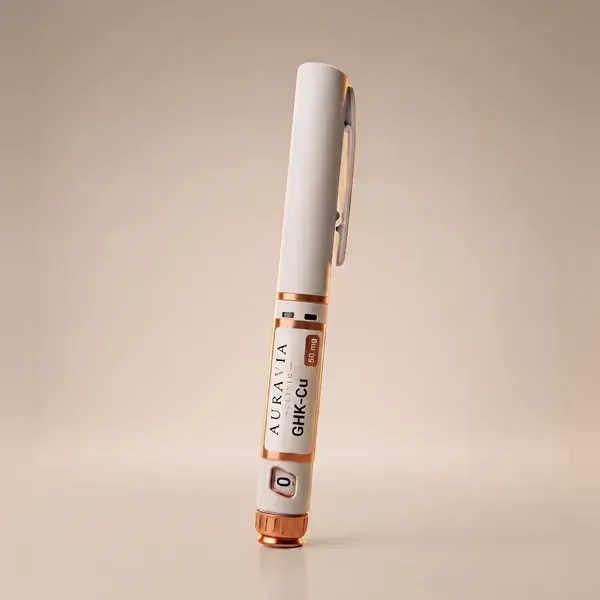
GHK-Cu Pen
Pre-filled Pen GHK-Cu

GLOW-UP Ritual
3-pen pack: Glow, NAD+, GHK-Cu
Test your knowledge
Quick quiz · 6 questions
Frequently Asked Questions
Are Mounjaro and Zepbound the same medication?
Is Zepbound available in Europe or the United Kingdom?
Does Mounjaro cause weight loss even when it is prescribed for diabetes?
Is one brand stronger or more effective than the other?
Why does the Zepbound label mention sleep apnea while the European label does not?
Can a person switch from one brand to the other?
Are the side effects different between Zepbound and Mounjaro?
Has tirzepatide been approved for heart failure under either brand?
Sources
- Rosenstock J, Wysham C, Frías JP, et al. (2021). Efficacy and safety of a novel dual GIP and GLP-1 receptor agonist tirzepatide in patients with type 2 diabetes (SURPASS-1): a double-blind, randomised, phase 3 trial. The Lancet. (PubMed)
- Frías JP, Davies MJ, Rosenstock J, et al. (2021). Tirzepatide versus Semaglutide Once Weekly in Patients with Type 2 Diabetes (SURPASS-2). New England Journal of Medicine. (PubMed)
- Jastreboff AM, Aronne LJ, Ahmad NN, et al. (2022). Tirzepatide Once Weekly for the Treatment of Obesity (SURMOUNT-1). New England Journal of Medicine. (PubMed)
- Garvey WT, Frías JP, Jastreboff AM, et al. (2023). Tirzepatide once weekly for the treatment of obesity in people with type 2 diabetes (SURMOUNT-2): a double-blind, randomised, multicentre, placebo-controlled, phase 3 trial. The Lancet. (PubMed)
- Malhotra A, Grunstein RR, Fietze I, et al. (2024). Tirzepatide for the Treatment of Obstructive Sleep Apnea and Obesity (SURMOUNT-OSA). New England Journal of Medicine. (PubMed)
- Nicholls SJ, et al. (2025). Cardiovascular Outcomes with Tirzepatide versus Dulaglutide in Type 2 Diabetes (SURPASS-CVOT). New England Journal of Medicine. (PubMed)
- European Medicines Agency (2026). Mounjaro (tirzepatide): EPAR medicine overview and product information. EMA, marketing authorisation of 15 September 2022. (ema.europa.eu)
- U.S. Food and Drug Administration (2026). Zepbound (tirzepatide) injection: prescribing information and approval history. FDA Drugs@FDA. (accessdata.fda.gov)