

- Three different things share the melanotan label: melanotan I (afamelanotide), melanotan II, and the unlicensed products sold online as tanning injections or nasal sprays. Only afamelanotide has a regulatory authorization, and only for a rare light-intolerance disease.
- The effects most often described with melanotan II are nausea, facial flushing, yawning, reduced appetite, injection site reactions, generalized skin darkening, and spontaneous erections or changes in sexual desire. Most of this comes from case reports, forum surveys, and small early studies rather than from controlled safety trials.
- Darkening of existing moles and the appearance of new pigmented lesions are documented in dermatology case reports. This matters clinically because pigment changes can blur the visual signals doctors use to recognize melanoma.
- Several melanoma cases have been published in people who used melanotan, including melanoma in situ, cutaneous melanoma, and one oral mucosal melanoma after nasal spray use. These reports show a temporal association, not proof of cause, and most patients also had other risk factors such as fair skin and sunbed use.
- Serious isolated events reported in the medical literature include renal infarction, and the authors of that report note that rhabdomyolysis and kidney failure after melanotan II had been described before.
- Laboratory analyses of products bought online have found peptide content that did not match the label and unidentified impurities, so the substance actually injected or inhaled is uncertain.
- Any mole that changes in size, shape, color, border, or symptoms deserves an in-person dermatological examination, whatever the suspected reason. This article is educational and is not medical advice.
What is melanotan, and why does one name cover three different substances?
Few peptide names cause as much confusion as melanotan. The word is used in at least three distinct ways, and the safety picture is completely different for each. Understanding that distinction is the first step in reading anything about melanotan side effects accurately, because an adverse effect documented in a regulated clinical program does not transfer automatically to a vial bought online, and the reverse is equally true.
Melanotan I is the historical research name of afamelanotide, a linear 13-amino-acid analogue of alpha-melanocyte-stimulating hormone (α-MSH) in which two residues are substituted to resist enzymatic breakdown. It acts mainly at the melanocortin 1 receptor (MC1R) on melanocytes, the receptor that drives eumelanin production. It is delivered as a controlled-release subcutaneous implant placed by a trained healthcare professional, and it has been studied in formal clinical trials.
Melanotan II is a different molecule: a cyclic heptapeptide, much smaller, and considerably less selective. In addition to MC1R, it activates other melanocortin receptors, including MC3R, MC4R and MC5R. Those receptors sit in the brain, the gut, the cardiovascular system, and the sexual response pathways, which is the pharmacological reason why the reported effects of melanotan II extend well beyond the skin. Melanotan II has never completed a full clinical development program for cosmetic tanning.
The third meaning is the practical one: the unlicensed products marketed as tanning injections, tanning nasal sprays, or the so-called Barbie drug. These are usually sold as melanotan II, but the vial contents are not verified by any regulator. The dermatology literature has flagged this terminological confusion explicitly, warning that clinicians cannot assume which molecule a patient has actually used. If you want the pharmacological comparison in detail, see our dedicated page on melanotan 1 versus melanotan 2; this page stays strictly on safety.
This article is for educational purposes only and is not medical advice. Consult a healthcare professional for any individual question.
Which of these substances is authorized by regulators, and for what?
Only one melanocortin analogue in this family holds a marketing authorization, and its indication is narrow. The European Commission granted a European Union marketing authorization for SCENESSE (afamelanotide) on 22 December 2014, under exceptional circumstances, for the prevention of phototoxicity in adult patients with erythropoietic protoporphyria (EPP). Authorization under exceptional circumstances means the applicant could not supply comprehensive efficacy and safety data under normal conditions of use, and the authorization carries an ongoing reassessment obligation based on real-world data.
In the United States, the Food and Drug Administration approved the same implant on 8 October 2019, to increase pain-free light exposure in adults with a history of phototoxic reactions from EPP. EPP is a rare genetic disorder in which light exposure triggers severe pain and skin damage. Cosmetic tanning is not an approved indication in either jurisdiction, and the product is administered by a healthcare professional rather than self-administered.
Afamelanotide is not side-effect free, and its label is instructive precisely because it was written by regulators. The adverse reactions listed in the United States prescribing information include implant site reaction, nausea, oropharyngeal pain, cough, fatigue, skin hyperpigmentation, dizziness, and melanocytic nevus. The label warns about generalized increased skin pigmentation and darkening of pre-existing moles and freckles, and it recommends a full body skin examination twice a year to monitor pre-existing and new pigmentary lesions. The European product information gives the same monitoring interval as every six months, and adds that a dermatology consultation should be sought if skin changes resemble skin cancer or its precursors, or are unclear to the treating specialist. The European summary of product characteristics also notes rare hypersensitivity reactions, including anaphylaxis.
Melanotan II has no such authorization anywhere. In the United States the FDA has treated injectable melanotan II as an unapproved new drug; a 2016 FDA Notice of Opportunity for Hearing documents that a distributor received a warning letter about its marketing of the product as far back as August 2007. In Australia, melanotan II is a prescription-only substance and no melanotan II product is included in the Australian Register of Therapeutic Goods or approved as a tanning agent. In the United Kingdom, authors of a 2025 case report state plainly that the product is unlicensed and its sale is illegal.
The practical consequence is simple. For afamelanotide, there is a known adverse reaction profile and a mandated monitoring plan. For melanotan II, there is no label, no approved monitoring, and no manufacturer accountability.
What side effects are reported with melanotan II?
The honest answer is that nobody has a reliable incidence table for melanotan II, because the controlled trials that would produce one were never completed for tanning use. What exists is a patchwork: small early human studies in other indications, published case reports, clinical observations by dermatologists, and surveys of what users describe to each other.
Early human research with melanotan II in men with erectile dysfunction is one of the few controlled sources. In that work, nausea and yawning were the most commonly reported adverse effects, and increased sexual desire was reported more often with melanotan II than with placebo. Spontaneous erections occurring without sexual stimulation were a documented pharmacological effect rather than an incidental one, which reflects melanocortin activity at MC4R in the central nervous system.
The effects most consistently described in the dermatology literature and in user accounts cluster into a few groups:
- Gastrointestinal and autonomic: nausea, sometimes severe, vomiting, reduced appetite, facial flushing, yawning, and dizziness.
- Pigmentary: generalized skin darkening, darkening of existing moles and freckles, new pigmented lesions, and darkening of mucous membranes such as the gums or inner lip.
- Sexual: spontaneous erections, priapism in isolated reports, and changes in libido in both sexes.
- Local: pain, redness, swelling, bruising or infection at injection sites, which with non-sterile technique carries its own infectious risk.
Two cautions apply to this list. First, severity is not captured: a symptom reported in a forum tells you that it happened, not how often or how badly. Second, self-reported profiles are systematically incomplete, because the events people do not connect to the product are never reported at all. A qualitative study of melanotan II discussion forums published in Dermatology in 2021 examined how users exchange this kind of experiential information, and later reviews of skin cancer misinformation cite that work when discussing how often unverified safety claims circulate in such spaces. An observational forum survey published in 2018 similarly documented an active underground market with easy access and low perceived barriers.
If you are weighing peptide safety questions more broadly, our overview on whether peptides are safe covers the general evidentiary problem: absence of documented harm is not the same as documented absence of harm.
How does melanotan change skin pigmentation, moles and mucous membranes?
Melanocortin receptor activation on melanocytes increases melanin synthesis. That is the intended effect, and it is not selective for the areas a person wants darker. Pigmentation increases broadly, including on skin that is normally covered, and it also increases in structures that already contain more melanocytes: moles (melanocytic nevi), freckles (ephelides), scars, and mucosal surfaces.
This generalized pigment response is well enough established that it appears in the regulatory label of the authorized analogue. The afamelanotide prescribing information explicitly warns about darkening of pre-existing moles and freckles, and tells prescribers to monitor pigmentary lesions with a full body skin examination twice a year. Regulators did not include that instruction as a formality: pigment change is the expected pharmacology, and it has to be watched.
With unlicensed melanotan II there is no such monitoring framework, and the reported pigment changes go further. Dermatology case reports describe eruptive melanocytic nevi following melanotan injection, meaning multiple new moles appearing over a short period. Another report describes multiple atypical nevi appearing shortly after injections. Mucosal darkening is also described, and the 2025 report of a patient who used a melanotan II nasal spray notes a second patient who observed darkening of pre-existing moles without change in their size, shape or surface.
The clinically important problem is not cosmetic. Dermatologists recognize melanoma largely through visual and dermoscopic pattern analysis: asymmetry, irregular borders, color variation, growth, and change over time. A drug that darkens everything and generates new pigmented lesions degrades the signal those methods depend on. The 2010 review in the British Journal of Dermatology made this point directly, noting that these agents can complicate the clinical presentation of pigmented lesions, and that their use should be suspected in unexpectedly tanned individuals with rapidly pigmenting nevi.
Visible pigment change is also what makes before-and-after imagery misleading as a safety argument; we discuss what those images can and cannot demonstrate in our article on melanotan 2 before and after results.
What do the melanoma case reports show, and what do they not prove?
This is the question that deserves the most precision, because it is easy to get wrong in either direction. There are published melanoma cases in melanotan users. There is no study establishing that melanotan causes melanoma. Both statements are true at once, and neither cancels the other.
What exists in the peer-reviewed literature:
- Melanoma in situ: Ong and Bowling reported melanotan-associated melanoma in situ in the Australasian Journal of Dermatology in 2012, noting that earlier reports had already linked these unlicensed peptides to dysplastic nevi.
- Invasive cutaneous melanoma: Hjuler and Lorentzen described, in Dermatology in 2014, a 20-year-old woman with Fitzpatrick skin type II whose melanoma was excised roughly three months after a self-administered course of melanotan II used to augment sunbed tanning. The authors stated themselves that a true causal link was debatable, and noted that the patient was a regular sunbed user.
- Mucosal melanoma: A 2025 report in the International Journal of Oral and Maxillofacial Surgery described a 22-year-old woman who developed a mass in the anterior maxilla after using a melanotan II nasal spray, with histology confirming mucosal malignant melanoma. The authors present it as a possible risk factor accompanied by a literature review, not as a demonstrated cause.
- Precursor lesions: Eruptive and atypical nevi following injection, including lesions reported as dysplastic on histology.
What these reports show: a temporal association between melanotan exposure and the diagnosis of pigmented lesions, including malignant ones, in people who were often young. They also show that a pigment-stimulating agent can appear in the history of patients presenting with melanoma, which is a legitimate signal worth documenting and studying.
What they cannot show: causation. Case reports have no comparison group, no denominator, and no control of confounding. In almost every published case the patient carried other established melanoma risk factors: fair skin, many nevi, intensive sunbed use, a family history, or in one recent report concurrent tanning bed sessions and hormone use. Melanoma also occurs in young fair-skinned sunbed users who have never touched a peptide. Reporting bias runs in both directions: a dramatic case is more likely to be written up, while uneventful use is never published at all.
There is also a biologically plausible counter-argument that should not be hidden. A 2024 review of chronic MC1R activation in the Journal of the European Academy of Dermatology and Venereology notes that MC1R-driven pigmentation is photoprotective and that MC1R agonists are being investigated for skin cancer chemoprevention. Crucially, the same review concludes that chronic MC1R activation does not prevent melanoma, particularly in people with risk factors, and that patients receiving melanocortin pharmacotherapies should continue to limit ultraviolet exposure and undergo regular dermatologic surveillance. In other words, even the optimistic reading of melanocortin pharmacology does not support treating a tan as protection.
The defensible conclusion is narrow: the melanoma question remains open, the case series is small but not empty, and no published evidence supports the claim that melanotan use is free of melanocytic risk.
Which serious adverse events appear in the published literature?
Beyond pigmentation, the literature contains a scattering of serious isolated events. They are rare in publication terms, which is not the same as rare in reality, because there is no systematic reporting channel for an unlicensed product bought online.
The best documented is a renal event. A case report with literature review published in CEN Case Reports in 2020 described renal infarction in a melanotan II user. The authors proposed a thrombotic pharmacological influence and a possible direct toxic effect on the renal parenchyma as candidate mechanisms, and noted that melanotan II inducing rhabdomyolysis and renal failure had been described previously. Rhabdomyolysis, the breakdown of skeletal muscle releasing myoglobin into the circulation, can itself precipitate acute kidney injury.
Melanocortin receptors are also expressed in cardiovascular tissue, and transient increases in blood pressure and heart rate have been described with melanocortin agonists as a class. Priapism, a prolonged and painful erection that constitutes a urological emergency, has been reported with melanocortin agonists acting centrally. Hypersensitivity is a further consideration: even the regulated implant carries a European warning about rare hypersensitivity reactions including anaphylaxis, and an unlicensed injectable with unidentified impurities offers no reassurance on that front.
A distinct category of harm has nothing to do with the peptide at all. The dermatology literature reviewing regulator warnings has highlighted the public health risk of blood-borne virus transmission through needle sharing among users of these injectable tanning products, alongside the risk of product impurity. Non-sterile self-injection also carries risks of local abscess, cellulitis, and systemic infection.
None of these events can be assigned a frequency. For a reader, the correct interpretation is that the published serious events define the range of what has been seen, not the probability of seeing it.
Why does the unregulated supply chain matter for safety?
Any discussion of side effects assumes you know what entered the body. With unlicensed melanotan products, that assumption does not hold, and this has been measured rather than merely suspected.
Analytical chemists at Aalborg University and collaborating institutions published an analysis in Drug Testing and Analysis in 2015 of melanotan II vials purchased from three online shops. Using liquid chromatography with ultraviolet detection and tandem mass spectrometry, they confirmed the identity of melanotan II, then quantified what was actually present. The total melanotan II content per vial ranged from 4.32 mg to 8.84 mg, although every shop claimed 10 mg per vial. Vials from two of the three shops also contained unknown impurities at 4.1% to 5.9%, while the third shop's impurities fell below the quantification limit.
Eleven years later, a regulator reproduced the same kind of finding in a different product format. On 17 August 2026, Australia's Therapeutic Goods Administration published a safety advisory after laboratory testing of seized tanning nasal sprays. Testing confirmed melanotan II in five nasal spray bottles that all carried the same label, and the estimated quantity per bottle varied from 22 mg to 54 mg against a labelled 30 mg. The TGA stated that consumers cannot be certain of the ingredients, strength or quality of these products, advised people to stop using them, and recommended taking any remaining product to a pharmacy for safe disposal. The regulator also issued 27 infringement notices totalling 101,412 Australian dollars to a New South Wales based individual.
Three consequences follow. Content that does not match the label means exposure is unpredictable from one container to another. Unidentified impurities mean an adverse reaction may not even originate from the peptide. And the absence of pharmaceutical-grade manufacturing means sterility, endotoxin levels and stability are all unverified. For background on the molecule itself, see our reference page on melanotan 2.
Nothing in this article should be read as encouragement to obtain or use these products. No usage information is provided here by design.
What have health authorities said about these products?
Regulatory positions across several jurisdictions are unusually consistent, which is worth noting in a field where agencies often diverge.
Australia (TGA). Melanotan II is a prescription-only substance, no melanotan II product is entered in the Australian Register of Therapeutic Goods, and none is approved as a tanning agent. The August 2026 safety advisory told consumers not to use melanotan II tanning products and to dispose of any they hold, citing laboratory testing showing content that varied widely from the label. The TGA has also pursued enforcement action against individuals importing and supplying them.
The UK Medicines and Healthcare products Regulatory Agency has warned since 2008 that melanotan tanning injections and, later, nasal sprays are unlicensed in the United Kingdom, with no guarantee of safety, quality or effectiveness, and it has acted against companies advertising or supplying them. The 2010 British Journal of Dermatology review summarizing those warnings records the agency's specific concerns about blood-borne virus transmission from needle sharing and about product impurity. Authors of the 2025 oral melanoma case report describe the product as unlicensed and its sale as illegal in the UK and many other countries.
United States (FDA). No melanotan or melanotan II product is approved. The agency has treated injectable melanotan II as an unapproved new drug requiring an approved application; a 2016 FDA Notice of Opportunity for Hearing recounts a warning letter sent to a distributor over its marketing of the product. The only FDA-approved melanocortin analogue for pigmentation purposes is afamelanotide, limited to erythropoietic protoporphyria.
European Union (EMA). The EMA's authorization covers afamelanotide for EPP only, granted under exceptional circumstances with annual reassessment based on real-world data. No cosmetic tanning indication exists.
Cancer authorities add a clinical framing rather than a legal one, noting that cases of abnormal moles and melanoma have been associated with melanotan injections while a causal link has not been established, and that long-term safety data are absent.
When should a changing mole be examined by a dermatologist?
Whatever a person has or has not used, the rule in dermatology is the same: a mole that changes deserves to be seen in person. Photographs, apps, and forum opinions are not a substitute for examination with a dermatoscope by a clinician who can compare lesions across the whole skin surface.
Changes that warrant prompt dermatological assessment include a lesion that grows or changes shape, a lesion whose two halves stop matching, irregular or blurred borders, several colors within one lesion, a diameter that increases, and any itching, bleeding, crusting or ulceration. A lesion that looks different from all the others on the same person is also a recognized warning sign. These signals are not specific to melanotan; they are the standard indications for assessment.
One point is specific to melanocortin exposure. Because pigment stimulation darkens existing lesions and can generate new ones, it becomes harder for both the patient and the clinician to judge whether a change is benign pigmentation or something else. That is precisely why the regulated analogue carries a labelled requirement for a full body skin examination every six months, and why the European product information directs clinicians to seek a dermatology consultation when skin changes resemble skin cancer or its precursors or are simply unclear. Telling a treating clinician about any melanocortin exposure is therefore clinically useful information, not an admission to be hidden; it changes how the examination is interpreted.
Finally, pigmentation obtained pharmacologically should not be treated as sun protection. The 2024 review of chronic MC1R activation is explicit that it does not prevent melanoma, particularly in people with risk factors, and that ultraviolet limitation and regular dermatologic surveillance remain necessary.
Medical disclaimer: this content is educational and does not constitute medical advice, diagnosis or treatment. Melanotan I and melanotan II are not approved for cosmetic use; afamelanotide is authorized only for a specific rare disease and is administered by a healthcare professional. Legal status varies by jurisdiction. Speak with a physician or dermatologist about any personal health question, and seek care promptly for any changing skin lesion.
Frequently Asked Questions
Are melanotan side effects common?
Does melanotan cause melanoma?
Why do moles get darker with melanotan?
Is a melanotan nasal spray safer than an injection?
Is afamelanotide the same thing as melanotan II?
Do melanotan side effects go away after stopping?
Why do nausea and flushing happen with melanotan II?
Is melanotan legal to buy?
Recommended products
Research peptides selected for quality and purity:

GHK-Cu
Anti-Aging Compound
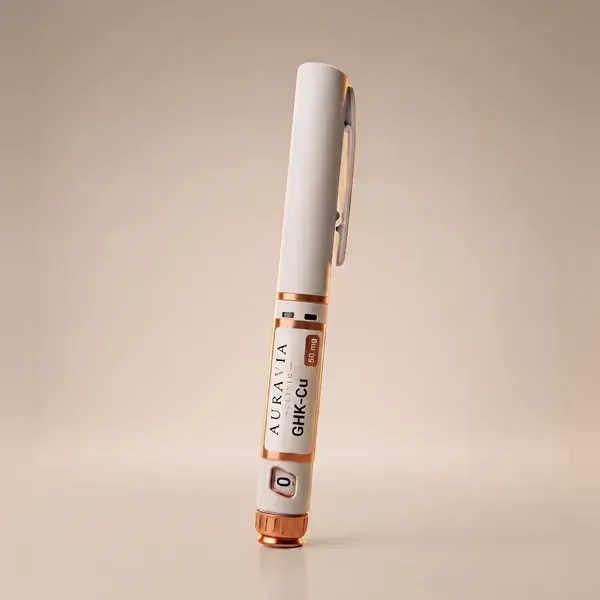
GHK-Cu Pen
Pre-filled Pen GHK-Cu
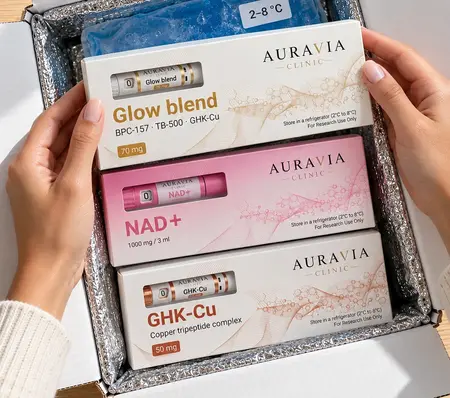
GLOW-UP Ritual
3-pen pack: Glow, NAD+, GHK-Cu
Test your knowledge
Quick quiz · 6 questions
Sources
- Hjuler KF, Lorentzen HF (2014). Melanoma associated with the use of melanotan-II. Dermatology. (PubMed)
- Cousen P, Colver G, Helbling I (2009). Eruptive melanocytic naevi following melanotan injection. British Journal of Dermatology. (PubMed)
- Ong S, Bowling J (2012). Melanotan-associated melanoma in situ. Australasian Journal of Dermatology. (PubMed)
- Yassin Alsabbagh A, Bhujel N, Singh RP (2025). Melanotan II nasal spray: a possible risk factor for oral mucosal malignant melanoma?. International Journal of Oral and Maxillofacial Surgery. (PubMed)
- Langan EA, Nie Z, Rhodes LE (2010). Melanotropic peptides: more than just 'Barbie drugs' and 'sun-tan jabs'?. British Journal of Dermatology. (PubMed)
- Peters B, et al. (2020). Melanotan II: a possible cause of renal infarction: review of the literature and case report. CEN Case Reports. (PubMed)
- Breindahl T, Evans-Brown M, Hindersson P, McVeigh J, Bellis M, Stensballe A, Kimergård A (2015). Identification and characterization by LC-UV-MS/MS of melanotan II skin-tanning products sold illegally on the Internet. Drug Testing and Analysis. (PubMed)
- Wessells H, et al. (2000). Melanocortin receptor agonists, penile erection, and sexual motivation: human studies with Melanotan II. International Journal of Impotence Research. (PubMed)
- Callaghan DJ 3rd (2018). A glimpse into the underground market of melanotan. Dermatology Online Journal. (PubMed)
- Böhm M, et al. (2024). An overview of benefits and risks of chronic melanocortin-1 receptor activation. Journal of the European Academy of Dermatology and Venereology. (PubMed)
- Gilhooley E, Daly S, McKenna D (2021). Melanotan II User Experience: A Qualitative Study of Online Discussion Forums. Dermatology.
- Therapeutic Goods Administration (Australia) (2026). Melanotan II tanning peptide products found to be inconsistently dosed (safety advisory, 17 August 2026). TGA Safety Alerts. (tga.gov.au)
- U.S. Food and Drug Administration (2019). SCENESSE (afamelanotide) implant, prescribing information. FDA Drugs@FDA, NDA 210797. (accessdata.fda.gov)
- European Medicines Agency (2014). Scenesse (afamelanotide): European public assessment report and product information. EMA EPAR. (ema.europa.eu)
- U.S. Food and Drug Administration (2016). Notice of Opportunity for Hearing, Manookian, Edward (documenting FDA action on injectable melanotan II as an unapproved new drug). FDA Electronic Reading Room. (fda.gov)