
- In the two phase 3 SURMOUNT-OSA trials (469 adults with moderate to severe obstructive sleep apnea and obesity), tirzepatide lowered the apnea-hypopnea index by 25.3 events per hour in participants not using positive airway pressure and by 29.3 events per hour in participants already on it, versus 5.3 and 5.5 events per hour with placebo at 52 weeks.
- Criteria for disease resolution (an apnea-hypopnea index below 5, or between 5 and 14 with an Epworth Sleepiness Scale score of 10 or less) were met by 43.0% and 51.5% of tirzepatide participants, compared with 14.9% and 13.6% on placebo.
- The FDA approved Zepbound (tirzepatide) on December 20, 2024 for moderate to severe obstructive sleep apnea in adults with obesity, the first prescription medicine cleared for this condition.
- In Europe, the CHMP finalized its review in December 2024 and concluded that a separate sleep apnea indication for Mounjaro was unnecessary, since the approved weight management indication already covers these patients.
- Evidence for semaglutide in sleep apnea is weaker and mostly observational: a large retrospective cohort reported a lower risk of new-onset obstructive sleep apnea, but no dedicated randomized polysomnography trial of semaglutide has reported a comparable primary endpoint.
- The trials enrolled only adults with obesity, ran for one year, and were not designed to show reductions in cardiovascular events or death. Positive airway pressure remains a reference therapy, and no one should stop it on their own initiative.
- This article is for educational purposes only. Decisions about sleep apnea therapy belong with a sleep specialist and a prescribing physician.
Why Is Sleep Apnea So Closely Tied to Obesity?
Obstructive sleep apnea (OSA) is a breathing disorder in which the upper airway repeatedly narrows or collapses during sleep. Each event fragments sleep and causes a transient drop in blood oxygen. Severity is usually graded with the apnea-hypopnea index (AHI), the average number of apneas and hypopneas per hour of sleep measured during a sleep study. Fifteen to thirty events per hour is considered moderate, and thirty or more is considered severe.
Excess body weight is the single strongest modifiable risk factor. Fat deposition around the pharynx, in the tongue itself, and in the abdomen reduces the caliber of the airway and lowers lung volumes, which in turn makes the airway easier to collapse. This is why weight management has been part of sleep apnea care for decades, long before any medicine was approved for the condition.
Until recently, however, weight loss was hard to deliver at the scale needed. Lifestyle programs typically produce a few percent of body weight reduction, and bariatric surgery is not an option for everyone. That gap is what made incretin-based medicines interesting to sleep physicians: drugs such as tirzepatide and semaglutide produce weight loss in a range that historically only surgery reached.
This article reviews what has actually been measured. It covers the SURMOUNT-OSA program, the state of the semaglutide evidence, the regulatory decisions in the United States and Europe, the proposed mechanisms, and the limits that still apply. It is educational content, not medical advice, and it does not describe any regimen.
What Did the SURMOUNT-OSA Trials Measure?
SURMOUNT-OSA is the program that generated the pivotal evidence. It consisted of two phase 3, double-blind, randomized, placebo-controlled trials run under a single master protocol, with results published in the New England Journal of Medicine in 2024 (Malhotra et al., N Engl J Med 2024;391:1193-1205).
A total of 469 adults with moderate to severe obstructive sleep apnea and obesity were randomized across sites in the United States, Australia, Brazil, China, Czechia, Germany, Japan, Mexico, and Taiwan. The split between the two trials is the detail that matters most for interpretation. Trial 1 enrolled participants who were not using positive airway pressure therapy. Trial 2 enrolled participants who were already on it and stayed on it throughout, so the medicine was tested as an addition to existing care rather than as a substitute for it.
Participants received weekly tirzepatide at the maximum tolerated level used in the program (10 mg or 15 mg) or matching placebo for 52 weeks, alongside lifestyle counseling. The primary endpoint was the change in apnea-hypopnea index from baseline to week 52, measured by polysomnography rather than by questionnaire. That choice is important: a hard physiological endpoint is much harder to move than a symptom score.
Prespecified secondary endpoints included body weight, the sleep apnea-specific hypoxic burden (a measure of how much oxygen desaturation accumulates across the night), high-sensitivity C-reactive protein, systolic blood pressure, and patient-reported sleep outcomes. A separate analysis of the patient-reported measures was published in Sleep Medicine in 2025, and the cardiometabolic secondary outcomes appeared in Nature Medicine.
How Much Did Tirzepatide Lower the Apnea-Hypopnea Index?
At week 52, the mean change in apnea-hypopnea index was -25.3 events per hour with tirzepatide versus -5.3 events per hour with placebo in Trial 1 (participants not on positive airway pressure). In Trial 2 (participants on positive airway pressure), the figures were -29.3 events per hour with tirzepatide versus -5.5 events per hour with placebo. The gap in favor of tirzepatide therefore amounted to roughly 20 events per hour in the first trial and roughly 24 in the second.
Expressed in relative terms, the mean reduction in apnea-hypopnea index was 55.0% in Trial 1 and 62.8% in Trial 2, against 5.0% and 6.4% respectively with placebo. For a condition in which no medicine had previously shown a meaningful effect on polysomnography, that is a large signal.
The trials also looked at a composite outcome described as disease resolution: an apnea-hypopnea index below 5 events per hour, or between 5 and 14 events per hour combined with an Epworth Sleepiness Scale score of 10 or less. This threshold was reached by 43.0% of tirzepatide participants in Trial 1 and 51.5% in Trial 2, compared with 14.9% and 13.6% on placebo. In other words, roughly half of the participants in the higher-performing trial no longer met the standard definition of clinically significant sleep apnea after one year.
Weight loss tracked alongside. Mean body weight fell by 18.1% in Trial 1 and 20.1% in Trial 2, versus 1.3% and 2.3% with placebo, which is consistent with the magnitude seen in the broader SURMOUNT obesity program and with what readers often see described in accounts of weight change on Zepbound. Secondary outcomes also showed reductions in hypoxic burden, in high-sensitivity C-reactive protein, and in systolic blood pressure, and improvements in self-reported sleep disturbance and daytime impairment.
Two caveats belong next to these numbers. First, a reduction in apnea-hypopnea index is a surrogate measure, not a clinical event. Second, half of the participants did not meet the resolution criteria, and many of those with severe disease at baseline still had clinically relevant sleep apnea at week 52.
What Do We Know About Semaglutide and Liraglutide?
The evidence base for other incretin drugs in sleep apnea is thinner and of a different quality, which is the main reason the regulatory outcome differed. Anyone comparing the two most discussed molecules, as in our overview of semaglutide versus tirzepatide, should keep this asymmetry in mind: similar mechanisms do not mean similar evidence.
The oldest randomized data come from liraglutide 3.0 mg. In the SCALE Sleep Apnea trial (Blackman et al., International Journal of Obesity 2016), adults with obesity and moderate or severe obstructive sleep apnea who were unable or unwilling to use continuous positive airway pressure were randomized for 32 weeks. The mean reduction in apnea-hypopnea index was -12.2 events per hour with liraglutide versus -6.1 with placebo, alongside a mean weight loss of 5.7% versus 1.6%. The direction was favorable, but both the weight loss and the respiratory effect were much smaller than what SURMOUNT-OSA later reported.
For semaglutide, there is currently no published dedicated randomized trial with polysomnography as a primary endpoint that is comparable to SURMOUNT-OSA. What exists is mostly observational. A large retrospective cohort analysis published in the Annals of the American Thoracic Society (Wu et al., 2026) compared roughly 191,000 matched individuals with obesity per group and reported that semaglutide use was associated with a lower risk of new-onset obstructive sleep apnea (hazard ratio 0.62; 95% confidence interval 0.60 to 0.63). Analyses of existing trial databases have also suggested a lower incidence of diagnosed sleep apnea with semaglutide 2.4 mg.
Associations of this kind are informative but cannot be read as proof of a treatment effect. Cohort studies cannot exclude residual confounding, sleep apnea is systematically underdiagnosed, and a diagnosis code is not the same measurement as an overnight sleep study. As things stand, semaglutide is not approved for obstructive sleep apnea anywhere, and its efficacy for this specific indication has not been established.
Where Do the FDA and the EMA Stand?
On December 20, 2024, the FDA approved Zepbound (tirzepatide) for moderate to severe obstructive sleep apnea in adults with obesity, to be used together with a reduced-calorie diet and increased physical activity. This was the first time any prescription medicine had been approved for obstructive sleep apnea. Tirzepatide had already been approved in the United States for type 2 diabetes in 2022 (as Mounjaro) and for chronic weight management in November 2023 (as Zepbound).
The wording of the indication is narrow and deserves attention. It applies to adults, it requires obesity, and it covers moderate to severe disease. It does not extend to people with sleep apnea who are not obese, to mild disease, or to children and adolescents. The approval also does not describe the medicine as a replacement for airway therapy.
Europe took a different procedural route to a similar conclusion. Eli Lilly applied to extend the Mounjaro label to include obstructive sleep apnea in adults with obesity, submitting the same two studies in 469 adults. In December 2024, the Committee for Medicinal Products for Human Use (CHMP) finalized its assessment and concluded that a separate sleep apnea indication was not needed, on the grounds that these patients are already covered by the existing weight management indication. The EMA published a questions-and-answers document explaining this outcome.
The practical consequence is that in the European Union there is no standalone sleep apnea indication on the label, even though the same clinical data were reviewed and the drug remains available for weight management. Reimbursement and prescribing practice vary considerably between countries, and in both regions access depends on local payer rules rather than on the trial results alone.
How Could an Incretin Drug Improve Breathing During Sleep?
The dominant and best-supported explanation is weight loss. Tirzepatide activates both the GIP and the GLP-1 receptors, which reduces appetite and energy intake and produces substantial fat mass loss. Less fat around and inside the upper airway means a wider, less collapsible pharynx, and less abdominal fat means better lung volumes, both of which make obstructive events less likely.
One mechanistic detail is worth highlighting. In a magnetic resonance imaging study of adults with obesity and sleep apnea (Wang et al., American Journal of Respiratory and Critical Care Medicine 2020), reductions in tongue fat volume were the main upper airway mediator of the relationship between weight loss and improvement in apnea-hypopnea index, accounting for a substantial share of the total effect. This supports the idea that where fat is lost matters, not only how much.
Several complementary hypotheses have been raised, and all of them remain unproven in this setting. They include a reduction in systemic and airway inflammation (the SURMOUNT-OSA secondary analysis showed lower high-sensitivity C-reactive protein with tirzepatide), improved fluid balance and less overnight rostral fluid shift, better metabolic control with less insulin resistance, and possible direct effects of GLP-1 receptor signaling on respiratory control or on upper airway muscle function. None of these has been isolated as a mechanism in a human sleep apnea trial.
It is also worth noting that the improvement was somewhat larger in the trial where participants continued positive airway pressure. That pattern is compatible with weight loss and airway therapy acting on the same problem through different routes, although the two trials were not designed to be compared directly with each other.
Readers interested in sleep itself should be careful not to extrapolate from this evidence to unrelated compounds. The research situation for molecules marketed around sleep quality, reviewed in our article on peptides studied for sleep, is nothing like the phase 3 evidence base described here.
Does This Change the Place of CPAP?
Positive airway pressure, commonly delivered as CPAP, remains a reference therapy for moderate to severe obstructive sleep apnea. It acts immediately, it works regardless of body weight, and it is the intervention with the longest track record for controlling nocturnal events and daytime sleepiness. Nothing in the SURMOUNT-OSA data displaces it.
The way the program was built actually reinforces this. Trial 2 tested tirzepatide in addition to ongoing airway therapy, and that is the trial with the larger reduction in apnea-hypopnea index and the higher proportion of participants meeting the resolution criteria. The American Academy of Sleep Medicine has emphasized that pharmacotherapy of this kind should be considered as part of comprehensive sleep apnea care alongside positive airway pressure, oral appliance therapy, or surgery where appropriate, and not as a substitute for them.
There is a specific safety point here that cannot be stated too plainly. No one should stop or reduce positive airway pressure therapy on their own initiative, including after significant weight loss or after a drop in symptoms. Any change requires objective reassessment, which in practice means a repeat sleep study interpreted by a sleep specialist. Symptoms are a poor guide to the apnea-hypopnea index, and untreated sleep apnea carries cardiovascular and accident risks.
A second consideration is durability. The improvements observed in the trials occurred while participants were taking the medicine. If the medicine is stopped and weight is regained, there is no reason to expect the respiratory benefit to persist, and the 52-week trials provide no data on what happens after discontinuation. A head-to-head randomized comparison of tirzepatide against positive airway pressure has been registered, but until such a trial reports, the two are not interchangeable on the evidence.
What Are the Limits of the Current Evidence?
The first limit is the population. SURMOUNT-OSA enrolled only adults with obesity and moderate to severe disease. Obstructive sleep apnea also occurs in people who are not obese, driven by craniofacial anatomy, nasal obstruction, upper airway muscle responsiveness, or a low arousal threshold. In those patients, a weight-centered intervention has no established rationale and was never tested. The findings also do not apply to mild sleep apnea or to pediatric populations.
The second limit is duration. Both trials ran for 52 weeks. Obstructive sleep apnea and obesity are chronic conditions, and one year tells us little about effects over five or ten years, about adherence in routine practice, or about what happens when therapy is interrupted. Real-world persistence with incretin drugs is known to be lower than in trials.
The third limit is the type of endpoint. The apnea-hypopnea index, the hypoxic burden, and blood pressure are intermediate measures. They are plausibly linked to cardiovascular outcomes, but SURMOUNT-OSA was not sized or designed to show fewer heart attacks, strokes, arrhythmias, road accidents, or deaths. Claiming that outcome benefit would go beyond what was measured.
Fourth, the comparator was placebo, not active therapy. We know tirzepatide beats placebo on polysomnography. We do not know how it compares with positive airway pressure, with oral appliances, with upper airway surgery, or with structured weight management programs, nor which patients benefit most from which approach.
Finally, these trials studied a regulated, pharmaceutical-grade product under medical supervision, with sleep studies, monitoring, and lifestyle support built in. Compounded, grey-market, or research-labeled material sold online is not the same product, has no equivalent evidence, and carries risks of mislabeling and contamination. Using such material outside medical care has nothing in common with what was tested.
What Adverse Effects Were Reported?
The tolerability profile in SURMOUNT-OSA matched what is known from the wider tirzepatide program. The most frequently reported adverse events in participants receiving tirzepatide were gastrointestinal: diarrhea, nausea, and vomiting in Trial 1, and diarrhea, nausea, and constipation in Trial 2. These events were mainly mild to moderate and clustered during the initial escalation period.
Beyond the trial, the class carries labeled warnings and precautions that apply to this indication as much as to weight management. They include pancreatitis, gallbladder disease including gallstones, acute kidney injury in the context of severe dehydration from vomiting or diarrhea, diabetic retinopathy complications in people with type 2 diabetes, hypoglycemia when combined with insulin or insulin secretagogues, and hypersensitivity reactions. Tirzepatide also carries a boxed warning about thyroid C-cell tumors based on rodent findings, and it is contraindicated in people with a personal or family history of medullary thyroid carcinoma or multiple endocrine neoplasia syndrome type 2. Anesthesia and sedation planning may need to account for delayed gastric emptying, which is directly relevant for anyone undergoing airway surgery.
Loss of lean mass alongside fat mass is an additional consideration with weight loss of this magnitude, and the long-term implications for respiratory and upper airway musculature have not been characterized. Our general overview of adverse effects reported with GLP-1 receptor agonists covers the class profile in more detail.
Medical disclaimer: this article is for educational purposes only and does not constitute medical advice, a recommendation, or any form of protocol. It contains no dosing guidance. Obstructive sleep apnea is a condition with real cardiovascular and safety consequences, and its management requires diagnosis by sleep study and follow-up by qualified clinicians. Consult a healthcare professional before any change to your care, and never discontinue positive airway pressure therapy without medical reassessment. Regulatory status and availability differ between jurisdictions.
Recommended products
Research peptides selected for quality and purity:

Retatrutide
Metabolic Peptide
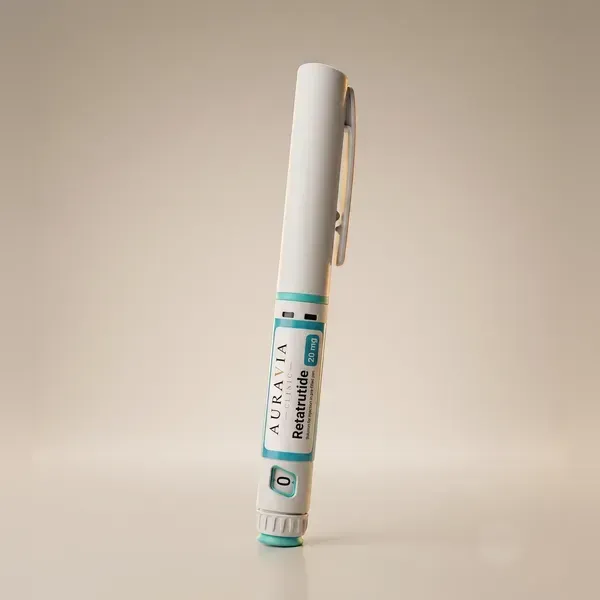
Retatrutide Pen
Pre-filled Pen Retatrutide
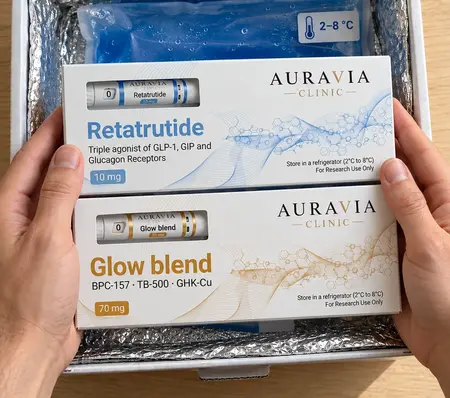
Transform DUO
2-pen pack: Retatrutide, Glow
Test your knowledge
Quick quiz · 6 questions
Frequently Asked Questions
Is tirzepatide approved for obstructive sleep apnea?
How much did the apnea-hypopnea index actually fall in the trials?
Does this mean sleep apnea can be cured with a GLP-1 drug?
Can someone stop CPAP if they lose weight on a GLP-1 drug?
Does semaglutide work for sleep apnea too?
How does an incretin drug improve breathing during sleep?
Would this apply to someone with sleep apnea who is not obese?
What adverse effects were most common in the trials?
Sources
- Malhotra A, et al. (2024). Tirzepatide for the Treatment of Obstructive Sleep Apnea and Obesity. New England Journal of Medicine 391(13):1193-1205 (PMID 38912654). (PubMed)
- Malhotra A, Grunstein RR, Azarbarzin A, et al. (2026). Tirzepatide on obstructive sleep apnea-related cardiometabolic risk: secondary outcomes of the SURMOUNT-OSA randomized trial. Nature Medicine 32(2):653-659. (nature.com)
- Kanu C, Shinde S, Chakladar S, Dennehy EB, Weaver TE, Poon JL, Malhotra A (2025). Effect of tirzepatide treatment on patient-reported outcomes among SURMOUNT-OSA participants with obstructive sleep apnea and obesity. Sleep Medicine (PMID 40774158). (PubMed)
- Wu JY, Lin YM, Hsu WH, Liu TH, Tsai YW, Huang PY, Chuang MH, Yu T, et al. (2026). Effects of semaglutide on obstructive sleep apnea risk and outcomes in patients with obesity. Annals of the American Thoracic Society 23(4):584-596 (PMID 41915556). (PubMed)
- Blackman A, Foster GD, Zammit G, et al. (2016). Effect of liraglutide 3.0 mg in individuals with obesity and moderate or severe obstructive sleep apnea: the SCALE Sleep Apnea randomized clinical trial. International Journal of Obesity 40(8):1310-1319 (doi 10.1038/ijo.2016.52).
- Wang SH, Keenan BT, Wiemken A, et al. (2020). Effect of Weight Loss on Upper Airway Anatomy and the Apnea-Hypopnea Index: The Importance of Tongue Fat. American Journal of Respiratory and Critical Care Medicine 201(6):718-727 (PMID 31918559). (PubMed)
- European Medicines Agency (2024). Questions and answers on the outcome of the assessment of the use of Mounjaro for the treatment of obstructive sleep apnoea; CHMP meeting highlights 9-12 December 2024. European Medicines Agency. (ema.europa.eu)
- American Academy of Sleep Medicine (2024). Zepbound approved by FDA as first sleep apnea medication; What clinicians should know about prescribing tirzepatide for sleep apnea. American Academy of Sleep Medicine. (aasm.org)
- Eli Lilly and Company (2024). Lilly's tirzepatide reduced obstructive sleep apnea (OSA) severity, with up to 51.5% of participants meeting the criteria for disease resolution. Eli Lilly investor news release. (investor.lilly.com)